An electricity-plan allocation and a promised statutory determination have revived South Africa’s nuclear-build debate. The decisive questions are now who will buy the power, who will finance the assets, and how the country will demonstrate that new reactors offer an affordable, safe and deliverable contribution to its energy system.
NuclearAfrica | Policy and Markets Analysis
South Africa has moved its proposed nuclear expansion a step closer to a formal procurement process. At the South African Nuclear and Clean Energy Conference on 10 November 2026, Minister of Electricity and Energy Kgosientsho Ramokgopa reaffirmed the place of 5,200 megawatts (MW) of new nuclear capacity in the country’s Integrated Resource Plan (IRP 2025). He said government intended to publish a determination under section 34 of the Electricity Regulation Act before June 2027, following the required consultations.
That is politically consequential. Yet the distinction matters: a capacity allocation in a national plan is not a reactor order; a proposed section 34 determination is not an issued determination; and a determination, once issued, is still not a financed or licensed construction project. For South Africa and other African countries watching its experience, the next phase is less about making another declaration in favour of nuclear energy and more about establishing a credible chain from system need to project delivery.
Why the 5,200 MW figure matters
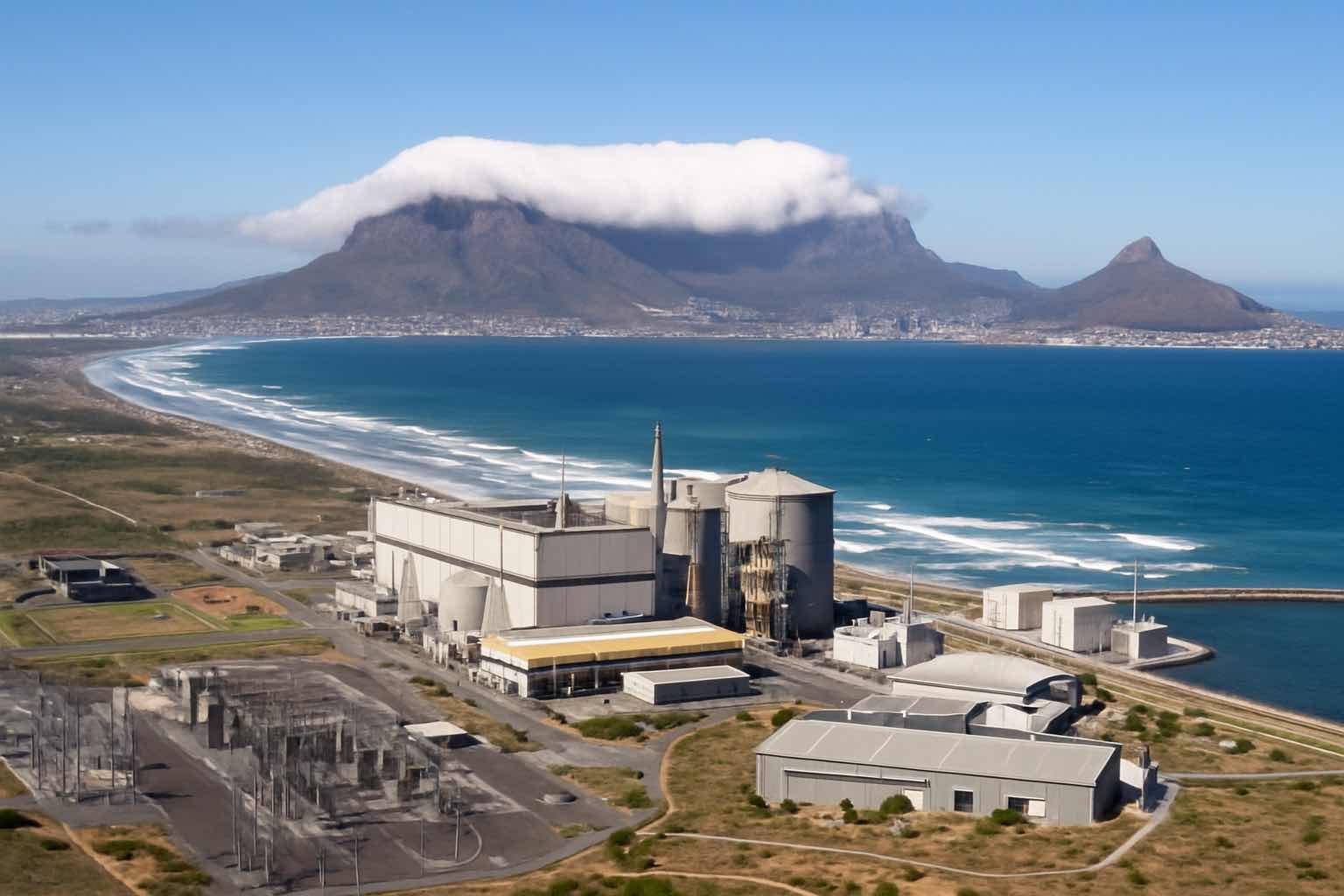
South Africa is the continent’s only commercial nuclear electricity producer. The two units at Koeberg near Cape Town give it four decades of experience in reactor operation, licensing, maintenance, radiological protection, workforce development and nuclear regulation. According to the International Atomic Energy Agency’s country profile, nuclear contributed roughly 5.5% of South African electricity generation in 2025. This is an established industrial capability, not a theoretical starting point.
The proposed expansion is nevertheless different in scale and financial exposure from operating an existing plant. At 5,200 MW, it amounts to several large reactor units or a different combination of reactor sizes. The eventual configuration, vendor, site, schedule and contracting model remain matters for rigorous project development and procurement. The IRP identifies a role for nuclear in the future supply mix; it does not settle the technology or prove a particular bid affordable.
South Africa’s energy context also matters. Years of electricity shortages, dependence on an ageing coal fleet, the growing deployment of renewables, the role of storage and flexible capacity, and pressure to decarbonise have made energy-security choices politically urgent. Nuclear may supply firm low-carbon output over long operating periods, but its economic value has to be tested within the complete electricity system. The correct comparison is not nuclear versus wind or solar in isolation; it is among alternative combinations of generation, transmission, storage, flexibility and demand-side measures that can reliably meet the same system need.
What the government has actually announced
In his 10 November address, Ramokgopa said that Eskom had submitted a feasibility report related to the 5,200 MW programme. He described the statutory determination as the next instrument through which the proposal could advance, subject to public submissions and consultation with the National Energy Regulator of South Africa (NERSA) and the Minister of Finance. He also pointed to Eskom’s role as prospective owner and operator, consistent with the country’s Nuclear Energy Policy.
These are important institutional signals. They indicate a possible route for the government to translate a policy target into a defined procurement mandate. But they leave several questions outstanding. Would Eskom carry the assets on its balance sheet, or would a project company be used? How much exposure would the sovereign assume? Would electricity be purchased through a long-term agreement, regulated tariff or another mechanism? How would foreign exchange, construction delay, cost escalation and refinancing risks be allocated?
Those questions are not secondary accounting details. Nuclear economics are especially sensitive to financing costs and the time required to bring a plant into revenue-generating operation. A technology with a competitive lifetime operating profile can still become difficult to finance if construction risk is concentrated on a weak balance sheet or if the borrowing terms are unsuitable. Equally, a low advertised overnight construction price tells the public little unless interest during construction, grid integration, waste management, decommissioning and contingent public liabilities are included.
The legal and regulatory sequence cannot be skipped
Section 34 is significant because it establishes a statutory route by which new generation capacity can be determined and a procurement arrangement authorised. The precise terms of any future determination would matter, including technology, quantity, procurement authority, timing and the evidence underlying the decision. Its publication would be a major milestone, but a determination would not itself constitute a construction licence from the National Nuclear Regulator (NNR).
The NNR’s independence must remain distinct from government’s investment ambition and Eskom’s commercial interests. Site suitability, environmental impact, reactor design, safety analysis, radiation protection, emergency preparedness, security, safeguards, fuel arrangements and eventual waste provisions require scrutiny under the appropriate national procedures. Public participation should begin early enough to influence choices rather than merely ratify them.
South Africa has the advantage of established regulators, specialist institutions and nuclear professionals. It also has public memories of contested nuclear procurement processes. Transparency is therefore an economic asset as much as a democratic obligation: procurement uncertainty, litigation and perceived conflicts of interest can increase risk premiums and delay projects before construction starts.
A formidable financing challenge
The industry and government often describe new nuclear as a long-term infrastructure investment. That description is correct but incomplete. Investors and lenders still need an identifiable revenue stream, credible counterparties, clear construction responsibilities and protection against risks that no single party can reasonably bear. In South Africa’s case, Eskom’s financial position, fiscal constraints and electricity tariff sensitivity make the allocation of these risks particularly important.
At least four financing structures warrant comparison: conventional utility procurement supported by the sovereign; a ring-fenced project-company model with long-term offtake; government-to-government financing tied to a supplier; and a structure in which public and private capital assume different portions of construction and operating risk. Each has different implications for sovereign debt, contingent liabilities, competition, local industry participation and future electricity prices. None should be presumed superior without published assumptions and independent appraisal.
Several other milestones matter before a financial close: an updated system-level economic assessment; an approved procurement framework; defensible land and site arrangements; an adequately resourced regulator; a reference plant and supplier qualification; fuel and waste strategies; grid connection studies; and a realistic construction schedule with contingency. The public should be able to distinguish binding commitments from non-binding memoranda, expressions of interest and diplomatic announcements.
What localisation should mean
South Africa already possesses a more extensive nuclear industrial base than its continental peers. Koeberg, the Nuclear Energy Corporation of South Africa (Necsa), Pelindaba, universities, laboratories and specialised engineering firms provide a foundation for expansion. The minister’s address also discussed research infrastructure, nuclear fuel-cycle capability, the future of the SAFARI-1 research reactor and long-term spent-fuel storage.
Localisation can create jobs and strengthen industrial capability, but a blanket domestic-content target is not a substitute for nuclear-grade quality assurance. A credible programme should identify which components, civil works, services, instrumentation, testing, maintenance and training can be supplied locally at the required standard and schedule. It should then invest in vendor qualification, codes and standards, traceability, welding and nondestructive testing, independent inspection, and long-term workforce development.
Workforce planning should similarly distinguish construction peaks from the permanent skills required to run and maintain reactors for decades. Operators, regulators, waste specialists, security personnel, safeguards experts, emergency responders and independent technical-support organisations must all be developed without allowing the project promoter to control its own oversight.
The regional implications are larger than one project
If South Africa can convert 5,200 MW of policy ambition into a transparently procured and financed programme, it may become a reference case for how an African government structures complex nuclear investment. Regional businesses could gain opportunities in qualified services and supply chains, while universities and technical institutions could support specialist training. Success could also strengthen continental conversations about interconnected electricity markets and industrial development.
The cautionary lesson is just as important. Many African newcomer countries are still establishing policy, human resources, regulation and investment-readiness arrangements under the IAEA Milestones Approach. They should not read South Africa’s 5,200 MW figure as proof that similar-sized projects can be replicated quickly or financed under the same terms. Ghana, Kenya, Egypt, Uganda and others face different system sizes, sovereign-risk profiles, demand trajectories, institutions and public-finance constraints. The transferrable lesson is the discipline of sequencing decisions, not the direct transfer of a capacity target.
For South Africa, the quality of the next steps will be more informative than the number announced at a conference. By mid-2027, observers should look for an issued and legally robust determination; publication of the evidence supporting the procurement rationale; a clear project sponsor and risk-allocation model; an independently credible schedule; and engagement that treats communities and the regulator as substantive participants.
What NuclearAfrica will watch next
The 5,200 MW proposal faces six tests: system value, meaning a demonstrated contribution relative to alternative electricity portfolios; affordability, based on all-in costs and fiscal exposure; lawfulness, including section 34 and procurement requirements; licensability, with an independent NNR; bankability, through realistic risk-sharing and revenue arrangements; and deliverability, through qualified suppliers, site readiness and a workforce pipeline.
South Africa has compelling reasons to examine nuclear alongside other low-carbon options. It also has enough technical experience to understand that nuclear programmes cannot be delivered by announcement. The next chapter will be written in statutory decisions, feasibility evidence, budgets, public consultation and procurement documents. That is where the country’s nuclear expansion will either acquire credibility or encounter its most difficult obstacles.
Related

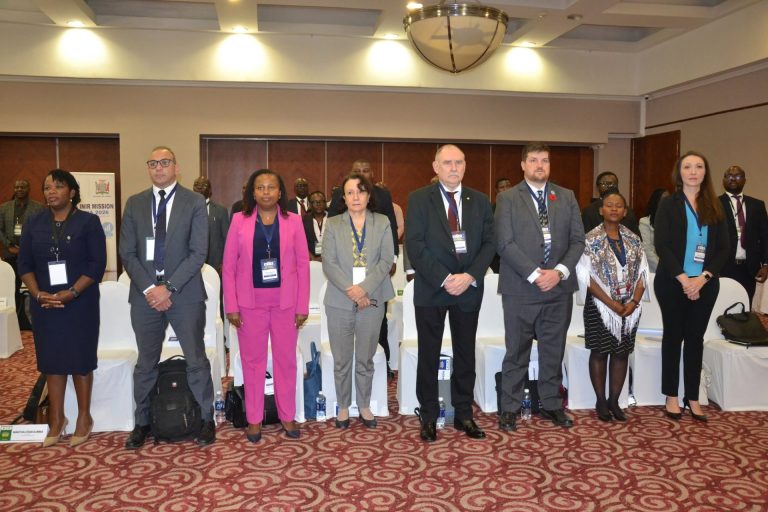
Zambia Completes IAEA Phase 1 INIR Mission: What the Review Means for Its Nuclear Power Ambitions
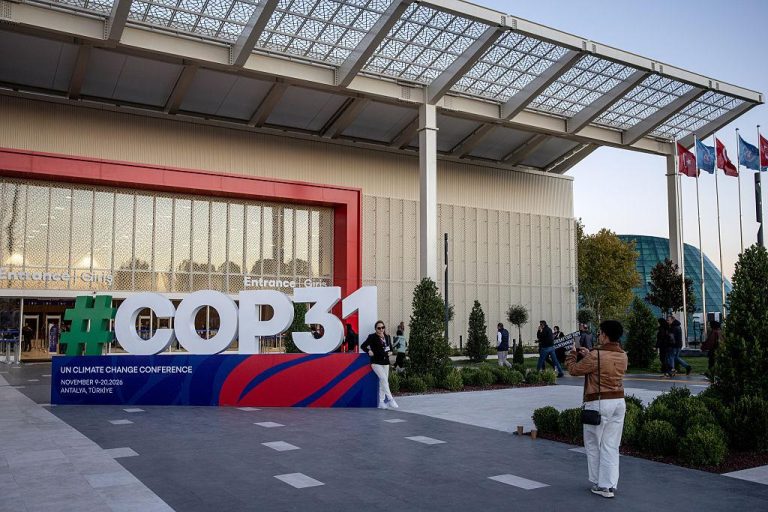
By Nuclear Africa• November 11, 2026COP31 in Türkiye: Can Nuclear Energy Move From Climate Pledges to Bankable Projects and What Will Africa Gain?
By Nuclear Africa• November 11, 2026
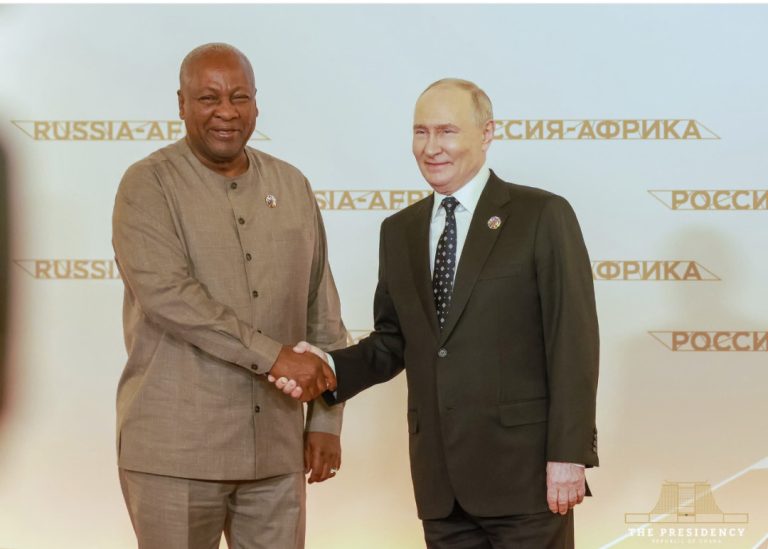
Ghana–Russia 2,000 MW Nuclear Cooperation: What Has Actually Been Agreed and What Comes Next
By Nuclear Africa• November 2, 2026
Who Will Finance Ghana’s Proposed 2,000 MW Nuclear Power Programme with Russia?
By Nuclear Africa• November 2, 2026