
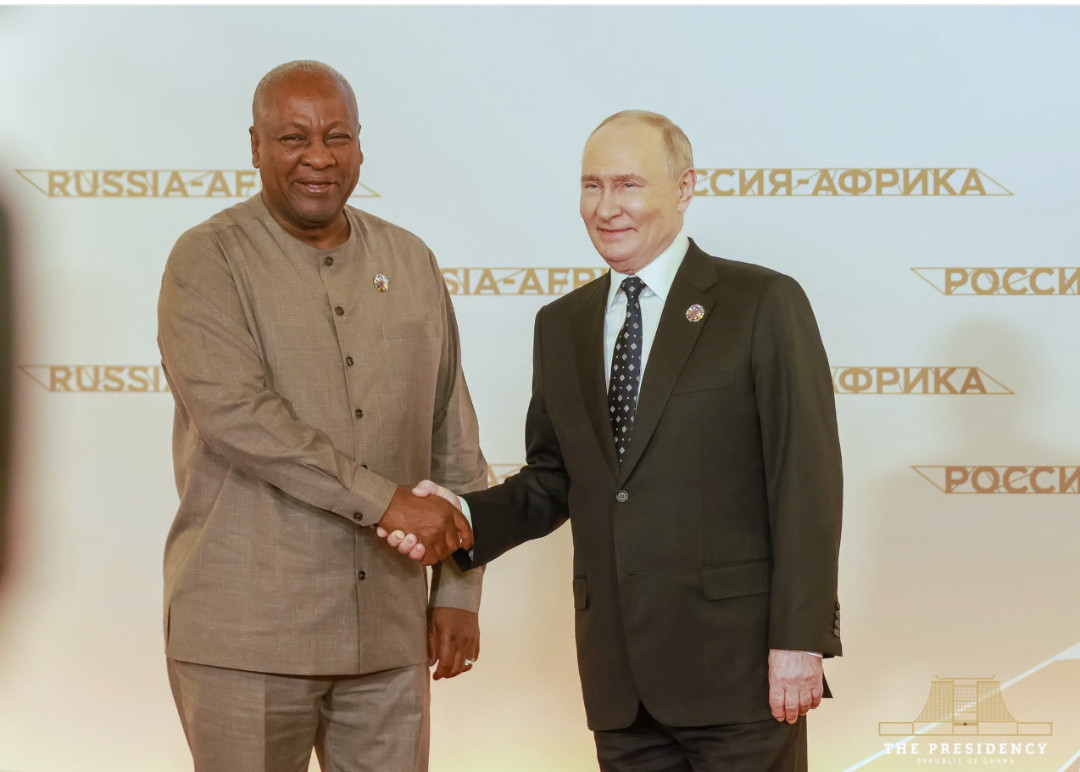
Ghana’s announcement that Russia will work with the country towards approximately 2,000 MW of nuclear power has moved an important part of the national nuclear debate from technology and diplomacy into finance. The most consequential question is no longer only whether Ghana wants nuclear power or which reactor technology might eventually be selected. It is how such a project would be financed, who would carry the financial risks, how the debt or investment would be repaid, and what obligations Ghana would assume in return.
A nuclear programme of this scale would likely become one of the largest infrastructure investments ever contemplated in Ghana. Its success would therefore depend as much on the financing architecture as on reactor technology, regulatory readiness or engineering design. The eventual financial structure would influence electricity tariffs, sovereign debt, foreign-exchange exposure, ownership, technology transfer, local content and the degree of long-term dependence on the technology supplier.
The Ghana–Russia announcement is politically significant because Russia has substantial experience financing nuclear exports through state-backed arrangements. Yet no financing package has so far been publicly disclosed for Ghana. There is no confirmed Russian state loan, build-own-operate arrangement, vendor-equity commitment, sovereign guarantee or project-finance term sheet associated with the proposed 2,000 MW programme. The project should therefore still be regarded as financially undefined.
Why Nuclear Power Is Primarily a Financing Challenge
Nuclear power plants are among the most capital-intensive energy projects. A very large proportion of their lifetime cost is incurred before the plant generates its first commercial electricity. Construction may take several years, and during that period interest accumulates on borrowed capital. This means that financing costs can materially affect the final cost of nuclear electricity.
A reactor financed at a relatively low interest rate over a long repayment period can produce a very different economic outcome from the same reactor financed at expensive commercial rates. This is especially important for emerging economies, where sovereign borrowing costs are often higher than in advanced economies and where lenders may price additional political, currency and project risks into the cost of capital.
For Ghana, the financing question is therefore not simply whether enough money can be raised to construct a plant. The real issue is whether capital can be raised on terms that remain affordable over the entire life of the project. A financing structure that appears attractive at the beginning could become fiscally difficult if interest rates are high, construction is delayed or the cedi depreciates significantly against the currency in which debt must be repaid.
Russia’s International Nuclear Financing Models
Russia has not relied on a single model to finance its overseas nuclear projects. Instead, Rosatom and the Russian government have used different structures depending on the host country, project size, political relationship and financial circumstances.
One model is based on a large government-to-government state loan. Under this approach, Russia provides most of the financing for construction, while the host country assumes a long-term sovereign repayment obligation. Another model is based on vendor ownership, where Rosatom or a related project company finances, owns and operates the plant while recovering its investment through electricity sales and long-term commercial arrangements.
For Ghana, these models are important because they illustrate the range of possible financing structures that could emerge from negotiations. However, neither should be assumed to apply automatically. Ghana’s own fiscal situation, electricity market, national ownership objectives and industrial-development priorities should determine which structure is acceptable.
The Egyptian Model: Sovereign State-Backed Financing
Egypt’s El Dabaa nuclear power project provides the clearest African example of Russian state-backed nuclear financing. Russia agreed to provide a state loan of approximately US$25 billion to support construction of four VVER-1200 reactors. The financing covers a substantial share of the project cost, while Egypt is responsible for the remaining portion.
This structure demonstrates why Russian nuclear finance can be attractive to newcomer countries. It allows a host government to access very large amounts of long-term capital that would be difficult to mobilise independently through commercial financial markets. The financing also supports a broader package that can include technology, fuel supply, construction services, workforce development and long-term technical cooperation.
For Ghana, however, the Egyptian model would raise major fiscal questions. A sovereign loan would ultimately become a long-term repayment obligation of the state. Even if the financing terms were relatively favourable, the debt would have to be serviced over many years and would likely be denominated in foreign currency. This would expose Ghana not only to interest costs but also to exchange-rate risk and potentially substantial contingent fiscal pressures.
The central issue would therefore not be whether Russia could provide the money. It would be whether Ghana could sustainably absorb the debt while continuing to finance other national priorities.
The Turkish Model: Build, Own and Operate
Russia’s Akkuyu nuclear project in Türkiye uses a fundamentally different model. Rather than lending the Turkish government the full construction cost, Rosatom established the project company and assumed significant responsibility for financing, ownership and operation.
This build-own-operate arrangement reduces the immediate requirement for the host country to borrow the entire cost of construction. For a government facing significant debt constraints, such a model can appear highly attractive.
However, the financial burden does not disappear. Instead, it is transferred into other forms of obligation. The project company must recover its investment through predictable long-term revenue, typically supported by electricity-purchase arrangements, guaranteed prices or other contractual protections.
For Ghana, such a structure would therefore raise a different set of questions. While it might reduce direct sovereign borrowing, it could create long-term commitments linked to electricity purchases and foreign ownership of strategic infrastructure. It would also require careful consideration of national control, regulatory independence, fuel supply, operator responsibility, technology transfer and eventual ownership arrangements.
A Hybrid Model May Be More Suitable for Ghana
Ghana does not have to replicate either the Egyptian or Turkish structure exactly. A hybrid financing model may offer a more balanced approach.
Under such a structure, part of the project could be financed through Russian export-credit support, part through Ghanaian public equity and part through strategic vendor or institutional investment. Development-finance institutions, political-risk insurers and commercial lenders could also participate in specific components of the financing package.
A hybrid structure could allow Nuclear Power Ghana or another designated Ghanaian entity to retain strategic ownership while sharing some of the construction and financing risks with external partners. It could also create room for local institutional investors, pension funds or infrastructure funds to participate in carefully defined portions of the project.
The main advantage of such an arrangement would be risk diversification. Instead of concentrating all obligations on the Ghanaian state or transferring excessive control to a foreign vendor, the project could distribute financial exposure across several parties.
Ghana Must Define an Affordability Envelope
Before detailed negotiations proceed, Ghana should establish a clear national affordability framework for nuclear power.
The country needs to determine how much direct borrowing it can sustainably assume, how much sovereign-guarantee exposure is acceptable, how much foreign-currency debt the economy can manage and what electricity-price range would remain compatible with industrial competitiveness and household affordability.
This should happen before a final technology or vendor decision.
Without a defined affordability envelope, Ghana risks negotiating a project that appears attractive technically but becomes difficult to support financially. Nuclear contracts can extend across several decades, meaning that the commitments made during project development could affect the national budget long after the current political administration has left office.
An affordability framework would therefore give Ghana a stronger negotiating position. It would allow the government to assess financing proposals against national fiscal limits rather than allowing vendor financing conditions to define the project.
Foreign-Exchange Risk Could Become a Major Long-Term Cost
Foreign-exchange exposure will be one of the most important financial risks associated with any nuclear project in Ghana.
Most construction finance would likely be denominated in a major international currency. Electricity revenues, however, would be generated primarily in Ghanaian cedis. This creates a mismatch between the currency in which the project earns revenue and the currency in which debt may need to be repaid.
If the cedi depreciates significantly over the life of the loan, the domestic cost of debt service could rise substantially even if the original interest rate remains unchanged.
A financing strategy would therefore need to address currency risk from the beginning. Ghana could potentially reduce this exposure through a combination of regional electricity exports, foreign-currency industrial offtake, partial tariff indexation, hedging instruments and refinancing arrangements.
No single mechanism is likely to eliminate the risk entirely. The objective should be to prevent the project from becoming excessively dependent on a weak domestic currency while avoiding the social and political consequences of fully dollarising electricity prices.
The Electricity Sector Must Be Financially Credible
One of the most important questions any lender will ask is simple: who will buy the electricity and can that buyer pay consistently?
This is particularly relevant to Ghana because the electricity sector has experienced longstanding financial difficulties, including revenue shortfalls, payment arrears and pressure on government finances.
A nuclear project cannot be insulated completely from these conditions. If the plant sells electricity to financially weak utilities, investors will demand additional protection. That protection could take the form of government guarantees, reserve accounts, escrow arrangements or letters of credit.
This means that a project described as privately or externally financed could still create substantial fiscal exposure for the state if government guarantees are required to secure payments.
Improving electricity-sector financial performance is therefore not separate from nuclear-project development. It is one of the conditions for nuclear bankability.
Industrial Demand Could Strengthen the Project’s Economics
The proposed 2,000 MW capacity would be easier to justify financially if Ghana can demonstrate strong growth in productive electricity demand.
Large industrial consumers could play an important role in this regard. Mining, aluminium production, mineral processing, manufacturing, industrial parks, data centres and other energy-intensive industries could become anchor customers for nuclear electricity.
Long-term industrial offtake agreements could improve revenue predictability and reduce dependence on a single utility purchaser. They could also strengthen the argument that nuclear power is not merely an electricity-generation project but part of a broader industrial-development strategy.
This connection is particularly important for Ghana because the economic value of nuclear power will depend partly on whether the electricity supports higher-value production and industrial expansion.
A strong industrial-demand strategy could therefore improve both the development case and the financial case for the project.
Regional Electricity Exports Could Improve Bankability
Regional exports through the West African Power Pool could provide another important source of demand.
A 2,000 MW nuclear programme would represent a large addition to Ghana’s electricity system. Exporting part of the output to neighbouring countries could diversify the revenue base and help justify the scale of the investment.
However, regional exports would require credible transmission infrastructure, cross-border payment arrangements and long-term contracts with regional purchasers.
Ghana should therefore avoid assuming that regional demand will automatically materialise. It must be developed deliberately as part of the project’s commercial structure.
If properly designed, regional electricity exports could become one of the strongest arguments for a large Ghanaian nuclear programme because they would allow the plant to serve a market larger than Ghana alone.
Technology and Financing Should Be Evaluated Together
One of the most important lessons from international nuclear projects is that reactor technology cannot be evaluated separately from the financing package that accompanies it.
A vendor may offer a relatively low reactor price but expensive finance. Another may offer a higher construction price supported by cheaper state-backed credit. The second proposal could ultimately produce lower electricity costs.
Ghana should therefore compare complete project packages rather than reactor prices in isolation.
The evaluation should consider the cost of capital, repayment period, grace period, construction-risk allocation, sovereign guarantees, currency exposure, equity requirements, local content, fuel arrangements, long-term service obligations and technology-transfer provisions.
This approach would allow Ghana to identify the proposal that offers the best lifetime value rather than simply the lowest construction cost.
Financing Will Shape Long-Term Technology Dependence
Nuclear financing has strategic implications because the country providing the capital will usually also provide much of the technology, equipment and long-term technical support.
This can create a relationship lasting many decades.
Fuel supply, spare parts, software, maintenance, training and specialist services may remain linked to the vendor country throughout the operating life of the plant.
For Ghana, this does not automatically constitute a disadvantage. Long-term cooperation with an experienced nuclear supplier can provide stability and technical support.
The key issue is whether the relationship develops Ghanaian capabilities over time.
Financing negotiations should therefore include clear commitments on knowledge transfer, workforce development, domestic industrial participation and progressive localisation.
Affordable finance should support national capability. It should not create permanent technological dependency.
Local Content Must Be Integrated into the Financing Structure
A project of this scale could create substantial opportunities for Ghanaian companies.
Civil works, construction materials, transportation, logistics, security, professional services and selected manufacturing activities could all provide domestic economic benefits.
However, local participation must be integrated into the financing structure from the beginning.
Export-credit financing is often linked to procurement from the financing country. This can create tension between obtaining attractive foreign financing and maximising local content.
Ghana will therefore need to negotiate carefully.
A realistic strategy would allow extensive Ghanaian participation in conventional construction and services during the early stages while progressively increasing local involvement in more specialised nuclear activities as firms gain certification and experience.
The objective should be to ensure that part of the billions invested in the plant remains within the Ghanaian economy and contributes to long-term industrial capability.
Waste Management and Decommissioning Also Require Financing
Nuclear financing does not end when the plant begins operation.
The project will create obligations related to radioactive waste, spent fuel and eventual decommissioning.
These costs must be financed throughout the plant’s operating life.
Ghana should therefore establish dedicated waste-management and decommissioning funds from the beginning of commercial operation.
These funds should be protected legally and managed transparently so that they cannot be diverted to unrelated government expenditure.
The basic principle should be that the electricity produced during the operating life of the plant should finance the costs created by the plant over its entire life cycle.
This would reduce the risk of transferring large unfunded liabilities to future generations.
Sovereign Guarantees Must Be Carefully Controlled
Government guarantees can lower financing costs because they reduce risks for lenders.
However, they also transfer financial risk to taxpayers.
A nuclear project could therefore appear to be privately financed while creating significant hidden public liabilities.
Ghana should avoid unlimited guarantees that expose the government to risks it cannot control.
Any guarantee should be specific, capped, transparently disclosed and included in national fiscal-risk assessments.
Parliament and relevant oversight institutions should understand the scale of any contingent obligations.
This is especially important for nuclear power because the size of the project means that even relatively limited guarantees can represent very large amounts of public exposure.
Transparency Will Strengthen the Project’s Credibility
Some commercial details of nuclear negotiations will inevitably remain confidential.
However, the scale and duration of the project mean that the core financial obligations should eventually be subject to public and parliamentary scrutiny.
The broad project cost, financing structure, ownership arrangements, sovereign guarantees and expected electricity-price implications should be sufficiently transparent for independent assessment.
This would strengthen rather than weaken the project.
A transparent financing framework would reduce political uncertainty and improve investor confidence by demonstrating that the programme is governed by predictable institutions rather than informal arrangements.
Because the project would extend across several administrations, long-term credibility will be essential.
Ghana Should Not Allow Financing to Determine Technology by Default
One of the risks facing nuclear newcomer countries is that financing availability can effectively decide which reactor technology is selected.
A country may prefer one technology technically but choose another because the financing package is substantially more attractive.
This can be rational, but it also carries risks.
Ghana should therefore establish national technical and financial criteria before selecting a vendor.
Safety, technology maturity, grid compatibility, construction record, financing terms, local content, fuel security and national ownership should all form part of a single decision framework.
Finance should influence technology selection, but it should not override all other considerations.
Russia Should Be Compared with Other Financing Partners
Russia is not Ghana’s only potential source of nuclear finance.
The United States has increasingly used export-credit and development-finance institutions to support international nuclear projects. South Korea has an extensive export-credit system and significant nuclear construction experience. France combines nuclear technology with established export-financing institutions. China has also used state-backed financing extensively for large infrastructure projects.
The changing international position of development-finance institutions could eventually create further opportunities for project preparation, guarantees and enabling infrastructure.
Ghana therefore has an opportunity to create competition among potential financing partners.
The objective should be to secure the best combination of technology, affordability, risk allocation, local participation and long-term national value.
Competition could strengthen Ghana’s negotiating position and improve the quality of the final financing package.
Ghana Needs a Nuclear Finance and Bankability Strategy
The Russia proposal makes the development of a formal national nuclear-financing strategy increasingly urgent.
Such a strategy should define the types of financing Ghana considers acceptable, the maximum level of sovereign exposure, the preferred ownership structure, the treatment of foreign-exchange risk and the mechanisms for securing long-term electricity revenues.
It should also establish common criteria for comparing vendor-financing proposals.
This would prevent the financing architecture from being negotiated on an ad hoc basis.
A national nuclear-financing strategy could also separate early project-preparation funding from construction finance.
This distinction is important because the studies, environmental assessments, legal work, grid analysis and owner-operator development required before financial close may be better supported through grants, concessional finance or specialised project-preparation facilities.
Project Preparation Must Come Before Construction Finance
Ghana’s immediate financial challenge is not yet the full cost of constructing a 2,000 MW nuclear plant.
Considerable expenditure must occur before a responsible investment decision can be made.
Site investigations, environmental studies, grid assessments, financial modelling, procurement preparation, legal analysis, owner-operator development and workforce planning all require funding.
These activities reduce uncertainty.
The more uncertainty Ghana removes before seeking major construction finance, the stronger its negotiating position should become.
Project-preparation funding should therefore be treated as a separate financing category.
Using expensive sovereign borrowing to finance all preparatory activities would increase project costs unnecessarily.
Grants, concessional finance and bilateral technical support may be more appropriate at this stage.
The Next Major Milestone Should Be a Financial Proposal
The Ghana–Russia announcement demonstrates political willingness to advance nuclear cooperation towards a major power project.
However, political commitment alone does not establish bankability.
The next significant development should therefore be a clearer indication of the financing structure under discussion.
Ghana will need to know whether Russia is prepared to provide a sovereign loan, whether Rosatom could take equity, whether a build-own-operate structure is being considered, what government guarantees would be required and how the electricity would be priced.
The project will also need clarity on repayment currency, construction-risk allocation, local content, technology transfer and eventual ownership.
Until these issues are defined, the proposed 2,000 MW programme remains financially conceptual.
NuclearAfrica Assessment
The proposed Ghana–Russia 2,000 MW nuclear programme represents a significant project-development milestone, but it is not yet a financing agreement.
No publicly confirmed Russian state loan, vendor-equity commitment, build-own-operate structure, sovereign guarantee, project cost or financial-close decision has accompanied the announcement.
Russia nevertheless brings substantial financing experience to the discussion. Its international projects demonstrate both sovereign state-backed lending, as seen in Egypt, and vendor-led ownership structures, as seen in Türkiye.
For Ghana, neither model should be adopted automatically.
A sovereign-loan structure could provide long-term capital but increase public debt and foreign-exchange exposure. A build-own-operate arrangement could reduce direct public borrowing but create long-term electricity-purchase obligations and questions about ownership and strategic control.
A hybrid financing structure may ultimately provide a better balance between affordability, national ownership and risk sharing.
The key principle should be that Ghana evaluates the entire lifetime financial and strategic impact of the project rather than focusing only on the amount of money available at the beginning.
The decisive factors will include the cost of capital, repayment terms, currency exposure, sovereign guarantees, electricity demand, construction-risk allocation, local content, technology transfer, fuel arrangements and future decommissioning obligations.
The Russia announcement has therefore opened a new phase in Ghana’s nuclear power debate.
The next major milestone may not be another political declaration or memorandum of cooperation.
It may be the financial term sheet.
And that document could ultimately prove just as important as the reactor technology in determining whether Ghana’s nuclear programme becomes affordable, sustainable and nationally beneficial.
Related
Floating Nuclear Power Is Moving Onto Africa’s Energy Agenda — But the Model Needs Much Deeper Scrutiny
By Nuclear Africa• November 2, 2026
Finland Grants World’s First Operating Licence for Spent Nuclear Fuel Repository: What Onkalo Means for Africa
By Nuclear Africa• November 2, 2026
From Summit Diplomacy to Nuclear Delivery: What Moscow’s 2026 Russia–Africa Summit Means for Africa’s Nuclear Future
By Nuclear Africa• November 1, 2026
Ethiopia Begins Defining a 2.4 GW Nuclear Power Programme as Three Potential Sites Emerge
By Nuclear Africa• November 1, 2026