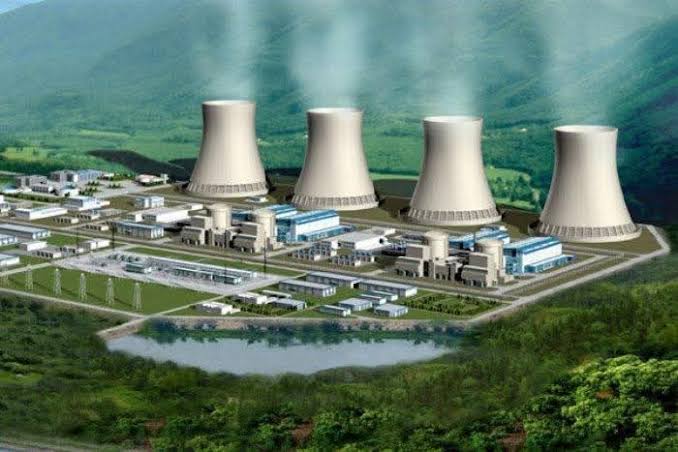
Ethiopia is beginning to put numbers, institutions and possible locations behind its nuclear ambitions, with Prime Minister Abiy Ahmed outlining a programme involving two 1,200 MW reactors and three prospective sites. The announcement makes the programme more concrete, but financing, reactor selection, site qualification, grid readiness, regulation and workforce development will determine whether Ethiopia can convert the 2.4 GW ambition into an executable nuclear project.
By NuclearAfrica Editorial Desk
Ethiopia has provided its clearest indication yet of the scale of its emerging nuclear power ambitions, with Prime Minister Abiy Ahmed outlining plans for two 1,200 MW reactors as part of a longer-term strategy to strengthen electricity security and support industrial development. The government has also narrowed an initial assessment of more than 30 potential locations to three candidate sites, while acknowledging that developing nuclear power will require at least a decade.
These announcements represent a meaningful shift in the programme. Ethiopia is no longer discussing nuclear power only as a future strategic possibility. It is beginning to define the approximate size of the programme, examine potential locations and strengthen the institutions required to move towards implementation.
The project remains at an early stage, however. A final reactor technology has not been publicly confirmed, detailed site qualification is still required, a financing package has not been announced and the regulatory process has not yet reached the stage associated with an actual construction application. The proposed 2.4 GW should therefore be understood as a national programme objective rather than committed nuclear capacity.
Ethiopia Is Beginning to Put Numbers Behind Its Nuclear Ambition
A programme consisting of two 1,200 MW reactors would provide approximately 2.4 GW of nuclear generating capacity, making Ethiopia one of the most ambitious prospective newcomer nuclear states in Africa. The scale is important because it indicates that the government is considering nuclear power as a major component of the future electricity system rather than as a small demonstration project.
The proposed capacity also creates substantial implementation requirements. Large reactors require strong transmission systems, significant financing, sophisticated regulatory capability and an owner-operator able to manage complex construction and long-term operation. Ethiopia will therefore need to build not only the plants themselves but also the institutional and electricity-system infrastructure required to support them.
The decision to discuss a specific unit size also begins narrowing the technology conversation. Although the final reactor design has not been announced, a 1,200 MW-class unit points towards a conventional large-reactor programme rather than a small modular reactor approach. That will have implications for grid planning, financing and construction sequencing.
Nuclear Could Diversify an Electricity System Dominated by Hydropower
Ethiopia has built much of its electricity-development strategy around hydropower, with major projects significantly increasing national generation capacity and strengthening the possibility of regional electricity exports. Nuclear energy would introduce a different type of large-scale generation with operating characteristics that could complement the country’s hydro resources.
Hydropower depends on water availability and is therefore exposed to hydrological variability. Nuclear plants, by contrast, can operate continuously for long periods and provide firm generation largely independent of seasonal rainfall. A diversified system combining hydro, renewables and nuclear could therefore offer greater resilience than dependence on any single energy source.
The challenge is scale. Adding two 1,200 MW units would represent a major transformation of Ethiopia’s power system. The transmission network, system reserves and electricity market would need to expand alongside the nuclear programme. Nuclear development should therefore be integrated into national power-system planning rather than treated as an isolated infrastructure project.
Industrialisation Is Central to Ethiopia’s Nuclear Rationale
The Ethiopian government is linking nuclear power directly to broader economic transformation. Manufacturing, industrial parks, digital infrastructure, mineral processing and urban development all require large quantities of dependable electricity. If Ethiopia expects rapid industrial growth over the coming decades, additional firm generation could become increasingly important.
This creates a potentially strong development argument for nuclear power, but the demand assumptions must be credible. Large nuclear plants require very high upfront investment and operate most economically when they can sell substantial quantities of electricity consistently over many years. Building generation far ahead of actual demand could create financial pressure on the electricity system.
Energy planning and industrial policy must therefore reinforce each other. A successful nuclear programme would support industrial growth, while expanding industrial demand would strengthen the economic case for the nuclear investment. This relationship should be demonstrated through realistic demand forecasts rather than assumed automatically.
Three Candidate Sites Mark an Important Technical Step
Ethiopia’s reduction of more than 30 potential locations to three candidate sites indicates that preliminary site assessment is becoming more systematic. Site selection is among the most consequential early decisions in a nuclear programme because the physical characteristics of the location affect plant safety, construction cost, environmental impact and emergency planning.
The three candidate locations will still require extensive investigation. Geology, seismicity, hydrology, meteorology, cooling-water availability, population distribution, external hazards, transportation routes and environmental conditions must all be assessed in sufficient detail to support a future licence application.
The eventual technology selection should also be informed by these site characteristics. A reactor design cannot be evaluated entirely independently of the location where it will operate. Cooling requirements, seismic design and infrastructure needs all vary according to site conditions. Ethiopia should therefore continue developing site and technology decisions in parallel rather than treating one as an afterthought to the other.
Institutional Development Must Keep Pace With Technology Selection
Ethiopia has also begun strengthening the institutional framework required for nuclear power. The Ethiopian Nuclear Energy Commission has been established to coordinate programme development, while regulatory institutions are working on the legal and technical requirements that would govern nuclear installations.
This institutional separation is critical. The organisation promoting and developing nuclear power should not also be the body responsible for independently deciding whether the plant is safe enough to build and operate. A credible nuclear programme requires an independent regulator with the legal authority, technical competence and financial resources necessary to review a complex reactor application.
Regulatory readiness will therefore be one of the most important indicators of whether Ethiopia’s programme is genuinely progressing. Laws can be enacted relatively quickly, but building an experienced regulatory workforce capable of evaluating reactor physics, thermal hydraulics, severe accidents, structural integrity, cybersecurity, emergency preparedness and quality assurance takes considerably longer.
Russia Is Emerging as the Most Visible International Partner
Russia currently occupies the most prominent position among Ethiopia’s external nuclear partners. Cooperation has developed through intergovernmental agreements and roadmaps covering nuclear power, scientific applications, workforce development and regulatory capacity. Recent high-level discussions have increasingly connected that cooperation with the possibility of an actual commercial nuclear power plant.
However, Ethiopia has not yet publicly confirmed the final reactor technology. The 1,200 MW unit size may provide an indication of the scale under consideration, but selecting a vendor will require a wider assessment of licensing maturity, construction experience, fuel arrangements, financing, local participation and long-term technical support.
Ethiopia should therefore ensure that technology selection remains a national decision based on transparent project requirements. International partnerships can accelerate development, but they should strengthen domestic decision-making rather than replace it.
Financing May Be the Programme’s Most Difficult Test
The proposed 2.4 GW programme would require very large amounts of capital. The total financial requirement would extend well beyond the nuclear island and conventional power plant. Site development, transmission infrastructure, regulatory capacity, security systems, workforce training, emergency preparedness, waste management and eventual decommissioning all carry substantial costs.
The financing package will therefore need to be evaluated as carefully as the reactor technology. Interest rates, repayment periods, sovereign guarantees, grace periods and risk allocation can significantly influence the final cost of electricity. Nuclear projects are particularly sensitive to financing because large amounts of capital are committed years before the plant begins earning revenue.
Foreign-exchange exposure may also become a major issue. Much of the construction cost would likely be denominated in foreign currencies, while domestic electricity revenue would largely be collected in Ethiopian birr. Significant currency depreciation during construction or operation could therefore increase the real burden of project debt.
A successful financing structure must account for these risks from the beginning rather than attempting to resolve them after major contractual commitments have already been made.
Grid Readiness Could Influence the Final Reactor Strategy
Two 1,200 MW reactors would introduce very large individual generating units into Ethiopia’s electricity system. This has important implications for transmission and system stability because the grid must remain secure even if one reactor unexpectedly disconnects.
The country will need sufficient reserve capacity, strong transmission interconnections and sophisticated system-control capability. Regional electricity links could provide additional flexibility, but they cannot substitute for detailed national grid studies.
The results of those studies may influence construction sequencing. Ethiopia may decide to commission the reactors several years apart, allowing electricity demand and grid capability to grow between units. The appropriate schedule should be based on system analysis rather than a political desire to build both reactors as quickly as possible.
Workforce Development Will Require a Generation of Investment
Ethiopia’s nuclear ambitions will ultimately depend on people as much as technology. A commercial nuclear power programme requires engineers, reactor operators, maintenance specialists, regulators, safeguards professionals, radiation-protection experts, security specialists, emergency planners, lawyers, procurement experts and project managers.
The owner-operator and regulator must maintain separate pools of expertise. Universities and technical institutions must also prepare younger professionals capable of replacing the first generation over the plant’s operating life.
This means workforce development cannot be reduced to a series of international training courses. Ethiopia will need structured academic programmes, practical placements, secondments, mentoring and long-term cooperation with experienced nuclear organisations. The objective must be to create sustainable Ethiopian competence rather than permanent dependence on foreign contractors.
A Ten-Year Development Horizon Is Ambitious but More Credible
Prime Minister Abiy’s acknowledgement that nuclear development will require at least ten years is a useful recognition of the complexity involved. Newcomer countries must build institutional infrastructure at the same time as they develop the physical project, and some of the required competencies cannot be created quickly.
The programme may ultimately take longer than a decade, particularly if site studies, financing or regulatory development require additional time. That should not automatically be regarded as failure. The quality of project preparation is more important than adherence to an arbitrary political deadline.
A reactor that enters service later but is supported by a strong regulator, capable owner-operator, sustainable financing and a prepared electricity grid would be preferable to a project accelerated before those foundations are mature.
Ethiopia Could Become One of Africa’s Most Important Nuclear Newcomers
If successfully implemented, Ethiopia’s proposed 2.4 GW programme would place the country among the most consequential nuclear newcomers on the continent. Egypt remains far ahead because its four reactors are already under construction, while South Africa remains Africa’s established commercial nuclear operator. Ethiopia nevertheless has characteristics that could support a substantial future programme, including a large population, ambitious industrialisation plans and growing regional electricity connections.
The country’s nuclear development could also have wider regional implications. A successful programme could influence neighbouring countries considering nuclear technology, contribute to regional electricity trade and expand the pool of nuclear expertise available in East Africa.
These opportunities make the quality of Ethiopia’s programme especially important. A well-managed project could strengthen confidence in nuclear power across the region, while a poorly structured project could reinforce concerns about cost, financing and institutional capacity.
Conclusion
Ethiopia is beginning to move from general nuclear ambition towards a more recognisable national programme. Two 1,200 MW reactors, three candidate sites and a stated development horizon of at least ten years provide a clearer picture of what the government intends to achieve.
The programme remains far from construction, however. Ethiopia still needs to complete detailed site qualification, select a technology, establish a viable financing structure, strengthen regulation, prepare the electricity grid and develop the workforce required to operate a commercial nuclear programme safely for decades.
If these foundations are developed successfully, Ethiopia could emerge as one of Africa’s most important nuclear newcomer states. If they are not, the 2.4 GW objective will remain a policy aspiration.
The determining factor will not be the ambition of the announcement. It will be the depth, discipline and quality of the preparation that follows.
Related

From Summit Diplomacy to Nuclear Delivery: What Moscow’s 2026 Russia–Africa Summit Means for Africa’s Nuclear Future
By Nuclear Africa• November 1, 2026
Namibia’s Etango Uranium Project Takes Final Investment Decision and Moves Into Full-Scale Construction
By Nuclear Africa• November 1, 2026
South Africa Could Become a Major HALEU Supplier Under New Pelindaba Nuclear Fuel Venture
By Nuclear Africa• November 1, 2026
Russia’s African Nuclear Strategy Is Expanding — But the Continent Must Distinguish Projects From Promises
By Nuclear Africa• November 1, 2026