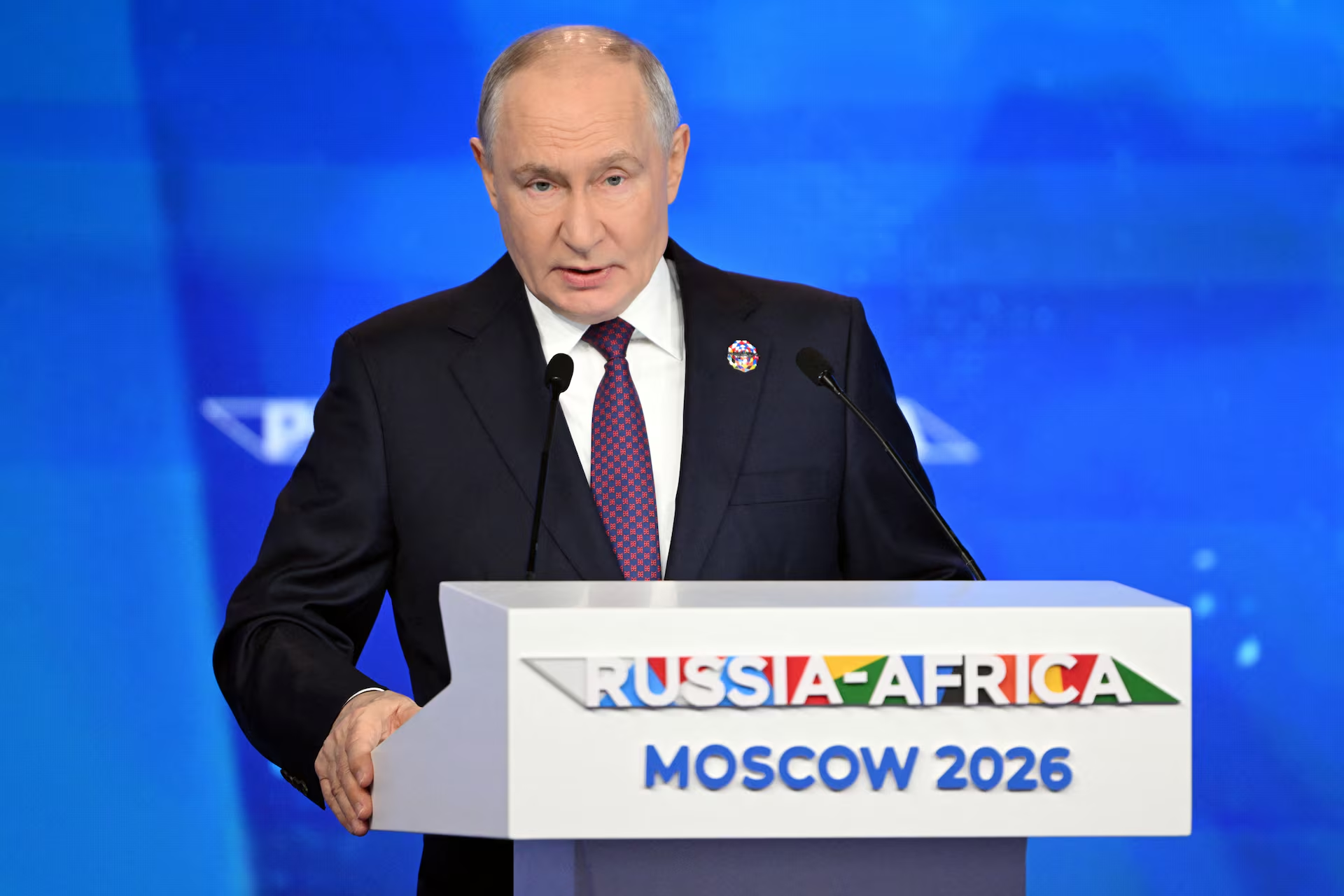
The third Russia–Africa Summit has placed nuclear power closer to the centre of Africa’s development diplomacy. Moscow’s latest commitments could accelerate infrastructure development and widen technology choices, but an expanding list of partnerships is not yet evidence of an expanding fleet of operating reactors. For African governments, the decisive test is whether diplomatic momentum becomes affordable, independently regulated and nationally beneficial nuclear capacity.
A consequential summit, but an unfinished nuclear transformation
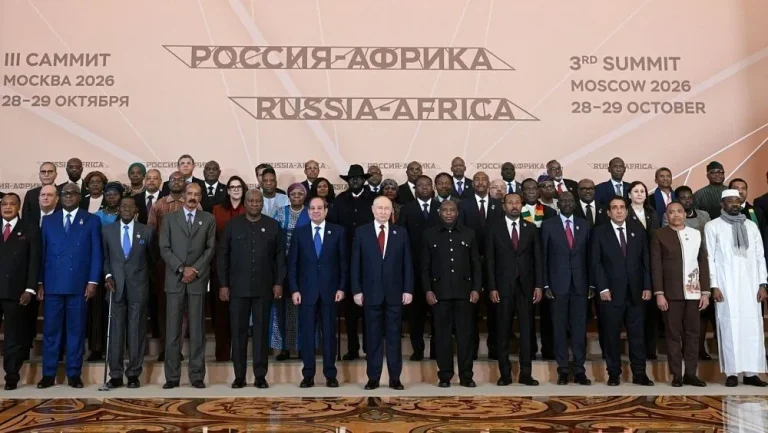
The Third Russia–Africa Summit, held in Moscow on 28 and 29 October 2026, marked another stage in Russia’s effort to establish long-term political, commercial and technological relationships across Africa. Its significance for nuclear energy extends beyond the presence of Rosatom, Russia’s state nuclear corporation, as a prominent participant. Nuclear power was explicitly placed within a broader agenda of energy security, industrialisation, infrastructure, skills development and technological sovereignty. In the days surrounding the summit, governments and Rosatom described new agreements, project roadmaps, prospective plant developments and renewed discussions over floating nuclear power units. Ghana’s announcement of cooperation toward a proposed 2,000-megawatt (MW) nuclear plant made this particularly significant for West Africa.
Yet the central question is not how many African countries have expressed an interest in Russian nuclear technology. It is how many of those expressions will progress through national energy planning, independent technical appraisal, bankable financing, site selection, licensing, construction and eventual operation. The distinction matters because nuclear projects are exceptionally long-term public commitments. They involve decades of electricity purchases, imported and domestic industrial capacity, financial exposure, nuclear fuel services, radioactive waste obligations, safeguards, physical protection and eventual decommissioning. A summit communiqué cannot settle these questions, and neither can a memorandum of understanding.
The Moscow meeting therefore deserves neither uncritical celebration nor reflexive geopolitical dismissal. Russia has substantial experience in nuclear engineering, fuel services and overseas project delivery, and its proposals may offer genuine benefits to African states seeking dependable low-carbon electricity. At the same time, the financial structure, technology fit, institutional requirements, sanctions exposure and geopolitical consequences of each project demand disciplined scrutiny. Africa’s nuclear future will be shaped as much by the quality of African decision-making as by the nationality of its external partners.
What the summit actually established
The summit adopted a declaration and a Russia–Africa Partnership Forum Action Plan for 2027–2029, alongside a separate declaration on civilian artificial intelligence. The African Union Commission and Russia also signed an action plan covering 19 areas of cooperation for 2027–2029. The AU described its instrument as a cooperation framework that does not itself create binding obligations under international law. The summit declaration supports a diversified energy mix and refers to nuclear power alongside hydrocarbons, hydropower, hydrogen and renewable sources. It also recognises the African-led Mission 300 initiative, which aims to expand electricity access for 300 million people by 2030.
These outcomes establish political direction and mechanisms for continuing dialogue. They are not, individually or collectively, financing approvals, engineering-procurement-construction contracts or regulatory authorisations for any particular nuclear installation. Mission 300 provides an important development frame, but nuclear projects announced in 2026 should not be presumed to deliver new grid-connected power before 2030. A first-of-a-kind programme normally requires years of preparation and construction. The nearer-term benefits may instead arise through institutional training, grid studies, nuclear medicine, radioactive-material applications and improved project preparation.
The commercial message from Rosatom was nonetheless substantial. During a summit session on nuclear technologies, its chief executive, Alexey Likhachev, said that the corporation was active in 29 of Africa’s 54 countries. Rosatom reported that 370 students from 26 African countries were studying in Russia through its arrangements, with further admissions planned. These are company-reported figures rather than independently audited indicators of African nuclear readiness. They nevertheless underline how Russia is approaching the continent through a combination of power generation, education, industrial partnerships, fuel-cycle relationships and non-power nuclear applications.
Egypt shows what implementation looks like
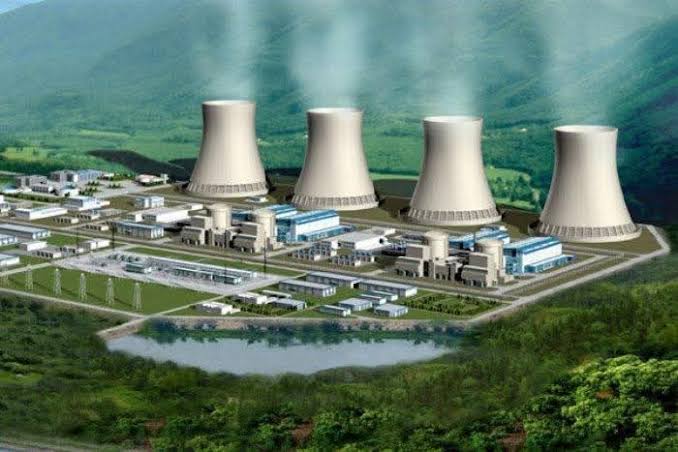
Egypt’s El Dabaa nuclear power plant remains the clearest benchmark for assessing the scale of Russia’s nuclear engagement in Africa. Four VVER-1200 reactors, together representing approximately 4,800 MW of planned capacity, are under construction. Rosatom reported that the reactor pressure vessel for Unit 2 was installed in July 2026 and that all four units were progressing through construction. It said delivery of the first batch of nuclear fuel for Unit 1 was planned for 2027. Rosatom has also discussed a possible future expansion from four units to six, but that expansion is a proposal, not an existing construction project.
El Dabaa matters because it has passed milestones that distinguish a real project from a diplomatic prospect: host-government commitment, project contracting, financing arrangements, site-specific regulatory processes, construction commencement and installation of major equipment. It also illustrates the scope of long-term supplier relationships, from design and construction to training, fuel and associated services. Egypt’s experience does not prove that the same model will be financially or technically suitable for Ghana, Uganda or Ethiopia. Egypt’s national grid, economic base, demand outlook, fiscal capacity, regulatory institutions and project configuration are different. The lesson is the importance of a complete project-development architecture, not the automatic transferability of a particular contract.
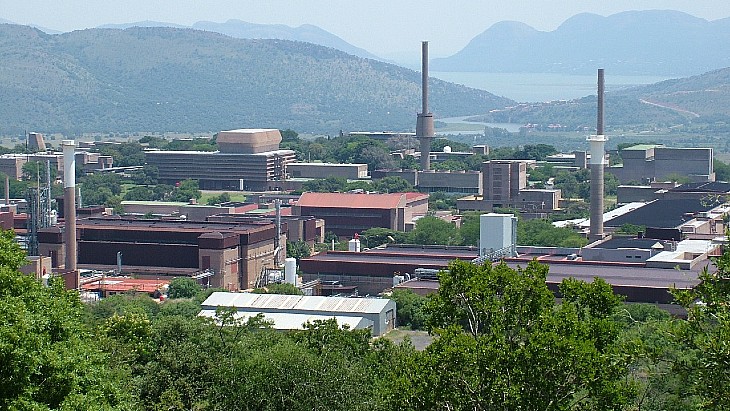
South Africa remains the continent’s only country with an operating commercial nuclear power station, Koeberg. Egypt is building additional commercial nuclear generating capacity, but the rest of the continent’s emerging programmes remain at various preparatory stages. This basic distinction is essential when interpreting claims that an African nuclear construction boom has already arrived.
Ghana’s 2,000 MW announcement changes the policy conversation
For Ghana, the most consequential post-summit development came from the bilateral engagement between President John Dramani Mahama and President Vladimir Putin. On 31 October, Foreign Affairs Minister Samuel Okudzeto Ablakwa said Russia had agreed to work with Ghana toward establishing a 2,000 MW nuclear power plant, linking the proposal to energy security and industrialisation. A day earlier, Rosatom had identified Ghana among countries with which it was discussing a large nuclear power plant. This is a politically important signal of prospective cooperation, not public evidence that Ghana has selected a final reactor design, agreed on a project price, secured financing, signed a construction contract or obtained a construction licence.
Ghana has already completed Phase 1 of the International Atomic Energy Agency’s Milestones Approach and is advancing through Phase 2, which focuses on the institutional and technical preparation needed before nuclear plant contracting and construction. Its Nuclear Power Ghana organisation and the independent Nuclear Regulatory Authority have distinct responsibilities. The IAEA’s published assessment of African newcomer programmes notes that Ghana had been considering discussions with potential vendors following a request-for-information exercise, including both large-reactor and small modular reactor options. Moscow’s offer must therefore be evaluated within Ghana’s existing programme rather than treated as its starting point.
A prospective 2,000 MW programme raises questions beyond headline capacity. The national owner or operator must establish whether the proposed output is intended to be delivered through one or several reactor units, what grid contingency and reserve capacity would be needed, how transmission would be reinforced, and how production would align with Ghana’s electricity demand and industrialisation plans. The Ghana Grid Company and relevant energy institutions need credible load-growth, dispatch, system-stability and regional export analyses. The economics must account for the timing of power demand as well as the tariff and fiscal consequences of contracted generation. A technologically attractive plant can still create public costs if its size, financing structure or delivery schedule is mismatched to the power system.
Ethiopia, Uganda, Rwanda and Togo: four distinct stages of development
Ethiopia’s engagement is more advanced than a first expression of interest, but still short of plant construction. Rosatom and Ethiopian counterparts signed a project roadmap in March 2026 following earlier cooperation, while Prime Minister Abiy Ahmed publicly affirmed the nuclear ambition at the Moscow summit. Rosatom said it expected to begin site survey activities. That combination of political endorsement and an identified preparatory work programme is a meaningful step, but it remains distinct from a licensed and financed construction project. Ethiopia’s growing electricity system, major hydropower resources and industrial ambitions make nuclear diversification a plausible subject of analysis, although project size, financing and operational integration still need to be demonstrated.
Uganda signed a cooperation roadmap with Rosatom during the summit. According to Rosatom, the immediate work involves reviewing national nuclear infrastructure and identifying steps toward discussions of an engineering-survey contract for the prospective Nakasongola site. This should be described accurately as an infrastructure and project-preparation pathway, not an agreement to construct a reactor. Uganda’s policy ambition can benefit from technical cooperation, but its readiness will depend on regulatory resources, grid capability, institutional coordination and a viable commercial structure.
Rwanda and Rosatom signed a memorandum on 28 October to assess Rwanda’s nuclear infrastructure needs in accordance with the IAEA’s approach. It builds on earlier cooperation concerning a prospective small nuclear power plant and a centre for nuclear science and technology. The new memorandum can help clarify institutional gaps and next steps, but the existence of a roadmap or an infrastructure-assessment MoU does not establish a committed small modular reactor project. Rwanda’s case is particularly useful for examining whether a smaller-scale technology can match a relatively compact national power system without creating disproportionate regulatory or financial burdens.
Togo’s Ministry of Energy also signed a memorandum with Rosatom on 28 October. Both the ministry and Rosatom characterised it as an exploratory framework for assessing projects in nuclear power and non-power applications, training and nuclear infrastructure. Floating nuclear generation was mentioned as a possibility for consideration. The Togolese ministry explicitly clarified that the agreement was not an announcement that a floating plant would be built in the country. That careful qualification should become standard practice in all reporting on African nuclear diplomacy.
Floating nuclear power: promise, novelty and responsibility
One of Moscow’s most distinctive commercial messages involved floating nuclear power units. Rosatom’s leadership said nine African countries had shown significant interest and identified substantive discussions involving Egypt, Tanzania, Togo and Namibia. Such systems could, in principle, provide power for coastal industrial zones, ports, mineral processing, water desalination or electricity systems where large land-based plants are unsuitable. They may alter the infrastructure required on land and offer different ownership or service models. However, a potential application is not a demonstrated local business case, and discussions are not deployment decisions.
Floating nuclear units introduce a layered governance problem because nuclear safety, nuclear security, maritime jurisdiction, emergency response, physical protection and liability responsibilities intersect. African host states would need to determine who licenses the facility, which authorities regulate the vessel and its operations, how security is maintained in ports and coastal waters, how the plant connects to a national grid, and who is responsible for fuel, spent fuel, waste, emergency preparedness and eventual removal. The IAEA has been examining these special safety, security and safeguards issues. A floating plant is not a way to avoid nuclear regulation; it requires regulatory arrangements suited to a new operating environment.
Small modular reactors and floating plants should also not be grouped together as if all designs were equally mature, proven or financeable. Technology comparisons must examine actual reference plants, licensing history, unit output, fuel characteristics, operating responsibilities, outage planning, total delivered electricity cost and realistic schedules. For some countries, starting with nuclear medicine, isotope production, food irradiation, research infrastructure or related skills may offer earlier returns while institutions develop. A nuclear development strategy should reflect the problem a country is trying to solve, not simply the catalogue of products available from a supplier.
Financing is the decisive filter
The most difficult barrier is unlikely to be finding a willing technology vendor. It is constructing a financing and risk-allocation model that African governments and electricity consumers can sustain. Nuclear plants involve large expenditures before the first unit of electricity is generated, lengthy construction periods and a concentration of risks around cost escalation, interest during construction, exchange rates, schedule delays, grid connection and long-term plant performance. Vendor-backed loans can address part of the upfront capital requirement, but they do not eliminate sovereign liabilities or determine whether the electricity will be affordable.
No country should infer from the fact that Russia is financing or constructing a project elsewhere that an equivalent financing package has been committed to its own programme. The terms of any proposed arrangement matter: debt currency and tenor, interest and grace periods, state guarantees, conditions for disbursement, cost-overrun liability, local procurement, fuel supply and price adjustment, performance guarantees, dispute resolution and the allocation of decommissioning costs. A long-term power purchase agreement or sovereign guarantee can transfer financial pressure from the project company to the national budget. Fiscal appraisal must therefore be integrated with power-system analysis rather than performed after a political commitment has hardened into a commercial expectation.
The financing landscape is changing. In June 2025, the World Bank Group and the IAEA formalised cooperation on nuclear energy for development, signalling renewed attention to the sector within development finance. This partnership does not mean that a particular African nuclear project has received a World Bank loan or guarantee. It does create space for stronger project preparation, institutional advice and discussion of risk mitigation. African countries should explore diverse financing and partnership options, including multilateral technical support, export-credit arrangements and credible private participation where appropriate, rather than assuming one bilateral sovereign lender must carry the entire programme.
Technological sovereignty must be defined in contract terms
Russia’s presentation of nuclear cooperation as a route to African technological sovereignty speaks to a legitimate aspiration. African nuclear programmes should generate more than imported megawatts. They should create capable national owners and operators, respected regulators, skilled workforces, local engineering and maintenance industries, scientific research opportunities and supply chains that remain productive over decades. The reported presence of hundreds of African trainees in Russian universities is therefore relevant, provided that education leads to recognised competencies and sustainable domestic employment.
Nevertheless, technological sovereignty is not achieved merely by purchasing technology from a state that describes itself as a strategic partner. Nuclear power relationships often create long-lasting dependencies on specialised components, intellectual property, proprietary operating systems, fuel-cycle services and original equipment suppliers. Contracts should protect access to operating information and training, define achievable local-content milestones, preserve independent safety oversight and allow the host state to manage future upgrades, outages and supplier disruptions. African professional associations, universities, manufacturers and research institutions should participate in developing the capability plan well before construction begins.
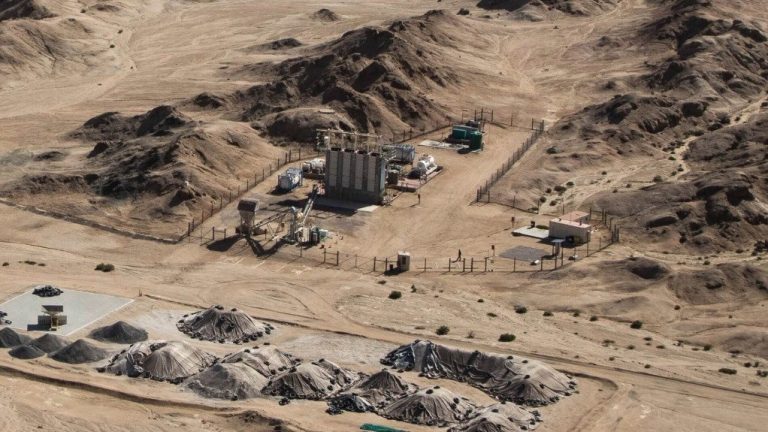
The nuclear fuel cycle adds another dimension. Some countries have uranium resources, but domestic mining does not automatically create enrichment, fuel fabrication or economically competitive nuclear fuel supply. It is important to distinguish the value of African uranium production from the far more complex technological and regulatory requirements of converting that resource into reactor fuel. African states should assess the economic value and environmental consequences of mineral partnerships separately from their decisions on reactor procurement, even where the same foreign group participates in both industries.
Safety, security, safeguards and public trust cannot be outsourced
Every newcomer country retains primary responsibility for ensuring that nuclear activities under its jurisdiction are governed safely and securely and that its international safeguards commitments are fulfilled. The IAEA Milestones Approach covers 19 infrastructure issues, including nuclear safety, safeguards, regulation, financing, grid preparedness, radioactive waste, emergency arrangements, security and human resources. Its purpose is to help countries build national capability in an orderly sequence. The presence of an experienced supplier does not substitute for that national responsibility.
Independent regulators must have legal authority, sustained budgets and technical personnel capable of reviewing vendor documentation, licensing facilities and taking decisions without commercial or political pressure. Nuclear security needs to be designed into the project through protection against external threats, insider risks, cyber threats and sabotage, with clear interfaces among operators, regulators, security services and emergency authorities. Safeguards-by-design and reliable nuclear material accounting arrangements should be addressed from early project preparation, not added after engineering decisions have become difficult to change. Public confidence requires transparent, continuing engagement with host communities and a willingness to disclose material project risks.
These requirements become even more important where a nuclear proposal emerges alongside broader defence, diplomatic or strategic-security relations. Civil nuclear cooperation should remain governed by its own peaceful-use commitments, independent regulatory procedures, procurement rules and public-interest tests. The political value of a bilateral relationship must not be allowed to determine a nuclear safety assessment.
Geopolitics presents both opportunity and exposure
Russia’s intensified engagement expands the menu of potential partners available to African nuclear newcomers. That can improve bargaining power if governments maintain credible comparative procurement and refuse to equate political alignment with technical suitability. It can also intensify competition among major nuclear suppliers from Russia, China, France, South Korea, the United States and other markets. The outcome need not be an exclusive geopolitical choice. African states can engage multiple partners, maintain international safeguards commitments and assess bids against publicly defined national requirements.
The geopolitical environment nevertheless affects the practical delivery of nuclear investments. Sanctions and financial restrictions associated with Russia’s war against Ukraine can create transaction, banking, insurance, supply-chain and contractual risks, depending on the entities, goods and services involved. These restrictions are complex and contain civil nuclear exceptions or authorisations in particular circumstances; it would be inaccurate to claim that all Rosatom-related nuclear cooperation is universally prohibited. The prudent response is legal and financial due diligence covering the precise counterparties, payment channels, lender exposure, critical suppliers, contingency arrangements and potential changes over a multidecade project. African governments must also evaluate the resilience of alternative international service and training relationships.
From an African perspective, the key principle is strategic autonomy. A state may properly pursue cooperation with Russia when that cooperation satisfies its development and regulatory priorities. It should equally retain the freedom to work with other suppliers and international institutions, to uphold United Nations and IAEA obligations, and to reject unfavourable project terms. Genuine sovereignty is the power to choose competently and to remain accountable for the choice.
What should Africa measure by 2029?
The 2027–2029 partnership framework offers a useful period for testing whether the Moscow summit produces measurable change. A meaningful assessment should not simply count memoranda signed or scholarship places announced. It should track completed feasibility and grid studies, evidence-based technology selection, strengthened regulatory and operator capacity, independently verified site investigations, published financing principles, viable contractual arrangements, nuclear security and safeguards preparation, local skills absorption, and measurable benefits in non-power applications. For projects with sufficient maturity, actual licensing and construction milestones will carry far more weight than further declarations.
Continental cooperation can improve outcomes. The African Union, African Commission on Nuclear Energy, African Regional Co-operative Agreement for Research, Development and Training related to Nuclear Science and Technology, regional power pools, African research institutions and national regulators have roles in strengthening technical exchange and institutional capacity. Regional electricity trade may enlarge the commercial usefulness of some nuclear projects, although cross-border power sales cannot be assumed without transmission, market and payment arrangements. Africa will gain more from nuclear cooperation if countries share expertise and lessons while retaining accountable national decision-making.
Conclusion: the African interest must determine the nuclear deal
The Third Russia–Africa Summit has made visible an important evolution. Russian nuclear engagement is no longer confined to broad declarations of interest. It now spans an operating construction project in Egypt, emerging large-reactor discussions, infrastructure roadmaps, small-reactor ambitions, floating-plant exploration, education and non-power applications. That broader agenda could contribute meaningfully to African energy systems and industrial capability. But the distance between summit diplomacy and reliable nuclear electricity remains considerable, and it varies sharply from country to country.
The most useful question after Moscow is therefore not whether Africa should accept or reject Russian nuclear technology. It is what African governments will demand from any nuclear partnership, Russian or otherwise. If the answer is independently verified project economics, effective regulatory control, credible financing, technology transfer, local industrial value, transparent public obligations and sustainable safety and security institutions, then Africa may turn external interest into enduring development gains. If the answer is measured only in diplomatic announcements, the continent risks accumulating commitments without capacity. The measure of success will be delivered public value, not the number of agreements signed in Moscow.
About the Author
Raymond Agalga is a Research Scientist at the Ghana Atomic Energy Commission (GAEC), Radiation Protection Institute, and a Nuclear Policy Analyst at the Institute of Economic Affairs (IEA), Ghana, Nuclear Energy Centre of Excellence. He is a Certified Nuclear Security Professional whose work spans nuclear safety, security, safeguards, non-proliferation, radiation protection and nuclear governance. His research and policy interests focus on strengthening Africa’s nuclear institutions, advancing international nuclear cooperation and promoting the safe, secure and sustainable development of nuclear energy across the continent.
The views expressed in this article are those of the author.
Related

Ethiopia Begins Defining a 2.4 GW Nuclear Power Programme as Three Potential Sites Emerge
By Nuclear Africa• November 1, 2026
Namibia’s Etango Uranium Project Takes Final Investment Decision and Moves Into Full-Scale Construction
By Nuclear Africa• November 1, 2026
South Africa Could Become a Major HALEU Supplier Under New Pelindaba Nuclear Fuel Venture
By Nuclear Africa• November 1, 2026
Russia’s African Nuclear Strategy Is Expanding — But the Continent Must Distinguish Projects From Promises
By Nuclear Africa• November 1, 2026