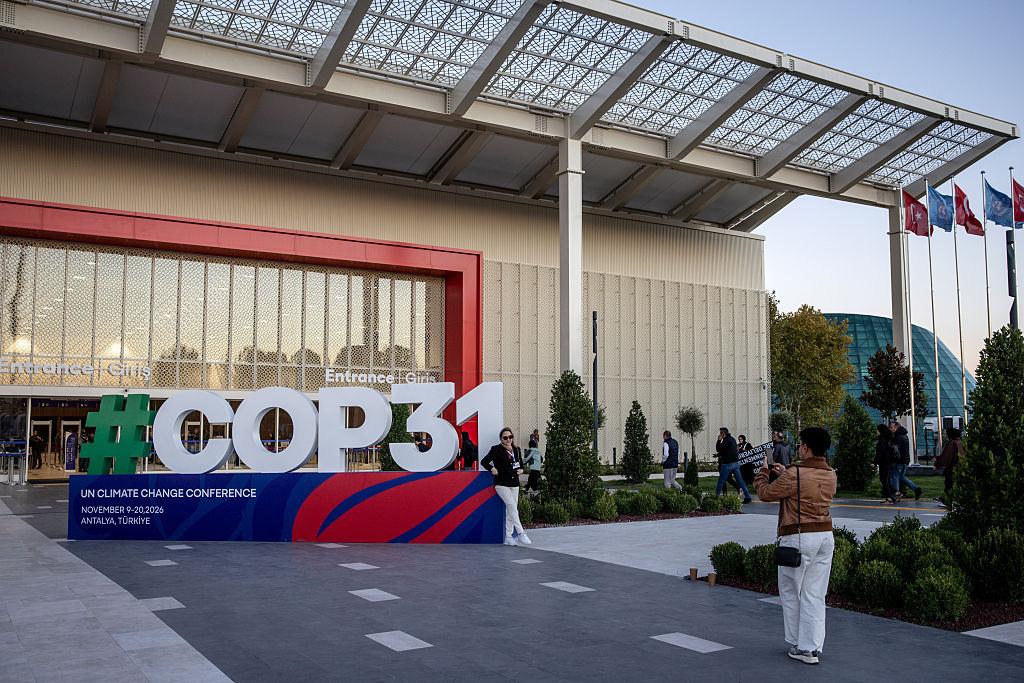
The 31st United Nations Climate Change Conference (COP31) opened in Antalya, Türkiye, on 9 November and is scheduled to conclude on 20 November 2026. For the nuclear industry, this is not simply another opportunity to make the case that nuclear power produces low-carbon electricity. That argument has gained substantial international recognition. The more consequential question is whether governments, lenders and technology providers can convert political declarations into decisions that bring new generating capacity online safely, affordably and on time.
For African countries, the stakes are distinctive. The continent must confront climate vulnerability while expanding electricity access, industrial capacity and economic opportunity. Its energy transition cannot be defined only by replacing high-carbon generation. It must also create enough reliable electricity for the economies Africa aspires to build. Nuclear power may form part of that response in some countries, alongside the much faster deployment of solar, wind, hydropower, storage, stronger grids and energy-efficiency measures. But the potential of nuclear energy does not remove the formidable demands of infrastructure, regulation, financing and public trust.
The headline prediction is therefore straightforward: COP31 is likely to strengthen the political and financial conversation around nuclear power, but a breakthrough for Africa will depend less on the wording of a declaration than on whether practical project-preparation and investment mechanisms emerge. These are expectations, not confirmed COP31 outcomes; negotiations are still under way.
From the COP28 pledge to the COP31 delivery test
The most important reference point is the Declaration to Triple Nuclear Energy, launched by 22 governments at COP28 in Dubai in 2023. As of October 2026, the World Nuclear Association lists 39 endorsing countries. They include eight African states: Ghana, Kenya, Morocco, Nigeria, Rwanda, Senegal, South Africa and Togo. The declaration is a voluntary coalition pledge to work toward tripling global nuclear capacity from a 2020 baseline by 2050. It is not itself a binding decision of the UN climate negotiations, and joining it does not mean a country has committed to build a specific reactor.
The difference matters. The growing number of endorsers demonstrates that nuclear energy has become more politically acceptable as part of decarbonisation planning. It does not, however, prove that additional reactors have been financed, licensed or built. The World Nuclear Association’s 2026 outlook reports that nuclear stations produced a record 2,701 terawatt-hours in 2025, approximately 9% of global electricity. The same assessment concludes that stated national ambitions could, collectively, deliver a tripling of capacity by 2050 but that actual construction rates remain far below what would be required.
COP31 should therefore be judged against delivery milestones: credible national project pipelines, predictable licensing and approval processes, financing arrangements, equipment and fuel supply chains, and sufficient skilled personnel. The 12 November event reviewing the tripling declaration offers an early opportunity to move the discussion from membership numbers to implementation.
Why Türkiye is a consequential host
The host country’s own energy trajectory gives the discussion added significance. Türkiye is preparing to introduce nuclear generation through its Akkuyu project and has set longer-term ambitions for additional large reactors and small modular reactors (SMRs). Its experience illustrates both the attraction and complexity of nuclear new-build programmes: such projects demand sustained state commitment, international partnerships, financing structures, competent institutions and public oversight over many years.
The COP31 Presidency is also advancing an ambition to raise electricity to 35% of final energy demand by 2035. Electrification on that scale would require clean power sources that can operate together across very different conditions. A COP31 event at the International Atomic Energy Agency (IAEA) pavilion on 11 November is examining the contribution of nuclear power to this 35-by-35 vision, including the investment frameworks needed to support it. The conference programme has included discussions on advanced reactors, renewables, international partnerships and SMRs; further sessions will address financing and a just transition.
This gives nuclear power a clear presence in the COP31 Action Agenda. That visibility must not be confused with an agreement by all UNFCCC parties to endorse nuclear energy. Formal negotiated decisions, Presidency initiatives, national pledges and industry side events are different instruments, with different implications.
Five outcomes worth watching
1. A stronger but probably still voluntary international nuclear coalition. More governments may endorse the tripling goal or announce national plans, while existing signatories could identify milestones to 2030. The most useful development would be transparent annual reporting on capacity added, projects reaching financial close, construction progress and the barriers delaying new entrants. An expanded declaration without measurable follow-through would be politically visible but operationally limited.
2. Progress on financing, not an automatic climate-finance entitlement. The World Bank Group’s June 2025 partnership with the IAEA was an important institutional shift. It opened a pathway for knowledge-building and cooperation on the safe, secure and responsible use of nuclear energy in developing countries. It did not create a universal financing guarantee for nuclear plants, nor did it establish that every climate fund or multilateral development bank would finance nuclear construction. At COP31, a meaningful outcome would be clearer pathways for pre-feasibility work, government guarantees, risk allocation, power-purchase arrangements, export-credit support and long-tenor financing. Without these, an attractive nuclear proposal may never become a bankable project.
3. Greater attention to SMRs, accompanied by harder questions. SMRs are prominent because they may eventually offer modular construction, lower upfront capital requirements per unit, and applications beyond electricity including industrial heat and potentially remote or specialised loads. But smaller reactor size does not automatically mean cheaper electricity. Commercial experience remains limited for many designs, and economics depend on repeat orders, manufacturing scale, licensing maturity, reliable fuel arrangements and effective waste management. For most African newcomers, SMRs are a strategic option to evaluate carefully, not a shortcut around the IAEA’s infrastructure requirements.
4. A more integrated debate about firm power, renewables and industrial development. The International Energy Agency forecasts that renewables and nuclear together will become an increasingly important part of the global power mix toward 2030. At COP31, the constructive question is not whether countries should choose nuclear or renewables. It is how to build least-cost, low-emission systems that meet hourly demand while strengthening grids, flexibility and resilience. Nuclear power could serve energy-intensive industry and system reliability in suitable markets, while distributed renewables and grid extension can often deliver access more quickly. Each country’s answer requires transparent comparison of technologies, timelines, costs and system needs.
5. More scrutiny of the social and institutional conditions for nuclear deployment. Nuclear power’s climate advantages do not make safety, security, safeguards, spent-fuel management, decommissioning liabilities or water-use concerns disappear. Climate resilience itself becomes a design issue where sites face extreme heat, flooding, drought or coastal hazards. Any COP31 effort to strengthen nuclear’s position in sustainable finance should be accompanied by credible standards for independent regulation, emergency preparedness, transparency, public participation and non-proliferation. These conditions are essential to investment confidence as well as public legitimacy.
What this means for Africa
Africa should not measure the nuclear success of COP31 merely by whether nuclear power appears in a final statement. A stronger test is whether interested African states gain access to the institutions and instruments needed to turn a long-term electricity strategy into a credible investment programme.
South Africa already operates nuclear power reactors; Egypt is constructing the El Dabaa nuclear power plant; and several other African states are at different stages of considering or preparing for nuclear generation. These situations cannot be treated as interchangeable. The policy and investment needs of an operating programme are different from those of a country still developing its legal framework, grid studies, site assessment, human capital and vendor-procurement arrangements.
The continent would benefit from an Africa-focused nuclear project-preparation and financing initiative that supports country-owned assessments without prejudging a nuclear decision. Such a mechanism could fund credible demand projections and system modelling, economic comparisons with alternatives, legal and regulatory development, site and environmental assessments, grid-readiness studies, workforce planning, independent advisory capacity and early financial structuring. It should also finance public communication and stakeholder engagement not simply technology promotion.
African governments could ask international financial institutions and export-credit agencies to clarify where nuclear projects fit within their mandates, what financing instruments may be available, and what due-diligence requirements prospective borrowers must meet. This is more valuable than relying on broad political language suggesting that all nuclear investments should automatically qualify for climate finance.
There is also a wider nuclear contribution that COP31 should not overlook. Nuclear and isotopic techniques support groundwater assessment, climate-smart agriculture, food safety, disease control and environmental monitoring. Many African countries can benefit from these applications immediately, regardless of whether they pursue nuclear electricity. The IAEA’s climate engagement therefore extends well beyond reactor construction.
Ghana: From international endorsement to domestic readiness
Ghana is an instructive case because it endorsed the tripling declaration and is pursuing a national nuclear power programme, yet has not reached the stage of building a commercial nuclear power station. The country’s work under the IAEA Milestones Approach has moved into Phase 2, where the focus is on preparing the institutions, studies and arrangements needed before inviting bids or negotiating a contract. Endorsement of an international pledge is therefore only one element of a much larger national undertaking.
For Ghana, COP31 could be useful in three practical ways. First, it can strengthen the case for including a rigorously assessed nuclear option in long-term energy and industrial planning, while preserving a realistic role for renewables, gas, storage and grid investments during the intervening years. Second, it can help Ghana pursue external support for grid integration, detailed feasibility work, regulation, workforce development and project-financing preparation. Third, it can provide a forum for examining which international partnerships offer credible technology, financing and institutional support without compromising national decision-making or regulatory independence.
Ghana’s Environmental Protection Authority has already directed its COP31 negotiating team to advance national and African interests in climate finance, adaptation, technology transfer and energy transition. There is an opportunity to connect that wider agenda with evidence-based nuclear planning, while recognizing that climate negotiations and nuclear procurement are separate decision processes.
For Accra, the right outcome would not be a premature commitment to a reactor model or supplier. It would be a clearer, funded route to completing the institutional and technical work necessary for an informed investment decision with affordability, energy security, safety and sovereign risk at the centre of the assessment.
How NuclearAfrica will judge the final COP31 outcome
By the conference’s scheduled conclusion on 20 November, five questions should guide the assessment:
- Recognition: Did any formal negotiated decision meaningfully address nuclear power, or was progress confined to voluntary statements and side events?
- Accountability: Did endorsers of the tripling declaration announce measurable interim milestones or credible mechanisms for tracking delivery?
- Finance: Did identifiable institutions announce specific project-preparation support, investment instruments or funding arrangements especially for developing economies?
- African participation: Were African governments able to secure practical access to expertise, financing discussions and technology partnerships suited to their stages of readiness?
- Governance: Did initiatives give adequate attention to safety, security, safeguards, environmental performance, waste liabilities, public acceptance and climate resilience?
There are reasons for cautious optimism. Nuclear energy has moved closer to the mainstream of international climate and development discussions; interest from governments, industries and financial institutions is wider than it was several years ago. Yet the decisive variables remain stubbornly practical. Projects need electricity buyers, workable tariffs, credible institutions, patient capital, competent regulators, trained people and social legitimacy. None of these is created by a conference declaration alone.
COP31 may not deliver a global nuclear breakthrough in its final negotiated text. It can still be a meaningful turning point if it begins to close the gap between nuclear ambition and nuclear investment readiness. For Africa, that would be the result worth celebrating: not merely a seat in a growing coalition, but a realistic pathway to affordable, reliable, low-carbon power and the capacity to decide responsibly where nuclear energy does, and does not, fit.
Related

Zambia Completes IAEA Phase 1 INIR Mission: What the Review Means for Its Nuclear Power Ambitions
By Nuclear Africa• November 11, 2026
Ghana–Russia 2,000 MW Nuclear Cooperation: What Has Actually Been Agreed and What Comes Next
By Nuclear Africa• November 2, 2026
Who Will Finance Ghana’s Proposed 2,000 MW Nuclear Power Programme with Russia?
By Nuclear Africa• November 2, 2026
Floating Nuclear Power Is Moving Onto Africa’s Energy Agenda — But the Model Needs Much Deeper Scrutiny
By Nuclear Africa• November 2, 2026