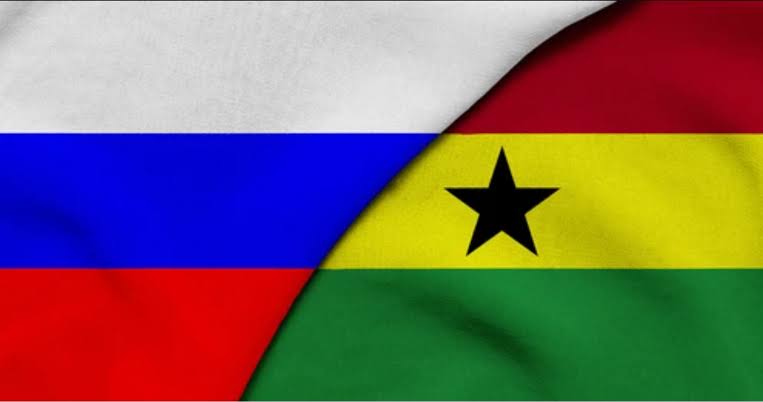
Ghana and Russia have renewed their long-standing nuclear relationship around an ambition to develop up to 2,000 MW of nuclear power. The political commitment is significant, but it should not yet be confused with a final reactor construction agreement. The real importance of the development lies in whether the two countries can now convert an existing framework for peaceful nuclear cooperation into a defined project with technology, financing, site, ownership and licensing arrangements.
By NuclearAfrica Editorial Desk
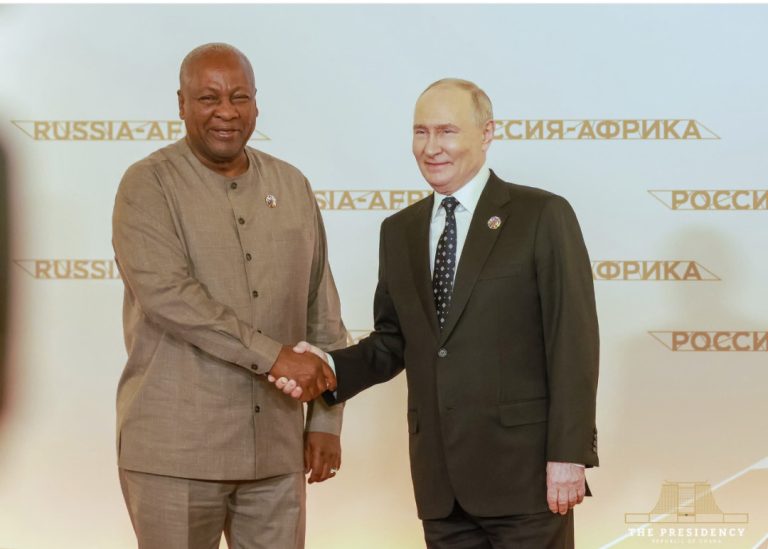
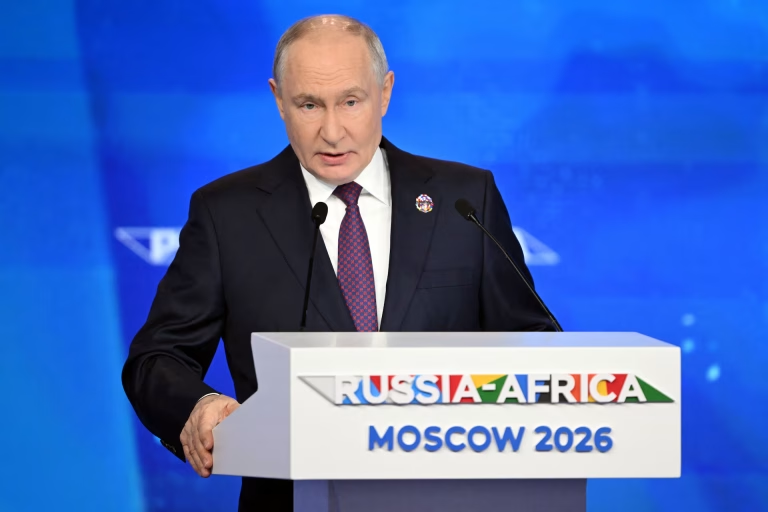
Ghana and Russia have opened a potentially important new chapter in their decades-long nuclear relationship after the two governments agreed to work towards the development of approximately 2,000 MW of nuclear power in Ghana. The commitment emerged from high-level discussions during President John Dramani Mahama’s participation in the Third Russia–Africa Summit in Moscow and has immediately attracted attention because of both the size of the proposed capacity and Russia’s growing role in African nuclear development.
President Mahama first announced on 29 October that Ghana had initiated discussions with Russia’s state nuclear corporation, Rosatom, on establishing the country’s first nuclear power station. Two days later, Foreign Minister Samuel Okudzeto Ablakwa said that bilateral discussions between President Mahama and Russian President Vladimir Putin had produced a commitment under which Russia would work with Ghana towards establishing a 2,000 MW nuclear power plant to strengthen energy security and support industrialisation. Reuters separately reported the Ghanaian government’s announcement on 31 October.
The development is potentially one of the most consequential recent announcements concerning Ghana’s nuclear power programme. Yet its precise status needs to be understood carefully. The public information released so far does not show that Ghana and Russia have signed a final engineering, procurement and construction contract for a 2,000 MW plant. There is no publicly identified reactor design, financing package, construction schedule or Rosatom-specific licence application. The October announcement should therefore be understood as a high-level political and project-development commitment that could lead to a more detailed nuclear project, rather than evidence that a 2,000 MW plant has already reached final investment or construction stage.
The 2026 Commitment Builds on a Much Older Ghana–Russia Nuclear Framework
The latest development is not the beginning of nuclear cooperation between Ghana and Russia. The two countries already have a long institutional history in the peaceful uses of nuclear energy. Ghana and Rosatom signed an early memorandum on nuclear cooperation in 2012, followed in 2015 by a broader agreement establishing a framework for cooperation in peaceful uses of atomic energy. Rosatom’s own reporting described the 2015 arrangement as a framework intergovernmental agreement identifying possible areas of cooperation between the two countries.
That framework was deliberately broad. It contemplated cooperation in areas that could include nuclear power plant design and construction, research reactors, the nuclear fuel cycle, radioisotope production, applications of nuclear technology in medicine and agriculture, and education and training. The agreement therefore created a legal and institutional basis through which more specific projects could eventually be developed, but it did not itself constitute a final contract to build a commercial nuclear power station.
The two countries attempted to deepen that cooperation in subsequent years. In 2016, Ghana and Russia discussed accelerating work towards a project-development agreement that could eventually support construction of a nuclear power plant and a centre for nuclear science and technology. Rosatom also continued engaging Ghanaian authorities on the nuclear programme in later years, including discussions with the Energy Ministry in 2023 concerning a Russian proposal for a nuclear power plant.
The 2026 commitment should therefore be viewed as a renewed attempt to move an existing bilateral relationship towards a more concrete commercial project. The major difference is that Ghana’s nuclear programme is now considerably more developed institutionally than it was when the earlier Russian agreements were signed.
What Has Actually Been Agreed in 2026?
The strongest publicly supported description of the latest arrangement is that Russia has agreed to work with Ghana towards a 2,000 MW nuclear power project. That language matters. It indicates political commitment and opens the way for detailed negotiations, but it does not establish all the technical and commercial parameters that would normally be expected in a final nuclear construction agreement.
President Mahama’s initial announcement referred to discussions with Rosatom on establishing Ghana’s first nuclear power station. Foreign Minister Ablakwa subsequently attached a capacity figure of 2,000 MW to the cooperation following the Mahama–Putin bilateral talks. Rosatom’s chief executive, Alexei Likhachev, also stated during the summit that Ghana was among four African countries with which Russia was discussing large nuclear power plant projects, alongside Uganda, Ethiopia and Egypt.
Taken together, the statements indicate that a large-reactor project is under discussion. They do not yet reveal whether the 2,000 MW would be delivered through two reactors, a larger multi-unit programme or some other configuration. Rosatom’s VVER technology is widely deployed internationally, but no specific VVER model has been publicly selected for Ghana and it would be premature to attach a reactor design to the project before the parties themselves do so.
The immediate importance of the cooperation is therefore that Ghana and Russia now have an explicit political mandate to move from general nuclear cooperation towards negotiations around an identifiable commercial power project.
The 2,000 MW Figure Could Represent a Major Expansion of Ghana’s Existing Nuclear Ambition
The scale of the proposal is particularly noteworthy because Ghana’s established programme has generally been built around an initial objective of roughly 1,000 MW of nuclear capacity. The World Nuclear Association’s October 2026 assessment records Ghana’s government target at about 1,000 MWe and notes an objective of commercial nuclear generation around 2034. It also identifies outstanding financing and project-development constraints that make that schedule increasingly difficult.
A Russian-supported 2,000 MW programme would therefore potentially double the capacity around which much of Ghana’s recent nuclear planning has been discussed. That does not necessarily mean Ghana intends to commission 2,000 MW simultaneously. The figure could describe a longer-term two-unit programme, with the first reactor entering service before the second, or a broader fleet objective extending beyond the initial commercial project.
This distinction will need to be clarified because the difference between a first reactor and a national nuclear fleet is substantial. Financing requirements, grid integration, construction sequencing, workforce requirements and fuel arrangements all change when the programme moves from approximately 1,000 MW to 2,000 MW.
The government will therefore need to explain whether the Russian proposal replaces the existing 1,000 MW objective, expands it, or represents a second stage of Ghana’s nuclear strategy.
Russia Is Entering a Programme With Existing Chinese and American Technology Tracks
The proposed Russian cooperation also needs to be understood within Ghana’s current vendor landscape. Ghana has already developed significant relationships with both Chinese and American nuclear technology providers.
Nuclear Power Ghana signed a framework agreement with China National Nuclear Corporation in 2024 concerning the HPR1000, or Hualong One, reactor. By 2025, CNNC had been identified for an approximately 1,200 MWe large-reactor project using a proposed build-operate-transfer structure, although no final construction contract had been concluded.
Ghana simultaneously developed an SMR pathway with US-based Regnum Technology Group using NuScale technology. In August 2024, Nuclear Power Ghana and Regnum signed a commercial agreement concerning a NuScale VOYGR-12 SMR project. That cooperation sits within a wider US–Ghana nuclear relationship that has included training, regulatory cooperation, an SMR simulator and supply-chain development under the FIRST programme.
The Russian development therefore creates an unusual situation in which Ghana may have three major international nuclear relationships operating simultaneously across large-reactor and SMR technologies. This could strengthen Ghana’s bargaining position, but it also makes project governance more important. The country will need a transparent process for determining which project is intended to proceed first, how different vendor relationships relate to one another and whether all of them are still part of a coherent national strategy.
The Russian Relationship Has Historical Depth — But the 1960s Story Needs Precision
President Mahama has linked the renewed Russian relationship to Ghana’s early nuclear ambitions under President Kwame Nkrumah. That historical connection is genuine. Ghana embarked on the Kwabenya Nuclear Reactor Project in the early 1960s with Soviet assistance, and contemporary IAEA records show that construction of a 2 MW swimming-pool research reactor was under way and expected to become operational after 1965.
The project, however, was never completed. Ghanaian planning records indicate that work on the Soviet-assisted 2 MW research reactor was suspended after the 1966 overthrow of the Nkrumah government. Ghana’s first operating research reactor came much later: the Chinese-built Ghana Research Reactor-1, which achieved first criticality in 1994 and was commissioned in the mid-1990s.
The historical significance of the current cooperation is therefore not that Russia previously supplied Ghana with an operating 2 MW reactor, but that Soviet assistance formed the foundation of Ghana’s earliest attempt to establish a nuclear research programme. The 2026 discussions effectively reconnect a relationship that dates to that first nuclear ambition.
That continuity carries symbolic importance, particularly because President Nkrumah originally associated nuclear science and energy with industrialisation, scientific independence and national development. Yet the contemporary project will have to be judged by modern regulatory, financial and commercial standards rather than by historical symbolism alone.
Financing Is Now the Most Important Missing Element
The most significant unanswered question surrounding the 2,000 MW proposal is financing. A commercial nuclear programme of this scale would require several billion dollars of investment and a financing structure capable of supporting many years of construction before electricity revenue begins.
No financing model has yet been publicly attached to the Ghana–Russia commitment. It is not known whether Russia would propose sovereign lending, export financing, vendor equity, a build-own-operate model, a build-operate-transfer arrangement, a long-term power purchase structure or some combination of these mechanisms.
This question is particularly important for Ghana because financing has already become one of the principal constraints affecting the existing nuclear programme. The World Nuclear Association’s 2026 assessment notes that funding shortfalls have delayed detailed site characterisation and environmental impact studies and that neither of Ghana’s principal technology tracks has yet reached final financing, contracting or licensing.
A Russian proposal will therefore become genuinely transformative only if it helps solve that problem. Another technology offer without a viable capital structure would add choice but would not necessarily move Ghana closer to construction.
Any financing arrangement should also be evaluated over the full project lifecycle. The analysis must consider the cost of capital, repayment period, sovereign guarantees, foreign-exchange exposure, construction-risk allocation, fuel supply, maintenance, spent-fuel responsibilities and eventual decommissioning. The financing package cannot be separated from the reactor decision because it will strongly influence the final cost of electricity.
Ghana’s Preferred Site and the Russian Project Must Eventually Converge
Ghana has already undertaken substantial work on siting. Nsuban in the Western Region has been identified as the preferred site for the first nuclear power plant, while Obotan in the Central Region remains an alternative. The IAEA has also reviewed Ghana’s site-selection process through its Site and External Events Design framework.
The Russian announcement has not yet clarified whether the 2,000 MW proposal is intended for Nsuban. This will eventually need to be resolved because technology selection and site characterisation cannot proceed independently indefinitely.
Different reactor designs create different requirements for cooling, foundation engineering, seismic qualification, emergency planning, transport and grid connection. If Rosatom is to become a serious contender for the first plant, its technology will need to be evaluated against the site information Ghana has already generated.
The programme should avoid restarting site work simply because a new vendor has entered the discussion unless there is a technically defensible reason to do so. Years of infrastructure preparation should become an asset to the new negotiations rather than being displaced by them.
A 2,000 MW Programme Would Have Major Grid Implications
Ghana must also examine what 2,000 MW of nuclear capacity would mean for the national electricity grid. Nuclear reactors provide highly valuable firm generation, but the electricity system must be capable of absorbing their output and responding safely if a large generating unit unexpectedly trips offline.
The question is therefore not simply whether Ghana needs another 2,000 MW of electricity over the long term. It is how that capacity would be introduced and how the national grid would evolve alongside it.
If the Russian concept involves two large reactors, commissioning them sequentially could allow transmission capacity, demand and reserve generation to expand between units. If both units were located at the same site, shared infrastructure could reduce some costs, but the concentration of generation would also require careful system planning.
These issues should be examined before the project configuration is finalised. Reactor size should fit the electricity system rather than forcing the electricity system to absorb a technology selected primarily for diplomatic or commercial reasons.
The Existing Cooperation Framework Does Not Replace Ghana’s Regulatory Process
The long-standing Ghana–Russia cooperation agreement and the new political commitment do not remove the requirement for independent licensing in Ghana. The Nuclear Regulatory Authority remains responsible for determining whether any proposed nuclear facility meets national requirements for safety, security and radiation protection.
Ghana is currently in Phase II of the IAEA Milestones Approach, which focuses on the preparatory work required before construction of a first nuclear power plant. The NRA is developing the regulatory infrastructure and expertise required to review a future power-reactor licence application.
Any Rosatom proposal must therefore enter the same national regulatory process as any Chinese, American or other technology. Government may select a strategic partner, but only the regulator can determine whether the detailed plant design, site and safety case satisfy Ghanaian law.
This separation is particularly important for a project arising from high-level presidential diplomacy. Political support can accelerate institutional coordination and financing negotiations, but it should never pre-empt the regulator’s technical judgment.
Localisation Should Become Part of the Agreement From the Beginning
Ghana also has an opportunity to use the negotiations to define what domestic industrial participation should accompany a 2,000 MW project. Nuclear construction creates demand for civil works, electrical equipment, mechanical fabrication, transport, quality assurance, engineering and a wide range of professional services.
The extent to which Ghanaian companies can participate will depend on the technology, procurement model and nuclear-quality standards required by the vendor. Localisation therefore needs to begin with an honest assessment of domestic capability rather than politically attractive percentage targets that cannot be supported by qualified suppliers.
A serious cooperation package should include supplier-development programmes, workforce training, certification and technology transfer long before major procurement begins. It should also establish how Ghanaian professionals will gradually assume greater responsibility for plant operation, maintenance and technical decision-making.
The objective should be to avoid creating a nuclear plant that remains technologically isolated from the broader Ghanaian economy.
Fuel, Spent Fuel and Long-Term Dependence Also Need to Be Negotiated
A nuclear agreement lasts much longer than its construction period. Ghana will need fuel deliveries, spare parts, technical support, software, maintenance expertise and eventually decommissioning capability over several decades.
This makes the long-term structure of the Ghana–Russia relationship as important as the initial construction offer. If Rosatom supplies the reactor, Ghana will need clarity on fuel-supply arrangements, possibilities for alternative suppliers, spent-fuel management and the responsibilities of both parties throughout the operating life of the plant.
Vendor dependence is not unique to Russian technology. Every newcomer country entering nuclear power creates long-term supply relationships. The policy objective should therefore be to understand those dependencies and manage them deliberately.
Ghana should ensure that the eventual agreement protects national energy security not only in the first years of operation but over the full sixty-year or longer lifespan of the facility.
What the Agreement Could Mean for Ghana’s 2034 Nuclear Target
The Russian announcement also raises questions about Ghana’s existing target of approximately 1,000 MW by 2034. The latest World Nuclear Association assessment concludes that the target remains credible as a policy objective but is increasingly difficult to achieve because final financing and project decisions have not been completed.
The new 2,000 MW cooperation should therefore not automatically be interpreted as meaning Ghana will now have twice as much nuclear capacity operating by 2034. The more realistic interpretation may be that Ghana is expanding its long-term nuclear ambition while still needing to determine which project can reach construction first.
If Russia can provide a mature technology, competitive financing and a project structure capable of moving quickly through Ghana’s regulatory and procurement systems, the cooperation could affect the timetable. But a new diplomatic commitment also requires fresh negotiations and technical work, which could add time if it effectively reopens choices previously considered settled.
The government should eventually clarify whether the Russian track changes the programme’s target date or simply expands the capacity envisaged beyond the first reactor.
The Next Agreement Will Matter More Than the Announcement
The real significance of the Moscow commitment will become clearer through the documents and decisions that follow it. A project-development agreement identifying the proposed technology, site, ownership model and responsibilities of the parties would represent a major step forward. A financing term sheet would allow Ghana to begin assessing affordability. A detailed implementation schedule would indicate how the project relates to Phase II completion and eventual transition into actual plant implementation.
The next stage should also clarify the relationship between Rosatom and Nuclear Power Ghana, whether the existing Ghana–Russia intergovernmental framework requires amendment, and how the Russian proposal will be evaluated against Ghana’s existing vendor relationships.
Transparency will matter. Nuclear power projects create financial commitments extending across generations, and the fundamental commercial architecture should be subjected to appropriate governmental, regulatory and public scrutiny.
A 2,000 MW nuclear project would be among the largest infrastructure investments ever undertaken in Ghana. The quality of the agreements governing it must reflect that scale.
Conclusion
The new Ghana–Russia nuclear commitment represents a major political development, but its true importance will depend on what follows. The two countries already possess a framework for peaceful nuclear cooperation dating back to the previous decade, and Russia has maintained a longstanding interest in participating in Ghana’s nuclear programme. What has changed in 2026 is the emergence of an explicit high-level objective: working towards approximately 2,000 MW of nuclear power.
That objective could significantly reshape Ghana’s programme. It could expand the country’s nuclear ambition, introduce new financing options and increase competition among Russian, Chinese and American technology pathways. It could also revive one of Ghana’s oldest international nuclear relationships at a much more advanced stage of national preparedness.
But the difference between cooperation and construction remains substantial. Ghana and Russia must still define the reactor technology, financing model, site, project ownership, grid integration, localisation, fuel arrangements, licensing pathway and timetable. Until those elements are agreed, the 2,000 MW project remains a serious strategic commitment rather than a bankable construction programme.
The most important outcome of the Moscow discussions is therefore not that Ghana has suddenly acquired a 2,000 MW nuclear plant. It is that Ghana and Russia now have a renewed political mandate to try to turn a nuclear relationship stretching back to the 1960s into an executable commercial power project.
Whether they can do so—and on terms that are financially sustainable, technically sound and consistent with Ghana’s existing nuclear strategy—will determine whether the latest agreement becomes a historic turning point or another chapter in a long history of nuclear cooperation without construction.
Related

Who Will Finance Ghana’s Proposed 2,000 MW Nuclear Power Programme with Russia?
By Nuclear Africa• November 2, 2026
Floating Nuclear Power Is Moving Onto Africa’s Energy Agenda — But the Model Needs Much Deeper Scrutiny
By Nuclear Africa• November 2, 2026
Finland Grants World’s First Operating Licence for Spent Nuclear Fuel Repository: What Onkalo Means for Africa
By Nuclear Africa• November 2, 2026
From Summit Diplomacy to Nuclear Delivery: What Moscow’s 2026 Russia–Africa Summit Means for Africa’s Nuclear Future
By Nuclear Africa• November 1, 2026