Zambia’s first formal nuclear infrastructure review is an important step towards an evidence-based national decision. But the mission’s most consequential message concerns the institutions, regulation, financing and grid planning that must precede any reactor project.
NuclearAfrica NewsDesk Analysis
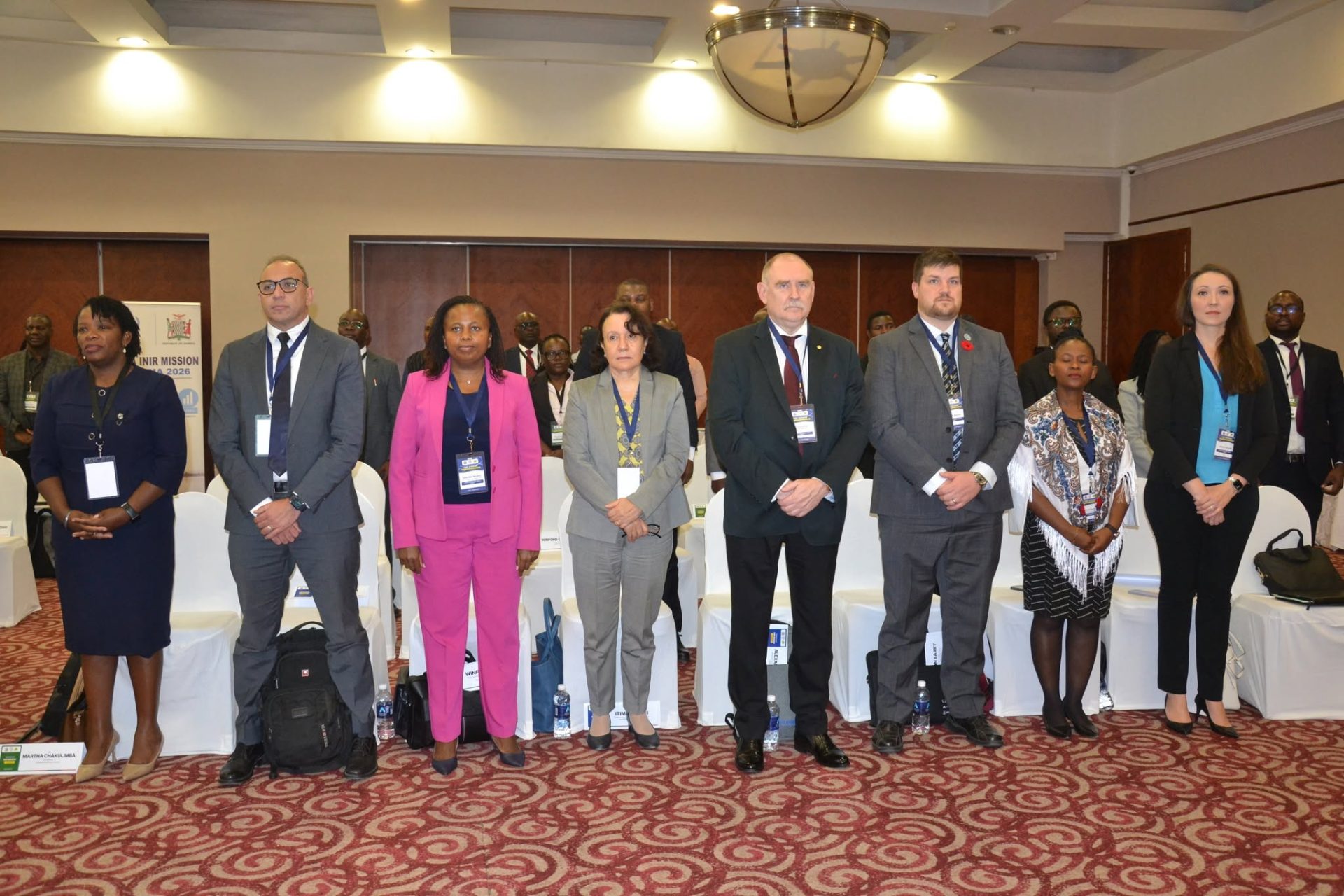
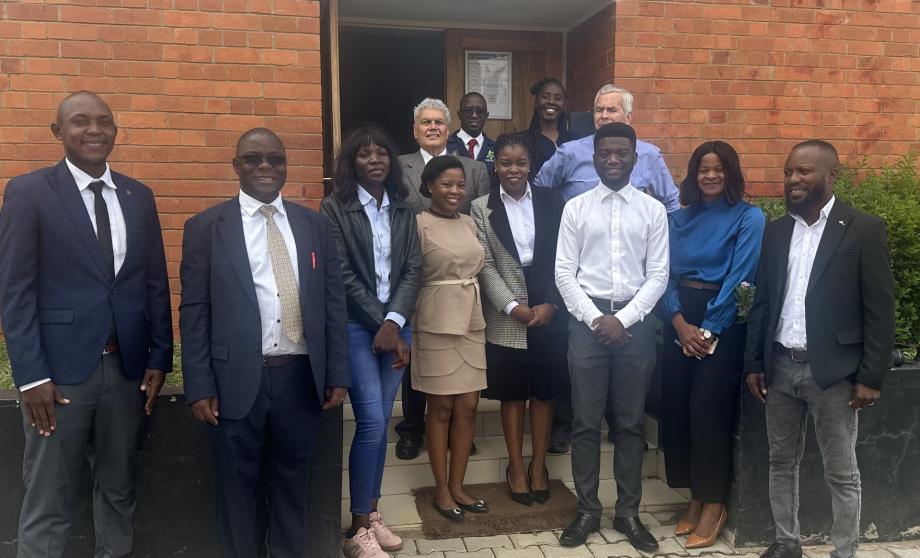
Zambia has concluded a Phase 1 Integrated Nuclear Infrastructure Review (INIR) mission undertaken with the International Atomic Energy Agency (IAEA), bringing a new level of external scrutiny to its preparations for a possible national nuclear power programme. The development is significant for a country seeking to diversify a heavily hydropower-dependent electricity system and create a more reliable foundation for mining, manufacturing and long-term economic growth.
The official message emerging from the mission’s closure is both encouraging and cautionary. Zambia has demonstrated its willingness to subject its nuclear ambitions to international peer review. At the same time, the government and IAEA mission leadership have emphasised that substantial work remains on coordination, legal frameworks, regulatory arrangements and national capacity.
From preparation to formal review
This week’s development follows a period of national self-assessment. In July 2026, Zambia’s Ministry of Technology and Science, Radiation Protection Authority (RPA), Nuclear Energy Programme Implementing Organization (NEPIO) and IAEA participated in a preparatory exercise in Livingstone. Held from 28 to 30 July, the activity combined support for the national Self-Evaluation Report with preparations for the main INIR mission.
At that stage, the IAEA representative explained that Zambia remained in Phase 1 of the Milestones Approach the phase in which a country studies whether nuclear power is a suitable national option and develops the basis for a knowledgeable commitment. NuclearAfrica reported on the Livingstone pre-INIR exercise in August and highlighted the need for credible evidence, independent regulation and realistic planning.
The completed November review represents the next procedural step. It should not, however, be described as approval for construction, certification that Zambia is ready to procure a reactor, or confirmation that the country has passed into Phase 2. A Phase 1 INIR mission is a peer review of preparedness and outstanding work; the sovereign decision to proceed, national authorisations and any eventual procurement and construction decisions are separate processes.
What an INIR mission actually assesses
The IAEA Milestones Approach provides a structured path for countries considering their first nuclear power plant. It consists of three phases and three corresponding milestones, progressing from consideration and a knowledgeable commitment, through preparatory activities before contracting, to construction and readiness to commission and operate.
An INIR mission evaluates national infrastructure against 19 interconnected issues. These include the national position on nuclear power, nuclear safety, management, funding and financing, legal and regulatory frameworks, safeguards, radiation protection, grid capacity, human resources, stakeholder involvement, site and supporting facilities, environmental protection, emergency planning, nuclear security, the nuclear fuel cycle, radioactive-waste management, industrial involvement and procurement.
The process is not a plant inspection or an IAEA licence. It is designed to identify gaps and good practices, allow national institutions to learn from international experts, and help the host country develop a prioritised action plan. That makes it especially valuable before politically attractive announcements harden into expensive technology choices or contractual commitments.
For Zambia, the immediate policy question is therefore not ‘Which reactor should be built?’ but ‘What evidence and institutional capabilities must be in place before Zambia can responsibly decide whether, how and when nuclear power should enter its energy mix?’
Why Zambia is considering nuclear power now
Zambia’s interest has to be understood against the background of its electricity-security challenge. Hydroelectricity accounts for more than three quarters of installed generation capacity, according to the World Bank. The severe 2024 drought exposed the vulnerability of this dependence, cutting available power and contributing to widespread electricity shortages. Mining, households, public services and smaller businesses have all experienced the consequences of an unreliable supply system.
The energy challenge extends beyond recovery from one drought. Zambia wants to increase mineral production, expand manufacturing, attract investment and support employment. Copper mining and associated processing require considerable electricity, while industrial diversification needs power that is both dependable and internationally competitive in cost.
Nuclear generation could potentially complement hydropower, solar, wind, storage, regional electricity trade and other sources over the long term. It offers firm, low-carbon output, but it is capital intensive and takes many years to prepare, finance, licence and build. It cannot resolve immediate load-shedding and must not displace faster, cost-effective investments in generation, transmission, system flexibility and electricity access.
In early November, Zambia’s Ministry of Energy reiterated a broader national ambition to expand generation capacity towards 10,000 megawatts over several years while exploring nuclear power as a longer-term option. That electricity-sector target should not be presented as a nuclear construction target. No verified public announcement arising from this INIR mission establishes a reactor design, plant location, nuclear capacity, construction date or financial close.
The World Bank has separately recommended faster deployment of solar and wind, improved tariffs and utility finances, and stronger regional integration to reduce Zambia’s exposure to hydrological risk. Any future nuclear investment must be assessed within that wider least-cost power-system strategy rather than treated as a stand-alone symbol of development.
The first major test: clear institutional responsibility
The coordination concerns raised at the INIR closing ceremony go to the centre of nuclear governance. Nuclear programmes involve institutions with fundamentally different roles. Government establishes policy; a programme-implementing body coordinates national preparation; an eventual owner-operator is responsible for developing and operating the facility; and an independent regulator makes safety and authorisation decisions.
If responsibilities overlap or remain ambiguous, decisions can stall, technical evidence can be duplicated or overlooked, and accountability becomes difficult to trace. A national nuclear programme also requires effective cooperation with the agencies responsible for electricity planning, environment, emergency management, security, customs, education, finance, land and local communities.
Zambia therefore needs a clear governance map specifying decision rights, interministerial reporting arrangements, institutional budgets and escalation procedures. The NEPIO must have an effective mandate and the ability to coordinate the country’s responses to INIR recommendations. But coordination must never be confused with regulatory control: a programme promoter should not be empowered to override an independent safety regulator.
The second test: law, regulation, safety and safeguards
The reported emphasis on legal and regulatory systems is equally significant. A functioning radiation protection regime is necessary, but the introduction of a nuclear power programme typically requires much broader arrangements for nuclear installation authorisation, independent technical review, inspections, enforcement, emergency preparedness, security, safeguards, liability, radioactive-waste management and eventual decommissioning.
The Radiation Protection Authority’s role and resources will need to be examined within that wider framework. The questions are not merely whether a regulator exists, but whether it has a sufficiently independent legal position, access to specialised technical expertise, sustained funding and the authority to make and enforce decisions without improper interference.
Nuclear safety, nuclear security and international safeguards have distinct functions. Safety protects workers, the public and the environment from harmful radiation risks; security addresses malicious acts involving nuclear and radioactive material or facilities; safeguards provide international assurance that nuclear material is not diverted from peaceful uses. All three must be built into the programme from the beginning.
Transparent public communication is part of this institutional architecture. Communities should be able to ask who regulates the project, how sites are evaluated, who bears long-term waste liabilities, what emergency arrangements would apply and how project costs would affect electricity bills and public finances. Trust grows from clear evidence and credible oversight, not publicity alone.
The third test: grid readiness and project bankability
Even a sound legal framework would be insufficient without a convincing commercial and technical case. Zambia will need to assess the size and flexibility of its electricity grid, reserve margins, transmission constraints, prospects for cross-border power trade, and the implications of losing a large generating unit unexpectedly. The choice between a conventional large reactor and an SMR if nuclear remains attractive must follow this assessment rather than precede it.
Financial planning is particularly important. Nuclear projects require considerable upfront capital and long-duration commitments. A serious feasibility assessment should consider debt affordability, sovereign and utility guarantees, foreign-exchange exposure, the creditworthiness of electricity buyers, construction risk, fuel and maintenance costs, decommissioning provisions and the distribution of risks between the state, project company, vendors and lenders.
The World Bank’s latest assessment of Zambia’s electricity sector identifies utility financial viability as a fundamental constraint and calls for tariff and market reforms, stronger collection and competitive procurement of additional generation. This matters for nuclear investment: a power plant cannot become financially credible simply because its output would be strategically valuable. Someone must be able to pay for the electricity under an enforceable arrangement over many decades.
Small modular reactors deserve examination, particularly because their unit size may suit some smaller grids better than very large conventional plants. However, smaller reactors do not eliminate the need for licensing, emergency arrangements, safeguards, waste management or sound economics. Zambia should require credible technology maturity, reference projects, fuel-supply arrangements and independently tested cost estimates before giving one reactor option preference.
What should happen after the mission?
The main value of the review will be determined by Zambia’s response to its findings. Five immediate priorities stand out.
First, the government should establish a single, accountable national process for receiving, validating and responding to the full INIR recommendations. An action matrix should identify each issue, the evidence required, the responsible institution, the budget, the timeline and the means of verification.
Second, Zambia should commission a gap assessment of nuclear legislation and the regulator’s capabilities, distinguishing reforms that are urgent for a knowledgeable national decision from those needed later for project licensing and construction.
Third, the ministries responsible for energy, science and finance should jointly update long-term electricity demand and least-cost system modelling. Nuclear scenarios should be tested transparently against renewables, storage, regional interconnections and other firm-capacity options, incorporating the expected demand from mining and industrial policy.
Fourth, the government should develop an integrated human-resource strategy covering the regulator, NEPIO, prospective owner-operator, universities, technical institutions, emergency responders and specialised support organisations. Sending a limited number of trainees abroad is useful, but it is not a substitute for a sustained national workforce and institutional-retention plan.
Fifth, Zambia should commit to systematic stakeholder engagement and the publication of appropriate non-sensitive progress information. Future nuclear decisions will carry obligations extending across generations; democratic accountability should begin before a reactor supplier is selected.
Only after these actions are prioritised and costed should Zambia consider whether a follow-up INIR review or progression to the next milestone is justified. The detailed mission report and Zambia’s official response will be more informative than a general statement that the country is advancing towards nuclear power.
A wider lesson for African nuclear newcomers
Zambia’s experience has relevance beyond its borders. Ghana, Kenya, Uganda, Rwanda and other African countries have used, or are using, the IAEA’s infrastructure-development framework at different stages. Their national circumstances differ, but a common challenge is converting policy ambition into institutions capable of sustaining an expensive, technically complex and highly regulated sector.
The lesson is not that all African countries should pursue nuclear generation. It is that those considering nuclear power should subject the option to rigorous evidence-based assessment, with the same seriousness applied to competing electricity technologies. Shared African expertise can reduce duplication in legal reform, regulatory training, grid analysis, workforce development, emergency preparedness and public communication, while preserving national responsibility for licensing and investment decisions.
There is also scope for greater regional cooperation through existing African regulatory, technical and electricity-sector networks. Cooperation can build human capacity and support independent peer learning, but it must not become a substitute for each country’s own sovereign institutions.
NuclearAfrica assessment: progress is real, but the hard work begins now
Zambia’s completion of a Phase 1 INIR mission is a meaningful governance milestone. It indicates that the country is willing to move its nuclear ambitions into a structured international review process and confront the work required before a knowledgeable national decision.
The most important immediate signal from the mission is not an endorsement of a reactor project. It is the reported call to strengthen institutional coordination, legal frameworks and regulatory systems. That message should be welcomed. In a nuclear power programme, identifying gaps early is evidence of serious preparation, not a sign of failure.
The measure of Zambia’s progress over the next year should be a credible, funded and publicly accountable plan for closing infrastructure gaps not the speed of a technology announcement. If that discipline is maintained, the INIR process can help Zambia determine whether nuclear power can contribute to electricity security and industrial development on terms the country can sustain. If the process is reduced to ceremony or political signalling, the programme risks moving faster on promises than on preparedness.
For Zambia and for Africa’s emerging nuclear programmes, the challenge is ultimately the same: build the institutions first, test the economics honestly, and let evidence determine the pace of nuclear ambition.
Related

COP31 in Türkiye: Can Nuclear Energy Move From Climate Pledges to Bankable Projects and What Will Africa Gain?
By Nuclear Africa• November 11, 2026
Ghana–Russia 2,000 MW Nuclear Cooperation: What Has Actually Been Agreed and What Comes Next
By Nuclear Africa• November 2, 2026
Who Will Finance Ghana’s Proposed 2,000 MW Nuclear Power Programme with Russia?
By Nuclear Africa• November 2, 2026
Floating Nuclear Power Is Moving Onto Africa’s Energy Agenda — But the Model Needs Much Deeper Scrutiny
By Nuclear Africa• November 2, 2026