The United States Nuclear Regulatory Commission has approved an amendment allowing Framatome’s nuclear-fuel facility in Richland, Washington, to manufacture tristructural isotropic fuel, commonly known as TRISO.
The decision increases the facility’s authorised uranium-enrichment limit from 6.5% uranium-235 to below 10% and permits TRISO-fuel fabrication. The NRC communicated its approval to Framatome on 26 June 2026, although the development was publicly reported more widely on 27 July.
The approval is an important step in strengthening the US supply chain for fuels used by several advanced-reactor designs.
It also illustrates a critical issue for African countries considering small modular reactors: selecting a reactor technology is only one part of the project. A country must also determine where its specialised fuel will come from, how it will be transported and what happens to it after use.
What is TRISO fuel?
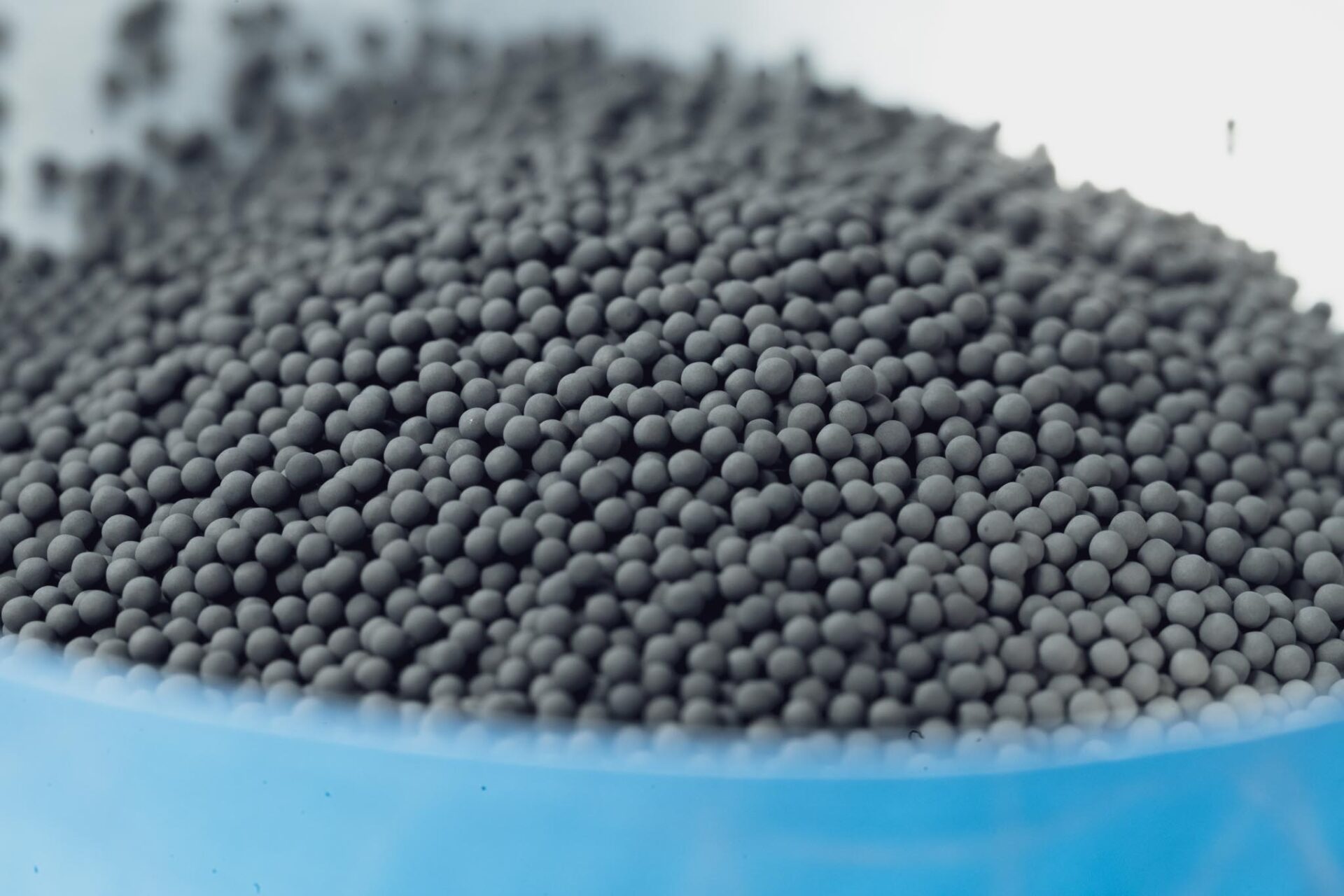
TRISO fuel consists of extremely small uranium-bearing kernels surrounded by multiple protective layers.
A typical particle contains a fuel kernel coated with layers of porous carbon, dense carbon and silicon carbide. These coatings are designed to retain radioactive fission products and maintain structural integrity at high temperatures.
Thousands of particles can be incorporated into graphite pebbles or cylindrical fuel compacts, depending on the reactor design.
TRISO fuel is often associated with:
- high-temperature gas-cooled reactors;
- pebble-bed reactors;
- microreactors;
- process-heat applications; and
- some advanced small modular reactor concepts.
Its coated structure provides strong resistance to high temperatures, but the fuel must still be manufactured to exacting quality standards.
Why fuel manufacturing is difficult
Producing TRISO fuel requires more than obtaining enriched uranium.
Manufacturers must create uniformly sized fuel kernels and apply several coatings with highly controlled thickness, density and chemical properties.
Small defects could reduce the particle’s ability to retain radioactive materials during reactor operation.
A fuel-production facility therefore requires:
- specialised coating equipment;
- uranium-processing systems;
- criticality controls;
- radiation protection;
- quality assurance;
- environmental controls;
- material accountancy;
- safeguards arrangements; and
- secure storage and transport.
The regulator must assess both the manufacturing process and the facility’s ability to handle higher-enrichment uranium safely.
Enrichment remains a central issue
Most conventional commercial reactors use fuel enriched to less than 5% uranium-235.
Many advanced-reactor developers expect to use high-assay low-enriched uranium, or HALEU, containing between 5% and 20% uranium-235.
The Framatome amendment authorises enrichment below 10%, which is higher than that used in most conventional reactors but below the upper HALEU limit.
This means that the facility can support some advanced fuels and development activities but may not yet be able to manufacture every fuel required by future reactor designs.
The limited availability of HALEU has become an important constraint on advanced-reactor deployment.
A reactor may complete significant design and licensing work but still face delays if sufficient fuel cannot be produced on schedule.
What the approval means
Framatome plans to manufacture uranium-oxide powder and TRISO particles at the Richland facility, with production expected to begin in 2027. Reporting on the approval indicates that an associated venture is initially targeting production of approximately two tonnes annually.
The decision does not guarantee that every planned reactor using TRISO fuel will receive fuel on its preferred schedule.
Production capacity must still be installed, commissioned and qualified. Reactor developers must also demonstrate that the specific fuel design meets their safety and performance requirements.
Nevertheless, the amendment expands the number of facilities capable of supporting the emerging advanced-reactor market.
Why this matters to Africa
Several African countries are considering small modular reactors and other advanced technologies.
These discussions often focus on reactor size, construction time and potential electricity cost. Fuel-cycle dependencies receive less public attention.
An African country selecting a TRISO-fuelled reactor could become dependent on a small number of international suppliers for:
- enriched uranium;
- fuel kernels;
- coated particles;
- completed fuel elements;
- transport packages;
- replacement fuel; and
- technical services.
This dependence may continue throughout the operating life of the plant.
A reactor expected to operate for 40 or 60 years requires more than a first fuel load. The owner must be confident that replacement fuel will remain available despite market disruptions, geopolitical tensions, supplier restructuring or changes in export policy.
Questions for reactor negotiations
African nuclear-newcomer countries should require vendors to explain:
- the fuel enrichment level;
- the location of enrichment and fabrication facilities;
- the number of qualified suppliers;
- the schedule for first and replacement fuel;
- whether an alternative supplier can manufacture the same design;
- how fuel prices will be determined;
- who obtains export and transport approvals;
- whether unused fuel can be returned;
- who owns the spent fuel;
- whether the supplier offers take-back arrangements; and
- what happens if the original supplier leaves the market.
These matters should be assessed during technology selection, not after reactor construction begins.
Safeguards implications
Higher-enrichment fuels require robust material accountancy and safeguards arrangements.
A nuclear-newcomer country must work with the IAEA to ensure that the facility design allows effective verification of fuel receipts, storage, loading, operation and eventual removal.
Safeguards-by-design can reduce the need for expensive modifications after construction.
The operator must also maintain accurate records, while the national safeguards authority must have sufficient personnel, equipment and legal authority to meet the country’s international obligations.
Even where fuel is supplied and removed by another country, the host state remains responsible for complying with its safeguards agreement while the material is within its jurisdiction.
Transport and security
TRISO particles and completed fuel elements must be transported in approved packages.
The requirements will depend on uranium quantity, enrichment, physical form and shipment configuration.
Security arrangements must protect the material against theft and sabotage without unnecessarily delaying delivery.
For African projects, transport may involve several jurisdictions, ports and carriers. Countries should investigate whether the required packages and shipping routes are already commercially available.
Fuel supply cannot be considered secure if no carrier is prepared to transport it to the reactor site.
Spent-fuel and waste arrangements
TRISO fuel is highly robust, but it still becomes radioactive spent nuclear fuel after irradiation.
Its coated particles and graphite matrix may require waste-management and disposal approaches different from those used for conventional light-water-reactor fuel.
A country considering the technology should establish:
- how spent fuel will be stored;
- whether it will be returned to the supplier;
- how long on-site storage will be required;
- how graphite and other materials will be classified;
- who pays for storage and disposal; and
- what decommissioning waste will be generated.
Claims that advanced reactors “eliminate nuclear waste” should be treated cautiously. They may change the quantity or characteristics of waste, but they do not remove the need for long-term management.
Opportunity for African participation
Africa is unlikely to establish a complete advanced-fuel supply chain in the immediate future.
However, African institutions can participate in related areas such as:
- fuel-performance research;
- graphite and materials studies;
- safeguards development;
- transport planning;
- quality assurance;
- waste characterisation; and
- nuclear-fuel policy.
South Africa’s historical experience with pebble-bed reactor technology and coated-particle fuel research may provide a foundation for renewed regional expertise.
Universities and national laboratories could also partner with established international fuel organisations to train African scientists and regulators.
Conclusion
The NRC’s approval of TRISO-fuel manufacturing at Framatome’s Richland facility represents an important supply-chain milestone for advanced nuclear reactors.
The decision expands authorised fuel-fabrication capability but does not remove wider constraints involving enrichment availability, production capacity, transport and reactor-specific qualification.
For Africa, the message is clear.
A credible advanced-reactor programme requires a credible fuel strategy.
Governments should assess supply security, safeguards, transport, spent-fuel responsibility and long-term contractual protections before selecting a reactor technology.
The reactor and its fuel cannot be planned separately.
Related


Africa Deepens Nuclear Safeguards Capacity as AFCONE Convene Hands-On Training in Nairobi
By Nuclear Africa• August 24, 2026
A 300 MW SMR Could Support More Than 12,500 Construction Jobs in Ghana: New Study Tests Nuclear’s Economic Case
By Nuclear Africa• August 24, 2026
Ghana Targets 1,000 MW of Nuclear Power by the Mid-2030s: What Must Happen Before Construction Can Begin?
By Nuclear Africa• August 24, 2026