The United States Department of Energy has approved a Nuclear Safety Design Agreement for Natura Resources’ molten-salt demonstration reactor at Abilene Christian University in Texas, marking another important step towards the deployment of an advanced liquid-fuelled nuclear reactor.
Natura Resources announced the approval on 21 July 2026. The agreement is intended to align the reactor’s design requirements, safety-analysis methods, regulatory engagement and major safety decisions as the project advances towards construction completion and operation.
The approval does not mean that the reactor has received permission to begin operating. Rather, it establishes an agreed safety framework for the Department of Energy’s continuing review of the project.
The milestone is significant because the reactor is being developed within a university environment and is expected to support advanced-reactor research, workforce development, medical-isotope applications and the collection of operating data for future commercial molten-salt reactors.
A university-based advanced reactor
The reactor is being developed at Abilene Christian University through its Nuclear Energy eXperimental Testing Laboratory, commonly known as NEXT Lab.
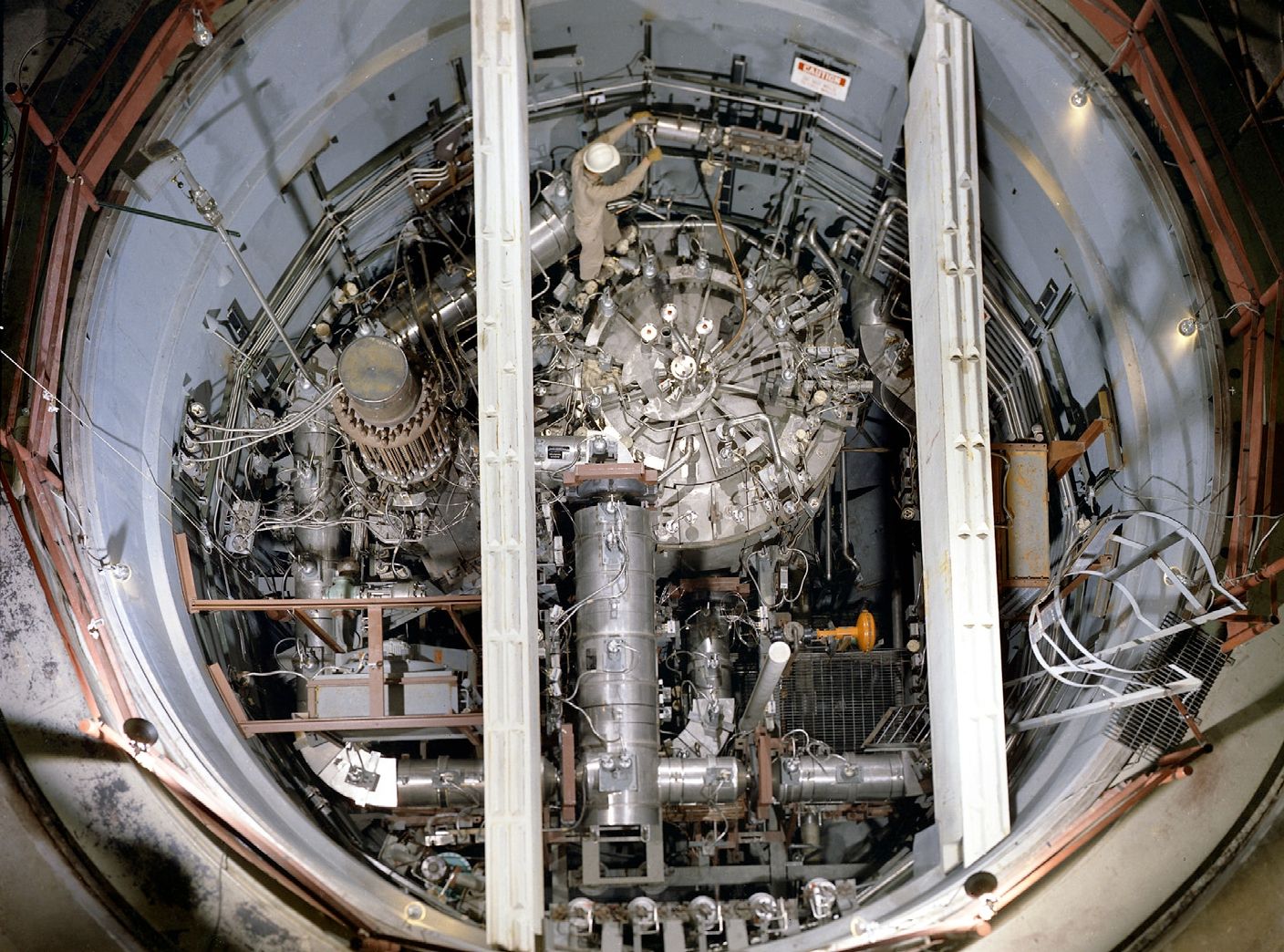
The proposed Molten Salt Research Reactor will be the first deployment of Natura Resources’ MSR-1 design. The system has a rated thermal power of approximately one megawatt and uses liquid fuel contained in molten salt.
Unlike conventional light-water reactors, which use solid uranium fuel assemblies and water as the primary coolant, the Natura design places nuclear fuel within a circulating molten-salt mixture.
The university says NEXT Lab’s mission is to use molten-salt reactor research to contribute to energy production, clean-water applications, medical-isotope availability and the education of future nuclear scientists and engineers.
The project is being supported by a wider university research alliance involving Abilene Christian University, the Georgia Institute of Technology, Texas A&M University and the University of Texas at Austin.
Natura Resources selected the alliance to lead a $30.5 million programme to design, license and build the research reactor.
What is a molten-salt reactor?
Molten-salt reactors are a class of advanced nuclear reactor in which molten salt performs one or more important functions.
In some designs, the salt acts only as the reactor coolant while the nuclear fuel remains solid. In liquid-fuelled designs such as the Natura reactor, fissile material is dissolved directly in the salt and circulates through the reactor system.
This configuration differs substantially from the solid-fuel arrangements used in most commercial reactors operating today.
Potential advantages associated with molten-salt technology include operation at high temperatures and relatively low pressure, efficient heat transfer and the possibility of using nuclear heat for industrial applications in addition to electricity production.
The technology could potentially support:
- electricity generation;
- hydrogen production;
- industrial process heat;
- water desalination;
- medical-isotope production;
- advanced-fuel research; and
- materials testing.
However, molten-salt reactors also introduce technical and regulatory challenges.
These include corrosion control, online monitoring of liquid fuel, radioactive-material accountancy, salt chemistry management, fuel processing, source-term analysis, component inspection, waste characterisation and safeguards verification.
The circulation of fuel through pipes and other reactor components may require regulatory approaches that differ from those developed for conventional reactors with fixed fuel assemblies.
The role of the Nuclear Safety Design Agreement
The Nuclear Safety Design Agreement is a central part of the Department of Energy authorisation process being used for the project.
According to Natura Resources, the agreement establishes the safety requirements and analytical methods that will guide the design and assessment of the reactor. It is intended to create a shared understanding between the developer and the Department of Energy concerning the standards that must be satisfied.
The agreement is therefore not equivalent to a final operating authorisation.
Before the reactor can become operational, the project will need to complete additional safety documentation, readiness assessments, construction activities, testing and authorisation steps.
This distinction is important for responsible reporting. A safety-design milestone demonstrates regulatory progress, but it does not mean that all technical and operational requirements have been completed.
An unusual regulatory pathway
The Abilene project has interacted with both the US Nuclear Regulatory Commission and the Department of Energy.
In September 2024, the Nuclear Regulatory Commission issued Abilene Christian University a construction permit for the Molten Salt Research Reactor. It was the first construction permit issued by the NRC for a liquid-fuelled advanced research reactor.
The permit authorised the university to construct the facility in accordance with its approved application and applicable regulatory requirements.
Natura subsequently entered the Department of Energy’s Reactor Pilot Program, an initiative intended to accelerate the testing of advanced reactors at sites outside the US national laboratories.
The relationship between the existing NRC construction permit and the newer Department of Energy authorisation process makes the project a particularly important case study in advanced-reactor governance.
It illustrates the need to ensure that accelerated deployment programmes retain clear institutional responsibilities, transparent safety requirements and credible independent technical review.
Why the project matters for Africa
Several African countries are considering advanced reactors, small modular reactors and new research reactors.
However, the continent’s nuclear debate often concentrates on the eventual purchase of commercial power plants. Less attention is given to the research infrastructure, university programmes, experimental facilities and regulatory expertise required to understand and oversee emerging reactor technologies.
The Abilene project demonstrates a different approach.
Instead of separating reactor development from academic education, the project places students, researchers, engineers, regulators and technology developers within a connected innovation environment.
For African nuclear-newcomer countries, this model raises an important question: could universities and national nuclear institutions play a larger role in building the knowledge base required for advanced-reactor deployment?
Building nuclear knowledge before commercial deployment
A country does not need to begin with a large commercial reactor to develop useful nuclear competence.
Research facilities, zero-power assemblies, accelerator laboratories, reactor simulators, thermal-hydraulic test loops and materials-research laboratories can support the development of:
- reactor-physics expertise;
- nuclear engineering;
- radiation protection;
- safeguards methods;
- safety analysis;
- cybersecurity;
- emergency preparedness;
- nuclear instrumentation;
- materials science; and
- regulatory competence.
These capabilities can help a country assess vendor claims independently rather than relying almost entirely on information supplied by reactor developers.
This is especially important for advanced reactors, where commercial operating experience may be limited and some technical claims may not yet have been demonstrated at scale.
African institutions should therefore treat nuclear research capacity as part of national technology readiness—not as an optional academic activity.
The workforce-development dimension
The university setting is one of the most valuable features of the Natura project.
Students can participate in research connected to an actual reactor programme rather than studying nuclear engineering only through classroom theory.
The NEXT Lab project provides opportunities in reactor design, modelling, fuel chemistry, instrumentation, licensing, materials, radiation protection and operations. Abilene Christian University is also developing expanded graduate-level nuclear-science and engineering programmes around the project.
Africa faces a major nuclear workforce challenge.
Countries pursuing nuclear power will require professionals across a much wider range of disciplines than reactor operation alone. These include:
- nuclear and mechanical engineers;
- electrical and civil engineers;
- regulatory inspectors;
- safety analysts;
- nuclear lawyers;
- environmental scientists;
- safeguards specialists;
- security professionals;
- emergency planners;
- radiochemists;
- radioactive-waste experts;
- project-finance specialists; and
- skilled technicians and artisans.
Workforce planning must begin years before construction of a commercial power plant.
Universities, technical institutions, regulators, project organisations and existing nuclear-research centres must therefore coordinate national training programmes.
Opportunities for African universities
A university-based reactor is not immediately realistic or necessary for every African country.
Research reactors involve substantial costs, long-term security obligations, radioactive-waste responsibilities and specialised regulatory oversight.
However, African universities can still become more involved in advanced nuclear technology through lower-risk and lower-cost initiatives, including:
- reactor simulators;
- non-nuclear molten-salt test loops;
- materials and corrosion laboratories;
- radiation-detection laboratories;
- computational reactor-physics centres;
- cybersecurity test environments;
- nuclear-policy programmes;
- safeguards training laboratories; and
- partnerships with operating research reactors.
Regional collaboration could allow several countries to share specialised facilities rather than duplicating expensive infrastructure.
Existing African nuclear institutions could serve as regional hubs for students and regulators from newcomer countries.
Medical isotopes and industrial applications
Natura Resources has also identified medical-isotope production as one of the possible applications of its technology.
Africa remains heavily dependent on imported radioisotopes and radiopharmaceuticals, despite the continent’s growing cancer burden and expanding demand for nuclear medicine.
A new generation of research and demonstration reactors could potentially contribute to regional isotope supply.
However, reactor construction alone would not solve the challenge.
A functioning isotope programme requires:
- target production;
- irradiation facilities;
- hot cells;
- radiochemical processing;
- quality-control laboratories;
- pharmaceutical regulation;
- specialised transport;
- nuclear pharmacies;
- trained clinicians; and
- reliable hospital demand.
African countries considering research reactors should therefore develop detailed utilisation plans before selecting a reactor design.
The key question should be what national or regional development problems the facility will solve—not simply whether the country can acquire a reactor.
Water desalination and industrial heat
The project is also connected to research on using advanced nuclear heat for water treatment and desalination.
Natura Resources and its university partners have explored how molten-salt reactors could supply high-temperature heat and electricity for treating water produced by oil and gas operations.
This application may be relevant to water-stressed African countries.
Nuclear-powered desalination could potentially support coastal cities, mining areas, industrial zones and regions experiencing persistent water scarcity.
However, African governments would need to compare the cost and practicality of nuclear desalination with renewable-powered systems, conventional grid electricity, water recycling and other alternatives.
Demonstration projects should be evaluated on economic performance as well as technical feasibility.
Regulatory lessons for Africa
The project provides several lessons for African nuclear regulators.
Regulatory capacity must precede deployment
A regulator should understand the technology before receiving a construction or operating application.
For liquid-fuelled reactors, this requires competence in salt chemistry, fuel movement, safeguards, corrosion, source-term modelling and advanced instrumentation.
New technology may require new guidance
Existing nuclear laws may be broad enough to cover molten-salt reactors, but detailed regulations developed for conventional light-water reactors may not address all relevant features.
Regulators may need technology-neutral requirements supported by reactor-specific guidance.
Acceleration must not eliminate independence
Faster licensing may be possible where applications are complete, regulatory expectations are clear and risks are proportionate.
However, political pressure to meet deployment deadlines must not compromise independent technical judgement.
International cooperation will be necessary
Few African regulators currently have extensive experience assessing liquid-fuelled reactors.
Cooperation with the IAEA, experienced regulators, technical-support organisations and regional networks will therefore be essential.
Safeguards must be considered early
Liquid fuel creates distinct material-accountancy and verification challenges because nuclear material may move continuously through reactor systems.
Safeguards-by-design should be incorporated from the beginning rather than added after the reactor design has been completed.
A model to study, not copy blindly
The Abilene project should not be treated as a template that can be transferred directly to every African country.
The United States has a large nuclear research system, established regulators, experienced national laboratories, mature universities and access to specialised supply chains.
Many African newcomer countries are still building foundational legal, institutional and human-resource capacity.
Nevertheless, the principle behind the project is widely applicable: nuclear technology development should be connected to research, education, workforce preparation and practical national needs.
Africa should avoid becoming only a market for finished reactor products developed elsewhere.
African universities and research institutions must be positioned to participate in reactor assessment, adaptation, regulation and innovation.
Conclusion
Approval of the Nuclear Safety Design Agreement for Natura Resources’ molten-salt demonstration reactor is an important milestone, although further reviews and authorisations remain necessary before operation.
The project’s wider significance lies in the integration of advanced-reactor development with university research, workforce education, isotope applications and water-treatment studies.
For Africa, the lesson is not that every country should construct a molten-salt research reactor.
The lesson is that advanced nuclear deployment requires an ecosystem of universities, laboratories, regulators, industries and skilled professionals.
African countries that invest in this ecosystem will be better positioned to make informed technology choices, negotiate effectively with vendors and regulate emerging reactors independently.
Those that focus only on purchasing a completed power plant risk remaining dependent on external expertise throughout the project’s lifecycle.
Related


Africa Deepens Nuclear Safeguards Capacity as AFCONE Convene Hands-On Training in Nairobi
By Nuclear Africa• August 24, 2026
A 300 MW SMR Could Support More Than 12,500 Construction Jobs in Ghana: New Study Tests Nuclear’s Economic Case
By Nuclear Africa• August 24, 2026
Ghana Targets 1,000 MW of Nuclear Power by the Mid-2030s: What Must Happen Before Construction Can Begin?
By Nuclear Africa• August 24, 2026