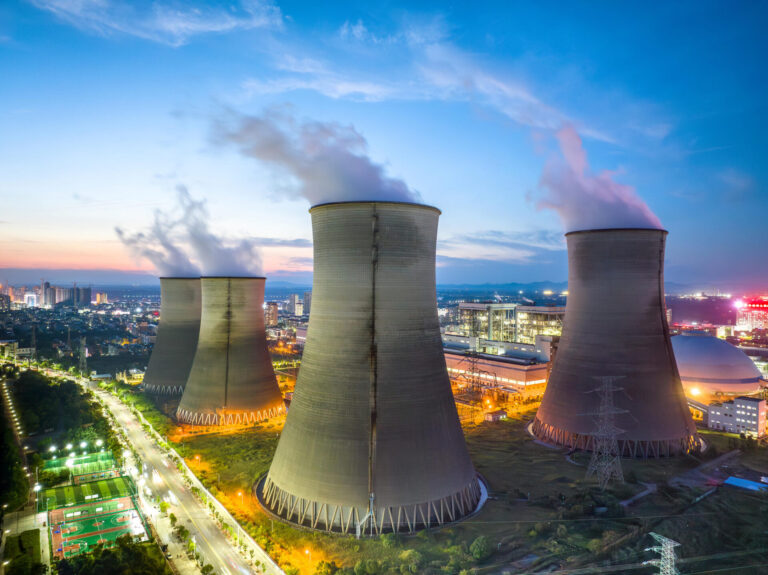
Record-low water levels in the River Danube have forced nuclear operators in Hungary and Romania to reduce electricity generation and prepare for possible further shutdowns, underscoring the growing importance of climate-resilient nuclear siting, cooling-water security and national grid contingency planning.
At Hungary’s Paks Nuclear Power Plant, electricity production had fallen to less than half of the station’s approximately 2,000-megawatt installed capacity by 30 July 2026. Hungarian authorities warned that all four operating reactors could be shut down if river conditions deteriorated further.
Paks ordinarily generates close to half of Hungary’s electricity. A prolonged shutdown would therefore represent a major national energy-security challenge, requiring greater electricity imports, demand-management measures and the mobilisation of alternative generation capacity.
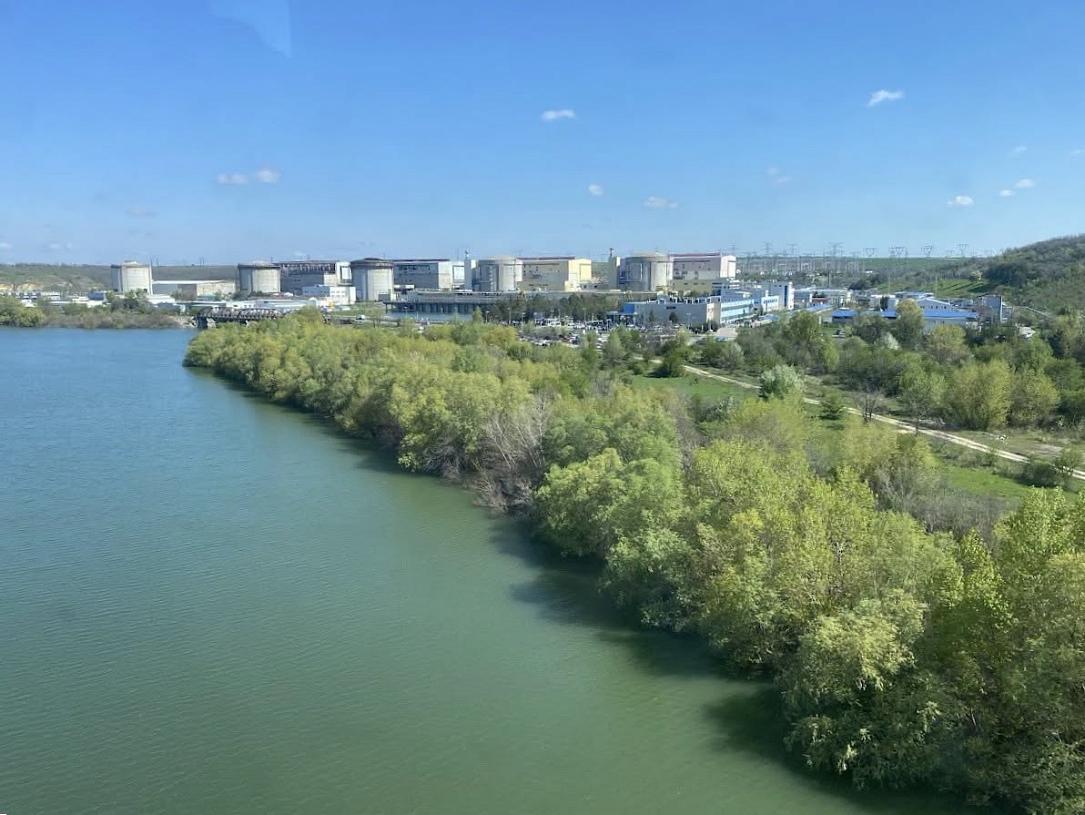
In Romania, Unit 1 of the Cernavodă Nuclear Power Plant was shut down in a controlled manner and disconnected from the national electricity system on 28 July. Operator Societatea Națională Nuclearelectrica said the decision followed an unprecedented decline in Danube water levels caused by severe drought and was implemented in accordance with established operating procedures.
Romanian authorities had also prepared to shut down Cernavodă Unit 2. However, a subsequent technical assessment found that operating parameters still allowed the unit to remain safely connected to the national grid on 30 July.
Nuclearelectrica nevertheless cautioned that Unit 2 could still be disconnected if hydrological conditions worsened or operating limits could no longer be maintained.
The events in both countries are precautionary operational and environmental-protection measures. They are not reports of reactor damage, a radiological release or a nuclear accident.
Two Countries, Different Operational Pressures
Although both Paks and Cernavodă depend on the Danube, the immediate reasons for their operating restrictions are not identical.
At Paks, prolonged drought and extreme heat reduced river flow while also increasing concerns about the temperature of water discharged back into the river after being used for plant cooling.
Hungarian environmental regulations limit the thermal effects of discharged cooling water on the Danube ecosystem. When river flow declines and the temperature of the receiving water rises, the plant has less capacity to disperse the additional heat without exceeding environmental limits.
The Paks operator reported that the Danube reached a record-low level of minus 106 centimetres at the plant on 27 July. Output reductions were subsequently introduced on individual units as the operator continued monitoring river flow, water temperature and cooling conditions.
Further reductions brought total plant output below 50%, while Hungary prepared to increase electricity imports and manage peak demand if the station had to be shut down completely.
At Cernavodă, the immediate concern was the exceptionally low river level itself and its implications for the plant’s approved operating limits and cooling-water arrangements.
Nuclearelectrica described the shutdown of Unit 1 as preventive and intended to protect nuclear safety and plant reliability. The company stated that keeping the reactor in a safe shutdown condition presented no danger to personnel, the public or the environment.
Cernavodă operates two CANDU reactors and normally supplies approximately one-fifth of Romania’s electricity. The shutdown of one unit therefore removed a substantial source of continuous generation at a time when high temperatures were also increasing electricity demand.
A Protective Shutdown Is Evidence of Safety Procedures Working
The operating restrictions should not be portrayed as evidence that the reactors had become unsafe or that nuclear power had failed technologically.
Nuclear power plants operate within approved technical specifications, safety margins and environmental limits. When external conditions approach those limits, operators may reduce power or shut down a reactor before cooling capability, plant reliability or environmental compliance is compromised.
This reflects the defence-in-depth principle that underpins nuclear safety. Protective action is taken while the reactor remains stable and controlled rather than waiting for operating conditions to deteriorate.
At Paks, the operator reported that standby and reserve pumping systems were available and that the plant could maintain the reactors in a safe condition even if extremely low water levels persisted for an extended period.
The units could be restarted progressively after river conditions recovered and the necessary operating criteria were again satisfied.
The important policy question is therefore not whether operators should have avoided reducing output or shutting down reactors. The more relevant questions are whether the plants were sufficiently prepared, whether national grids had enough replacement capacity and whether longer-term climate trends had been incorporated into infrastructure planning.
Climate Change Creates a Two-Sided Challenge for Nuclear Power
Nuclear energy can contribute to climate-change mitigation by producing large quantities of low-carbon electricity. However, nuclear installations must also adapt to the physical consequences of a changing climate.
These consequences may include:
- prolonged drought and declining river flow;
- higher river, lake and seawater temperatures;
- more severe and frequent heatwaves;
- coastal flooding and sea-level rise;
- extreme rainfall and inland flooding;
- wildfires;
- sedimentation and blockage of cooling-water intakes;
- erosion and changing coastal conditions; and
- increasing competition for water among electricity generation, agriculture, industry and households.
International nuclear safety guidance recognises extreme cooling-water temperatures, severe drought, declining water levels and the degradation or loss of an ultimate heat sink as external hazards that must be considered during plant siting, design and safety assessment.
The Danube situation demonstrates how these hazards can occur simultaneously.
Low rainfall reduces river flow. High air temperatures raise river-water temperatures and increase electricity demand. The power system may therefore experience its highest demand precisely when nuclear and other thermal power plants are under pressure to reduce generation.
This challenge is not exclusive to nuclear power.
Hydroelectric stations can lose generation when reservoir and river levels fall. Gas- and coal-fired plants may also face cooling-water restrictions. Drought can disrupt river transport, fuel deliveries, industrial production and agricultural activity.
The broader lesson is that climate resilience must be designed into the entire electricity system rather than assessed for each generating technology in isolation.
What the Danube Crisis Means for African Nuclear-Newcomer Countries
The events in Hungary and Romania are directly relevant to African countries considering nuclear power.
Several African nuclear programmes are at stages where site selection, environmental assessment, grid studies and reactor-technology evaluation are either beginning or remain incomplete.
Decisions taken during these stages will determine whether future nuclear facilities can withstand climate conditions that may differ significantly from historical patterns.
Countries including Ghana, Kenya, Nigeria, Rwanda and Uganda should therefore avoid assessing potential nuclear sites solely on the basis of historical rainfall, river-flow and temperature records.
Site evaluations should incorporate forward-looking climate scenarios covering the plant’s complete lifecycle.
A nuclear power plant may operate for 60 to 80 years. Decommissioning and long-term site management may continue for several decades afterwards. Water availability, coastal conditions and environmental limits must therefore remain acceptable far beyond the date on which construction begins.
African regulators, programme organisations and prospective plant owners should examine several critical questions:
- Will the proposed water source remain sufficient during severe and prolonged drought?
- How will higher ambient water temperatures affect reactor efficiency and environmental discharge limits?
- What alternative cooling arrangements will be available if the primary water source becomes constrained?
- Could agricultural, industrial or municipal water demands conflict with nuclear plant requirements?
- Can the national electricity grid withstand the sudden loss of its largest generating unit?
- Are forward-looking climate projections incorporated into the safety case and environmental-impact assessment?
- Which institution will be responsible for continuously updating climate, hydrological and environmental data throughout the plant’s operating life?
These questions should be resolved before a preferred site or reactor technology is effectively locked in.
Cooling Technology Must Form Part of Reactor Selection
Public discussions about reactor selection frequently concentrate on capital cost, electrical output, construction schedules, localisation and vendor financing.
Cooling requirements often receive much less attention.
Yet cooling-system design can significantly influence water withdrawal, water consumption, plant efficiency, environmental effects, construction cost and resilience to drought and heat.
Plants using once-through cooling withdraw large volumes of water and return most of it to the source at a higher temperature.
Recirculating cooling systems use cooling towers and generally withdraw less water, although they consume more water through evaporation.
Dry-cooling systems reduce dependence on water but can be more expensive and may perform less efficiently during very hot weather.
Hybrid systems combine wet- and dry-cooling arrangements and may provide greater flexibility under changing environmental conditions.
No cooling option is universally superior. The appropriate choice depends on local climate, hydrology, environmental restrictions, reactor technology, electricity-system requirements and project economics.
African newcomer countries should therefore require reactor vendors to provide directly comparable information on:
- total water withdrawal;
- water consumption;
- cooling-water discharge temperature;
- plant performance during extreme heat;
- minimum water-level requirements;
- resilience during prolonged drought;
- intake-protection arrangements; and
- the cost and technical implications of alternative cooling configurations.
Environmental and water-resource assessments should not be postponed until after a preferred reactor technology has effectively been selected.
The Grid Must Be Able to Lose Its Largest Unit
The Danube crisis also reinforces a central challenge for relatively small African electricity systems: the consequences of losing a large reactor.
Nuclear power plants can operate reliably for long periods, but every reactor must periodically shut down for refuelling, inspection and maintenance. Unplanned outages must also be anticipated.
Where a single reactor represents a large proportion of national generating capacity, its sudden disconnection can create major system-balancing problems.
Reserve generation, regional interconnections, electricity imports, demand-response arrangements and emergency operating procedures must be available.
Hungary’s response included preparations to increase electricity imports and requests for households and major industrial consumers to reduce electricity use during periods of peak demand.
The government indicated that the country had between approximately 3,600 and 3,800 megawatts of electricity-import capacity that could assist if Paks shut down completely.
Many African countries do not have comparable import capacity or sufficiently interconnected regional electricity systems.
This strengthens the case for completing rigorous grid-readiness studies before determining reactor size.
Large reactors may provide economies of scale, but an individual unit should not be so large that its sudden loss destabilises the national grid.
Smaller reactors could reduce the size of each individual outage. However, small modular reactor projects would still require reserve planning, transmission expansion, frequency-control capability and a credible assessment of cost and technological maturity.
A Specific Lesson for Ghana
Ghana’s nuclear-power programme has identified preferred and alternative candidate areas for further site investigation.
The Danube experience demonstrates why detailed site characterisation and climate modelling cannot be treated as secondary activities or repeatedly delayed because of funding constraints.
For Ghana, a comprehensive climate-resilience assessment should address:
- long-term coastal and inland water availability;
- seawater and surface-water temperature trends;
- sea-level rise and storm surges;
- coastal erosion and sediment transport;
- flooding caused by extreme rainfall;
- saline intrusion;
- blockage of cooling-water intakes by biological material, sediment or debris;
- the effect of extreme heat on reactor and electricity-grid performance;
- cooling-water discharge effects on marine and freshwater ecosystems; and
- alternative sources of essential cooling water.
A coastal site may reduce exposure to river drought, but it introduces different hazards.
These include sea-level rise, coastal erosion, storm surges, salt corrosion, changing sediment patterns, marine biological fouling and the possibility of intake blockage.
Coastal siting must therefore not be assumed to be automatically climate-resilient.
Ghana’s Nuclear Regulatory Authority must also possess the technical capacity, qualified personnel and independent data needed to evaluate climate and hydrological hazards.
The regulator should not have to depend exclusively on assessments prepared by the project owner, engineering contractor or reactor vendor.
Where several reactor designs remain under consideration, Ghana could apply a plant parameter envelope approach during environmental assessment.
This would identify the widest credible range of water requirements, thermal discharges, land requirements, emissions and other environmental characteristics associated with the technologies under consideration.
Environmental and site investigations could then examine the most demanding credible parameters before a final reactor design is selected.
Such an approach could help prevent Ghana from selecting a site based on assumptions that later prove incompatible with the cooling-water requirements or environmental characteristics of the chosen technology.
Resilience Must Be Planned, Not Assumed
The Danube output reductions and shutdowns do not invalidate nuclear power’s contribution to low-carbon electricity generation.
They demonstrate that low-carbon infrastructure must itself be resilient to the climatic conditions it is intended to help address.
For Africa, the principal lesson is that nuclear readiness requires much more than a policy declaration, vendor engagement or financing proposal.
It requires detailed knowledge of water systems, credible climate projections, rigorous site characterisation, independent regulatory assessment and an electricity grid capable of managing the sudden loss of major generating units.
Climate resilience should be integrated into:
- national nuclear-energy policy;
- site-selection criteria;
- reactor-technology assessment;
- environmental-impact studies;
- nuclear safety cases;
- emergency and contingency planning;
- cooling-system selection;
- electricity-grid development strategies; and
- long-term investment decisions.
The controlled reductions and shutdown preparations in Hungary and Romania show nuclear safety and environmental-protection procedures functioning as intended.
However, they also reveal the economic and energy-security consequences that may arise when drought, extreme heat, high electricity demand and water constraints affect the same electricity system simultaneously.
African newcomer countries still have an opportunity to incorporate these lessons before committing to sites, reactor sizes and cooling technologies.
That opportunity should not be lost.
Related


Africa Deepens Nuclear Safeguards Capacity as AFCONE Convene Hands-On Training in Nairobi
By Nuclear Africa• August 24, 2026
A 300 MW SMR Could Support More Than 12,500 Construction Jobs in Ghana: New Study Tests Nuclear’s Economic Case
By Nuclear Africa• August 24, 2026
Ghana Targets 1,000 MW of Nuclear Power by the Mid-2030s: What Must Happen Before Construction Can Begin?
By Nuclear Africa• August 24, 2026