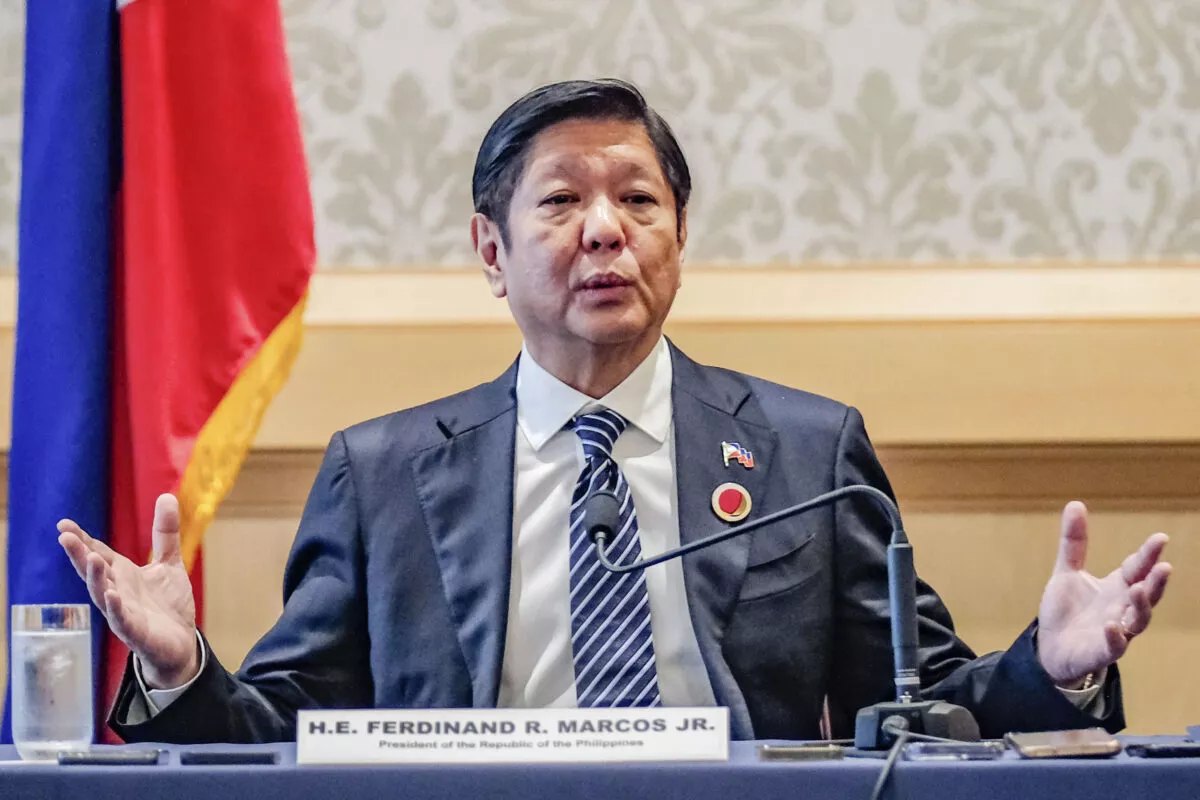
Philippine President Ferdinand Marcos Jr has renewed his government’s commitment to nuclear energy as the country seeks to strengthen energy security and address high electricity costs.
Speaking during his State of the Nation Address on 27 July 2026, Marcos said the Philippines would continue expanding renewable energy while advancing preparations for nuclear power as part of a diversified energy strategy. Philippine government reporting described nuclear energy as a potential component of long-term energy security and efforts to reduce electricity costs.
The statement adds political momentum to a programme that has been developing through international cooperation, legislative preparation and consideration of small modular reactors.
It does not, however, constitute a final decision to construct a particular reactor.
Why the Philippines is reconsidering nuclear energy
The Philippines has experienced rapid electricity-demand growth and relatively high power prices.
Its electricity system spans thousands of islands, creating challenges for transmission, fuel delivery and the integration of generating capacity.
The country also imports a significant share of its energy resources, exposing consumers to international price volatility.
Nuclear power is being considered as a source of firm, low-carbon electricity that could complement renewable energy.
The government is also examining electricity demand from data centres, industry and digital technologies.
Marcos has recently discussed nuclear cooperation with international partners and specifically referred to the potential of small modular reactors.
The legacy of Bataan
The Philippines has one of the world’s most recognisable unfinished nuclear histories.
The Bataan Nuclear Power Plant was completed during the 1980s but never entered commercial operation.
The plant became associated with concerns about cost, governance, safety and political controversy.
Its existence continues to shape the country’s nuclear debate.
Some stakeholders favour examining whether the facility can be rehabilitated. Others argue that the Philippines should pursue new reactor technologies rather than attempt to operate a plant that has remained unused for decades.
Any decision on Bataan would require a comprehensive assessment of:
- structural condition;
- reactor systems;
- seismic and volcanic hazards;
- replacement components;
- modern safety standards;
- licensing requirements;
- cost;
- spent-fuel arrangements; and
- public acceptance.
The presence of an existing plant does not necessarily make rehabilitation cheaper or faster than new construction.
Small modular reactors
The Philippines has expressed interest in SMRs for its geographically dispersed electricity system.
Smaller reactors could potentially be placed near regional demand centres, industrial zones or isolated grids.
Possible advantages include:
- lower unit capacity;
- phased deployment;
- factory manufacturing;
- reduced site footprint; and
- compatibility with smaller electricity systems.
However, SMRs are not automatically affordable.
The cost of first-of-a-kind units, financing, imported fuel, regulatory development and supporting infrastructure may remain substantial.
The country must assess whether projected reactor costs remain competitive after accounting for the full lifecycle.
Legal and regulatory preparation
The Philippine Senate has been working towards ratification of major international nuclear conventions covering safety, radioactive-waste management, early notification and assistance following an accident.
These instruments form part of the institutional foundation required for a credible power programme.
The Philippines must also ensure that its national regulator has:
- clear legal independence;
- adequate financial resources;
- qualified staff;
- enforcement authority;
- access to technical-support organisations; and
- the ability to oversee several reactor technologies.
Political support for nuclear energy cannot substitute for independent licensing.
The regulator must be able to reject or delay a project that fails to meet safety requirements.
Why the development matters to Africa
The Philippines shares several conditions with African nuclear-newcomer countries.
These include:
- high electricity prices;
- rising demand;
- dependence on imported fuels;
- limited recent nuclear operating experience;
- infrastructure constraints;
- interest in SMRs;
- need for international financing; and
- public concern about safety and cost.
Its programme therefore provides a useful comparative case for Ghana, Kenya, Uganda, Rwanda and other African countries studying nuclear power.
The Philippines also demonstrates that political interest can continue across several years without immediately producing a reactor-construction decision.
Nuclear programme development is a long institutional process rather than a single presidential announcement.
The importance of affordability
Governments frequently describe nuclear energy as a way to reduce electricity prices.
Whether it does so depends on project cost, financing terms and delivery performance.
Nuclear plants have high initial capital requirements. Interest accumulated during long construction periods can substantially increase the final cost.
A country must therefore evaluate:
- overnight construction cost;
- interest rates;
- loan guarantees;
- currency risk;
- construction schedule;
- fuel costs;
- grid upgrades;
- waste and decommissioning costs; and
- the proposed electricity-purchase arrangement.
A reactor may provide stable electricity over many decades, but poor financing or construction delays can make the electricity expensive.
Affordability claims should be supported by transparent modelling.
Public confidence
The history of the Bataan project means that public trust will be central to any new programme.
The government must provide accessible information about:
- why nuclear power is being considered;
- which technologies are under review;
- project costs;
- site-selection criteria;
- emergency arrangements;
- radioactive-waste plans;
- procurement decisions; and
- the role of the independent regulator.
Public engagement should begin before a preferred reactor and site have been finalised.
Consultation carried out only after major decisions have been taken may be viewed as public relations rather than genuine participation.
Vendor competition and geopolitics
The Philippines is likely to receive reactor offers from several supplier countries.
Nuclear procurement increasingly combines technology, financing, fuel supply, training and wider diplomatic cooperation.
Competing offers may give the Philippines stronger negotiating leverage.
They may also create geopolitical pressure.
A transparent technology-selection process should evaluate proposals against consistent criteria rather than political preference.
Relevant factors include:
- safety;
- licensing maturity;
- construction experience;
- financing;
- fuel security;
- localisation;
- waste management;
- supplier-state reliability; and
- compatibility with the national grid.
Lessons for African nuclear-newcomer states
Political commitment must be institutionalised
Presidential support can create momentum, but the programme must be supported by legislation, budgets and competent organisations.
Legacy projects require independent reassessment
Existing sites or unfinished facilities should not be revived simply because money has already been spent.
SMRs still require full nuclear infrastructure
A smaller reactor does not remove the need for safety, security, safeguards, liability and waste-management systems.
Cost claims must be transparent
Governments should publish assumptions and compare nuclear options with realistic alternatives.
Public communication should address difficult questions
Support cannot be built by discussing benefits while avoiding cost, waste, accident and governance concerns.
Conclusion
President Marcos’s 2026 State of the Nation Address has reaffirmed nuclear energy’s place in the Philippines’ long-term energy debate.
The country sees potential benefits in energy security, lower carbon emissions and a more diversified electricity system.
Turning that ambition into a viable project will require much more than political endorsement.
The Philippines must complete its legal framework, strengthen its regulator, select technology transparently, develop a credible financing model and decide how to manage the legacy of the Bataan plant.
For African nuclear-newcomer states, the Philippine experience reinforces an important lesson: nuclear energy can be politically attractive, but success depends on patient institutional preparation and disciplined project governance.
Related


Africa Deepens Nuclear Safeguards Capacity as AFCONE Convene Hands-On Training in Nairobi
By Nuclear Africa• August 24, 2026
A 300 MW SMR Could Support More Than 12,500 Construction Jobs in Ghana: New Study Tests Nuclear’s Economic Case
By Nuclear Africa• August 24, 2026
Ghana Targets 1,000 MW of Nuclear Power by the Mid-2030s: What Must Happen Before Construction Can Begin?
By Nuclear Africa• August 24, 2026