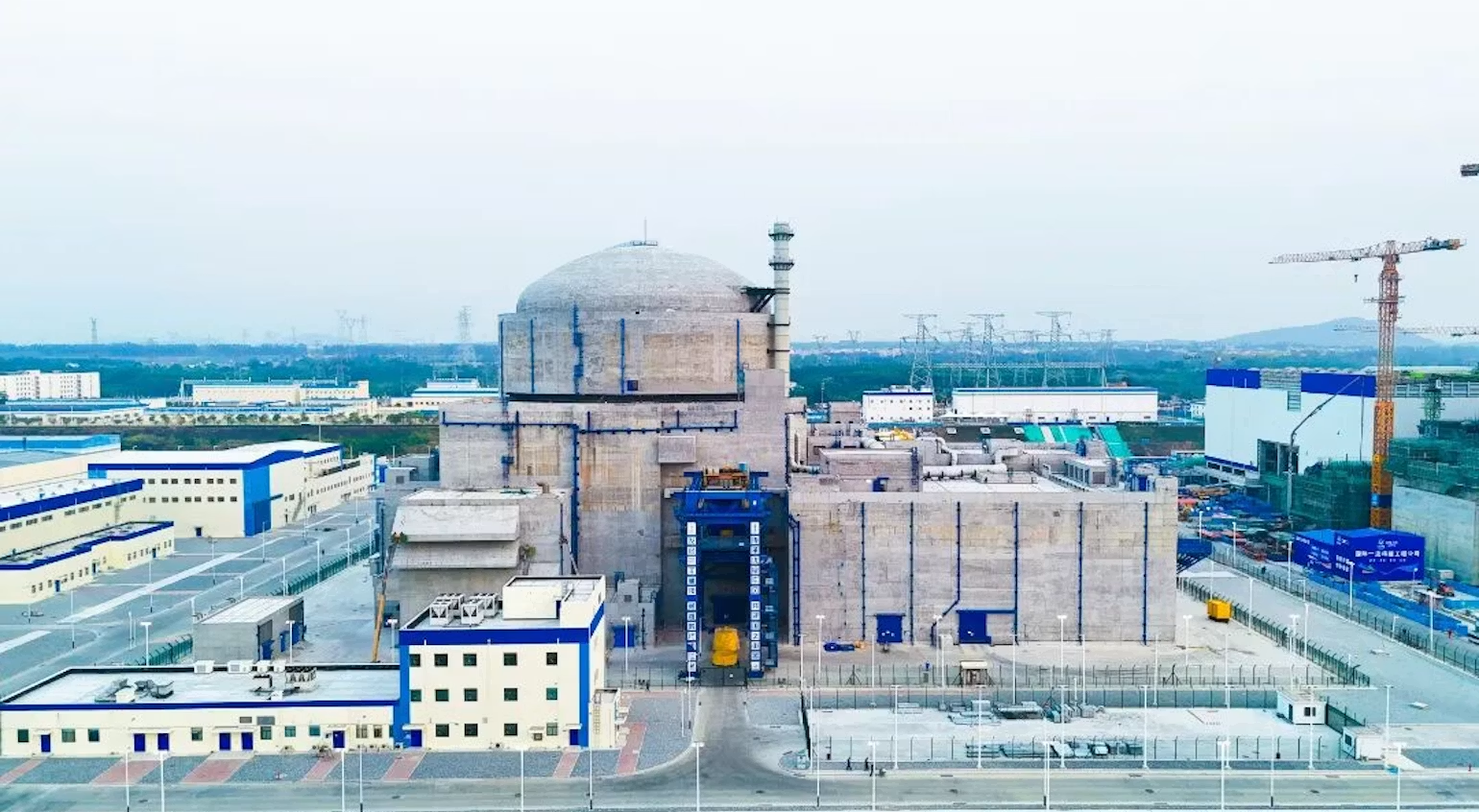
China’s Changjiang Unit 3 has connected to the electricity grid and begun supplying power for the first time, marking another significant commissioning milestone for the country’s domestically developed Hualong One reactor technology.
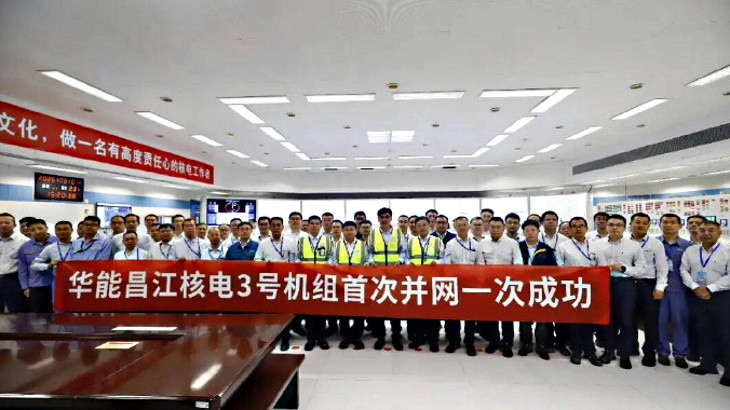
The reactor, located at the Changjiang Nuclear Power Plant in the southern island province of Hainan, was connected to the grid on 1 August 2026. It is the first Hualong One reactor in Hainan to reach the grid-connection stage.
Grid connection means that the reactor has begun producing electricity, but Changjiang 3 has not yet entered commercial operation. The unit must complete further power-ascension tests and other commissioning activities before it can be declared ready for regular commercial service.
The milestone follows the reactor’s first criticality on 10 July 2026, when it achieved a sustained and controlled nuclear chain reaction for the first time. Construction of the unit began in March 2021.
Part of a Larger Nuclear Development at Changjiang
Changjiang 3 is one of two Hualong One reactors being constructed under the second phase of the Changjiang nuclear project.
Its sister unit, Changjiang 4, has been under construction since December 2021. China Huaneng Group holds a controlling 51% interest in the second-phase project, while China National Nuclear Corporation holds the remaining 49%.
The two-unit development represents an estimated investment of approximately CNY40 billion, or about USD5.9 billion. Each unit is designed with an installed generating capacity of approximately 1.2 million kilowatts.
Once both reactors are fully operational, project developers estimate that they will generate around 18 billion kilowatt-hours of electricity annually. Chinese authorities say the output will strengthen Hainan’s energy supply while supporting the province’s efforts to reduce dependence on fossil-fuel generation.
The Changjiang site already hosts two operating CNP-600 pressurised-water reactors, which entered commercial operation in 2015 and 2016.
It is also the location of the ACP100, known as Linglong One, a 125 MWe small modular reactor being developed as a demonstration project for electricity generation, industrial heat, district heating and desalination applications.
Changjiang is therefore becoming a multi-technology nuclear site combining conventional reactors, large Generation III units and an advanced small modular reactor project.
Another Reference Unit for the Hualong One
The Hualong One, also known internationally as the HPR1000, is China’s principal domestically developed Generation III pressurised-water reactor design.
Its continued deployment is central to China’s strategy of establishing a standardised domestic reactor fleet supported by national engineering companies, manufacturers, construction firms and fuel-cycle organisations.
Changjiang 3 adds to the growing body of construction and commissioning experience associated with the technology.
For China, repeated deployment provides opportunities to retain specialised workers, standardise equipment, develop domestic manufacturing capacity and transfer lessons from completed projects to reactors still under construction.
This fleet-based approach is increasingly important as China positions the Hualong One for international deployment.
However, the number of operating or near-operational reference reactors does not by itself establish that the technology is suitable for every potential buyer. Each country must assess the reactor against its national electricity system, regulatory framework, financing capacity, infrastructure and long-term nuclear-fuel and waste-management policies.
What the Milestone Means for Africa
Several African countries are examining large reactors, small modular reactors or combinations of both as part of long-term energy planning.
For these countries, Changjiang 3 provides additional technical evidence that can be considered during reactor-technology assessments. It offers another case through which policymakers and regulators can examine construction sequencing, commissioning performance, supply-chain organisation and the benefits of repeated deployment.
The milestone also reinforces the importance of distinguishing between different stages of nuclear-project development.
Government approval, construction licensing, first concrete, fuel loading, first criticality, grid connection and commercial operation are separate milestones. A project should not be described as completed simply because it has generated electricity for the first time.
Grid connection is a major achievement, but it remains part of the commissioning process.
African governments evaluating reactor vendors should therefore request detailed and independently verifiable information on:
- construction costs and schedule performance;
- financing terms and sovereign financial exposure;
- grid requirements and system-stability implications;
- localisation and technology-transfer commitments;
- regulatory documentation and licensing support;
- fuel supply and fuel-fabrication arrangements;
- spent-fuel and radioactive-waste responsibilities;
- decommissioning obligations; and
- long-term maintenance and technical-support requirements.
The existence of a growing reference fleet can reduce certain technology and delivery risks. It cannot eliminate the institutional, financial and infrastructure risks facing nuclear-newcomer countries.
Grid Size Remains a Central Consideration
Large reactors such as the Hualong One may present particular challenges for countries with relatively small or weak electricity systems.
International nuclear-planning guidance generally requires countries to examine whether their grids can absorb the sudden loss of a large generating unit without triggering widespread system instability.
For African countries with constrained reserve margins or limited regional interconnections, adding a single reactor of more than 1,000 MW could require extensive investment in transmission networks, reserve generation, grid-control systems and cross-border electricity trading.
The Changjiang project is being developed within China’s much larger industrial, financial and electricity infrastructure. Its delivery conditions cannot automatically be transferred to an African nuclear-newcomer programme.
Technology assessment must therefore consider not only whether a reactor can be built, but whether the national electricity system can safely and economically accommodate it.
From Reference Plant to Export Proposal
Changjiang 3’s grid connection strengthens the operating and commissioning record supporting China’s Hualong One programme.
It also provides Chinese vendors with another reference project when engaging prospective international customers, including countries in Africa.
For African decision-makers, the appropriate response is neither automatic acceptance nor rejection of Chinese nuclear technology. It is rigorous, transparent and country-specific assessment.
A mature reactor design supported by an active domestic programme may offer advantages in standardisation, supply-chain continuity and workforce experience. Those advantages must still be weighed against financing arrangements, localisation objectives, regulatory independence, fuel security and the allocation of long-term liabilities.
Changjiang 3 has now moved from construction and initial start-up into grid-connected commissioning. Its next major milestone will be the completion of testing and formal entry into commercial operation.
Until then, it should be accurately described as a grid-connected reactor undergoing commissioning—not as a fully operational commercial generating unit.
Related


Africa Deepens Nuclear Safeguards Capacity as AFCONE Convene Hands-On Training in Nairobi
By Nuclear Africa• August 24, 2026
A 300 MW SMR Could Support More Than 12,500 Construction Jobs in Ghana: New Study Tests Nuclear’s Economic Case
By Nuclear Africa• August 24, 2026
Ghana Targets 1,000 MW of Nuclear Power by the Mid-2030s: What Must Happen Before Construction Can Begin?
By Nuclear Africa• August 24, 2026