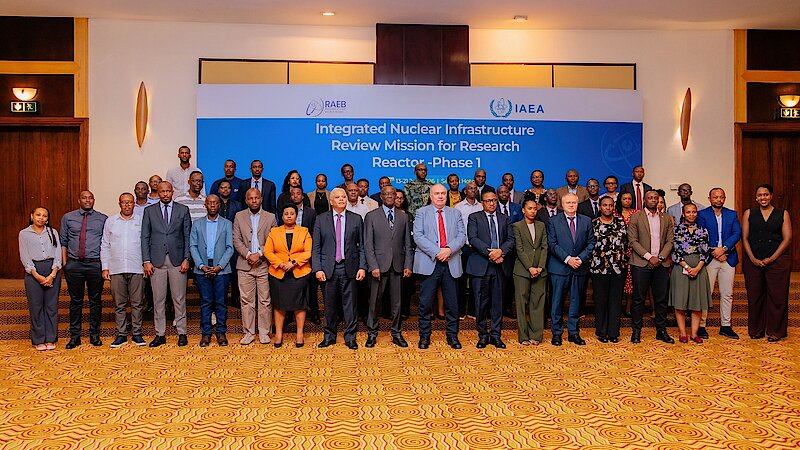
Rwanda has completed an International Atomic Energy Agency review of the national infrastructure being developed for its proposed research-reactor programme.
The Integrated Nuclear Infrastructure Review for Research Reactors mission( INIR-RR) was conducted from 13 to 21 July 2026 at the request of the Government of Rwanda. It brought together IAEA experts and national stakeholders to assess the country’s preparations for establishing and operating a research reactor safely, securely and sustainably.
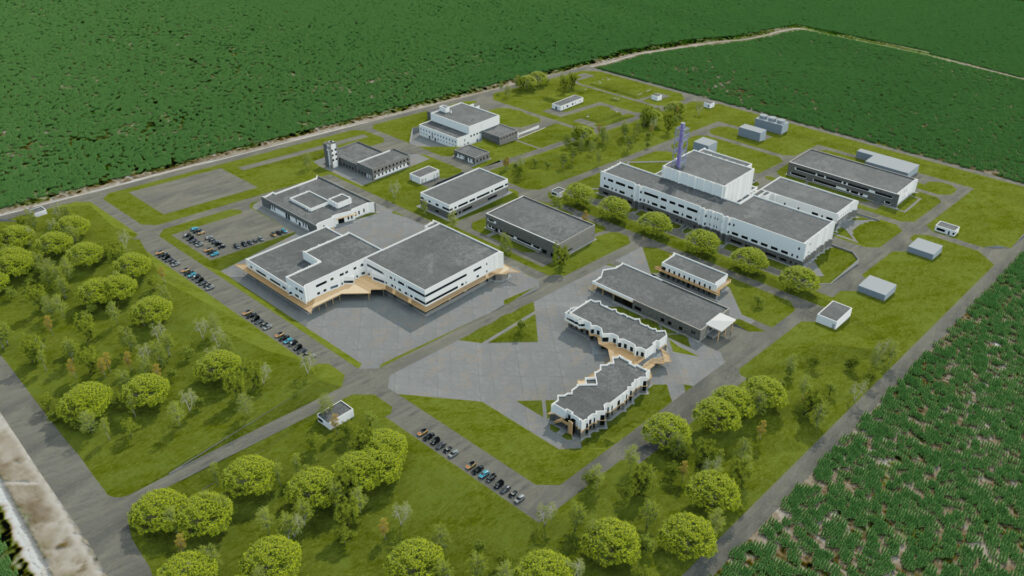
The review represents an important milestone in Rwanda’s plans to establish a Centre for Nuclear Science and Technology, which would serve as a national hub for research, education, isotope production, industrial applications and the development of specialist nuclear expertise.
A research reactor for national development
Unlike commercial nuclear-power reactors, research reactors are generally developed to support scientific, medical, educational and industrial applications rather than large-scale electricity generation.
Rwanda’s proposed reactor is expected to support activities in:
The Rwanda Atomic Energy Board said the facility would form part of the planned Centre for Nuclear Science and Technology and help build the technical expertise required for the country’s broader nuclear programme.
The project therefore appears intended to serve both immediate development needs and Rwanda’s long-term ambition to introduce nuclear power.
What the IAEA mission assessed
An INIR-RR mission examines whether a country has begun establishing the national infrastructure needed to develop a research reactor responsibly.
The review does not constitute approval to construct or operate a reactor. Instead, it identifies areas of progress, remaining gaps and actions required before the project moves to subsequent stages.
The Rwanda mission assessed preparations for non-power nuclear applications and provided recommendations intended to align the programme with international expectations for nuclear safety and security. The review also considered the institutional foundation needed to support implementation of the project.
Relevant infrastructure areas typically include:
Developing these areas before construction is essential because the long-term value of a research reactor depends not only on the reactor itself, but also on whether the country has the institutions, personnel and facilities needed to use it effectively.
Progress recognised, further work required
The mission concluded that Rwanda had made significant progress in developing the national infrastructure for a research-reactor programme. It also issued recommendations intended to guide the next phase of implementation.
Dr Fidele Ndahayo, Chief Executive Officer of the Rwanda Atomic Energy Board, described the review as an important milestone rather than the conclusion of the country’s preparations.
According to RAEB, the discussions helped Rwanda identify both areas of progress and matters requiring further strengthening before the project advances.
The precise recommendations were not included in RAEB’s public announcement. Their eventual implementation will therefore be an important measure of Rwanda’s readiness to move from policy ambition towards project development.
Building the foundation for nuclear power
The research-reactor review follows an earlier IAEA Integrated Nuclear Infrastructure Review mission focused on Rwanda’s proposed nuclear-power programme.
That Phase 1 INIR mission was conducted from 2 to 9 March 2026 and assessed Rwanda’s progress across the infrastructure areas required to support a new nuclear-power programme. The IAEA recognised strong government commitment and stakeholder engagement while identifying additional work needed as the country progresses through the Milestones Approach.
Taken together, the two reviews cover Rwanda’s preparations for both power and non-power nuclear applications.
The sequencing is significant. A research reactor can provide practical experience in reactor operation, radiation protection, safeguards, security, emergency preparedness, maintenance, nuclear regulation and radioactive-waste management before the introduction of a commercial power reactor.
Mikhail Chudakov, IAEA Deputy Director General and Head of the Department of Nuclear Energy, described the research-reactor programme as an important foundation for Rwanda’s future power programme.
Supporting medical-isotope production
One of the most important potential uses of the proposed facility is medical-isotope production.
Radioisotopes are used in cancer treatment, diagnostic imaging and other nuclear-medicine procedures. However, many African countries remain dependent on imported isotopes and radiopharmaceuticals, some of which have short half-lives and must be transported rapidly.
A properly planned Rwandan research reactor could help strengthen isotope availability in Rwanda and potentially serve neighbouring countries.
However, a reactor alone would not create a complete medical-isotope supply chain. Rwanda would also need:
The business case would also need to establish which isotopes Rwanda intends to produce, expected domestic demand and whether a viable regional market exists.
Applications in agriculture and industry
Research reactors can also support agriculture through neutron-activation analysis, soil and water studies, plant research and the development of techniques used in food security and environmental monitoring.
Industrial applications may include material testing, non-destructive examination, mineral analysis, process optimisation and research into advanced materials.
For Rwanda, these applications could align the nuclear programme with national priorities in healthcare, agricultural productivity, manufacturing, education and technological innovation.
A clear utilisation strategy will nevertheless be necessary to prevent the reactor from becoming an expensive facility operating below its potential.
The project should be based on demonstrated demand from hospitals, universities, industries, agricultural institutions and research organisations rather than on reactor construction as an objective in itself.
Strengthening Rwanda’s nuclear workforce
The proposed Centre for Nuclear Science and Technology could become a central institution for nuclear workforce development.
Rwanda has already begun expanding university-level education in nuclear science and technology. During the July mission, Chudakov delivered a lecture at the University of Rwanda’s College of Science and Technology on global nuclear-power and technology development.
A research reactor could provide practical training for:
- reactor operators;
- nuclear and mechanical engineers;
- radiation-protection officers;
- safeguards inspectors;
- security specialists;
- regulators;
- radiochemists;
- medical physicists;
- maintenance personnel; and
- emergency-response professionals.
The facility could also support regional training and cooperation with other African countries, particularly if developed as a shared centre of excellence.
Regulatory independence will be essential
Rwanda’s nuclear programme involves institutions with different responsibilities.
RAEB is leading the development and promotion of nuclear science and technology, while the Rwanda Utilities Regulatory Authority has regulatory responsibilities relevant to the sector.
Maintaining a clear separation between programme promotion and independent regulatory decision-making will be essential as the research-reactor project advances.
The regulator must have sufficient legal authority, staffing, technical competence and financial independence to review the site, reactor design, construction programme, safety case and operating licence without pressure from the project promoter.
The regulator will also need to oversee:
- radiation protection;
- nuclear security;
- safeguards implementation;
- radioactive-waste management;
- emergency preparedness;
- transport of nuclear and radioactive materials;
- environmental monitoring; and
- eventual decommissioning.
Completing an international review mission is therefore an important step, but it does not replace independent national licensing.
Financing and sustainability
Research reactors require substantial investment throughout their lifecycle.
The total cost extends beyond initial construction and includes:
- nuclear fuel;
- maintenance and refurbishment;
- security systems;
- regulatory oversight;
- waste management;
- staff development;
- isotope-processing facilities;
- emergency preparedness; and
- eventual decommissioning.
Rwanda will therefore need a long-term financing model that remains sustainable even where commercial revenues do not cover the full cost of operation.
Government funding may be justified where the reactor supports national healthcare, scientific research, education and industrial development. Even so, costs and expected public benefits should be clearly documented.
Partnerships with international organisations and technology suppliers can support implementation, but Rwanda must retain sufficient national capacity to own, regulate and manage the programme over its full lifecycle.
Lessons for other African countries
Rwanda’s approach offers several lessons for African countries considering research reactors or nuclear power.
First, non-power nuclear applications can provide tangible development benefits before commercial nuclear electricity is introduced.
Second, international review missions can help identify institutional gaps early, when corrective actions are less expensive.
Third, research-reactor development should be integrated with universities, hospitals, regulators and industrial users rather than managed as an isolated infrastructure project.
Fourth, a research reactor can contribute to power-programme readiness, but it cannot substitute for the full infrastructure required for a commercial nuclear-power plant.
Finally, the value of a reactor should be measured by the services it provides—not simply by its construction or technical capacity.
Conclusion
The completion of Rwanda’s INIR-RR mission represents a meaningful step in the country’s development of nuclear science and technology.
The proposed research reactor could support healthcare, agriculture, industry, education and workforce development while helping Rwanda acquire practical experience relevant to a future nuclear-power programme.
The next phase will be more demanding.
Rwanda must translate the mission’s recommendations into a realistic implementation plan covering regulation, financing, site development, human resources, security, safeguards, waste management and reactor utilisation.
Handled carefully, the Centre for Nuclear Science and Technology could become an important national and regional institution.
Its success will ultimately depend not on the speed with which the reactor is constructed, but on whether Rwanda builds the independent institutions, skilled workforce and sustainable applications required to operate it safely and productively for decades.
Related


Africa Deepens Nuclear Safeguards Capacity as AFCONE Convene Hands-On Training in Nairobi
By Nuclear Africa• August 24, 2026
A 300 MW SMR Could Support More Than 12,500 Construction Jobs in Ghana: New Study Tests Nuclear’s Economic Case
By Nuclear Africa• August 24, 2026
Ghana Targets 1,000 MW of Nuclear Power by the Mid-2030s: What Must Happen Before Construction Can Begin?
By Nuclear Africa• August 24, 2026