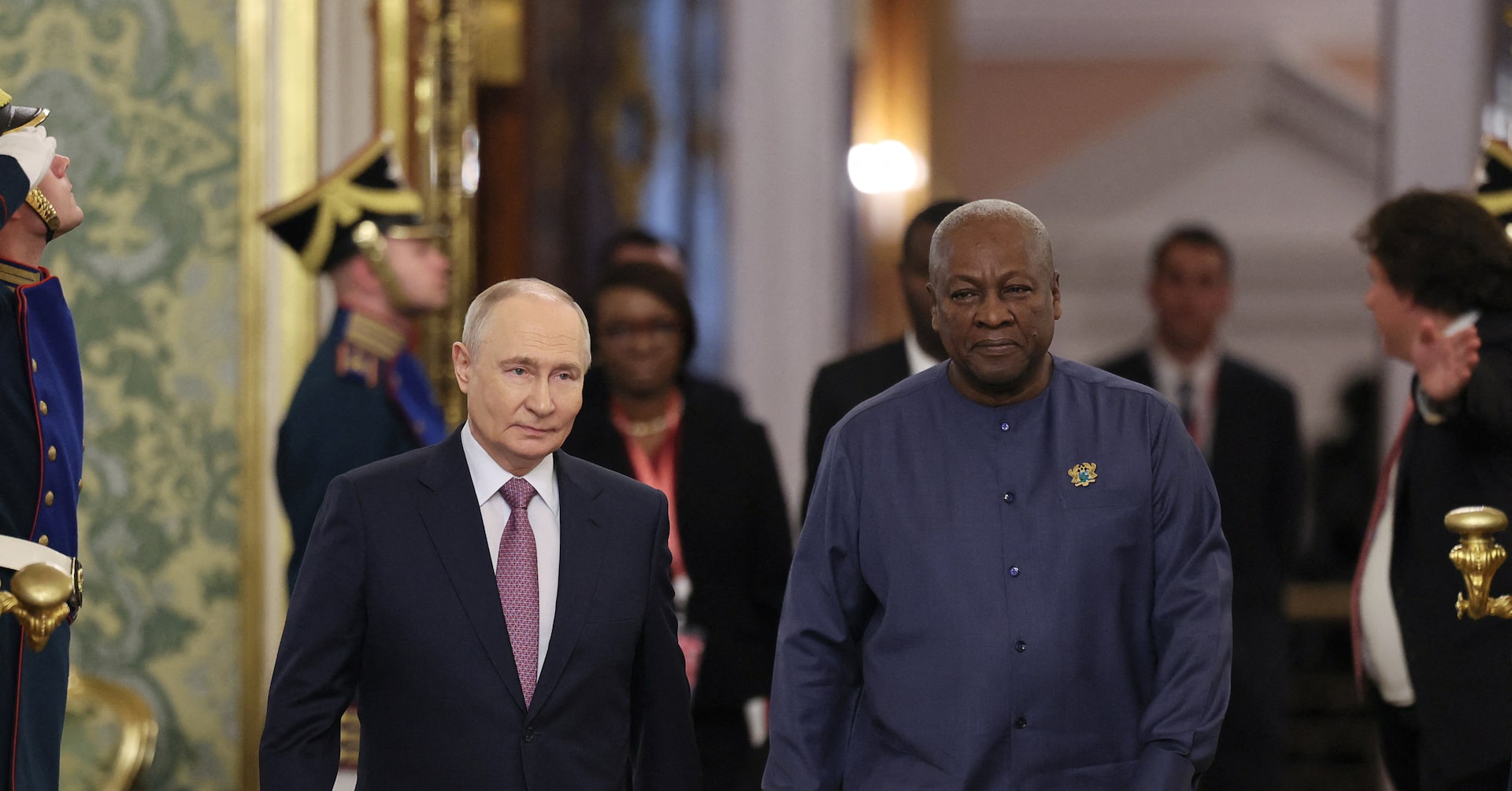
Ghana says Russia has agreed to work with Accra towards developing 2,000 MW of nuclear power following high-level discussions in Moscow. The announcement could significantly broaden Ghana’s technology and financing options, but it also raises important questions about how the Russian proposal fits the country’s existing Chinese and American nuclear partnerships, its preferred site, its grid constraints and the still-unresolved financing of the first nuclear power project.
By NuclearAfrica Editorial Desk
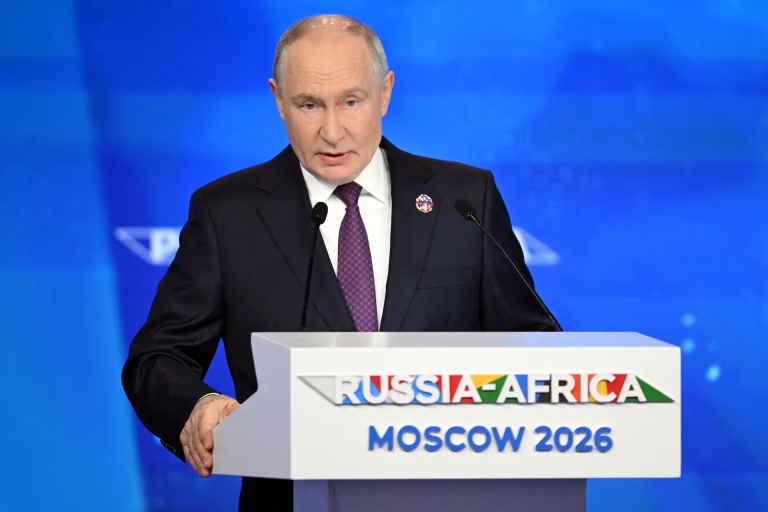
Ghana’s nuclear power programme has entered another potentially consequential phase following the government’s disclosure that it is discussing a possible 2,000 MW nuclear power development with Russia. The announcement, made around the latest Russia–Africa engagements in Moscow, places Rosatom more prominently within a Ghanaian nuclear programme that has already spent years developing institutional capacity, identifying prospective sites, engaging technology vendors and strengthening the regulatory framework required for the eventual introduction of commercial nuclear power.
President John Dramani Mahama indicated that Ghana had initiated discussions with Russia’s state nuclear corporation on the country’s nuclear power ambitions, while Foreign Minister Samuel Okudzeto Ablakwa subsequently stated that Russia had agreed to work with Ghana towards the development of about 2,000 MW of nuclear generation. That figure is significant because Ghana’s earlier programme discussions have generally centred on an initial commercial nuclear capacity of around 1,000 MW. A possible 2,000 MW programme therefore suggests either a larger long-term fleet ambition, a two-unit large-reactor development or a phased programme that could combine several units over time.
The announcement is nevertheless still an early project-development signal rather than evidence of an imminent construction start. No specific Rosatom reactor design has been publicly identified for Ghana, no financing arrangement has been disclosed, no engineering, procurement and construction contract has been announced, and no Rosatom-specific application has entered the Ghanaian regulatory process. The significance of the development therefore lies less in the suggestion that construction is about to begin and more in the possibility that Ghana’s technology and financing landscape is widening at precisely the moment when the programme needs to move from infrastructure preparation towards a defined and bankable first project.
A New Russian Track Enters a Programme That Is Already Well Developed
Russia is not entering a blank nuclear landscape in Ghana. Ghana has been preparing for commercial nuclear power for many years and is already in the second phase of the IAEA Milestones Approach, where the focus shifts from establishing broad national commitment towards developing the infrastructure required to negotiate, regulate and eventually construct a nuclear power plant. The country has established the Nuclear Regulatory Authority as an independent regulator, created Nuclear Power Ghana as the programme organisation and prospective owner-operator, developed a nuclear education and research base through the Ghana Atomic Energy Commission and the School of Nuclear and Allied Sciences, and carried out extensive site-selection work.
This institutional foundation makes the latest Russian engagement more significant than an isolated diplomatic announcement. Rosatom would be entering a programme in which Ghana has already undertaken technology assessments, engaged potential vendors, examined large-reactor and small modular reactor options, and identified Nsuban in the Western Region as the preferred location for the first nuclear power plant, with Obotan in the Central Region retained as an alternative. Ghana has therefore moved considerably beyond the stage at which a government merely declares an interest in nuclear power.
The Russian discussions must consequently be understood in relation to this existing programme architecture. A key question is whether Rosatom is being considered as another contender for Ghana’s first commercial reactor, as a potential financing partner, as a supplier for a later phase of nuclear expansion or as part of a wider restructuring of the country’s vendor-selection strategy. Until the government clarifies that relationship, the 2,000 MW announcement should be viewed as a potentially important new track rather than a replacement for the technology pathways already under consideration.
Ghana Already Has Significant Chinese and American Nuclear Pathways
Ghana’s large-reactor pathway has included extensive engagement with China National Nuclear Corporation around the HPR1000, or Hualong One, a modern pressurised water reactor that China is deploying domestically and internationally. The Chinese relationship has given Ghana exposure to a conventional large-reactor option capable of delivering substantial baseload capacity, while discussions have also addressed possible project-development and financing structures.
At the same time, Ghana has developed a separate small modular reactor pathway involving Regnum Technology Group and NuScale, supported by wider cooperation with the United States. That relationship has included commercial engagement, technical cooperation, capacity building and work under the US FIRST programme. Ghana’s interest in SMRs reflects the possibility that smaller unit sizes could provide greater flexibility for the national grid, reduce the financial exposure associated with a single large generating unit and allow nuclear capacity to be introduced progressively as electricity demand expands.
These existing relationships mean that Rosatom is entering a competitive environment. That can be advantageous. Ghana may now be able to compare large-reactor and SMR technologies not only according to engineering characteristics but also according to financing, construction risk, fuel arrangements, localisation, workforce development and long-term service requirements. However, multiple technology relationships can only remain useful for a limited period. At some point, the country must narrow the field sufficiently for detailed engineering, financing and licensing work to proceed around a specific project.
The 2,000 MW Figure Needs to Be Properly Understood
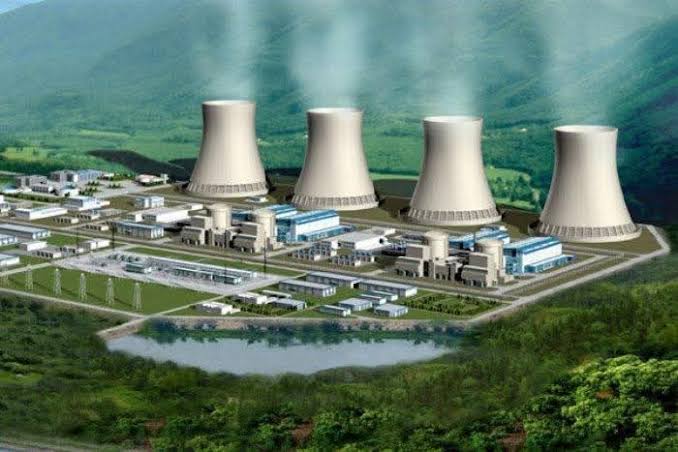
The proposed 2,000 MW capacity should not automatically be interpreted as a single plant or a single construction phase. Nuclear programmes are commonly developed through multiple units, and Ghana could theoretically reach 2,000 MW through two large reactors, a combination of large and small units, or several SMRs deployed over a longer period. Each configuration would produce very different financial, grid and project-management implications.
A two-unit large-reactor programme could provide substantial economies of scale and a significant quantity of firm electricity, but it would also require a strong transmission system, large amounts of financing and sufficient reserve capacity to manage the temporary loss of one large generating unit. A phased SMR programme could allow capacity to be introduced more gradually, but the economics would depend heavily on achieving repeated deployment, standardisation and sufficiently low financing costs.
The government should therefore eventually distinguish between the capacity envisaged for the first nuclear power project and the country’s longer-term nuclear fleet objective. Without this distinction, the 2,000 MW figure risks being interpreted as an immediate project commitment when it may instead represent a longer-term programme ambition. Clear sequencing will be especially important because Ghana must ensure that electricity demand, transmission infrastructure and financing capability grow alongside the nuclear programme.
Financing Could Ultimately Determine Which Technology Advances
The most consequential element of any future Rosatom proposal may not be the reactor design itself but the financing structure accompanying it. Ghana’s nuclear programme does not currently lack technology suppliers. What remains much more difficult is identifying a commercial structure capable of financing a multi-billion-dollar project without placing unsustainable pressure on the public finances, electricity tariffs or the country’s foreign-exchange position.
Any Russian offer should therefore be compared with Chinese, American and other prospective financing structures using a full-project approach. The relevant considerations include the interest rate, loan tenor, grace period, sovereign-guarantee requirements, currency denomination, construction-risk allocation, cost-overrun responsibility, fuel arrangements, long-term technical support, spent-fuel obligations and decommissioning liabilities. These factors can have as much influence on the final cost of nuclear electricity as the price quoted for the reactor itself.
This is particularly important because nuclear projects are highly sensitive to the cost of capital. A reactor with a relatively competitive engineering price can become expensive if financing costs are high or if delays significantly extend the period during which interest accumulates before the plant begins earning revenue. Conversely, a more expensive reactor could produce more affordable electricity if accompanied by long-tenor concessional financing and strong construction-risk guarantees. Ghana should therefore treat the financing package as an integral part of the technology decision rather than as a separate negotiation conducted after the reactor has already been selected.
Site Development and Grid Readiness Remain Fundamental
Ghana has made important progress in site selection, but selecting a preferred site is not equivalent to completing the site-development process. Detailed characterisation must continue to establish the geological, seismic, hydrological, meteorological and environmental conditions that would influence plant design and licensing. The country must also continue environmental impact assessment, infrastructure planning and the acquisition of the technical data required to support a defensible safety case.
The new Russian discussions have not yet clarified whether Rosatom is evaluating the already identified Nsuban site, whether the potential 2,000 MW programme would use the same site, or whether a future additional location could be required. This is an important issue because site conditions affect reactor technology, cooling requirements, construction cost, emergency planning and environmental protection. The programme should therefore avoid treating technology selection and site development as entirely separate processes.
Grid readiness is equally important. A nuclear programme approaching 2,000 MW would represent a major addition to Ghana’s power system, and the transmission network must be capable of carrying that electricity while remaining stable during outages. The size of the largest generating unit also matters because the grid must maintain sufficient reserve capacity to compensate if that unit disconnects unexpectedly. These considerations may influence whether Ghana ultimately favours one or more large reactors, a phased SMR programme or a hybrid approach over a longer period.
Vendor Competition Could Strengthen Ghana’s Negotiating Position
The growing interest of major nuclear suppliers gives Ghana a potentially valuable bargaining position. A country with a credible programme, identified sites, a dedicated regulator and an established nuclear workforce is more attractive to vendors than a country that has only announced a political ambition. Ghana can use that credibility to insist on stronger commercial terms and deeper domestic participation.
Localisation should therefore become a central component of vendor evaluation. Ghana should assess not only how much of the project could be sourced locally during construction but also what capabilities would remain in the country after the plant is completed. Workforce training, engineering services, maintenance capability, manufacturing opportunities, research collaboration and supply-chain qualification can all create value beyond the electricity generated by the plant itself.
Competition can also improve risk allocation. Vendors seeking to secure the Ghanaian project may be willing to provide stronger construction guarantees, participate in financing or assume greater responsibility for cost and schedule performance. Ghana should use that competitive environment deliberately, while recognising that prolonged competition without convergence can eventually become counterproductive.
Regulatory Independence Must Remain Central
The increasing number of international nuclear partners makes regulatory independence even more important. Government may determine which technology and financing structure best serve national energy policy, but the Nuclear Regulatory Authority must independently determine whether the chosen project meets Ghana’s safety, security and environmental requirements.
Political agreements, diplomatic relationships and financing offers cannot substitute for a regulatory safety assessment. The regulator must have sufficient specialist personnel, technical resources and institutional authority to review whichever technology is ultimately proposed. It must also be capable of imposing conditions, requiring additional information or rejecting elements of an application if the safety case is inadequate.
This separation between policy selection and regulatory approval is one of the foundations of a credible nuclear programme. Ghana’s international reputation as a newcomer will depend partly on its ability to demonstrate that its regulator can act independently even when major political and financial interests favour rapid project development.
Ghana Now Needs Project Convergence
Ghana has already demonstrated sustained commitment to nuclear power through several political administrations. Institutions have been created, professionals trained, prospective sites identified and international partnerships developed. The next stage of the programme therefore requires more than additional declarations of cooperation.
The country now needs to move towards a clearly defined first project. That means converging around a reactor technology or technology class, a financing structure, an owner-operator model, a site-development programme, a grid-integration plan and a licensing pathway. New partnerships should be judged partly by whether they help Ghana resolve those remaining issues.
The new Rosatom discussions may eventually prove valuable if they provide competitive financing, a technology that fits Ghana’s grid and strong localisation opportunities. But if they simply add another unresolved pathway to an already crowded vendor landscape, they could complicate rather than accelerate the programme.
Conclusion
The Ghana–Russia discussions could become one of the most significant developments in Ghana’s nuclear power programme if they evolve into a concrete technology and financing proposal. A potential 2,000 MW development could broaden Ghana’s long-term nuclear ambition, increase competition among suppliers and create additional options for financing and industrial participation.
For now, however, the proposal remains preliminary. No specific Rosatom reactor has been publicly selected, no final financing arrangement has been announced, and no construction or licensing timetable has been established. The announcement should therefore be viewed as an important strategic opening rather than a committed project.
The central issue for Ghana is no longer whether international nuclear companies are interested in the country. They clearly are. The challenge is converting that interest into one technically sound, financially sustainable and properly regulated project that can actually be built. Whether the new Russian track helps Ghana cross that threshold will determine its real significance.
Related

From Summit Diplomacy to Nuclear Delivery: What Moscow’s 2026 Russia–Africa Summit Means for Africa’s Nuclear Future
By Nuclear Africa• November 1, 2026
Ethiopia Begins Defining a 2.4 GW Nuclear Power Programme as Three Potential Sites Emerge
By Nuclear Africa• November 1, 2026
Namibia’s Etango Uranium Project Takes Final Investment Decision and Moves Into Full-Scale Construction
By Nuclear Africa• November 1, 2026
South Africa Could Become a Major HALEU Supplier Under New Pelindaba Nuclear Fuel Venture
By Nuclear Africa• November 1, 2026