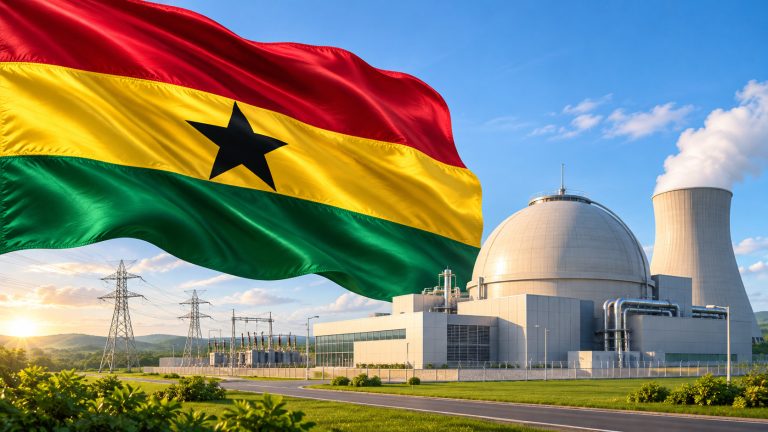
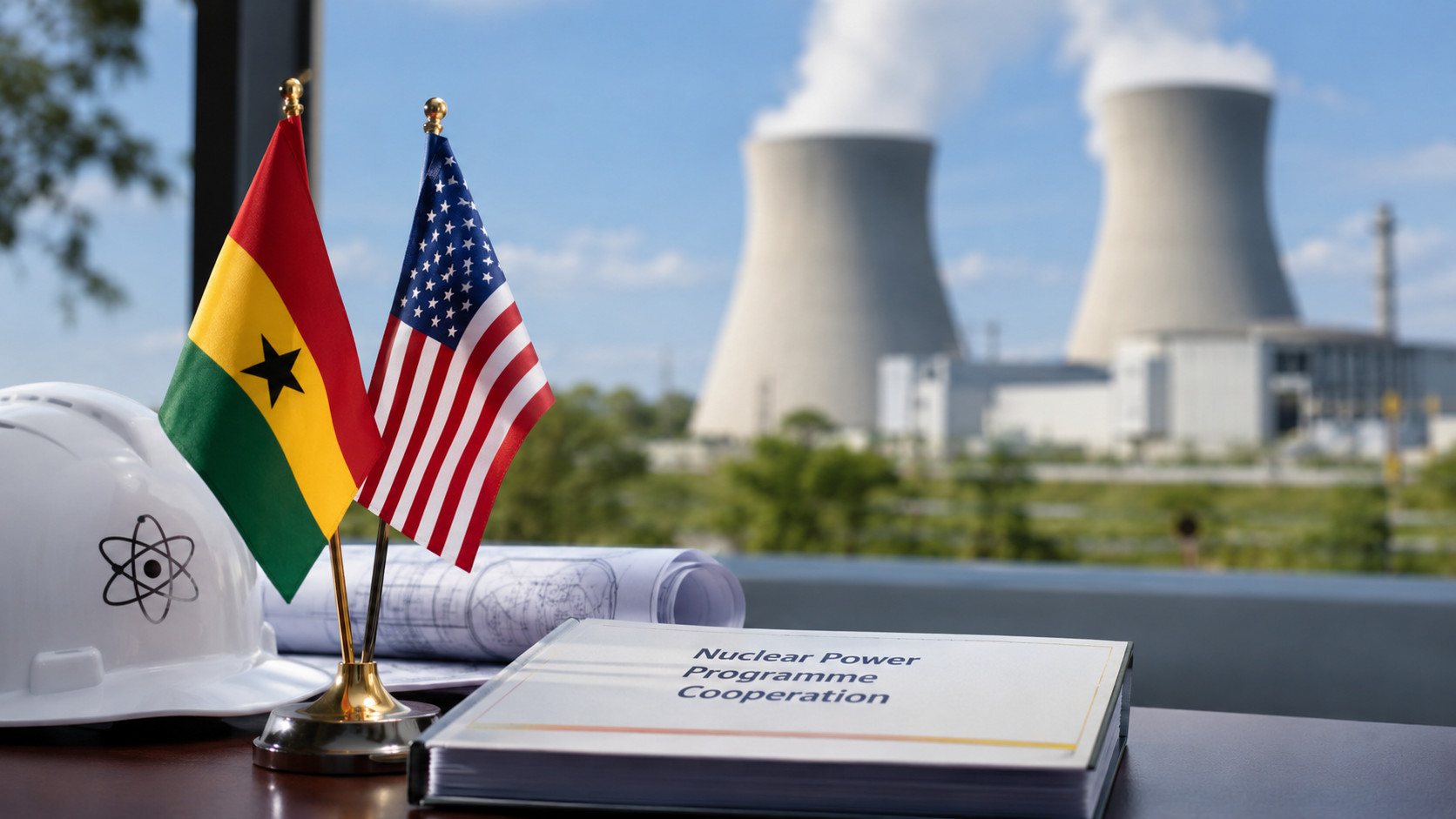
Ghana is seeking stronger cooperation with the United States to accelerate the development of its first nuclear power plant, as the West African country prepares to implement a US$200 million nuclear-readiness programme announced in its 2027 national budget.
The latest diplomatic initiative highlights Ghana’s efforts to mobilise international financing, technical expertise and institutional support for a nuclear energy programme that has gained renewed political momentum.
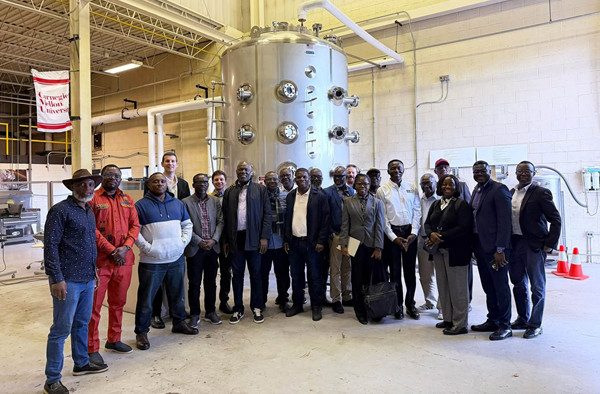
A Ghanaian delegation led by Deputy Minister for Energy and Green Transition Richard Gyan-Mensah undertook a five-day working visit to the United States, engaging government agencies, nuclear industry representatives and academic institutions on opportunities to advance the country’s nuclear power ambitions.
The engagements come at a critical point in Ghana’s nuclear development journey, with the government targeting the completion of key preparatory activities and the signing of an engineering, procurement, construction and financing (EPC+F) contract by December 2028.
Ghana Deepens Nuclear Cooperation with Washington
The Ghanaian delegation’s engagements included discussions with US nuclear industry stakeholders, the Nuclear Energy Institute and George Mason University, among other institutions.
The discussions explored potential cooperation in nuclear project preparation, financing, technology assessment, regulatory capacity building, nuclear safety and security, workforce development and industrial supply-chain participation.
Of particular significance was the exploration of grant-funded preparatory studies, project financing arrangements and investment guarantees that could help Ghana address some of the substantial financial and technical requirements associated with developing its first nuclear power plant.
Independent technology assessments were also identified as a potential area of cooperation, reflecting the importance of evaluating nuclear technologies against Ghana’s electricity system, infrastructure capabilities, financing conditions and long-term development objectives.
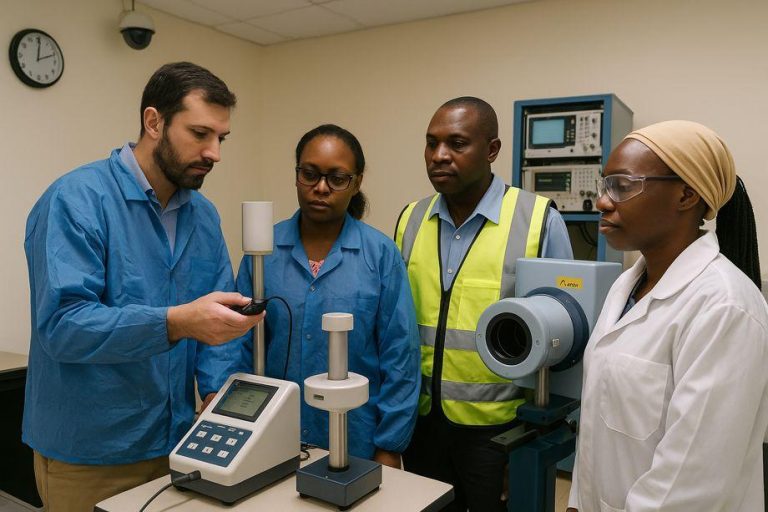
Academic partnerships and specialised training could further support Ghana’s efforts to develop the technical workforce needed to construct, regulate, operate and maintain a nuclear power facility.
However, the discussions represent potential areas of collaboration rather than confirmed financing commitments or finalised project agreements.
$200 Million Commitment Signals New Implementation Push
Ghana’s engagement with the United States follows the government’s announcement of a US$200 million nuclear-readiness programme covering January 2027 to December 2028.
The programme is intended to accelerate preparations for the country’s first nuclear power plant, including site studies, technology selection, environmental assessments, financing arrangements, licensing preparations, nuclear safeguards, emergency preparedness and development of the nuclear safety case.
The government has also outlined plans to train more than 2,000 scientists as part of efforts to strengthen the country’s nuclear-related human resource capabilities.
The December 2028 target is focused on investment readiness and the conclusion of an EPC+F contract, rather than the commencement of nuclear electricity generation.
This distinction is significant because nuclear power development requires extensive regulatory approvals, engineering work, financing arrangements and construction activities before a plant can begin commercial operation.
The US$200 million allocation should therefore be understood as an investment in the preparatory foundations of Ghana’s nuclear power programme, not as the total capital cost of constructing a nuclear power plant.
Ghana Maintains State Ownership Ambition
An important feature of Ghana’s emerging nuclear development strategy is the government’s stated intention to retain full state ownership of the proposed nuclear power plant.
Under the approach outlined in the 2027 Budget, international partners may provide technology, engineering, financing and specialist services without necessarily acquiring ownership of the facility.
The government has ruled out an independent power producer ownership structure for the planned state-owned nuclear baseload project.
This position places particular importance on the design of financing arrangements, procurement contracts and the institutional framework for ownership and operation.
Ghana will need to balance its objective of maintaining national control over strategic electricity infrastructure with the considerable financing, technical and managerial demands associated with nuclear power development.
International cooperation with countries such as the United States could provide important support, particularly through export-credit arrangements, technical assistance, project-development services and specialised expertise.
Nevertheless, any financing structure will need to address long-term fiscal obligations, construction risks, foreign-exchange exposure and the eventual cost of electricity.
Moving Towards Nuclear Investment Readiness
Ghana is currently implementing Phase II of the International Atomic Energy Agency’s Milestones Approach, which guides countries developing their first nuclear power programmes.
The phase focuses on the preparatory work required before major procurement and contractual commitments, including strengthening the legal and regulatory framework, assessing potential sites, developing human resources and establishing credible financing and project implementation arrangements.
Ghana has already made progress in establishing key institutions and advancing technical studies. However, several important decisions and preparatory activities remain outstanding, including the completion of site-related processes, technology selection, financing arrangements and the institutional requirements for project implementation.
The latest engagement with Washington could help address some of these requirements if the discussions lead to clearly defined technical assistance, financing support and institutional cooperation.
For Ghana, the central challenge is increasingly shifting from securing international expressions of support to translating partnerships into measurable implementation progress.
This will require coordination among the Ministry of Energy and Green Transition, Nuclear Power Ghana, the Nuclear Power Institute, the Nuclear Regulatory Authority and other institutions involved in the national nuclear power programme.
Wider Implications for Africa’s Nuclear Energy Ambitions
Ghana’s latest diplomatic initiative also reflects a broader trend across Africa, where countries considering nuclear power are increasingly exploring international partnerships to address energy security, industrialisation and long-term electricity demand.
Nuclear power development requires sustained political commitment, significant financial resources, specialised human capital and robust institutions capable of managing complex infrastructure over several decades.
For emerging nuclear countries, international cooperation can help bridge critical technical and financing gaps. However, successful programmes must also establish domestic capabilities in nuclear safety, security, safeguards, regulation and project governance.
Ghana’s experience could offer useful lessons for other African countries seeking to translate nuclear energy ambitions into bankable infrastructure projects.
The combination of domestic readiness funding and international diplomatic engagement may provide a stronger foundation for progress, provided that financial commitments are accompanied by transparent implementation arrangements and credible institutional oversight.
The Road to 2028
Ghana’s renewed engagement with the United States comes at a consequential moment for the country’s nuclear power ambitions.
With a US$200 million readiness commitment and a December 2028 target for major contractual progress, the government has established a more defined timetable for advancing the programme.
The immediate priority will be converting diplomatic discussions into practical cooperation agreements, funded technical activities and measurable progress towards completing the requirements for a nuclear investment decision.
For Ghana, the success of the latest initiative will ultimately be measured not by the number of international partnerships announced, but by their contribution to developing a safe, secure, financially credible and institutionally sustainable nuclear power programme.
As the country moves towards its next major nuclear milestone, the transition from nuclear diplomacy to investment readiness will be decisive.
Related

From Preparedness to Response: Advancing Ghana’s Capacity to Manage Radiological Crime Scenes
By Nuclear Africa• November 17, 2026Ghana Commits US$200 Million to Nuclear Power Readiness, Sets 2028 Deadline for Construction Contract
By Nuclear Africa• November 13, 2026
Kenya’s First ARTEMIS Review Puts Nuclear Waste Governance at the Centre of Its Energy Ambitions
By Nuclear Africa• November 11, 2026South Africa’s 5,200 MW Nuclear Expansion Faces Its Real Test: From Policy to Procurement
By Nuclear Africa• November 11, 2026