By: Lennox Assan, CNSSP
Ghana has taken an important step towards strengthening its national nuclear security preparedness following the successful organisation of a National Workshop on Radiological Crime Scene Management in Accra.
The five-day workshop, held from 9 to 13 November 2026 at the Detective Training Academy of the National Police Training School, was conducted by the International Atomic Energy Agency (IAEA) and the Government of Ghana through the Nuclear Regulatory Authority (NRA).
The initiative brought attention to an increasingly important dimension of national security: the ability of countries to investigate criminal activities involving radioactive materials while protecting investigators, emergency responders, the public and the environment from potential radiation hazards.
As radioactive materials continue to support essential activities in medicine, industry, agriculture, mining and scientific research, countries must also strengthen their capabilities to prevent, detect and respond to their unauthorised possession, theft, trafficking or malicious use.
For Ghana, the workshop represents more than a specialised training programme. It reinforces the need to translate technical expertise and institutional cooperation into practical national capabilities for managing complex nuclear security incidents.
Understanding Radiological Crime Scene Management
A radiological crime scene presents challenges that extend beyond conventional criminal investigations.
Unlike an ordinary crime scene, the presence or suspected presence of radioactive materials introduces potential radiation exposure and contamination hazards that can affect investigators, emergency responders, forensic evidence and surrounding communities.
Responding effectively requires the integration of two equally important objectives: ensuring the safety of personnel and the public while preserving the integrity of criminal investigations.
Investigators must be able to recognise potential radiological hazards, establish appropriate scene controls, preserve evidence and coordinate with radiation protection specialists before undertaking activities that could expose personnel to unnecessary risks.
At the same time, radiation protection and technical response measures must be implemented in ways that support lawful investigations and maintain the evidential integrity of materials collected from the scene.
This creates a complex operational environment in which law enforcement officers, forensic investigators, radiation protection specialists, emergency responders and other competent authorities must work closely together.
Successful radiological crime scene management therefore depends not only on technical expertise but also on clearly defined responsibilities, effective communication and coordinated operational decision-making.
From Classroom Learning to Practical Response
The Accra workshop combined technical presentations, discussions and practical exercises designed to strengthen participants’ understanding of the specialised requirements for managing radiological crime scenes.
Training covered nuclear security events, radiological health and safety, incident command and coordination, forensic investigations, scene control, hazard assessment and the proper handling of evidence.
Participants were introduced to approaches for identifying and assessing radiation hazards, establishing controlled areas and implementing appropriate protective measures during investigations involving radioactive materials.
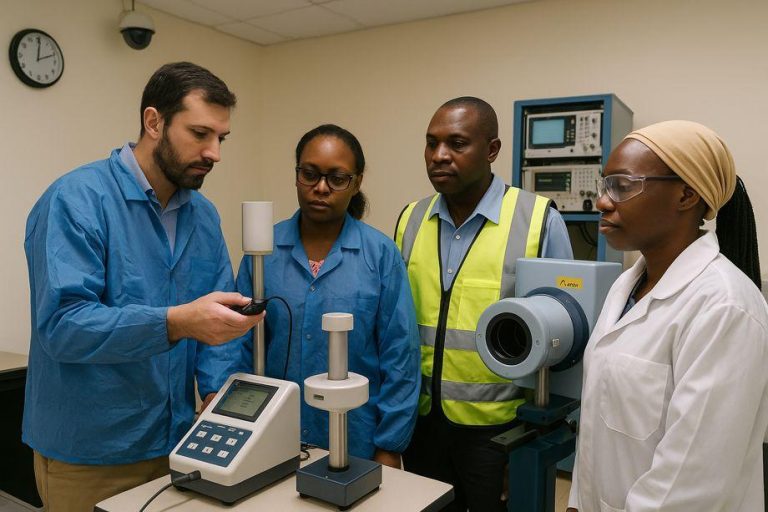
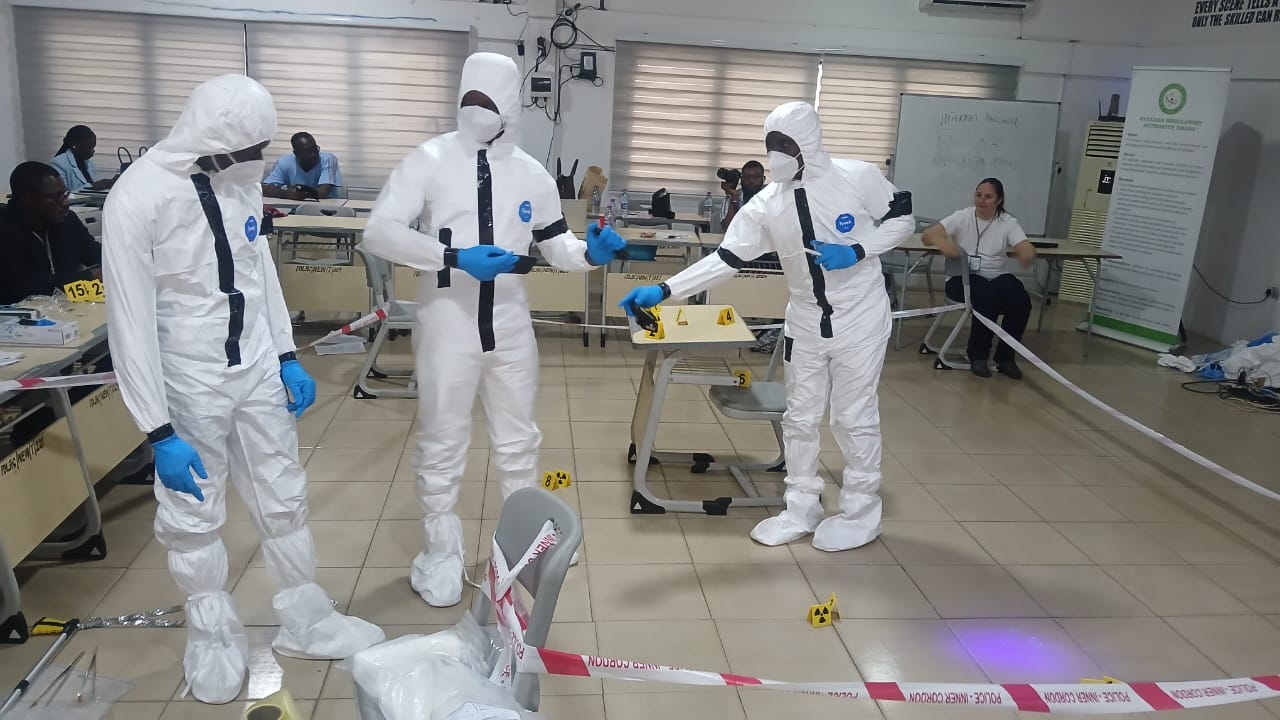
Practical activities provided opportunities to use radiation measurement equipment, examine evidence collection procedures in potentially contaminated environments and apply essential safety precautions.
Tabletop exercises and a live-play exercise further allowed participants to test their understanding of response procedures and examine how different institutions would coordinate their activities during a simulated radiological security incident.
These exercises demonstrated an essential principle of radiological crime scene management: criminal investigations must not come at the expense of radiation safety.
Personnel must be capable of securing and examining a scene while ensuring that investigative activities do not create unnecessary exposure risks or compromise broader emergency response operations.
The practical component of the workshop also illustrated why operational readiness cannot be achieved through classroom instruction alone. Responders must develop confidence in applying their knowledge under realistic conditions, particularly when decisions involve competing safety, security and investigative priorities.
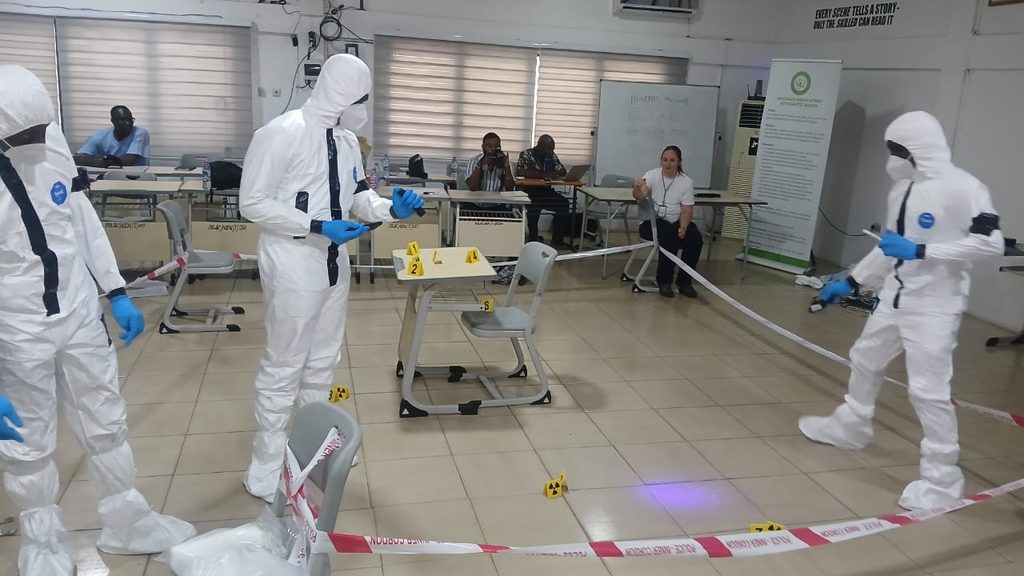
Photo caption: Participants wearing protective equipment undertake a simulated radiological crime scene investigation during the national workshop in Accra, November 2026.
Strengthening Ghana’s National Nuclear Security Response Architecture
The workshop carries important implications for Ghana’s national nuclear security infrastructure.
Although the Nuclear Regulatory Authority provides regulatory oversight and relevant technical expertise within its mandate, the management of incidents involving radioactive materials requires coordinated action across several institutions.
The Ghana Police Service plays a particularly important role because law enforcement personnel may be among the first authorities to encounter a suspected radiological crime scene.
Their ability to recognise unusual hazards, secure the scene, preserve evidence and request specialist assistance can significantly influence the effectiveness of the subsequent investigation and response.
Radiation protection specialists provide essential expertise in hazard identification, radiation measurement, exposure control and contamination management.
Forensic institutions contribute specialised investigative capabilities, while emergency response organisations support measures needed to protect responders, affected populations and the surrounding environment.
The effectiveness of the national response depends on how well these different capabilities are integrated.
Unclear institutional responsibilities, delayed technical assistance or inadequate communication can complicate incident management and create avoidable risks.
Conversely, established working relationships, agreed procedures and coordinated exercises can strengthen operational efficiency and promote safer investigations.
The Accra workshop therefore provides an opportunity to reinforce institutional cooperation and deepen the practical understanding of how different national actors contribute to radiological crime scene management.
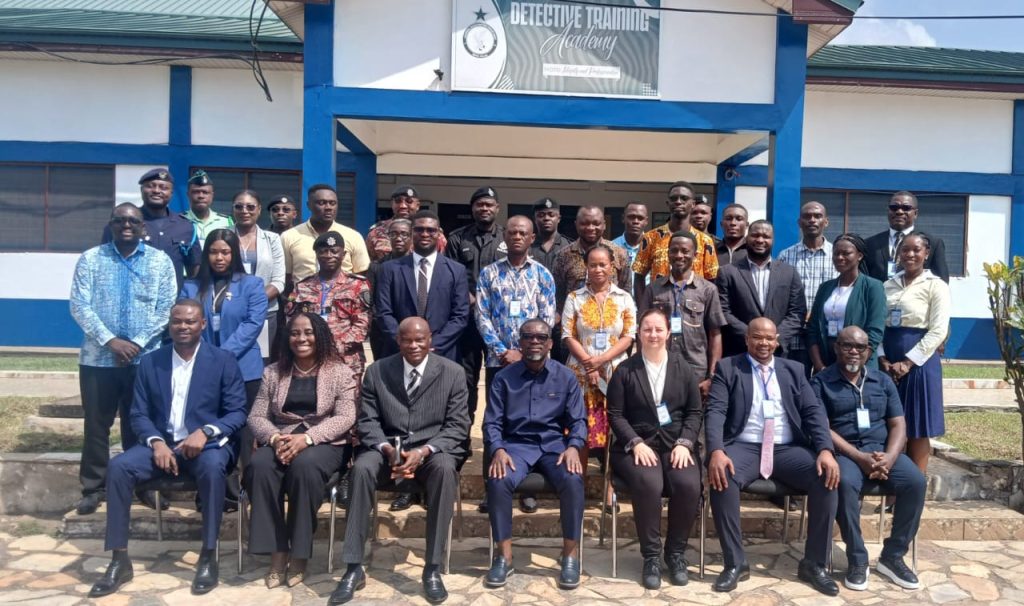
Photo caption: Workshop participants and representatives at the Detective Training Academy of the National Police Training School in Accra.
Protecting Evidence While Managing Radiation Hazards
One of the most technically demanding aspects of radiological crime scene management is maintaining the integrity of forensic evidence while ensuring that personnel and facilities remain protected against radiation hazards.
Evidence collected from a scene involving radioactive materials may require specialised assessment, handling, packaging, documentation, storage and transportation arrangements.
Potential contamination can complicate routine forensic procedures, while inappropriate handling may result in the loss, alteration or contamination of evidence.
Investigators must therefore maintain an appropriate chain of custody while coordinating closely with radiation protection personnel.
This is essential not only for safe operations but also for ensuring that evidence remains reliable and suitable for subsequent investigative and judicial processes.
The ability to reconcile these requirements illustrates why radiological crime scene management is a specialised national security capability rather than simply an extension of ordinary forensic investigation.
Implications for Nuclear Security Across Africa
The significance of Ghana’s initiative extends beyond its national borders.
Across Africa, radioactive materials are widely used in healthcare, industrial radiography, mining, agriculture, scientific research and other civilian applications.
These technologies contribute to socioeconomic development, but their use also creates responsibilities for effective regulatory control, physical protection and security preparedness.
Incidents involving the theft, unauthorised movement or illicit trafficking of radioactive materials may extend across institutional and geographical boundaries.
Addressing these risks requires cooperation among regulatory authorities, law enforcement agencies, customs organisations, intelligence services and emergency response institutions.
For African countries, strengthening radiological crime scene management should form part of broader national efforts to prevent, detect and respond to nuclear security events.
Regional cooperation can contribute significantly to these efforts.
Organisations and mechanisms such as the Forum of Nuclear Regulatory Bodies in Africa (FNRBA), the African Union and relevant international partnerships provide opportunities for technical exchanges, capacity building and the sharing of experiences.
Common training approaches, specialist networks and regional exercises could help countries develop more consistent capabilities for managing radiological security incidents.
Continued technical support from the IAEA also remains important, particularly in strengthening national response arrangements and helping countries develop the specialised expertise required for effective nuclear security.
Moving Beyond Training to Sustainable National Preparedness
Perhaps the most important message emerging from the Accra workshop is that preparedness must extend beyond the acquisition of radiation detection equipment or the training of individual specialists.
Effective radiological crime scene management requires a sustainable system of institutional coordination, operational procedures, trained personnel and regular practical exercises.
For Ghana, sustaining the benefits of the workshop means ensuring that the knowledge and experiences gained contribute to stronger institutional preparedness.
This includes maintaining clear arrangements for requesting technical support, strengthening coordination between investigative and radiation protection personnel, ensuring the availability of suitable equipment and providing opportunities for continued joint training.
Regular exercises are particularly valuable because they enable institutions to identify weaknesses in coordination, clarify operational responsibilities and strengthen decision-making before actual incidents occur.
There is also a need to ensure that lessons from specialised training are incorporated into institutional procedures and broader national response arrangements.
The long-term effectiveness of such initiatives should therefore be assessed not only by the number of personnel trained but also by improvements in operational readiness, institutional cooperation and the capacity to manage complex incidents safely and effectively.
A Critical Investment in National Security and Public Safety
The November 2026 workshop underscores the growing importance of integrating nuclear security, radiation protection, forensic science and emergency management into national preparedness systems.
As Ghana continues to benefit from the peaceful applications of nuclear science and technology, maintaining credible capabilities to respond to security incidents involving radioactive materials remains an essential responsibility.
For the wider African region, the initiative provides a useful example of how targeted capacity-building activities can contribute to stronger national nuclear security arrangements.
Ultimately, a radiological crime scene must be treated as both a potential security threat and a radiation protection challenge.
Managing it successfully requires the right expertise, appropriate equipment, effective institutional relationships and clearly understood response procedures.
The real measure of preparedness is not simply whether a country can identify a radioactive source or secure a crime scene, but whether its institutions can respond together, protect lives, preserve evidence and uphold the rule of law under challenging conditions.
Ghana’s continued investment in these capabilities will be important to strengthening national security, protecting communities and supporting a safer environment for the peaceful use of nuclear and radioactive materials.
About the workshop: The National Workshop on Radiological Crime Scene Management was conducted by the International Atomic Energy Agency (IAEA) and the Government of Ghana through the Nuclear Regulatory Authority (NRA), from 9 to 13 November 2026 at the Detective Training Academy of the National Police Training S itchool in Accra, Ghana.
Author Biography
Lennox Assan is a Ghana-based nuclear security and radiological emergency management professional and a Certified Nuclear Security (Specialised) Professional (CNSSP). His professional interests include nuclear security, radiological emergency preparedness and response, and strengthening institutional capabilities for managing nuclear and radiological security incidents.
Related

Ghana Seeks US Support to Accelerate Nuclear Power Programme Amid $200 Million Readiness Commitment
By Nuclear Africa• November 17, 2026Ghana Commits US$200 Million to Nuclear Power Readiness, Sets 2028 Deadline for Construction Contract
By Nuclear Africa• November 13, 2026
Kenya’s First ARTEMIS Review Puts Nuclear Waste Governance at the Centre of Its Energy Ambitions
By Nuclear Africa• November 11, 2026South Africa’s 5,200 MW Nuclear Expansion Faces Its Real Test: From Policy to Procurement
By Nuclear Africa• November 11, 2026