A new commercial framework between Necsa and Quantum Leap Energy could place South Africa inside one of the most strategically important emerging segments of the global nuclear fuel market. The proposal builds on Pelindaba’s existing nuclear infrastructure and prospective advanced-reactor demand, but financing, technology demonstration, licensing and construction must still be completed before commercial HALEU production becomes a reality.
By NuclearAfrica Editorial Desk
South Africa could re-emerge as an important international nuclear fuel-cycle player following a new commercial arrangement aimed at developing high-assay low-enriched uranium, commonly known as HALEU, at the Pelindaba nuclear complex. The agreement brings together the South African Nuclear Energy Corporation and Quantum Leap Energy in a proposed joint venture that would develop a test facility before progressing towards commercial-scale production.
The potential significance extends far beyond South Africa. Many advanced reactor developers are designing technologies that require fuel enriched to higher levels than the uranium used by most existing commercial reactors. As those reactor programmes move closer to deployment, the limited availability of non-Russian HALEU is emerging as one of the principal constraints on the advanced nuclear sector. If South Africa can establish a credible commercial supply, the country could gain a strategic position in a market expected to grow alongside the next generation of nuclear reactors.
The project nevertheless remains in development. The commercial framework is important because it clarifies ownership and implementation responsibilities, but South Africa is not yet producing HALEU commercially. Capital still has to be secured, enrichment technology must demonstrate its performance, regulatory approvals must be completed and the facilities must be constructed and commissioned.
Why HALEU Is Becoming Strategically Important
Most commercial nuclear power reactors operating today use uranium enriched to below 5% uranium-235. HALEU typically contains between 5% and 20% uranium-235 and can enable advanced reactor designers to achieve smaller core sizes, longer refuelling intervals and different power-density characteristics.
These technical advantages have made HALEU attractive to several advanced-reactor developers. The difficulty is that the fuel supply chain has not expanded at the same pace as reactor development. A reactor may have a mature engineering design and an identified customer, but it cannot operate unless sufficient quantities of properly fabricated fuel are available when the plant is ready to load.
This mismatch has made HALEU a strategic issue for governments and reactor vendors. Developing additional supply capacity is therefore not simply a commercial opportunity; it is part of the infrastructure required for advanced nuclear deployment. South Africa’s proposed entry into this market could become particularly important if the country is able to establish production before global demand accelerates substantially.
Pelindaba Provides a Strong Existing Nuclear Foundation
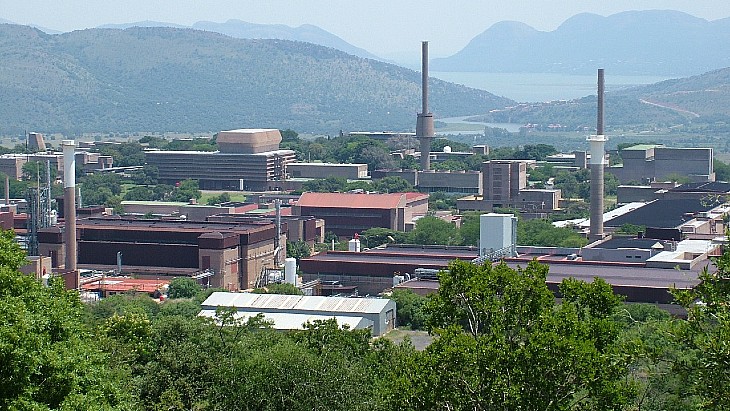
The selection of Pelindaba gives the venture advantages that a greenfield enrichment project would not possess. The site is South Africa’s principal nuclear research complex and already contains specialised nuclear infrastructure, research capability and an experienced technical workforce. Necsa has decades of experience handling nuclear materials, operating research facilities and working within national safeguards and regulatory arrangements.
This existing institutional base can reduce some of the challenges normally associated with establishing a new fuel-cycle facility. Technical personnel, security arrangements, material-control systems and nuclear culture already exist in some form, even though they will need to be adapted and expanded for commercial HALEU production.
Pelindaba also carries symbolic importance. South Africa has a long and complex nuclear history, including indigenous enrichment capability and the former nuclear weapons programme that the country dismantled before joining the global non-proliferation system as a non-nuclear-weapon state. A modern, safeguards-compliant HALEU project would represent a very different use of enrichment technology, focused on peaceful international fuel markets rather than strategic weapons capability.
The Commercial Framework Moves the Project Beyond Preliminary Cooperation
The latest agreement represents a progression from earlier cooperation between Necsa and Quantum Leap Energy. The partners have moved from preliminary discussions towards a structure that sets out ownership, financing responsibilities and operational roles. Quantum Leap Energy is expected to hold the majority interest and lead capital raising and operations, while Necsa would contribute site access, institutional support and expertise relating to safeguards and regulation.
That progression matters because many nuclear fuel-cycle projects remain trapped for years at the memorandum stage. A binding commercial framework indicates that the parties are attempting to define how a real project would be implemented.
However, the distinction between a commercial framework and an operating facility remains important. The venture still needs to complete technical demonstration, secure funding and satisfy the applicable South African regulatory requirements. Commercial output cannot be assumed simply because the ownership structure has been agreed.
Prospective TerraPower Offtake Strengthens the Market Case
The presence of prospective customer interest could strengthen the project significantly. Quantum Leap Energy has announced supply arrangements associated with TerraPower, one of the most prominent advanced-reactor developers in the United States. The detailed quantities and delivery schedule remain commercially important questions, but the existence of a prospective customer can make a capital-intensive fuel project more attractive to investors.
Fuel-cycle infrastructure generally requires substantial upfront investment before revenue begins. Long-term offtake arrangements can reduce market uncertainty by demonstrating that future production has potential buyers. This is especially important in the HALEU market because demand depends on the deployment schedules of advanced reactor developers, many of which are themselves still moving through licensing and construction.
The project will therefore need to align its production schedule carefully with actual reactor demand. Building capacity too early could create underutilised infrastructure, while building too slowly could allow competitors to capture the market.
Enrichment Requires Exceptional Safeguards and Regulatory Discipline
The commercial opportunity must be balanced against the sensitivity of uranium enrichment. Although HALEU remains well below weapons-grade enrichment, the technology required to enrich uranium is internationally sensitive. Any commercial facility must therefore operate under rigorous national regulation, safeguards, nuclear material accounting and physical security.
South Africa’s historical experience makes this particularly important. The country’s decision to dismantle its nuclear weapons and place its peaceful nuclear activities under international safeguards is a major part of its modern non-proliferation identity. A new enrichment venture will therefore be judged not only on commercial performance but also on the transparency and credibility of its safeguards arrangements.
This creates both responsibility and opportunity. If South Africa can demonstrate that advanced fuel-cycle activities can be managed securely and transparently within a strong safeguards framework, the project could strengthen the country’s international nuclear standing as well as its commercial position.
Africa Has an Opportunity to Move Further Down the Nuclear Value Chain
The proposed HALEU venture also highlights a wider African industrial question. The continent is already important to the nuclear fuel cycle because of its uranium resources, particularly in countries such as Namibia. Yet much of the higher-value processing associated with nuclear fuel takes place outside Africa.
South Africa’s proposed enrichment venture could begin changing that pattern. Instead of participating only through raw-material extraction or importing finished reactor technology, Africa could capture more value through specialised nuclear fuel services. This would represent a shift from resource supply towards technology-intensive industrial participation.
The opportunity extends beyond enrichment. Nuclear expansion creates demand for conversion, fuel fabrication, engineering, specialised manufacturing, transport, radiation protection, cybersecurity, safeguards services and technical education. African countries should therefore consider how nuclear growth can support industrial development rather than treating reactor procurement as the entire nuclear economy.
Commercial Production Is Promising but Still Uncertain
The venture remains exposed to several risks. The technology must demonstrate that it can enrich uranium reliably at the required scale. Capital must be raised on commercially acceptable terms. Regulators must be satisfied with the design, security arrangements and safeguards provisions. The facilities must then be constructed, commissioned and operated successfully.
Global demand is another uncertainty. Advanced reactors are attracting substantial government and private investment, but their deployment schedules remain fluid. If major projects are delayed, HALEU demand could grow more slowly than currently anticipated. The South African venture will therefore need to develop production capacity in a way that remains aligned with the emerging market.
These uncertainties do not diminish the strategic significance of the project. They simply mean that the transition from promising commercial framework to operational fuel supplier should be judged according to actual implementation milestones.
Conclusion
The proposed Pelindaba HALEU venture could become one of Africa’s most strategically significant nuclear fuel-cycle developments. It combines an established nuclear site, an experienced national institution, a potentially growing international market and prospective customer demand.
If successfully implemented, the project could place South Africa inside a critical segment of the advanced-reactor supply chain and demonstrate that Africa’s nuclear future is not limited to importing reactors or exporting raw uranium. The continent could participate in higher-value technologies and services that support the international nuclear industry.
For now, however, the project remains a serious development opportunity rather than an operating commercial facility. Financing, technical demonstration, regulatory approval and construction will determine whether South Africa can convert the Pelindaba proposal into a durable international position in advanced nuclear fuel.
Related

From Summit Diplomacy to Nuclear Delivery: What Moscow’s 2026 Russia–Africa Summit Means for Africa’s Nuclear Future
By Nuclear Africa• November 1, 2026
Ethiopia Begins Defining a 2.4 GW Nuclear Power Programme as Three Potential Sites Emerge
By Nuclear Africa• November 1, 2026
Namibia’s Etango Uranium Project Takes Final Investment Decision and Moves Into Full-Scale Construction
By Nuclear Africa• November 1, 2026
Russia’s African Nuclear Strategy Is Expanding — But the Continent Must Distinguish Projects From Promises
By Nuclear Africa• November 1, 2026