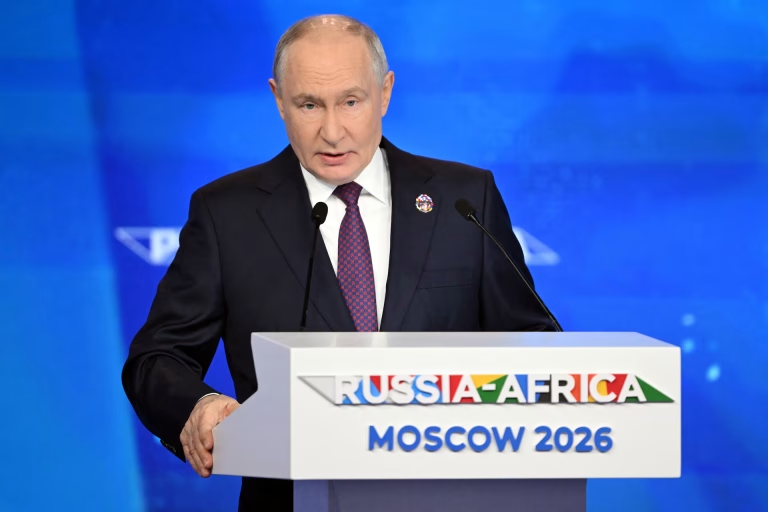
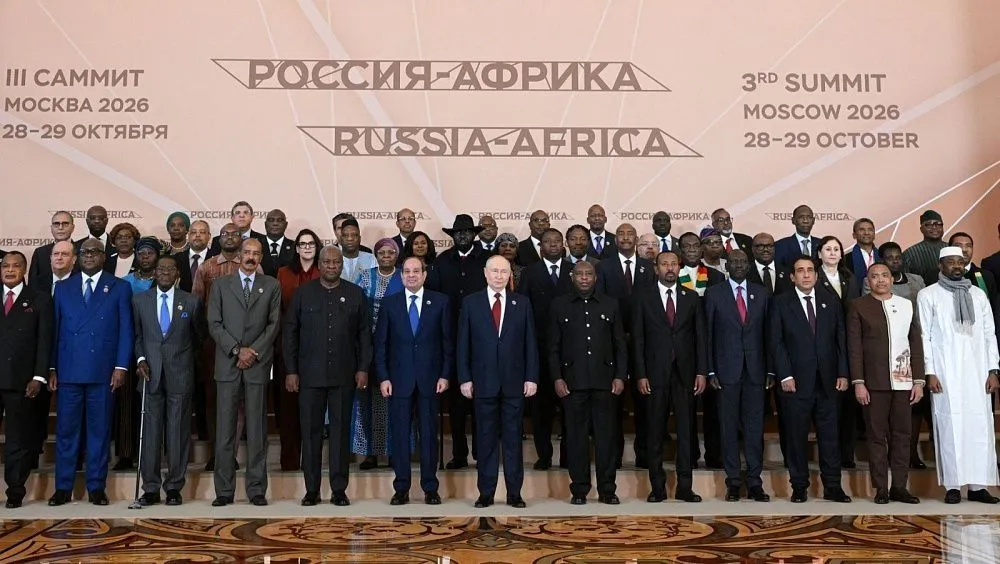
From Ghana and Ethiopia to Uganda, Rwanda and Togo, Russia is expanding nuclear cooperation across Africa while promoting large reactors, small modular reactors, floating nuclear power, research infrastructure and workforce development. The diplomatic momentum is substantial, but the continent must distinguish carefully between projects that have reached construction and agreements that remain at the level of planning, site studies or political cooperation.
By NuclearAfrica Editorial Desk
Russia’s nuclear engagement with Africa is entering a broader and more geographically diverse phase. Rosatom is no longer focusing only on a small number of flagship relationships but is increasingly positioning itself as a partner for countries at very different stages of nuclear development, offering technologies and services ranging from gigawatt-scale reactors and small modular reactors to floating nuclear units, research centres, fuel services and professional training.
The latest developments involving Ghana, Ethiopia, Uganda, Rwanda and Togo illustrate the scale of this strategy. At the same time, Rosatom is discussing floating nuclear technologies with several African coastal states and continues construction of the four-unit El Dabaa nuclear power plant in Egypt. The result is an increasingly complex African nuclear landscape in which Russian involvement stretches from actual reactor construction to very early-stage feasibility discussions.
This expansion is significant because it reflects growing African interest in nuclear energy as governments search for reliable electricity, industrialisation, lower-carbon power and greater energy security. Yet it also creates a risk that the sheer volume of agreements will be interpreted as evidence of an equally large construction pipeline. In reality, the maturity of the projects varies enormously, and understanding those differences is essential to evaluating Africa’s nuclear trajectory.
Egypt Remains the Benchmark for What a Real Construction Programme Looks Like
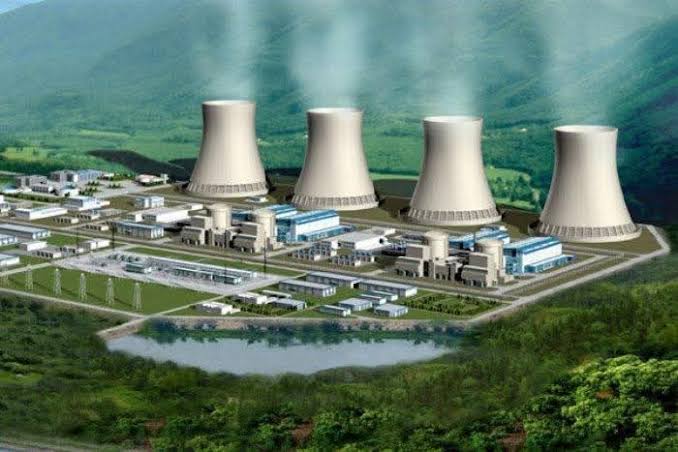
Egypt provides the clearest reference point for assessing the maturity of the other Russia–Africa nuclear relationships. At El Dabaa, four VVER-1200 reactors are physically under construction. The project has a defined technology, established contracts, financing arrangements, regulatory approvals and an active construction site. Major components are being manufactured and installed, and the programme has progressed through stages that most of Africa’s newer nuclear initiatives have not yet reached.
This makes Egypt fundamentally different from countries where nuclear cooperation is still framed around memoranda, roadmaps and early project-development agreements. The distinction is important because public discussion can easily compress several years of programme development into a simple headline suggesting that a country has “agreed to build” a nuclear power plant. In practice, there is a large difference between expressing an intention to develop nuclear energy and committing billions of dollars to a specific, licensed construction project.
Egypt’s experience also demonstrates the institutional depth required for implementation. A construction programme of this scale requires a capable owner-operator, an independent regulator, a mature site-development process, long-term financing, technical workforce development and extensive coordination between domestic institutions and the foreign vendor. Other African newcomers can therefore learn as much from the process surrounding El Dabaa as from the reactor technology itself.
Ghana Introduces Russia Into a Competitive Technology Environment
Ghana’s latest engagement with Rosatom is particularly significant because the country already has established relationships with Chinese and American nuclear companies. The discussion of a potential 2,000 MW project therefore creates a competitive environment that differs from countries where a single external supplier dominates the nuclear programme from the outset.
This competition could benefit Ghana if it produces stronger financing, localisation and project-risk terms. Chinese large-reactor technology, American SMR cooperation and a possible Russian proposal represent different approaches to reactor size, supply chain, financing and long-term technical dependence. Ghana can potentially use these differences to negotiate a project that better fits its grid, economy and industrial-development objectives.
The risk is that too many parallel pathways could delay project convergence. A newcomer country has limited technical and institutional resources, and those resources can become fragmented if multiple vendor processes continue indefinitely. Ghana’s challenge will therefore be to use international competition during the evaluation phase while eventually narrowing the field sufficiently to allow a specific project to enter detailed engineering, financing and licensing.
Ethiopia Is Moving From General Ambition Towards Project Definition
Ethiopia’s nuclear programme is becoming more tangible following the government’s announcement of an ambition involving two 1,200 MW reactors and the narrowing of an initial site-screening process from more than 30 locations to three candidates. This is a significant step because it begins to connect nuclear policy with actual project parameters, including scale, location and a broad development timeline.
The government’s acknowledgement that the programme could require at least a decade is also important. It recognises that nuclear power cannot be introduced simply through a technology-supply contract. Ethiopia must establish the legal and regulatory framework, build a qualified workforce, complete site investigations, develop the electricity grid, negotiate financing and create an owner-operator capable of managing a complex nuclear asset.
Russia is currently Ethiopia’s most visible international nuclear partner, but the programme remains far from construction. A final reactor technology has not been publicly confirmed, detailed site qualification is still required and a financing package has not been announced. Ethiopia therefore represents a country that is beginning to define a serious programme but has not yet crossed into an executable project.
Uganda Is Beginning to Link Nuclear Cooperation With Site-Specific Work
Uganda’s latest roadmap with Rosatom is notable because it connects high-level nuclear cooperation with the proposed Nakasongola nuclear site. The roadmap is intended to support further assessment of national infrastructure and identify steps that could eventually lead to engineering surveys associated with the site.
This remains an early stage, but site-specific work is important because it signals a transition from generic nuclear policy towards technical project preparation. A prospective reactor site must be evaluated for geology, seismic risk, hydrology, cooling-water availability, environmental conditions, access and surrounding population before it can support a credible construction proposal.
If Uganda proceeds into detailed site surveys, the country will begin generating some of the technical information required for later technology selection and licensing. The pace at which this work is completed, and the extent to which it is integrated with national regulatory development, will determine whether Uganda’s nuclear ambitions begin to acquire the same institutional depth as more advanced newcomer programmes.
Rwanda Is Building a Broader Nuclear Ecosystem
Rwanda’s approach is distinctive because it combines prospective electricity generation with nuclear science, research infrastructure and human-resource development. The country is working with Rosatom on national nuclear infrastructure, an SMR pathway and the proposed Centre for Nuclear Science and Technology, while simultaneously sending students abroad for nuclear-related education and participating in IAEA infrastructure reviews.
This strategy could allow Rwanda to derive benefits from nuclear technology before a commercial power reactor becomes operational. Research reactors and nuclear science centres can support medicine, agriculture, industrial applications, education and scientific research, while also creating the workforce and institutional culture required for more complex power projects.
The commercial SMR programme nevertheless remains at an earlier stage. Rwanda has not yet publicly announced the final reactor technology, financing package, site or construction licence for the electricity-generating project. The country’s progress is therefore best understood as rapid institutional preparation rather than imminent commercial reactor construction.
Togo Shows How Early-Stage Nuclear Cooperation Should Be Interpreted
Togo’s new cooperation framework with Rosatom illustrates the earliest stage of nuclear programme development. The agreement provides a basis for examining peaceful nuclear applications across electricity, health, agriculture and workforce development. Floating nuclear power has attracted particular attention, but the Togolese government has explicitly cautioned that the agreement should not be interpreted as confirmation that a floating nuclear plant will be built.
That clarification is important because early cooperation agreements often establish mechanisms for feasibility studies, capacity building and technical dialogue rather than committing the parties to construction. In many cases, the purpose of the agreement is precisely to determine whether a nuclear project makes sense for the country.
For Togo, the immediate value may therefore lie in understanding the technology, developing regulatory knowledge and assessing how nuclear applications could fit national development priorities. Whether this ultimately produces a power project will depend on future technical, economic and institutional analysis.
Floating Nuclear Power Introduces a Different African Nuclear Model
Rosatom’s promotion of floating nuclear power to African states may become one of the most important emerging technology discussions on the continent. Smaller floating units could theoretically provide electricity to countries whose grids are not ready for gigawatt-scale reactors, while also supporting coastal industrial operations, desalination or mining-related electricity demand.
The model could reduce some onshore construction requirements because the reactor is fabricated elsewhere and delivered to the host location. It could also allow the supplier to retain responsibility for major servicing and refuelling, potentially reducing some of the technical burden on the host country.
However, these advantages come with new questions. Regulatory jurisdiction must be clearly established, maritime security must be integrated with nuclear security, emergency arrangements must account for both marine and onshore populations, and liability provisions must address the international nature of the technology. The host country must also consider the strategic implications of depending on an external provider for fuel, maintenance and possibly ownership of the reactor itself.
Floating nuclear power could therefore be relevant to some African systems, but it should not be described as a shortcut that removes the need for strong national institutions.
Integrated Russian Nuclear Packages Offer Both Benefits and Risks
Rosatom’s competitiveness in Africa is partly based on its ability to offer integrated nuclear cooperation. Rather than supplying only a reactor, it can potentially provide fuel, training, research infrastructure, technical assistance and, in some cases, state-supported financing. This can be attractive for newcomer countries that lack domestic nuclear experience because it creates a relatively coherent development pathway.
The same integration can also create long-term dependence. A country that relies on one external partner for technology, fuel, software, maintenance, training and financing may remain tied to that partner throughout the plant’s operating life. Given that a nuclear reactor can operate for sixty years or longer, supplier dependence becomes a strategic issue rather than merely a commercial consideration.
African governments should therefore evaluate integrated offers on the basis of their full lifecycle implications. Technology transfer, local workforce development, fuel security, spare-parts access and the ability to diversify technical support over time should all be considered during negotiations.
Africa Should Avoid Turning Nuclear Procurement Into Geopolitical Alignment
Russia’s growing presence will inevitably be assessed against competition from China, the United States, South Korea and European suppliers. African nuclear procurement should nevertheless remain focused on national development requirements rather than being reduced to geopolitical alignment.
The relevant questions are practical and long term. Countries need to know whether they can afford the project, whether the reactor has a credible licensing and operating history, whether the grid can accommodate the capacity, how the fuel cycle will be managed and how much domestic capability will be created. They must also assess whether the financing package is sustainable and whether the regulator can remain independent from political or commercial pressure.
A nuclear project will outlast most governments and political alliances. Technology selection should therefore be based on an assessment of what remains sustainable for the country over decades rather than what appears diplomatically attractive at a particular moment.
Regional Cooperation Could Strengthen African Bargaining Power
The growing number of African nuclear programmes creates an opportunity for deeper regional cooperation. Egypt is accumulating experience with construction, South Africa has decades of operating and regulatory experience, Ghana has developed substantial newcomer infrastructure, Morocco has research and regulatory capability, and regional bodies are strengthening safeguards and regulatory networks.
African institutions could use this accumulated experience to help newcomer countries become more informed customers. Joint training, regulatory cooperation, regional technical support and shared lessons from vendor negotiations could reduce duplication and strengthen national capability.
This would not require countries to surrender sovereign control over their nuclear programmes. Instead, regional cooperation could allow smaller states to access expertise that would be expensive to develop independently while preserving their own regulatory and policy authority.
Conclusion
Russia’s African nuclear strategy is clearly expanding, and the latest developments show that nuclear energy is gaining political importance across a broader group of African states. Rosatom is positioning itself across the full spectrum of nuclear development, from large-reactor construction and SMRs to floating plants, research centres and human-resource development.
The significance of this expansion should be recognised, but it should also be reported accurately. Egypt is constructing reactors. Ghana, Ethiopia, Uganda, Rwanda and Togo remain at different stages of planning, infrastructure development and project definition. The difference between those stages is substantial.
Africa’s nuclear future will ultimately be determined not by the number of cooperation agreements signed at international summits but by the number of programmes that can translate political ambition into financing, licensing, construction and safe long-term operation. That is the test against which the current wave of Russia–Africa nuclear diplomacy should eventually be judged.
Related

From Summit Diplomacy to Nuclear Delivery: What Moscow’s 2026 Russia–Africa Summit Means for Africa’s Nuclear Future
By Nuclear Africa• November 1, 2026
Ethiopia Begins Defining a 2.4 GW Nuclear Power Programme as Three Potential Sites Emerge
By Nuclear Africa• November 1, 2026
Namibia’s Etango Uranium Project Takes Final Investment Decision and Moves Into Full-Scale Construction
By Nuclear Africa• November 1, 2026
South Africa Could Become a Major HALEU Supplier Under New Pelindaba Nuclear Fuel Venture
By Nuclear Africa• November 1, 2026