Zambia has completed a preparatory review of its nuclear-power infrastructure with support from the International Atomic Energy Agency, advancing the country towards a formal assessment of whether it is ready to make an informed commitment to a nuclear power programme.
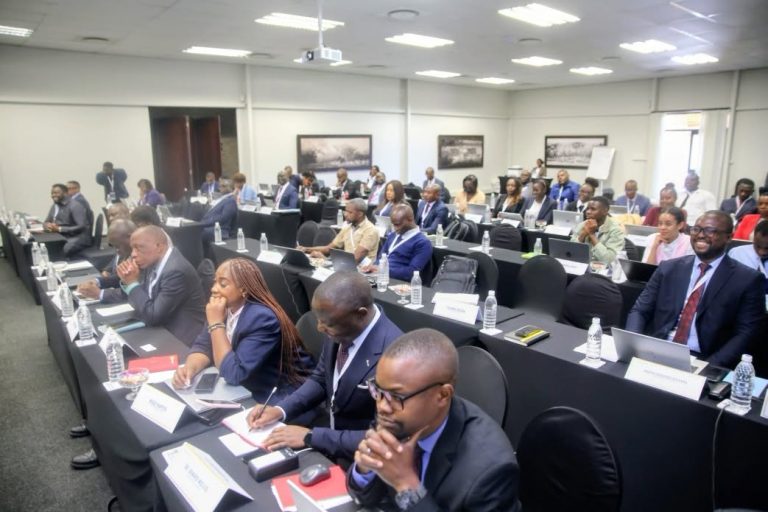
The Ministry of Technology and Science hosted the Pre-Integrated Nuclear Infrastructure Review exercise in Livingstone from 28 to 30 July 2026.
The programme incorporated support for Zambia’s Self-Evaluation Report and preparations for a future Integrated Nuclear Infrastructure Review, or INIR, mission.
Representatives from the Ministry, Radiation Protection Authority, Nuclear Energy Programme Implementing Organisation and IAEA examined the evidence supporting Zambia’s progress in nuclear governance, safety, security, safeguards, workforce development and institutional coordination.
Zambia Remains in Phase One
The IAEA representative participating in the exercise confirmed that Zambia remains in Phase One of the Agency’s Milestones Approach.
Phase One is the period during which a country considers whether nuclear power is an appropriate national option and undertakes the work required to make a knowledgeable commitment.
The IAEA framework identifies 19 infrastructure issues that newcomer countries must address progressively. These include national policy, nuclear safety, management, financing, legal and regulatory frameworks, safeguards, security, radiation protection, grid capacity, human-resource development, stakeholder involvement, emergency planning, radioactive-waste management and procurement.
A Phase One INIR mission does not approve a reactor project. It assesses whether the country has undertaken the studies, consultations and institutional preparations necessary to make an informed national decision.
Why Zambia Is Considering Nuclear Power
Zambia’s interest in nuclear energy is closely connected to the vulnerability of its electricity system.
The country relies heavily on hydropower, making electricity generation sensitive to drought, rainfall variability and changing reservoir conditions.
The government argues that nuclear power could contribute to a more diversified and reliable electricity mix while supporting industrialisation, scientific development and long-term energy security.
That strategic case, however, must be tested against Zambia’s electricity demand, grid size, public finances, alternative generation options and ability to sustain a nuclear programme over many decades.
The Pre-INIR process provides a structured way of examining those questions before the country enters technology procurement.
The Importance of the Self-Evaluation Report
A national Self-Evaluation Report is more than an administrative requirement.
It should provide evidence showing what the country has completed, what remains outstanding, which institution is responsible for each activity and whether plans for the next phase are realistic.
The report should therefore examine difficult questions, including:
- whether Zambia’s nuclear institutions have clear and non-overlapping mandates;
- whether the Radiation Protection Authority has sufficient legal independence and resources;
- whether the grid can accommodate a nuclear unit of the size being considered;
- how the programme and eventual plant would be financed;
- whether a credible owner-operator has been identified;
- whether Zambia has a long-term radioactive-waste strategy;
- how the required workforce will be developed and retained; and
- whether the public has been meaningfully involved.
A credible self-evaluation should identify weaknesses rather than attempt to present the programme as fully prepared.
Regulatory Independence
Radiation Protection Authority Board Chairperson Msafiri Sinkala used the Livingstone exercise to reaffirm the importance of regulatory independence, technical competence and adequate resourcing.
That issue is central to Zambia’s future programme.
The institution promoting nuclear power should not control licensing or safety decisions. The regulator must be able to assess applications, require additional information, impose conditions, conduct inspections and refuse authorisation where safety requirements are not met.
Formal legal independence is not enough if the regulator lacks staff, laboratories, funding or access to independent technical expertise.
Lessons for Other African Newcomers
Zambia joins a growing group of African countries using the IAEA Milestones Approach to structure their nuclear ambitions.
Ghana, Kenya, Rwanda and Uganda are also at different stages of infrastructure development.
The value of the approach is that it gives these countries a common framework while allowing each to proceed according to its circumstances.
It also creates a basis for regional learning.
African newcomer countries can share experience in nuclear law, workforce development, regulatory capacity, financing analysis, stakeholder engagement and grid planning without needing to select the same reactor technology.
NuclearAfrica Perspective
Zambia’s Pre-INIR exercise is significant because it moves the programme from broad political interest towards evidence-based institutional assessment.
But it should not be confused with readiness to build.
The most important outcome will not be whether Zambia receives favourable publicity. It will be whether the process identifies real gaps and produces a funded national action plan for addressing them.
A nuclear programme becomes credible when institutions are prepared to expose weaknesses before those weaknesses become project failures.
Sources: Zambia Ministry of Technology and Science; Radiation Protection Authority; IAEA; Zambia Monitor.
Related


Africa Deepens Nuclear Safeguards Capacity as AFCONE Convene Hands-On Training in Nairobi
By Nuclear Africa• August 24, 2026
A 300 MW SMR Could Support More Than 12,500 Construction Jobs in Ghana: New Study Tests Nuclear’s Economic Case
By Nuclear Africa• August 24, 2026
Ghana Targets 1,000 MW of Nuclear Power by the Mid-2030s: What Must Happen Before Construction Can Begin?
By Nuclear Africa• August 24, 2026