As advanced reactor developers continue to push the boundaries of nuclear technology, an unconventional reactor concept being proposed in the United States is raising important questions about innovation, regulation and public confidence that resonate far beyond North America.
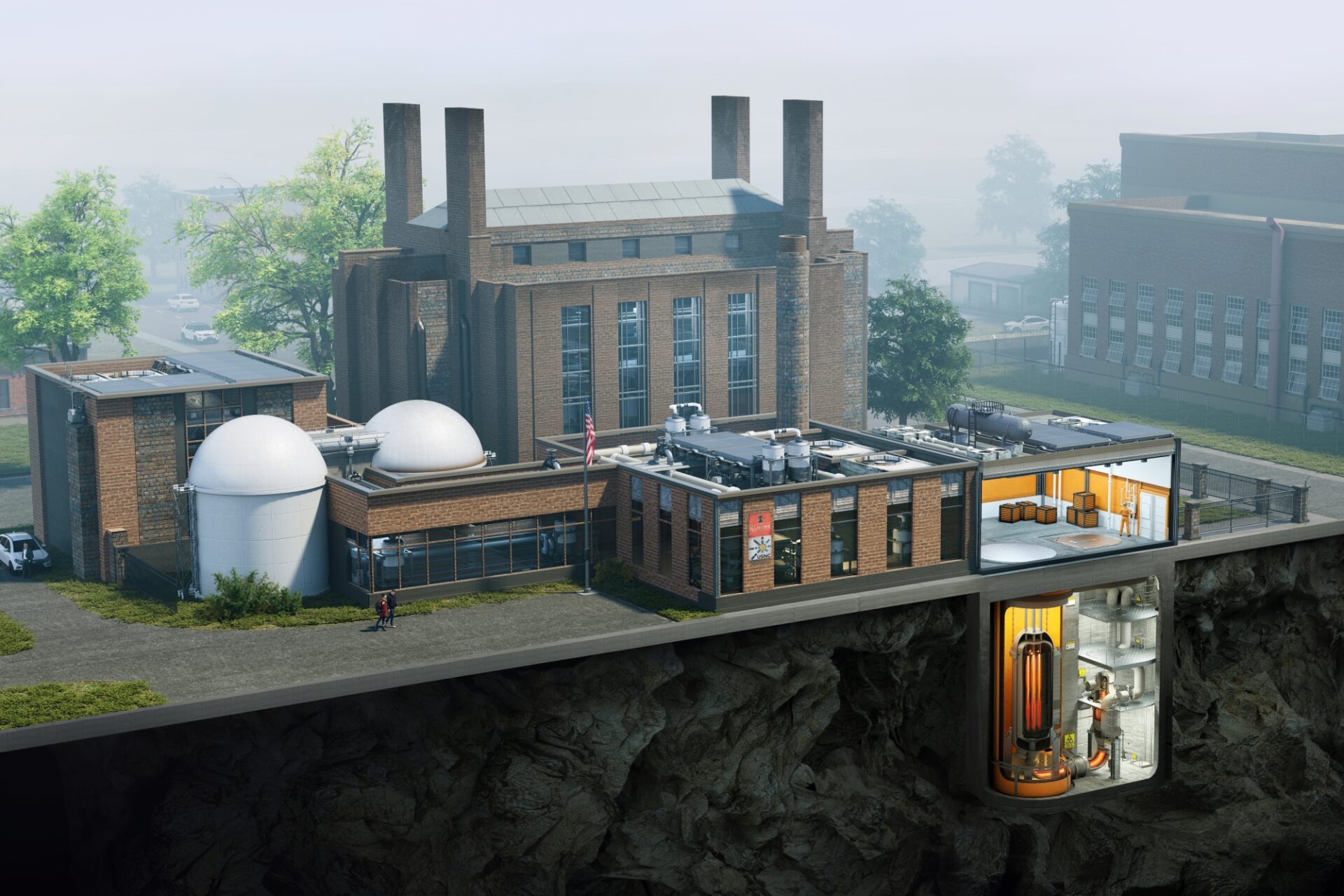
Deep Fission, a U.S.-based advanced nuclear technology company, is advancing plans to develop what could become the world’s first commercially oriented underground nuclear reactor demonstration at the Great Plains Industrial Park in Parsons, Kansas.
Unlike conventional nuclear power plants, which are constructed on the surface within heavily engineered containment structures, Deep Fission proposes placing a small pressurised-water reactor approximately one mile beneath the Earth’s surface, using geological formations as part of the reactor’s pressure-management and containment concept.
Although the company has attracted significant attention within the advanced reactor community, the project remains in its development phase and has not yet demonstrated commercial viability or received the full range of regulatory approvals required for deployment. Recent reports also indicate growing debate within the local community regarding environmental oversight, public consultation and long-term waste management.
Innovation Meets Regulation
Around the world, dozens of companies are developing advanced reactor concepts aimed at reducing construction costs, improving safety and expanding nuclear deployment into new markets.
Many of these designs promise modular construction, passive safety systems, reduced staffing requirements and enhanced operational flexibility.
The underground reactor concept represents one of the most ambitious departures from conventional nuclear engineering.
By locating the reactor deep underground, developers argue that natural geological barriers could provide additional protection against external hazards while potentially simplifying certain engineering requirements.
However, these potential benefits must still be demonstrated through rigorous scientific assessment and independent regulatory review.
Novel reactor designs cannot rely solely on innovative engineering claims. They must satisfy the same fundamental safety objectives that govern every nuclear installation, regardless of technology.
Why African Regulators Should Pay Attention
For African countries exploring advanced reactors and Small Modular Reactors (SMRs), the Kansas project provides valuable lessons.
As global vendors increasingly market innovative nuclear technologies to newcomer countries, regulators will face proposals that differ substantially from conventional nuclear power plants.
Some may involve underground installations.
Others may incorporate molten salt reactors, high-temperature gas-cooled reactors, microreactors or floating nuclear power plants.
Each presents unique licensing challenges.
Regulators must therefore develop the technical capacity to evaluate entirely new safety cases rather than assuming that innovative designs are inherently safer because they are newer.
Questions Every Regulator Should Ask
Before licensing any first-of-a-kind reactor technology, national nuclear regulatory authorities should require comprehensive answers to several critical questions.
How has the design been independently validated?
How will groundwater be protected throughout the reactor’s operational lifetime?
What emergency planning arrangements are appropriate for underground installations?
How will radioactive waste and spent fuel be retrieved and managed?
What happens if the operating company ceases to exist before decommissioning?
What financial guarantees are in place to ensure long-term environmental protection?
These questions are particularly important because advanced reactor technologies often propose new operational concepts that existing regulations may not have been specifically designed to address.
Building Public Trust
Perhaps the most important lesson from the Kansas experience concerns public engagement.
Nuclear technology continues to depend heavily on public confidence.
Communities expect transparent environmental assessments, meaningful consultation, independent regulatory oversight and clear communication regarding both benefits and risks.
No degree of technological innovation can substitute for public trust.
For African countries seeking to introduce nuclear power for the first time, establishing transparent decision-making processes from the outset will be just as important as selecting the right reactor technology.
Innovation Requires Strong Institutions
Advanced reactors undoubtedly have the potential to transform the future of nuclear energy.
Many promise greater flexibility, improved economics and expanded applications ranging from industrial heat to remote electricity generation.
Yet technological innovation must always be matched by institutional innovation.
Independent regulators, robust legal frameworks, skilled technical expertise and effective stakeholder engagement remain the cornerstones of every successful nuclear programme.
For Africa’s emerging nuclear nations, the message is clear: embracing innovation should never mean compromising regulatory rigour.
Every new reactor concept—no matter how promising—must earn public confidence through transparent science, independent oversight and internationally recognised safety standards.
Related


Africa Deepens Nuclear Safeguards Capacity as AFCONE Convene Hands-On Training in Nairobi
By Nuclear Africa• August 24, 2026
A 300 MW SMR Could Support More Than 12,500 Construction Jobs in Ghana: New Study Tests Nuclear’s Economic Case
By Nuclear Africa• August 24, 2026
Ghana Targets 1,000 MW of Nuclear Power by the Mid-2030s: What Must Happen Before Construction Can Begin?
By Nuclear Africa• August 24, 2026