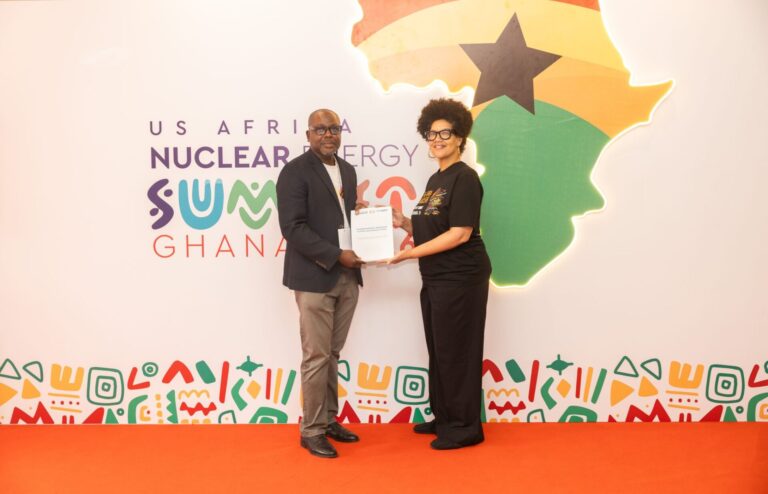
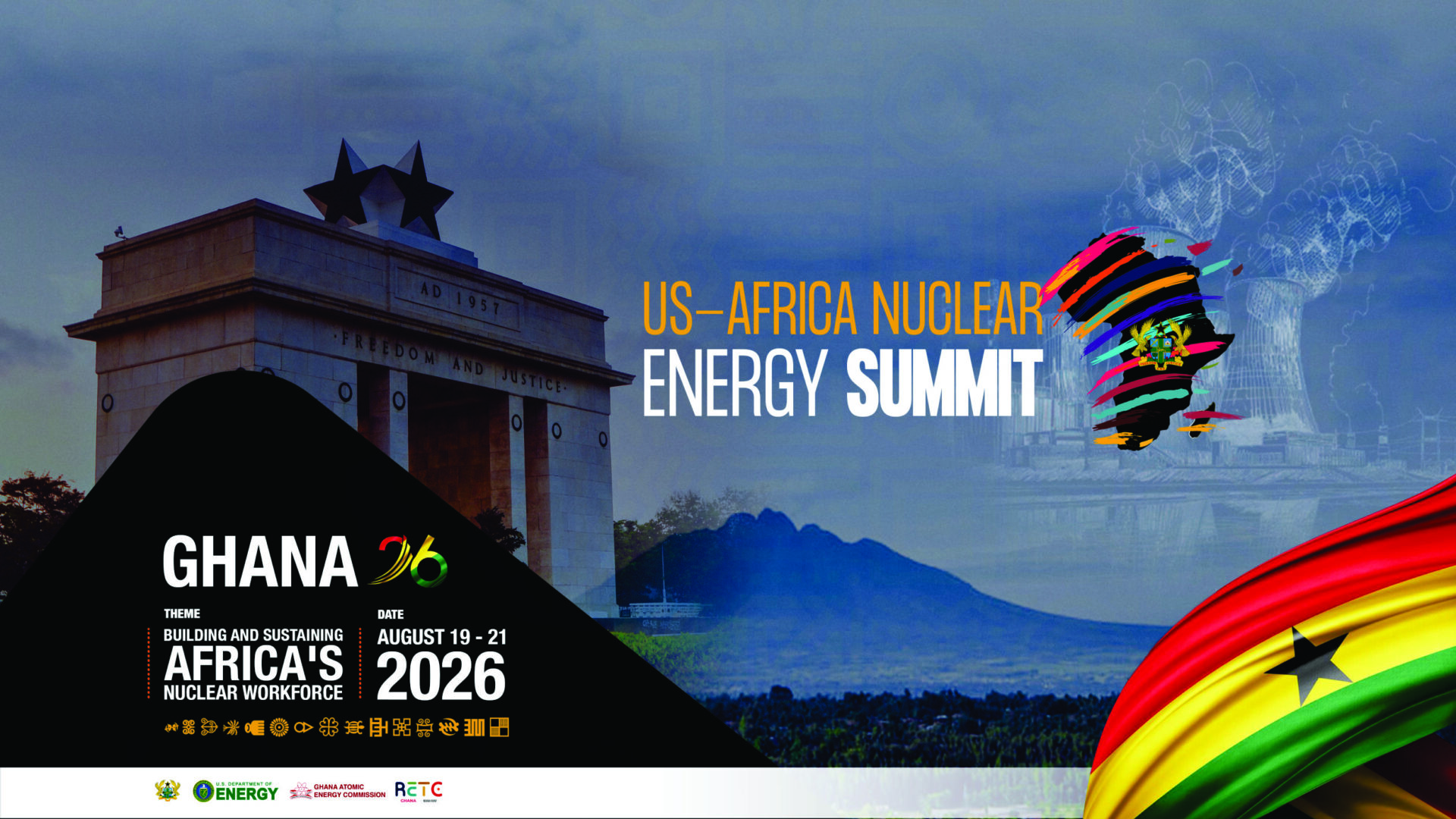
When nuclear policymakers, industry leaders, regulators and educators gather in Ghana from 19–21 August for the 2026 US–Africa Nuclear Energy Summit, the official theme will focus on perhaps the least glamorous but most consequential part of Africa’s nuclear ambitions: building and sustaining the workforce.
The summit at Accra’s Labadi Beach Hotel comes as more African countries investigate conventional reactors, SMRs, research reactors and wider nuclear applications. Its choice of theme reflects a reality that is becoming increasingly difficult to ignore: reactors can be purchased, but sustainable nuclear competence cannot simply be imported.
The IAEA has repeatedly emphasised that human resources must be developed throughout the phases of a newcomer nuclear programme, covering the government, regulator, owner-operator and supporting technical institutions.
Africa’s nuclear debate therefore needs to move beyond asking what technology countries want to build.
It must ask who will safely regulate, construct, operate, maintain, secure and eventually decommission it.
The workforce begins long before operations
A common misconception is that the largest nuclear workforce challenge arrives when a reactor is ready to operate.
In reality, human-resource demands emerge much earlier.
Governments need specialists capable of developing policy and negotiating complex international contracts. Regulators require engineers and scientists able to review licence applications independently. Owner-operators need project managers, procurement specialists and technical personnel capable of becoming intelligent customers rather than simply accepting vendor decisions.
Later come construction quality specialists, commissioning engineers, operators, maintenance technicians, radiation-protection professionals, chemists, cybersecurity specialists, safeguards personnel, emergency planners and security officers.
The workforce problem is consequently not simply one of training reactor operators.
It is about building a national ecosystem of nuclear competence.
Ghana already provides an important case study
The IAEA’s 2026 publication on initiating nuclear safety infrastructure records that Ghana developed a national human-resource plan for its nuclear power programme with participation from key organisations, with the plan approved by the Ghana Nuclear Power Programme Organisation Board in 2019.
Ghana also possesses a longer-standing nuclear knowledge base through the Ghana Atomic Energy Commission, the Nuclear Regulatory Authority, universities and the country’s research-reactor programme.
In 2024, Ghana and the United States launched a regional nuclear-energy training centre intended to support Ghana and other African countries considering civilian nuclear programmes.
An IAEA publication issued in February 2026 similarly highlighted Ghana’s experience with postgraduate education, fellowships, international training and knowledge-management initiatives supporting institutions involved in the country’s nuclear programme.
These are important foundations.
But a nuclear-power workforce cannot remain concentrated only among physicists, research scientists and policymakers.
The technician gap deserves more attention
The nuclear sector requires highly educated engineers and scientists, but it also depends heavily on technically qualified trades and vocational personnel.
Welders, electricians, mechanical technicians, instrumentation specialists, nondestructive-testing personnel, quality-control inspectors and maintenance technicians form a substantial part of the workforce needed during nuclear construction and operation.
This creates an important African policy question.
Should nuclear workforce strategies remain centred on university postgraduate programmes, or should countries begin integrating technical and vocational education institutions much more deliberately?
International experience suggests the second approach is essential. Nuclear programmes require an educational pipeline broad enough to support everything from regulatory analysis and reactor physics to conventional construction and mechanical maintenance.
That means ministries of education, universities, technical institutes, professional engineering bodies and industry should participate in workforce planning before construction begins.
Egypt shows what happens when construction starts
Egypt’s El Dabaa project demonstrates how workforce requirements intensify when a nuclear programme enters construction.
The IAEA reports that Egypt’s Nuclear Power Plants Authority conducted an integrated assessment of its human-resource requirements and developed a staffing plan for El Dabaa. Training arrangements linked to the project’s contracts include exposure to design, construction, commissioning, operations and maintenance, while additional programmes cover technical disciplines, project management and language skills.
This reinforces an important lesson for newer African programmes: workforce preparation cannot wait for reactor construction.
By the time major components are arriving at site, much of the institutional and technical preparation should already be well under way.
Avoiding permanent dependence on foreign expertise
International cooperation will remain essential.
No newcomer country builds every nuclear capability domestically from the start. Vendors, foreign regulators, experienced utilities, the IAEA, universities and national laboratories all provide essential training opportunities.
The danger comes when training programmes are disconnected from a national staffing strategy.
Sending hundreds of people to workshops does not necessarily create a sustainable nuclear workforce.
Countries need to know which competencies are required, in what organisations, at what dates, in what numbers, and how trained personnel will be retained.
Retention may eventually become as important as recruitment.
Highly specialised staff trained at significant public expense can be attractive to international nuclear companies, other industries and overseas employers. Regulators may also struggle to compete financially with vendors and owner-operators for experienced specialists.
Regional approaches could change the equation
Not every African country needs to reproduce every specialist capability independently.
Regional cooperation could be particularly valuable for specialised education, nuclear-security training, emergency preparedness, safeguards, research-reactor utilisation and technical-support organisations.
Africa already possesses centres of nuclear experience in South Africa, Egypt, Ghana, Nigeria, Morocco and Algeria, while emerging programmes are developing new institutions elsewhere.
The strategic opportunity is to turn those national assets into a connected continental knowledge network.
That would allow countries at different stages of nuclear development to share training resources while maintaining the sovereign regulatory and operational responsibilities that cannot be outsourced.
Why This Matters for Africa
The most consequential outcome of the 2026 US–Africa Nuclear Energy Summit should therefore not be another declaration that Africa needs nuclear energy.
That question has already moved significantly forward.
The more difficult question is whether countries are building the institutional and human capability to deliver nuclear programmes safely and sustainably.
NuclearAfrica will be watching the summit for tangible outcomes: new training programmes, university partnerships, financing for workforce development, technical apprenticeships, regulator-support arrangements and measurable commitments that extend beyond the conference itself.
The continent does not merely need people who understand nuclear technology.
It needs enough competent people, in the correct institutions, at the correct time, with clear career paths and systems that preserve their knowledge for decades.
Because before Africa operates nuclear reactors, it must first build the institutions and people capable of owning them.
Related

Beyond the Resolutions: GC70 and the Emerging Global Nuclear Order
By Nuclear Africa• September 22, 2026
Africa Deepens Nuclear Safeguards Capacity as AFCONE Convene Hands-On Training in Nairobi
By Nuclear Africa• August 24, 2026
A 300 MW SMR Could Support More Than 12,500 Construction Jobs in Ghana: New Study Tests Nuclear’s Economic Case
By Nuclear Africa• August 24, 2026