
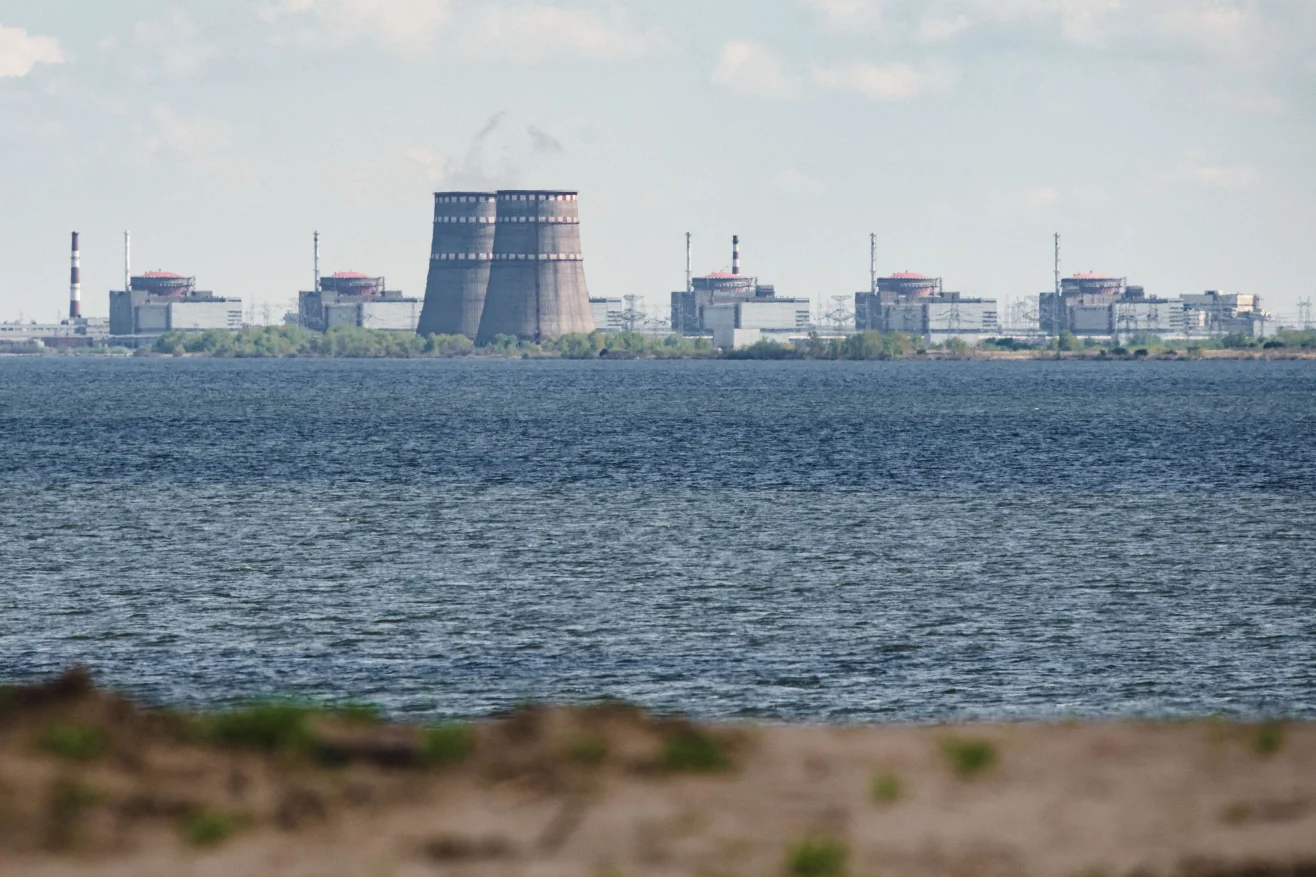
A nuclear power plant does not stop needing electricity simply because its reactors are shut down.
That fundamental safety principle has again been demonstrated at Ukraine’s Zaporizhzhia Nuclear Power Plant, where repeated disruptions to external electricity supplies have prompted operators to increase water levels in the plant’s spent-fuel pools as an additional precaution against a prolonged loss of power.
The development carries an important lesson for African countries planning their first nuclear power plants: nuclear infrastructure readiness is not simply about choosing a reactor and ensuring that the national grid is large enough to accommodate it. The electricity network must also be sufficiently resilient to support the nuclear facility itself under normal, abnormal and emergency conditions.
External Power Losses Accelerate at Zaporizhzhia
According to the International Atomic Energy Agency, Zaporizhzhia has experienced 24 losses of off-site electrical power since the conflict in Ukraine began, with 12 occurring during the past four months alone.
Two of the latest interruptions occurred on 1 and 4 August 2026.
During both events, emergency diesel generators started automatically and supplied electricity to essential nuclear-safety systems, including cooling functions.
IAEA Director General Rafael Mariano Grossi said the increasing frequency of the interruptions was “deeply concerning” and described the situation as unsustainable.
The six-unit Zaporizhzhia plant, Europe’s largest nuclear power station, is not currently generating electricity. But shutting down a reactor does not eliminate its electricity requirements.
Nuclear fuel continues generating residual heat after a reactor is shut down, while spent nuclear fuel stored in pools must also continue to be adequately cooled. Instrumentation, monitoring, ventilation and other safety-related equipment can similarly depend on reliable electrical supplies.
That makes access to dependable off-site and emergency electricity a fundamental part of nuclear safety.
Additional Precaution for Spent Fuel
Against this background, the plant has decided to raise water levels in the spent-fuel pools associated with its six units.
The measure should not be interpreted as evidence that the spent fuel is currently overheating.
Instead, it provides an additional safety margin.
Higher water inventories would increase the amount of time available before significant water loss could occur in an extreme scenario involving prolonged loss of external electricity combined with eventual exhaustion or failure of emergency power supplies.
World Nuclear News reported the measure on 7 August, citing the continuing concerns surrounding the reliability of external electricity supplies to the plant.
It is therefore a precautionary resilience measure rather than a response to an ongoing spent-fuel accident.
That distinction is important.
One Remaining External Power Route
The wider concern is the deterioration of the electricity infrastructure supporting the facility.
Zaporizhzhia has been operating without its principal 750 kV Dniprovska external power connection since March 2026.
Although repairs were subsequently carried out on parts of the line with the assistance of a locally negotiated ceasefire, damage elsewhere in the transmission system has prevented the main connection from returning to normal service.
The plant has consequently depended on the remaining 330 kV Ferosplavna-1 connection.
When that supply was interrupted during the latest incidents, emergency diesel generators automatically took over the required safety loads.
The generators performed their intended function.
But emergency generators are precisely that: emergency equipment. They are not intended to substitute indefinitely for a robust and reliable external electricity network.
Previous disruptions demonstrate why the issue matters. In June, Reuters reported that Zaporizhzhia had been reconnected to the grid following an IAEA-brokered arrangement after what was then its 19th loss of off-site power since the war began.
The subsequent rise to 24 events illustrates how rapidly conditions have deteriorated.
The Overlooked Nuclear Infrastructure: The Grid
For African nuclear newcomer countries, the development provides a useful reminder about an aspect of nuclear-power planning that can receive less public attention than reactor technology.
When discussions take place about whether an electricity system is ready for nuclear power, the question is often framed in one direction:
Can the national grid accommodate a large nuclear reactor? That is an important question.
A large generating unit suddenly disconnecting from a relatively small electricity system can create significant frequency and stability challenges. Countries considering gigawatt-scale nuclear plants therefore have to evaluate generation reserve margins, transmission capacity, interconnections and the ability of their electricity systems to respond to the loss of the largest generating unit.
But Zaporizhzhia demonstrates that nuclear-grid interaction works in the opposite direction as well.
The second question is: Can the electricity network reliably support the nuclear power plant?
A nuclear station requires dependable external electricity for safety functions even when it is not producing electricity itself.
For African newcomer programmes, these two questions should consequently be assessed together.
What African Nuclear Programmes Should Examine
Countries developing nuclear programmes will need more than a transmission connection between a future plant and the national electricity system.
Nuclear infrastructure planning must consider whether sufficient redundancy exists if the principal transmission route becomes unavailable.
That includes the resilience of transmission corridors, substations and switching infrastructure; the availability of alternative external electricity routes; on-site emergency generation and fuel arrangements; battery-backed systems; emergency operating procedures; and the ability to restore external power following severe grid disturbances.
Site selection and grid planning therefore cannot be completely separated. A technically suitable nuclear site with inadequate transmission resilience could create additional infrastructure requirements and costs.
This consideration is especially relevant for newcomer countries where electricity networks may be undergoing rapid expansion at the same time that nuclear projects are being developed.
Shutdown Does Not Mean Risk-Free
The situation also illustrates why the distinction between reactor shutdown and nuclear safety is important.
All six Zaporizhzhia reactors have been shut down, but the facility continues to contain substantial quantities of nuclear material.
External electricity therefore remains important.
Reuters has previously noted that even while the plant is not generating power, electricity is required to maintain cooling and other essential functions.
The Zaporizhzhia situation is highly unusual because the nuclear station is located in an active conflict zone. Its experience should therefore not be interpreted as representative of the normal reliability or safety performance of commercial nuclear plants.
Nevertheless, the engineering principle being demonstrated is universal.
Nuclear safety depends on multiple layers of defence.
If normal external power disappears, another external connection may be available. If those connections are lost, emergency diesel generators can supply critical systems. Batteries and other backup arrangements provide additional protection for specified functions and periods.
The objective is to prevent a single failure from removing the ability to maintain essential safety functions.
Transmission Infrastructure Is Nuclear Infrastructure
This has potentially important implications for African governments evaluating the cost of nuclear programmes.
The reactor itself is only one part of the investment.
Newcomer countries may also require substantial expenditure on transmission lines, substations, grid-control systems, reserve generation, interconnections and other supporting infrastructure.
Some of those investments would benefit the wider electricity system regardless of whether nuclear power is introduced.
But they nevertheless need to be recognised early in nuclear planning.
Grid studies should therefore examine more than the ability to evacuate electricity from a proposed nuclear station. They should also evaluate the resilience of the electrical infrastructure required to maintain nuclear safety.
The distinction could become increasingly significant as African countries consider different reactor sizes.
Small modular reactors may reduce some grid-integration challenges associated with very large generating units, but they do not eliminate the fundamental requirement for reliable safety-related electricity supplies.
A Broader Nuclear-Readiness Lesson
Zaporizhzhia is an extreme case created by war, damaged infrastructure and repeated disruptions to transmission systems.
African nuclear programmes will operate in very different circumstances.
Yet extreme cases can expose engineering dependencies that are less visible during normal operation.
For countries considering their first nuclear plants, the lesson is straightforward: Nuclear readiness extends beyond the reactor site boundary. Transmission networks, substations, backup electricity supplies, emergency arrangements and grid-restoration capabilities form part of the wider infrastructure required to operate nuclear power safely.
As Africa’s nuclear ambitions advance, policymakers should therefore think about the grid not simply as the system that receives electricity from a nuclear plant. It is also one of the systems that helps keep that nuclear plant safe.
Related

Amazon’s 20-Year Nuclear Deal Shows How Large Corporate Buyers Can Help Finance Nuclear Investment
By Nuclear Africa• October 5, 2026
US Nuclear Regulator’s Workforce Warning Carries a Clear Lesson for African Nuclear Newcomers
By Nuclear Africa• October 5, 2026
US-South Korea $120 Billion Nuclear Framework Shows the Scale of State-Backed Reactor Finance
By Nuclear Africa• October 5, 2026
Morocco Nuclear Regulator Says No Radioactive Leak at Maâmora Research Centre
By Nuclear Africa• October 5, 2026