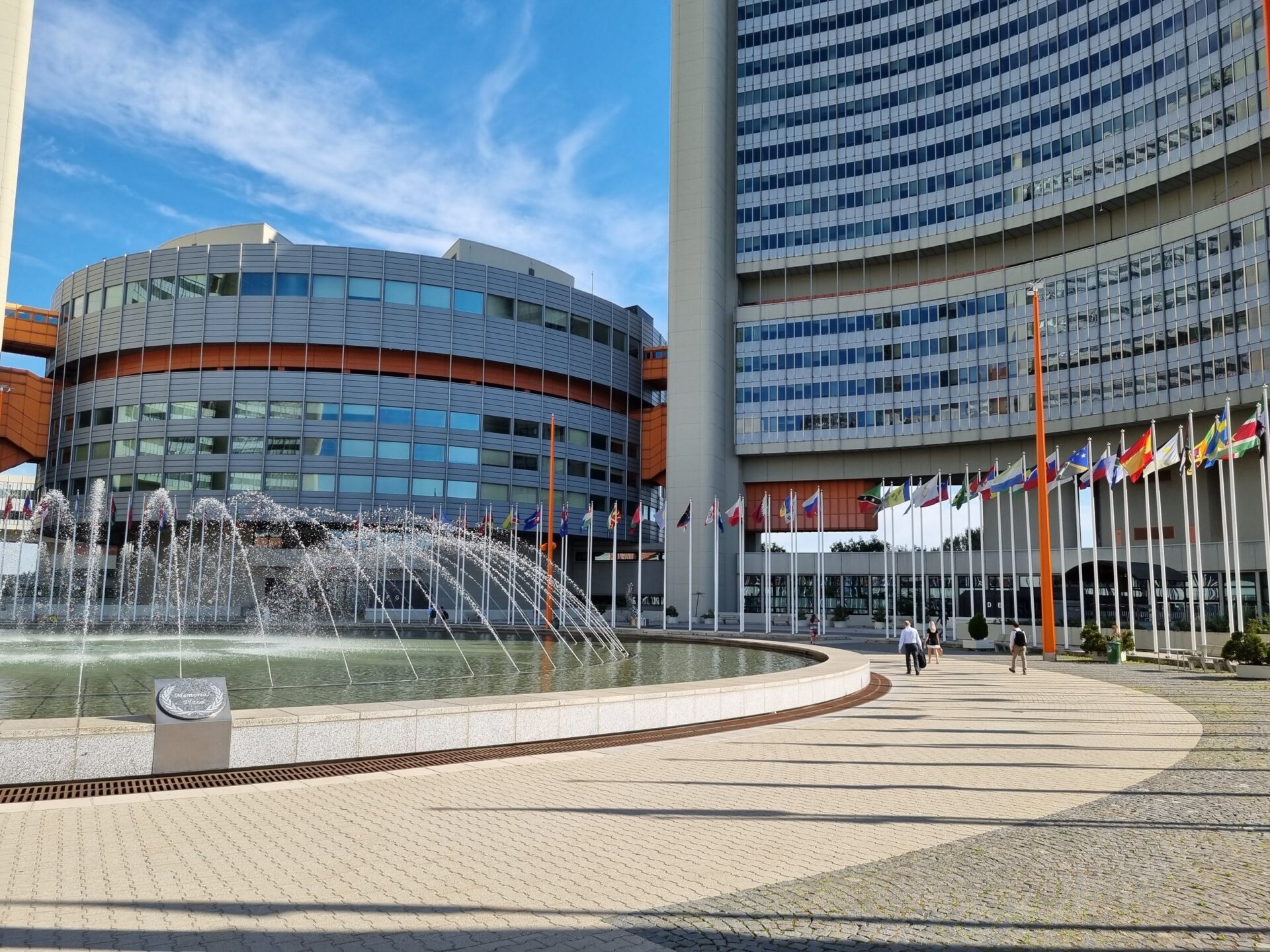
The International Atomic Energy Agency has convened a series of meetings aimed at strengthening international understanding of the Convention on Supplementary Compensation for Nuclear Damage and encouraging wider participation in the global nuclear-liability regime.
The meetings, reported by the IAEA on 23 July 2026, brought together government representatives and legal experts from Africa, Asia and other regions. Participants included representatives from the United Republic of Tanzania and countries that are developing or considering peaceful nuclear programmes.
The discussions are particularly relevant as more countries consider nuclear power, research reactors, radioactive-material applications and regional nuclear cooperation.
Although nuclear safety is designed to prevent accidents, countries must also establish legal arrangements defining who would be financially responsible if an incident occurred, how affected people could seek compensation and how claims involving more than one country would be handled.
What is nuclear liability?
Nuclear liability refers to the legal and financial responsibility for damage caused by a nuclear incident.
Unlike ordinary civil-liability systems, international nuclear-liability regimes generally place primary responsibility on the operator of a nuclear installation. This principle is known as the channelling of liability.
Under this approach, people affected by a nuclear incident do not ordinarily have to pursue claims against multiple organisations such as reactor vendors, construction companies, fuel suppliers or equipment manufacturers. Claims are directed principally towards the nuclear operator identified under national law.
A comprehensive nuclear-liability framework normally addresses:
- which operator is legally responsible;
- whether liability is strict or fault-based;
- the minimum amount of financial security required;
- insurance or other financial guarantees;
- the types of damage eligible for compensation;
- the time limits for making claims;
- the courts with jurisdiction;
- compensation for environmental damage;
- economic losses connected to an incident;
- cross-border claims; and
- supplementary public or international compensation.
These arrangements provide protection for the public while giving operators, suppliers and investors greater certainty about their legal exposure.
The Convention on Supplementary Compensation
The Convention on Supplementary Compensation for Nuclear Damage, commonly known as the CSC, was adopted under IAEA auspices in 1997 and entered into force in 2015.
It is intended to support a global nuclear-liability system by establishing minimum legal principles for participating countries and creating an international supplementary compensation fund that may be available following a qualifying nuclear incident.
The convention can accommodate countries that are parties to existing nuclear-liability conventions as well as countries whose national laws comply with the principles contained in the CSC’s annex.
The IAEA identifies the CSC alongside the Vienna Convention on Civil Liability for Nuclear Damage and related instruments as part of the international legal framework governing nuclear liability.
Participation, however, remains uneven across the world.
This means that neighbouring countries may apply different definitions of nuclear damage, compensation limits, limitation periods and jurisdictional rules. Such differences could complicate claims following an incident with transboundary consequences.
Africa’s position
African countries are at different stages of nuclear development and participation in international nuclear-liability instruments.
South Africa operates the continent’s only commercial nuclear-power station. Egypt is constructing the four-unit El Dabaa Nuclear Power Plant. Ghana, Kenya, Uganda, Rwanda and several other countries are developing or evaluating nuclear-power programmes.
Other African states operate research reactors, radioactive-waste facilities, uranium mines, medical-isotope installations and facilities using radioactive sources.
These activities create different levels of nuclear and radiological risk, but all require an adequate legal framework.
Ghana, for example, became a party to the Convention on Supplementary Compensation in 2016 and is also party to the 1997 Protocol to Amend the Vienna Convention on Civil Liability for Nuclear Damage.
South Africa, despite operating a commercial nuclear plant, is not currently listed by the IAEA as a party to the CSC.
The differences across the continent show that Africa does not yet have a harmonised approach to nuclear liability.
Why nuclear liability matters before construction
Nuclear liability should not be treated as a legal issue that can be postponed until a power plant begins operation.
The applicable liability framework can influence:
- reactor-procurement negotiations;
- vendor participation;
- project insurance;
- lender requirements;
- government guarantees;
- fuel-supply contracts;
- transport arrangements;
- emergency planning;
- public confidence; and
- relationships with neighbouring countries.
Reactor vendors and suppliers generally seek protection from unlimited or unpredictable legal claims. Governments, on the other hand, must ensure that victims would have access to timely and adequate compensation.
This balance must be established clearly in national legislation.
Without a credible framework, a country may struggle to attract responsible investors, obtain insurance or conclude major nuclear-procurement contracts.
Cross-border consequences
The transboundary nature of a possible nuclear incident makes international cooperation especially important.
A release occurring in one country could affect agriculture, fisheries, tourism, trade, public health or the environment in another. Even where measured radiation levels are low, precautionary restrictions and public concern could create substantial economic consequences.
African countries are connected through shared rivers, coastlines, electricity networks, food markets and transport corridors. A nuclear-liability regime must therefore consider damage beyond the territory where a nuclear facility is located.
Regional consultations may be particularly important where a proposed nuclear site is located near a national border or shared water body.
Liability and small modular reactors
The growth of interest in small modular reactors also raises new liability questions.
SMRs may be deployed in multiple units at one site, transported as factory-manufactured modules or located near mines, industrial centres and isolated electricity systems.
African regulators and governments will need to determine whether existing liability limits are appropriate for these designs and how responsibility would be assigned where several reactor modules, vendors or operators are involved.
Floating nuclear power plants could create additional questions involving maritime law, port-state responsibilities, transport liability and jurisdiction.
The smaller physical size of a reactor does not remove the need for a clear legal framework.
Five priorities for African countries
1. Review existing legislation
Countries should determine whether their nuclear laws adequately address operator liability, strict liability, financial security, jurisdiction and compensation.
General environmental or civil-liability legislation may not be sufficient for a nuclear-power programme.
2. Decide on international participation
Governments should assess the advantages and obligations associated with joining the CSC, the Vienna Convention and related instruments.
The decision should be based on national circumstances, regional relationships and the structure of the proposed nuclear programme.
3. Establish realistic compensation levels
Liability limits must reflect potential harm while remaining insurable and financially credible.
Governments should consult insurers, operators, regulators, finance ministries, affected communities and international experts.
4. Clarify the role of the state
National law should explain what happens when damages exceed the operator’s financial security.
Possible approaches include government support, supplementary public funds and access to international compensation arrangements.
5. Coordinate regionally
The African Union, regional economic communities and African nuclear institutions should encourage dialogue on compatible liability principles.
Regional coordination would be particularly valuable for emergency communication, transboundary claims and public information.
Ghana’s potential role
Ghana’s participation in the CSC and the amended Vienna Convention places it in a useful position to contribute to African discussions on nuclear liability.
As Ghana advances its nuclear-power programme, it will still need to ensure that international treaty commitments are fully reflected in domestic legislation, implementing regulations, institutional responsibilities and financial arrangements.
The country could also support regional capacity-building through cooperation involving the Nuclear Regulatory Authority, Ghana Atomic Energy Commission, legal institutions and relevant African bodies.
Conclusion
The IAEA’s latest meetings underline a basic principle of responsible nuclear development: a country must prepare not only to operate a nuclear facility safely, but also to respond legally and financially to the unlikely possibility of an incident.
For African nuclear-newcomer countries, nuclear liability is therefore not a secondary legal concern. It is an essential part of nuclear readiness.
Countries considering nuclear power should establish clear operator responsibility, adequate financial security, effective claims procedures and compatible international arrangements before major construction and procurement commitments are completed.
Africa’s nuclear ambitions will be strengthened—not weakened—by ensuring that public protection and compensation are built into national programmes from the beginning.
Related


Africa Deepens Nuclear Safeguards Capacity as AFCONE Convene Hands-On Training in Nairobi
By Nuclear Africa• August 24, 2026
A 300 MW SMR Could Support More Than 12,500 Construction Jobs in Ghana: New Study Tests Nuclear’s Economic Case
By Nuclear Africa• August 24, 2026
Ghana Targets 1,000 MW of Nuclear Power by the Mid-2030s: What Must Happen Before Construction Can Begin?
By Nuclear Africa• August 24, 2026