The United States and Paraguay have signed a memorandum of understanding establishing a framework for strategic cooperation in civil nuclear energy, opening a new channel for bilateral engagement while stopping well short of committing either country to a nuclear power project.
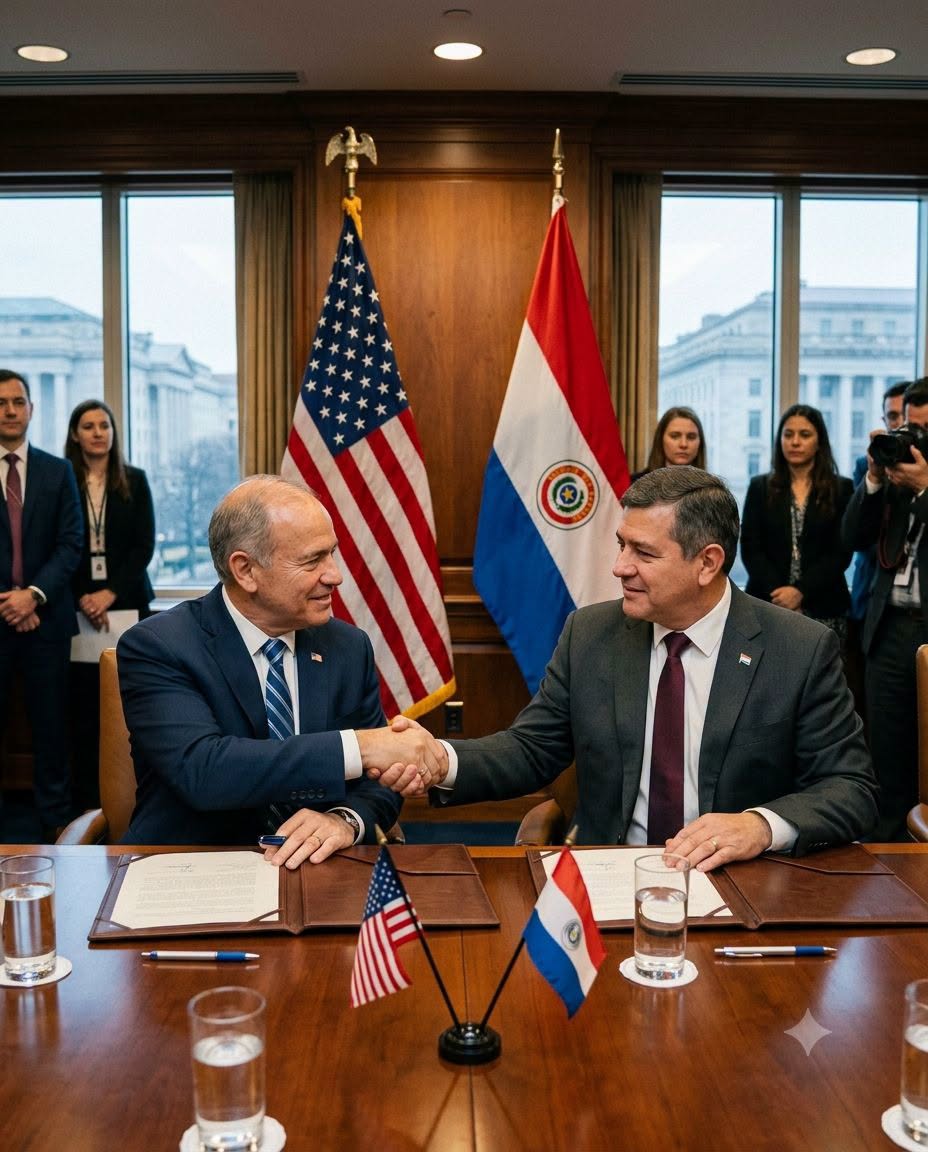
US Secretary of State Marco Rubio and Paraguayan Foreign Minister Rubén Ramírez Lezcano signed the Memorandum of Understanding for Strategic Civil Nuclear Cooperation in Washington on 4 August 2026.
The US Department of State presented the agreement as another step in the expansion of relations between the two countries and said it reaffirmed their shared commitment to advancing civil nuclear energy under high standards of safety, security and non-proliferation.
An Early Diplomatic Framework
The memorandum provides a political and institutional framework through which the two governments can explore future cooperation in peaceful nuclear applications.
Such cooperation could eventually involve government officials, regulators, technical experts, researchers, educational institutions and nuclear-industry representatives. Previous US nuclear-cooperation memoranda have been used to support nuclear infrastructure development, independent regulatory oversight, technical exchanges and adherence to high standards of nuclear safety, security and non-proliferation.
For Paraguay, the agreement may therefore create opportunities for cooperation in areas such as:
- national nuclear-energy planning;
- workforce and institutional capacity development;
- nuclear legislation and regulation;
- safety and security infrastructure;
- safeguards and non-proliferation;
- technical research;
- public and stakeholder engagement; and
- future commercial discussions.
However, the memorandum is not evidence that Paraguay has selected a nuclear technology or decided to construct a nuclear power plant.
The publicly released information did not identify a reactor vendor, technology, project site, generating capacity, construction schedule, estimated cost or financing arrangement. It should therefore be understood as an enabling diplomatic framework rather than a reactor-supply agreement or final investment decision.
It Is Not a Section 123 Agreement
The memorandum should not be confused with an agreement concluded under Section 123 of the United States Atomic Energy Act.
A Section 123 Agreement establishes the legal framework required for significant US nuclear cooperation with another country. This can include the export of nuclear reactors, critical reactor components and certain nuclear materials.
These agreements contain specific non-proliferation requirements and are subject to formal US governmental and congressional review processes. Even after entering into force, a Section 123 Agreement authorises cooperation but does not itself guarantee that a reactor sale, technology transfer or nuclear-material shipment will occur.
A strategic civil nuclear memorandum performs a different function.
It can establish political support, organise bilateral dialogue and help the partner country begin developing the institutions and capabilities needed for responsible nuclear cooperation. The US Department of State has previously described such memoranda as instruments that may precede and help prepare the ground for a future Section 123 Agreement or other export authorisations.
The Paraguay memorandum may therefore become part of a longer diplomatic and legal process. It does not replace the additional agreements, regulatory approvals, export licences, safeguards arrangements, procurement procedures and financing commitments that would be needed for an actual nuclear power project.
Nuclear Diplomacy Expands
The agreement reflects the increasingly strategic role of government-to-government nuclear cooperation.
Supplier countries recognise that decisions made during the earliest stages of a newcomer programme can influence future reactor technologies, fuel arrangements, regulatory models, training partnerships, financing structures and long-term diplomatic relationships.
The United States explicitly uses strategic nuclear-cooperation memoranda to develop bilateral relationships, support its civil nuclear industry and advance its national-security and nuclear non-proliferation objectives.
Other supplier countries similarly use cooperation agreements, training programmes, feasibility studies, research partnerships and vendor engagement to build relationships with countries considering nuclear energy. Emerging nuclear countries have consequently signed agreements with multiple prospective suppliers covering areas such as reactor development, research reactors, nuclear applications, workforce training and institutional capacity.
These relationships can provide newcomer countries with valuable expertise and access to international experience.
They can also create strategic dependencies if early cooperation is allowed to shape procurement decisions before the country has independently defined its national requirements.
Lessons for Africa
Several African countries are developing the infrastructure required to introduce nuclear power or expand the peaceful applications of nuclear science and technology.
The Paraguay agreement offers an important lesson: diplomatic cooperation can be useful, but it must remain subordinate to a country’s independently determined national nuclear policy.
African governments considering similar arrangements should use early international cooperation to strengthen the foundations of their programmes rather than prematurely commit themselves to a particular vendor or reactor design.
Priority areas should include:
Nuclear legislation
The country should have a comprehensive legal framework defining institutional responsibilities, regulatory authority, nuclear safety, security, safeguards, radioactive-waste management, civil liability and emergency preparedness.
Independent regulation
Technical cooperation should strengthen the competence and effective independence of the national nuclear regulatory body. It should not create arrangements in which a supplier government or reactor vendor becomes the principal source of regulatory judgement.
Safeguards and non-proliferation
International cooperation should support the effective implementation of the country’s safeguards obligations, nuclear-material accountancy arrangements, export controls and commitments under the international nuclear non-proliferation regime.
Workforce development
Training should be connected to a national human-resource strategy covering government institutions, the regulator, owner-operator, universities, technical-support organisations and emergency-response agencies.
Grid, site and infrastructure studies
A political memorandum cannot substitute for evidence-based assessments of electricity demand, grid capacity, potential sites, cooling-water availability, environmental conditions, transport infrastructure and project economics.
Transparent technology assessment
Potential reactor technologies should be assessed against clearly defined national criteria. These should include safety, licensing maturity, construction experience, fuel security, waste-management implications, financing requirements, localisation potential and compatibility with the national electricity system.
Public and stakeholder engagement
Governments should communicate clearly about what has—and has not—been agreed. A diplomatic memorandum should not be presented publicly as though construction were imminent or financing had already been secured.
Preserve Procurement Independence
Newcomer countries should also avoid exclusivity provisions that unnecessarily restrict future engagement with other potential partners.
Maintaining relationships with several supplier countries may allow a government to compare technologies, financing models, localisation proposals and long-term fuel-service arrangements before beginning a formal procurement process.
However, multi-vendor engagement must be managed through a transparent national framework. Otherwise, competing diplomatic initiatives can produce fragmented studies, incompatible training programmes and institutional confusion.
The government should remain in control of the sequence:
- determine the national need;
- develop the required nuclear infrastructure;
- establish technology-neutral evaluation criteria;
- conduct independent technical and economic assessments;
- undertake transparent procurement; and
- negotiate binding project agreements only after the national requirements are clear.
The IAEA’s Milestones Approach similarly treats nuclear power development as a comprehensive national undertaking involving legal, regulatory, safeguards, financing, human-resource, stakeholder, procurement and radioactive-waste considerations—not merely the acquisition of a reactor.
Diplomatic Importance, but No Reactor Yet
The US–Paraguay memorandum is strategically important because it formally places civil nuclear cooperation within the expanding relationship between the two governments.
It may support institutional development, technical exchanges and future commercial engagement. It may also become an early step towards more detailed legal arrangements if Paraguay eventually decides to pursue significant US nuclear technology or equipment.
But the agreement remains several steps removed from an operating nuclear power project.
For African countries, the central lesson is to distinguish carefully between political cooperation, legal authorisation, commercial procurement, project financing and construction.
A memorandum can open the door.
It does not mean that a reactor is ready to pass through it.
Related

Ghana Advances US Nuclear Cooperation as 123 Agreement Moves to Approval Stage
By Nuclear Africa• August 20, 2026
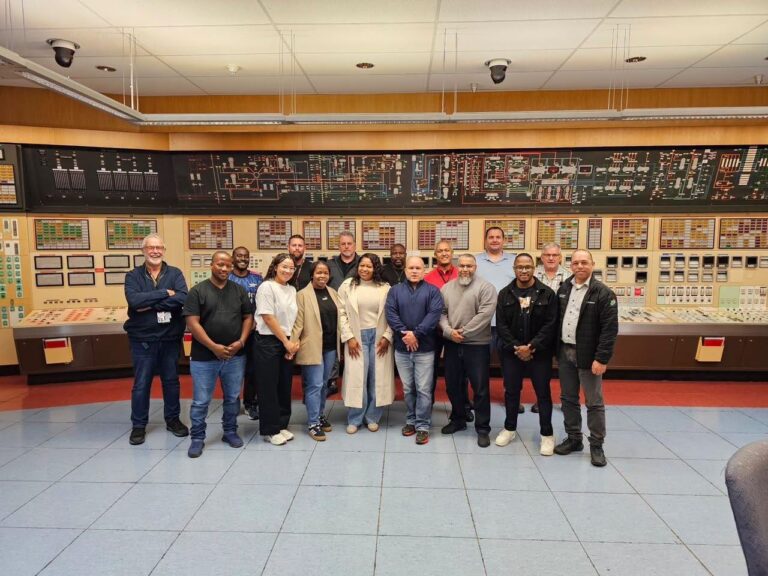
Koeberg Licenses 12 New Reactor Operators : What Africa’s Nuclear Newcomers Can Learn About Workforce Readiness
By Nuclear Africa• August 20, 2026
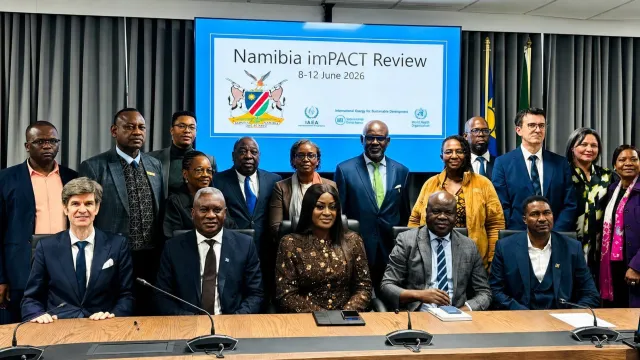
Beyond Power Reactors: Namibia’s Cancer Burden Exposes the Urgency of Nuclear Medicine Investment
By Nuclear Africa• August 20, 2026
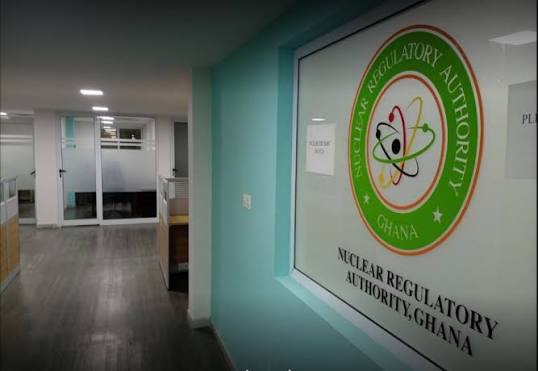
Ghana Has a Nuclear Law But Seven Key Regulations Are Still Waiting in Parliament
By Nuclear Africa• August 20, 2026