South Africa’s Koeberg Nuclear Power Station has added newly licensed reactor and senior reactor operators, offering a practical reminder that nuclear workforce readiness is measured not by graduate numbers alone, but by plant-specific competence, examination and regulatory authorisation.
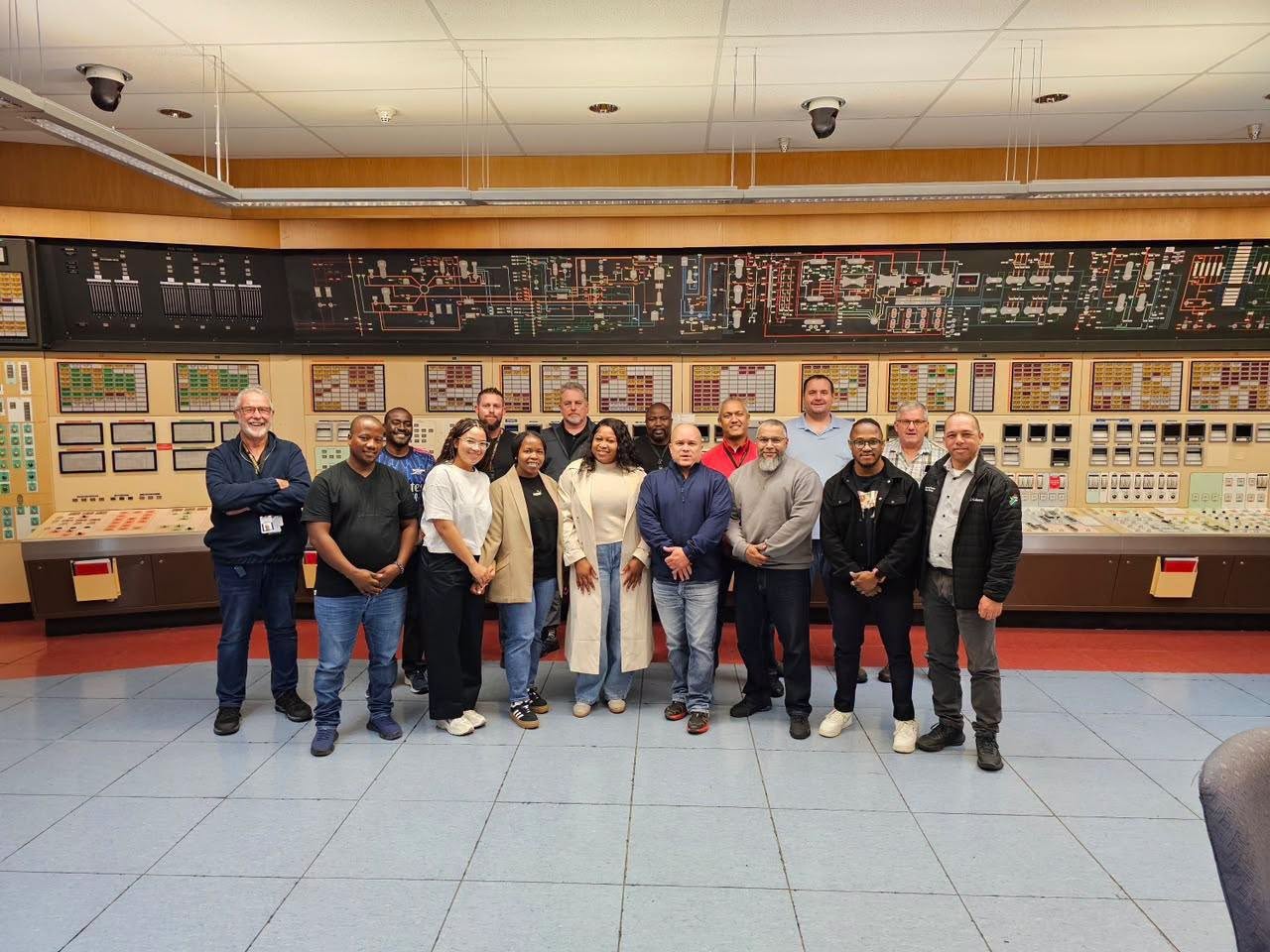
South Africa’s Koeberg Nuclear Power Station has reached a workforce milestone that deserves more attention than a routine personnel announcement. Eskom says eight reactor operators and four senior reactor operators received licences following the required training and examination process, adding qualified personnel to the control-room organisation of Africa’s only operating commercial nuclear power plant.
The significance for African newcomer countries is simple: nuclear workforce development does not end when someone graduates with a nuclear engineering degree. A power reactor requires personnel who are trained on a specific plant, tested against operating procedures, evaluated in simulators and authorised to carry out safety-significant functions under the oversight of a national regulator.
That difference is becoming increasingly important as Ghana, Kenya, Nigeria and other African countries develop workforce plans around future nuclear power programmes. Universities can create scientific and engineering foundations. They cannot by themselves produce licensed reactor operators.
From graduate to licensed operator
The operating workforce of a nuclear plant develops through a sequence that is both technical and regulatory. Candidates require academic or technical foundations, plant-system knowledge, classroom instruction, simulator training, supervised operational experience, examinations and continuing requalification.
Senior reactor operators carry additional responsibilities because they are expected to supervise control-room activities and make operational decisions within the plant’s licensed framework. The regulator’s role is therefore critical: competence cannot be treated solely as an internal utility judgement when the position affects nuclear safety.
For newcomers, this means workforce plans should distinguish between general nuclear education and role-specific qualification. A country may have hundreds of nuclear graduates and still lack the personnel needed to operate a particular reactor safely.
Long-term operation raises the stakes
The Koeberg milestone also comes as South Africa prepares the plant for decades of extended operation. Long-term operation requires not only component ageing management and investment in plant systems, but also knowledge retention. Experienced staff retire. New operators must be trained before that knowledge disappears.
This is one of the less visible costs of a nuclear programme. A reactor may operate for 60 years or more, but the workforce that starts it will not be the same workforce that shuts it down. Training therefore has to be continuous across generations.
Why This Matters for Africa
African newcomers should build workforce roadmaps backwards from the licensed positions that will eventually be required. That means asking how many operators, maintenance specialists, radiation-protection staff, security personnel, chemists, engineers and regulators will be needed at each programme stage — and when their plant-specific training must begin.
Koeberg offers the continent something valuable: an African operating reference point. The practical lesson is that workforce readiness is a chain of education, plant-specific training, simulator performance, supervised experience, examination and regulatory authorisation. Breaking any link weakens the programme.
Related

Morocco Nuclear Regulator Says No Radioactive Leak at Maâmora Research Centre
By Nuclear Africa• October 7, 2026
Amazon’s 20-Year Nuclear Deal Shows How Large Corporate Buyers Can Help Finance Nuclear Investment
By Nuclear Africa• October 7, 2026Beyond the Resolutions: GC70 and the Emerging Global Nuclear Order
By Nuclear Africa• October 6, 2026
US Nuclear Regulator’s Workforce Warning Carries a Clear Lesson for African Nuclear Newcomers
By Nuclear Africa• October 5, 2026