AMSSNuR says field measurements found no evidence of radioactive leakage or contamination after claims circulated online. The episode highlights a growing challenge for African nuclear institutions: misinformation can become an emergency-management problem even when no radiological emergency has occurred.
By NuclearAfrica Editorial Desk
5 October 2026
Morocco’s nuclear and radiological regulator has rejected claims circulating online that a radioactive leak occurred at the Maâmora Nuclear Research Centre, saying inspectors sent to the facility found no evidence of a radioactive release or contamination.
The Moroccan Agency for Nuclear and Radiological Safety and Security, AMSSNuR, issued a formal statement after allegations spread through social-media platforms and messaging channels claiming that radioactive material had escaped from the research centre and caused contamination or health effects in the surrounding area.
According to the regulator, a technical team was dispatched to the site to verify the allegations independently. Inspectors carried out ambient dose-rate measurements and surface-contamination checks. AMSSNuR subsequently reported that the measurements remained within normal and stable ranges and that there was no evidence of radioactive contamination within the facility or its surroundings.
The statement matters for the immediate reassurance it provides to the Moroccan public. But the episode is also significant for a much broader reason. It demonstrates that nuclear and radiological emergency preparedness increasingly has an information dimension. A country may have no physical radiological emergency and yet find itself managing the public consequences of what appears online to be one.
For African countries operating research reactors, expanding the use of nuclear science or preparing commercial nuclear-power programmes, this is becoming an important governance challenge.
From an online allegation to a regulatory response
The operator of the Maâmora Nuclear Research Centre, Morocco’s National Centre for Nuclear Energy, Sciences and Nuclear Techniques, CNESTEN, had already rejected the allegations and stated that no incident or radioactive leak had been recorded at the facility.
That initial response was important, but the subsequent intervention of AMSSNuR added a different level of assurance. CNESTEN operates the facility. AMSSNuR is the independent authority responsible for nuclear and radiological safety and security oversight.
That distinction is essential in nuclear governance.
When allegations concern the safety of a regulated nuclear installation, the operator can provide immediate information about plant conditions, alarms, equipment status and onsite monitoring. However, the public also needs an independent regulator capable of examining the facility, reviewing the operator’s information and reaching its own conclusion.
AMSSNuR’s decision to send inspectors and conduct measurements therefore strengthens the credibility of the response. Instead of relying exclusively on an institutional denial, the regulator was able to say that it had carried out physical measurements and found no evidence supporting the allegations.
This type of response is particularly important in a sector where public trust depends heavily on the perceived independence and technical competence of regulatory institutions.
Why Maâmora attracts attention
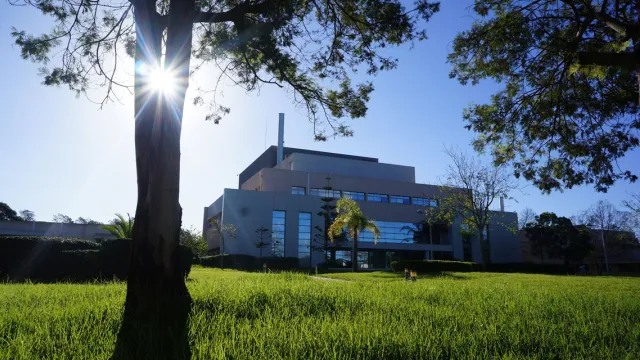
The Maâmora Nuclear Research Centre is one of Morocco’s most important nuclear-science facilities. It hosts the country’s TRIGA Mark II research reactor, which has a nominal thermal power of about 2 MW and has been used for research, education, training and peaceful nuclear applications.
The reactor is not a commercial nuclear power plant. Its purpose and scale are different from those of large electricity-generating reactors, but it remains a regulated nuclear installation and therefore attracts understandable public attention when safety allegations arise.
Research reactors play an important role across the nuclear sector. They can support neutron activation analysis, scientific research, radioisotope production, education, workforce development and technical training. In many newcomer countries, research reactors are also among the institutions through which future nuclear engineers, operators, regulators and scientists gain practical experience.
Precisely because these facilities are important national scientific assets, regulators and operators must be able to communicate clearly when questions arise about their safety.
A false claim involving a research reactor can easily be interpreted by members of the public as evidence of a major nuclear accident if the difference between research reactors and commercial power reactors is not well understood.
This creates an additional responsibility for institutions to explain not only whether an event occurred, but also what type of facility is involved, what measurements were taken and why the results matter.
The emerging problem of nuclear misinformation
The most important lesson from the Moroccan episode may ultimately have less to do with the reactor itself and more to do with the environment in which nuclear information now circulates.
Nuclear emergency planning has traditionally concentrated on physical events. Authorities prepare for equipment failures, radioactive-source accidents, transport incidents, contamination, fires, malicious acts and other situations that could result in exposure or environmental release.
Those scenarios remain essential. But institutions now also need to prepare for events in which the emergency exists primarily in the information space.
A fabricated notice carrying an official logo can be distributed to thousands of people within minutes. A photograph from another country can be presented as evidence of an accident at a local nuclear facility. Routine emergency exercises can be misrepresented as confirmation that an accident has already occurred. Old footage can be recirculated as breaking news. False casualty figures or invented radiation measurements can spread before the responsible regulator has even had time to dispatch an inspection team.
Artificial intelligence and increasingly sophisticated digital editing tools make the challenge even more serious because false documents, photographs, audio recordings and videos can be made to appear increasingly authentic.
The result is that a nuclear regulator may find itself dealing with two separate questions at the same time. The first is technical: has anything actually happened at the facility? The second is informational: what does the public now believe has happened?
Managing the second question badly can have consequences even when the answer to the first is no.
Why radiation rumours are especially powerful
Misinformation affects many areas of public policy, but radiation has particular characteristics that make false claims unusually difficult to counter.
Ionising radiation cannot normally be seen, smelled or felt. Members of the public cannot simply stand outside a facility and determine for themselves whether radiation levels are normal. They depend on properly calibrated instruments and trusted institutions to establish whether a hazard exists.
This creates an unavoidable dependence on technical authority.
When a regulator states that there has been no radioactive release, the public is being asked to accept that conclusion partly because the regulator possesses the equipment, expertise and legal authority necessary to make the determination.
That makes trust one of the most important assets in nuclear regulation.
It also means that regulators need to communicate evidence rather than reassurance alone.
A statement saying there is “no danger” may be accurate, but it asks the public to accept an institutional conclusion. A statement explaining that inspectors measured ambient dose rates and tested surfaces for contamination begins to show how that conclusion was reached.
Where security and operational considerations permit, regulators can strengthen this approach further by publishing more information about what was measured, where measurements were taken, how the results compare with normal background levels and whether environmental monitoring systems detected any abnormal change.
The goal is not to overwhelm the public with technical data. It is to demonstrate that the conclusion rests on measurable evidence.
Speed and transparency increasingly matter together
The Moroccan case also highlights the importance of speed.
Rumours move faster than formal regulatory processes. A responsible regulator cannot simply publish information before it has verified the facts, but waiting too long can allow misinformation to dominate the public conversation.
The challenge is therefore to communicate progressively.
A regulator can first acknowledge that it is aware of the allegation and is investigating it. It can then inform the public whether any immediate protective action is required. Once measurements or inspections are completed, it can publish the verified results. If further analysis is required, it can say so clearly rather than leaving the public to assume that silence means concealment.
This type of staged communication can prevent an information vacuum from developing.
Once a false account of an incident becomes widely accepted, correcting it becomes much more difficult. People may interpret later official statements as defensive or politically motivated, particularly where public trust in institutions is already weak.
This is why the communications function of a nuclear regulator should not be treated as secondary to technical regulation. In an emergency, effective communication can itself become part of public protection.
Regulators need trusted and authenticated digital channels
AMSSNuR also warned against fabricated digital content and the misuse of official institutional identity. That raises a practical issue that every African nuclear regulator should consider.
The public must be able to identify quickly where authentic nuclear-safety information will appear.
Regulators should maintain authoritative websites that are updated promptly and clearly linked to their official social-media channels. Government websites should also point citizens toward the regulator’s verified channels so that people are not forced to judge authenticity based only on logos, screenshots or forwarded messages.
The same principle should extend to emergency notices.
If an actual incident requires sheltering, evacuation, movement restrictions or other protective actions, the public should already know which institutions are authorised to issue those instructions and where those instructions will be published.
Digital authentication may therefore become increasingly important for high-consequence public notices.
The challenge is not unique to Morocco. Ghana, Kenya, Rwanda, Nigeria, Uganda, South Africa and other African countries with nuclear or radiological programmes will face similar risks as public interest in their programmes increases.
A false statement carrying the logo of a regulator or nuclear utility could potentially trigger fear, unnecessary movement of populations or distrust in official emergency instructions.
Preparing for that possibility should become part of modern nuclear emergency planning.
Communication must not become a substitute for openness
There is, however, another side to the issue.
Regulators must be careful not to classify legitimate public concern, criticism or questioning as misinformation.
Members of the public are entitled to ask whether a nuclear facility is safe. They are entitled to question environmental monitoring, emergency plans, radioactive-waste arrangements and regulatory independence. Journalists and civil-society organisations are also entitled to scrutinise nuclear institutions.
A strong regulator should welcome evidence-based scrutiny because independent questioning can strengthen accountability.
The distinction must therefore remain clear between criticism and demonstrably false information.
Where a claim is technically incorrect, the strongest response is normally evidence. Where documents are forged or officials are impersonated, legal remedies may be appropriate. But enforcement should never become a substitute for transparent communication.
Trust is strengthened when institutions explain, demonstrate and disclose rather than merely demand belief.
An important lesson for African nuclear newcomers
For countries preparing commercial nuclear power programmes, the Moroccan case deserves close attention.
The public-information environment surrounding a future power reactor will be far more intense than the environment surrounding most research facilities.
During site selection, construction and eventually operation, false claims could emerge about radiation releases, reactor defects, contaminated water, missing nuclear material, worker exposures, emergency evacuations or environmental damage.
Some of those claims may arise accidentally from misunderstanding. Others may be deliberately fabricated.
Countries such as Ghana, Kenya and Rwanda should therefore consider including misinformation scenarios in their nuclear emergency exercises before their first power reactors become operational.
An exercise could simulate a minor plant event accompanied by a viral claim that radioactive material had escaped. Authorities could then test whether the regulator detects the false information quickly, whether emergency organisations agree on the facts, whether monitoring data can be released promptly, who addresses the public and how social-media channels are used.
Such exercises would reveal weaknesses in communication arrangements in much the same way that conventional emergency exercises reveal weaknesses in physical response.
The ability to identify and correct a false evacuation notice could one day prove almost as important as testing an emergency siren.
Routine environmental monitoring can strengthen credibility
One of the most effective ways to counter false radiation claims is to establish public access to credible baseline information before controversy arises.
Where technically feasible, regulators should publish routine environmental radiation-monitoring information around nuclear facilities. That creates a historical record against which unusual claims can be assessed.
If the public can see that radiation measurements have remained stable over months or years, a sudden allegation can be evaluated against an existing baseline rather than a set of data produced only after the regulator has been challenged.
Publishing such information also creates opportunities for universities and independent researchers to examine trends and contribute to public understanding.
This approach shifts nuclear communication away from institutional reassurance and towards evidence-based transparency.
It also helps build familiarity with radiation as something that can be measured, monitored and compared rather than something that should automatically be associated with catastrophe.
Morocco’s regional role gives the episode wider importance
Morocco has become an increasingly important centre for nuclear and radiation-safety capacity development in Africa.
Through AMSSNuR, CNESTEN and its cooperation with the IAEA and other international partners, the country contributes to regional training, regulatory capacity building and the development of nuclear expertise.
This means the lessons from the Maâmora episode need not remain national.
African regulatory networks could increasingly share experience on crisis communication, official digital authentication, public radiation-data systems and methods for responding to fabricated nuclear content.
Regional cooperation could also support the development of common principles for communicating nuclear and radiological events. This would be particularly valuable where rumours involve cross-border contamination or transport of radioactive material.
As nuclear programmes expand, African countries will increasingly depend on one another for technical cooperation. They may also increasingly face information challenges that cross national boundaries just as quickly as material can.
Trust must be built before the crisis
Perhaps the most important lesson is that public trust cannot be created during an emergency.
It has to exist beforehand.
A regulator that is visible only when defending itself against allegations will find it harder to persuade the public during a crisis than an institution that routinely explains its work, publishes inspection information, communicates radiation-monitoring results and engages openly with journalists and communities.
Nuclear regulators should therefore communicate during normal operations, not only during abnormal events.
They should explain how inspections work, what environmental monitoring measures, what constitutes an unusual event, what emergency arrangements exist and where members of the public should obtain verified information.
People should know their nuclear regulator before they need their nuclear regulator.
This is especially important in African nuclear-newcomer countries, where large sections of the population may have little direct experience with nuclear technology but will increasingly encounter debates about reactors, radiation and nuclear safety.
Conclusion
AMSSNuR’s conclusion is clear: its inspections and measurements found no evidence of a radioactive leak or contamination at the Maâmora Nuclear Research Centre.
That should remain the central factual point.
But the wider significance of the episode is that it demonstrates how quickly nuclear safety can become entangled with digital misinformation.
A false claim can create fear before inspectors arrive. A fabricated official notice can circulate more widely than a regulator’s technical statement. An institution that has not established trusted communication channels in advance may struggle to correct misinformation once it has spread.
Africa’s nuclear emergency preparedness must therefore continue evolving.
Countries will still need radiation detectors, trained emergency teams, environmental monitoring systems and technically competent regulators. Increasingly, they will also need rapid verification mechanisms, authenticated digital channels, trained communicators and strategies for dealing with false nuclear information.
The physical safety system protects people from radiation.
The information system helps the public understand whether that protection is working.
As Africa expands the peaceful use of nuclear science and technology, both will become indispensable.
Related

Amazon’s 20-Year Nuclear Deal Shows How Large Corporate Buyers Can Help Finance Nuclear Investment
By Nuclear Africa• October 5, 2026
US Nuclear Regulator’s Workforce Warning Carries a Clear Lesson for African Nuclear Newcomers
By Nuclear Africa• October 5, 2026
US-South Korea $120 Billion Nuclear Framework Shows the Scale of State-Backed Reactor Finance
By Nuclear Africa• October 5, 2026
Rwanda releases Nuclear Industrial Localization Roadmap
By Nuclear Africa• October 5, 2026