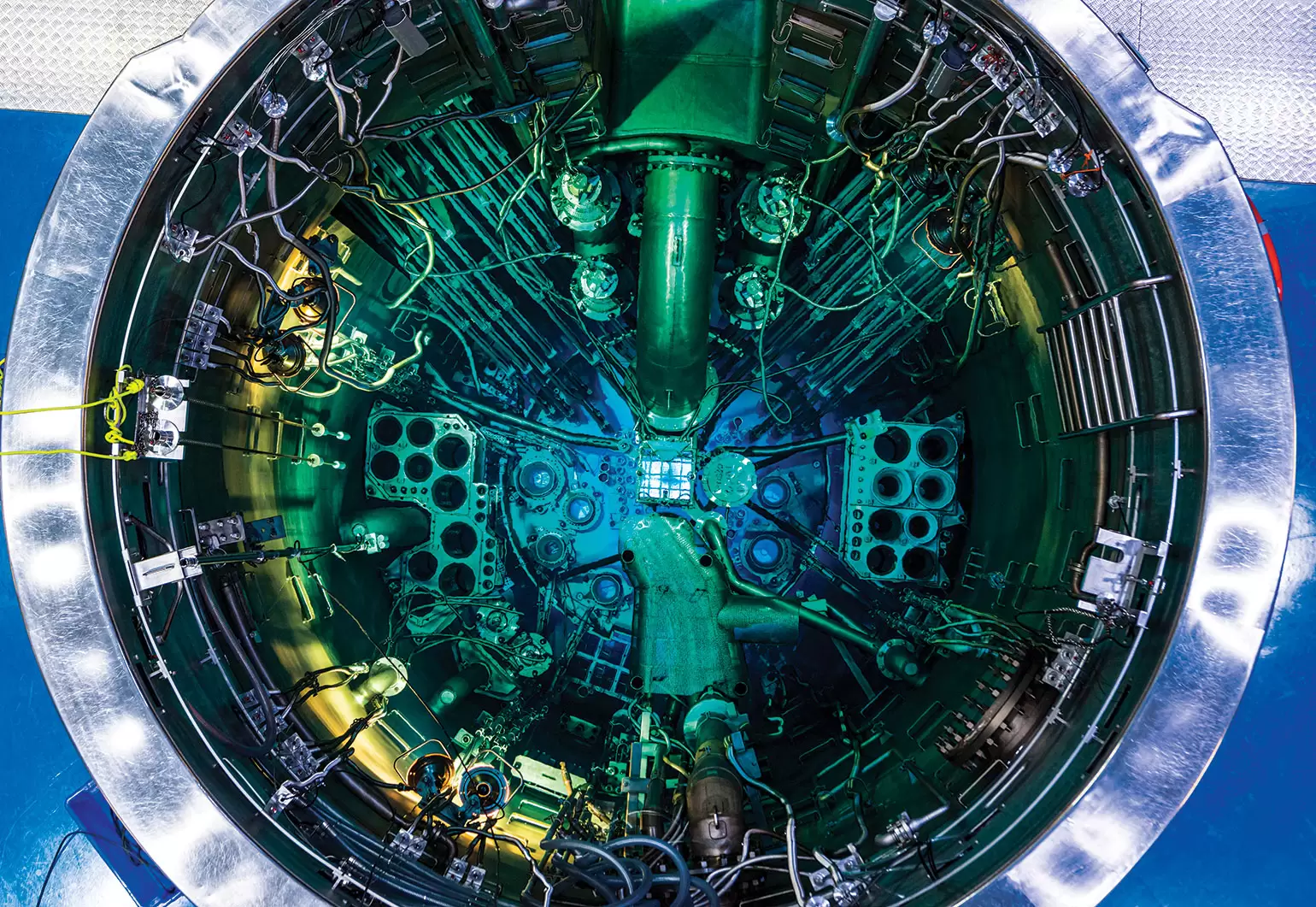
Australia’s OPAL research reactor has marked 20 years since first criticality, providing an unusually measurable case study of what a well-utilised national research reactor can deliver beyond electricity generation.
The 20 MW multipurpose reactor at the Australian Nuclear Science and Technology Organisation’s Lucas Heights campus first achieved criticality on 12 August 2006. Two decades later, ANSTO says OPAL has supported production of more than 10 million nuclear-medicine doses, irradiation of more than 900 tonnes of silicon and over 8,000 scientific experiments.
These numbers matter for Africa because several countries operate research reactors while others are considering building new ones.
The crucial policy question is not simply whether Africa needs more research reactors.
It is what those facilities will actually deliver.
A reactor that does not generate electricity
Research reactors are fundamentally different from commercial nuclear power reactors.
They are generally smaller and are designed primarily to provide neutron fluxes for scientific research, isotope production, education, material testing and industrial applications rather than producing electricity.
OPAL illustrates the breadth of that role.
ANSTO says the reactor has supported nuclear medicines used in diagnosis and treatment, neutron-scattering research and the irradiation of silicon used in high-performance semiconductor applications.
Its neutrons have supported research in areas ranging from advanced manufacturing and materials to health, climate and environmental science.
That makes a productive research reactor less like a small power station and more like a national scientific platform.
Africa already has a research-reactor base
Africa has an established research-reactor community encompassing countries including Algeria, Egypt, Ghana, Libya, Morocco, Nigeria and South Africa.
The IAEA reported in April 2026 that Egypt, Ghana and Nigeria intend to conduct market analyses aimed at improving utilisation of their reactors, including radioisotope production, analytical services and research applications.
The same IAEA programme has supported expanded postgraduate training and analytical capabilities, while Ghana and Nigeria have established cooperation related to safe operation, training and research-reactor utilisation.
Separately, the IAEA is providing assistance to countries including Kenya, Rwanda and Uganda as they investigate new research-reactor projects.
The African research-reactor ecosystem could therefore expand substantially.
That makes the question of utilisation increasingly important.
Owning a reactor does not automatically create value
A research reactor is expensive to operate and maintain.
It needs qualified operators, regulators, security arrangements, nuclear fuel, maintenance systems, radioactive-waste management, emergency preparedness and continuing investment.
Its development case should therefore depend on the services it can provide.
An underutilised reactor can become primarily a cost centre.
A highly utilised facility can support hospitals, universities, industry, regulators and the wider scientific community.
OPAL’s twenty-year record provides useful metrics against which African research-reactor strategies can be evaluated.
How many patients benefit from isotopes associated with the facility? How many industrial users purchase analytical or irradiation services? How many graduate students receive hands-on training? How many scientific experiments are performed? How many publications result? How much external revenue is generated?
Those are more meaningful questions than simply asking whether a country possesses a reactor.
Medical isotopes could be transformative
Nuclear medicine represents one of the strongest development arguments for research reactors.
Radioisotopes are used internationally for diagnostic imaging and, increasingly, targeted cancer therapies.
African countries still face significant disparities in access to nuclear medicine, and regional isotope-production capacity can help strengthen supply security when supported by the necessary radiopharmaceutical production, transportation, hospital and regulatory infrastructure.
But a reactor alone does not solve the problem.
Isotope production must connect with hot cells, processing laboratories, quality assurance, distribution networks, trained pharmacists, medical physicists, nuclear-medicine physicians and hospitals.
The full ecosystem matters.
Research reactors as workforce infrastructure
For African newcomer nuclear-power programmes, research reactors can also provide something less tangible but extremely valuable: practical nuclear experience.
The IAEA notes that countries including Egypt, Ghana and Nigeria built nuclear and radiation-safety expertise through years of research-reactor operation before moving deeper into nuclear-power planning.
Operating a research reactor develops experience in reactor physics, safety culture, radiation protection, maintenance, security, safeguards and regulatory oversight.
Those capabilities are not identical to operating a large commercial reactor, but they provide an institutional foundation.
This can make research reactors strategically valuable even when the country’s eventual power-reactor technology is completely different.
Why This Matters for Africa
OPAL’s twentieth anniversary should not be treated simply as an Australian celebration.
It should prompt African countries to develop performance frameworks for research-reactor utilisation.
Success should be measured not by the existence of the reactor but by its impact.
The goal should be to turn neutrons into measurable national benefits: improved healthcare, scientific output, industrial services, trained personnel and technological capability.
For countries considering new research reactors, those expected outcomes should be defined before construction begins.
For countries already operating reactors, OPAL offers a different challenge:
After 10, 20 or 30 years, can the country clearly demonstrate what the reactor has delivered?
That may ultimately be the best measure of whether a research reactor has become genuine national infrastructure rather than simply a nuclear facility.
Related

Beyond the Resolutions: GC70 and the Emerging Global Nuclear Order
By Nuclear Africa• September 22, 2026
Africa Deepens Nuclear Safeguards Capacity as AFCONE Convene Hands-On Training in Nairobi
By Nuclear Africa• August 24, 2026
A 300 MW SMR Could Support More Than 12,500 Construction Jobs in Ghana: New Study Tests Nuclear’s Economic Case
By Nuclear Africa• August 24, 2026