Applications are open for the second CONNECT-NM Young Researcher Network Workshop, scheduled to take place from 30 September to 2 October 2026 at the Fraunhofer Institute for Nondestructive Testing, known as Fraunhofer IZFP, in Saarbrücken, Germany.
The programme is intended for early-career specialists in nuclear materials, including doctoral candidates, postdoctoral researchers, young professionals and other emerging scientists working within the CONNECT-NM community.
Approximately 30 applicants will be selected. The application deadline is 14 August 2026, and applicants are expected to receive selection decisions by 31 August.
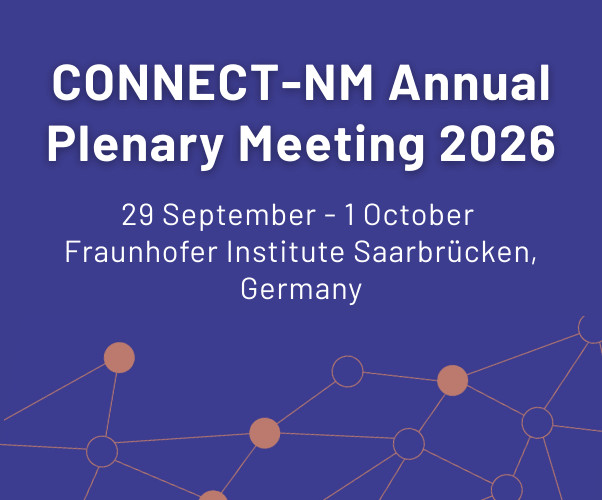
The workshop will take place alongside the third CONNECT-NM Plenary Meeting and the 2026 JPNM Days, enabling selected participants to interact with a wider European community of nuclear-materials researchers, universities, laboratories, industries and technical-support organisations.
What is CONNECT-NM?
CONNECT-NM is a European partnership designed to coordinate research and innovation in nuclear materials.
Its work brings together expertise needed to understand how materials behave under the demanding conditions found in existing and advanced nuclear systems.
Nuclear materials may be exposed to:
- high temperatures;
- neutron irradiation;
- pressure;
- corrosion;
- mechanical stress;
- repeated heating and cooling;
- chemically aggressive coolants; and
- extended operating periods.
Understanding these effects is essential to reactor safety, efficiency and longevity.
The partnership supports research, education, training and cooperation across the European nuclear-materials community. It has also established a Young Researcher Network to connect emerging professionals with senior experts and institutions.
Why nuclear materials matter
A nuclear reactor’s safety depends not only on its overall design but also on the performance of individual materials and components.
Engineers must understand whether reactor vessels, fuel cladding, pipes, welds, graphite, concrete and specialised alloys can withstand their expected operating environment.
Materials degradation can arise through:
- embrittlement;
- swelling;
- creep;
- fatigue;
- stress-corrosion cracking;
- oxidation;
- thermal ageing; and
- radiation damage.
Materials science is therefore central to several major nuclear priorities.
Long-term operation
Many existing nuclear plants are seeking permission to operate for 60 years or longer.
Regulators and operators need evidence that safety-significant materials can continue performing reliably.
Advanced reactors
SMRs, molten-salt reactors, fast reactors and high-temperature reactors may use coolants and operating temperatures different from those of conventional plants.
They require new materials or improved qualification of existing ones.
Nuclear fusion
Future fusion machines will expose materials to intense neutron conditions, high heat loads and other extreme environments.
Radioactive-waste management
Waste packages and disposal barriers must remain effective over long periods.
Reactor decommissioning
Material characterisation is necessary to determine contamination, activation and suitable disposal routes.
Workshop programme
The 2026 programme is expected to include:
- presentations on CONNECT-NM education and training activities;
- a technical visit to Fraunhofer IZFP;
- a joint JPNM and CONNECT-NM workshop on research infrastructure;
- technical and professional-development sessions;
- networking and community-building activities; and
- a social programme that includes a cruise on the Saar River.
The technical visit is likely to be particularly valuable because Fraunhofer IZFP specialises in nondestructive testing and condition-monitoring technologies.
Nondestructive testing allows engineers to examine structures and components without damaging them.
Methods can include ultrasound, radiography, electromagnetic testing, thermography, acoustic techniques and advanced data analysis.
In the nuclear sector, such methods help identify defects, monitor ageing and verify the condition of safety-significant components.
Who is eligible?
The workshop is not open to every young nuclear researcher worldwide.
Applicants must be affiliated with an organisation that is a member of the CONNECT-NM consortium. The organisers advise prospective participants to check the official list of member organisations before submitting an application.
This eligibility condition is especially important for African applicants.
A researcher’s nationality or residence is not necessarily the determining factor. An African researcher studying, employed or undertaking a fellowship at an eligible European partner institution may qualify.
A researcher working solely at an African institution that is not a consortium member may not qualify unless the organisers confirm another route of eligibility.
Applicants should therefore verify their institutional status before preparing their submissions.
Funding and participation costs
CONNECT-NM states that additional funding may become available for eligible applicants from partner organisations whose normal reimbursement rate is below 100%.
The organisers had not confirmed that additional support at the time of the announcement, and applicants should not assume that all travel and participation expenses will automatically be covered.
Before applying, candidates should clarify:
- whether travel is reimbursed;
- whether accommodation is covered;
- whether meals are provided;
- whether visa costs are eligible;
- whether their home institution must pay expenses first; and
- what documentation will be required for reimbursement.
Applicants who require a Schengen visa should also consider the time needed to obtain supporting documents and complete the visa process.
Why the opportunity matters to African researchers
African nuclear programmes need expertise in materials science.
Countries considering nuclear power will eventually require professionals capable of evaluating:
- reactor materials;
- ageing-management programmes;
- corrosion;
- structural integrity;
- component inspection;
- fuel performance;
- materials qualification;
- manufacturing quality; and
- decommissioning waste.
These competencies cannot be developed solely through short courses.
They require sustained education, laboratory experience, mentorship, international research collaboration and access to specialised facilities.
Participation in a network such as CONNECT-NM can help African researchers build professional relationships that may later support:
- joint publications;
- doctoral and postdoctoral research;
- laboratory access;
- research proposals;
- conference participation;
- technical exchanges; and
- long-term institutional partnerships.
Relevance to Africa’s existing reactors
Materials research is already relevant to Africa’s operating and planned nuclear facilities.
South Africa’s Koeberg Nuclear Power Station is undergoing long-term operation beyond its original licensing period. This places increased emphasis on ageing management, inspection and continued demonstration of material integrity.
African research reactors also require surveillance of fuel, reactor structures, cooling systems and irradiation facilities.
Egypt’s El Dabaa Nuclear Power Plant will require a new generation of specialists in construction quality, component inspection and materials performance.
Countries planning SMRs or research reactors will need national competence to assess vendor claims and review maintenance programmes.
Beyond networking
The workshop should not be seen only as a networking event.
Technical meetings can provide early-career researchers with exposure to questions that shape actual nuclear programmes:
- How are materials qualified for new reactors?
- What evidence is required to justify longer plant operation?
- How can inspection methods detect degradation before failure?
- How should research infrastructure be shared across countries?
- How can scientific results be translated into regulatory decisions?
- What skills will future nuclear-materials professionals need?
Young researchers also benefit from seeing how universities, industry, technical-support organisations and regulators approach the same scientific problem differently.
Preparing a strong application
Although applicants should follow the official application form, a competitive submission will generally need to demonstrate clear relevance to the workshop.
Applicants should be ready to explain:
- their current research or professional role;
- how their work relates to nuclear materials;
- what they expect to learn;
- how they will contribute to the workshop;
- how participation will support their career; and
- how they will share the knowledge within their institution or network.
A strong motivation statement should be specific.
Rather than saying only that the applicant is interested in nuclear energy, the statement should identify relevant technical interests, such as:
- irradiation damage;
- corrosion;
- fuel materials;
- advanced manufacturing;
- nondestructive testing;
- structural integrity;
- computational materials science;
- fusion materials;
- waste forms; or
- ageing management.
Opportunity for African institutions
The restrictive eligibility requirement points to a wider challenge.
African nuclear institutions need stronger formal links with major international research partnerships.
Individual researchers frequently search for international opportunities but discover that participation is limited to consortium members.
African universities and research organisations should therefore pursue:
- associate membership arrangements;
- joint research projects;
- institutional memoranda of understanding;
- researcher exchanges;
- co-supervised postgraduate programmes;
- access agreements for specialised laboratories; and
- participation in internationally funded consortia.
Institutional partnerships create more durable opportunities than relying solely on individual applications.
Preventing brain drain
International training opportunities can strengthen African nuclear programmes, but only where researchers have pathways to apply their expertise at home.
Governments and institutions should support returning researchers through:
- appropriate laboratory facilities;
- funded research programmes;
- professional advancement;
- access to scientific equipment;
- opportunities to teach and supervise students; and
- involvement in national nuclear projects.
Without such pathways, international training may contribute to permanent migration of highly specialised professionals.
The objective should be international mobility combined with strong African institutional careers.
Key information
Programme: Second CONNECT-NM Young Researcher Network Workshop
Dates: 30 September–2 October 2026
Location: Fraunhofer IZFP, Saarbrücken, Germany
Places: Approximately 30
Deadline: 14 August 2026
Selection results: Expected by 31 August 2026
Eligibility: Young researchers affiliated with a CONNECT-NM consortium member organisation
Activities: Technical sessions, research-infrastructure workshop, professional development, networking and technical visit.
Conclusion
The 2026 CONNECT-NM Young Researcher Network Workshop offers a valuable opportunity for eligible early-career professionals to deepen their understanding of nuclear materials and connect with Europe’s research community.
Its timing is particularly relevant as the nuclear sector confronts questions involving reactor lifetime extension, advanced fuels, SMRs, fusion materials and new manufacturing techniques.
African researchers who are affiliated with eligible consortium members should examine the opportunity promptly, particularly because only about 30 participants will be selected.
For African institutions, the broader lesson is equally important.
Building the continent’s nuclear future will require participation in the international research networks where technologies, standards and specialist knowledge are being developed.
Africa should not only import nuclear systems. Its researchers must be present in the laboratories and professional communities shaping the materials on which those systems depend.
Related


Africa Deepens Nuclear Safeguards Capacity as AFCONE Convene Hands-On Training in Nairobi
By Nuclear Africa• August 24, 2026
A 300 MW SMR Could Support More Than 12,500 Construction Jobs in Ghana: New Study Tests Nuclear’s Economic Case
By Nuclear Africa• August 24, 2026
Ghana Targets 1,000 MW of Nuclear Power by the Mid-2030s: What Must Happen Before Construction Can Begin?
By Nuclear Africa• August 24, 2026