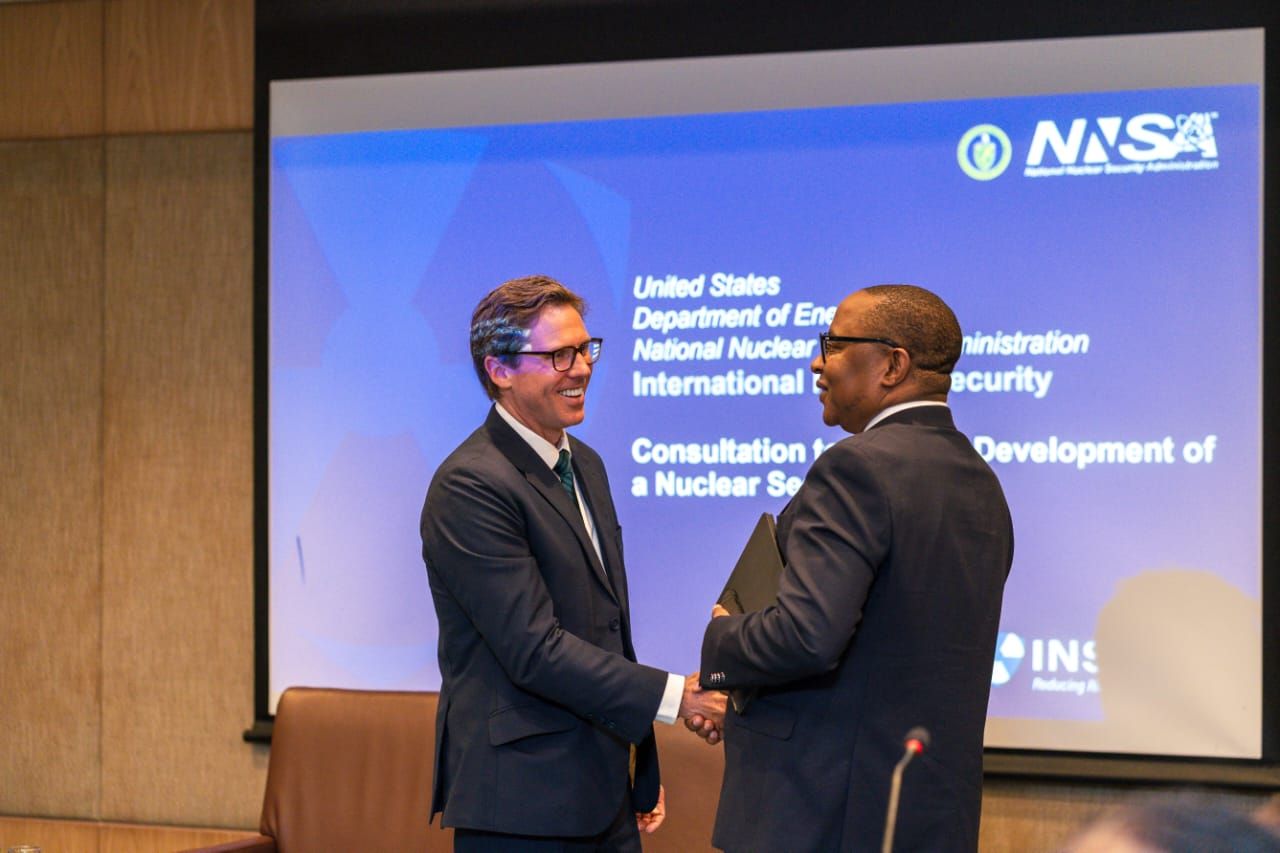
Kigali, Rwanda — Rwanda has reinforced its growing focus on nuclear and radiological security by hosting a four-day Nuclear Security Policy Workshop in Kigali, bringing together officials and experts from Rwanda and neighbouring Uganda to strengthen national nuclear security frameworks and regional cooperation.
Held from 21 to 24 September 2026, the workshop was co-hosted by the Rwanda Utilities Regulatory Authority (RURA) and the U.S. Department of Energy’s National Nuclear Security Administration (NNSA), including its International Nuclear Security activities. The programme was officially opened by RURA Director General Evariste Rugigana and the Chargé d’Affaires of the U.S. Embassy in Rwanda.
The workshop focused on some of the most important elements of a national nuclear security regime, including the security of nuclear and radioactive material during transport, nuclear material accounting and control, commonly known as NMAC, insider threat mitigation and cybersecurity. These areas form part of the broader institutional, regulatory and operational arrangements required to prevent, detect and respond to the theft, sabotage, unauthorised removal or malicious use of nuclear and other radioactive material.
Building security into emerging nuclear programmes
The Kigali workshop is significant beyond the immediate training programme. Across Africa, a growing number of countries are examining expanded applications of nuclear science and technology, while several are considering or developing nuclear power programmes. This trend is increasing the importance of establishing strong nuclear security arrangements early, rather than treating security as an operational requirement to be addressed only after facilities and infrastructure have been developed.
For emerging nuclear countries, nuclear security policy provides the foundation upon which legislation, regulations, institutional responsibilities, physical protection systems, personnel reliability programmes, material control arrangements and response capabilities can subsequently be built.
The NNSA’s Office of International Nuclear Security works internationally to reduce the risk of theft of nuclear material and sabotage of nuclear facilities, while supporting partner countries in strengthening sustainable nuclear security capabilities. NNSA has also increasingly emphasised the importance of considering security, safeguards and non-proliferation requirements as nuclear technologies and facilities are planned and deployed.
The participation of both Rwanda and Uganda therefore gives the workshop an important regional dimension. Nuclear security remains fundamentally a national responsibility, but many potential security challenges do not stop at national borders. The transport of radioactive sources, movement of goods and people, illicit trafficking risks, cyber threats and emergency response considerations can all require cooperation between neighbouring states.
Regional exchanges of experience can also help countries develop compatible approaches to threat assessment, information sharing, regulatory oversight, training and response coordination.
Focus on transport, NMAC and the insider threat
Transport security is particularly important because nuclear and radioactive materials may become more vulnerable when moved outside fixed installations. An effective national framework must therefore establish clear responsibilities for operators, carriers, regulators, law enforcement agencies and other organisations involved in protecting material throughout transport operations.
Rwanda already maintains regulatory provisions covering the transport of nuclear and other radioactive material as well as the import, export and transit of such materials. Its regulatory framework has expanded in recent years to include requirements relating to physical protection, safeguards, radioactive waste management and the licensing of nuclear installations.
Nuclear Material Accounting and Control was another major area addressed during the Kigali discussions. Effective NMAC systems allow organisations to maintain knowledge of the quantity and location of nuclear material and to identify discrepancies or indications of unauthorised removal. While nuclear material accountancy also has an important safeguards function, material control and accounting measures are an essential element of facility-level nuclear security.
Attention to the insider threat is equally important. Nuclear security systems cannot rely exclusively on fences, cameras, guards and access controls. Individuals with authorised access may possess knowledge, privileges or opportunities that could be exploited to facilitate theft, sabotage or other malicious acts. Effective mitigation therefore requires a combination of personnel reliability, access control, organisational culture, information protection, monitoring and appropriate management systems.
Cybersecurity becoming central to nuclear security
The workshop’s inclusion of cybersecurity reflects the rapidly changing technological environment surrounding nuclear and radiological activities.
Modern nuclear and radiation facilities increasingly depend on digital instrumentation, communication networks, access-control systems, databases and information-management platforms. Cyber compromise can therefore have consequences extending beyond information loss, potentially affecting physical protection, facility operations and other security functions.
For African countries building new nuclear capabilities, cybersecurity considerations will increasingly need to be incorporated into nuclear infrastructure planning from the outset. This includes not only technical protection of networks and systems, but governance arrangements, workforce competence, supply-chain security, incident reporting and coordination between nuclear regulators and national cybersecurity authorities.
Rwanda expands its nuclear regulatory architecture
The Kigali workshop takes place against the background of Rwanda’s continuing development of its nuclear and radiation regulatory system.
RURA’s responsibilities for radiation protection are anchored in Rwanda’s legal framework governing radiation protection, with the regulator responsible for controlling the safe and peaceful use of ionising radiation and protecting people, property and the environment from harmful effects. RURA identifies safety, security and effective regulatory infrastructure as interconnected elements of responsible nuclear and radiation activities.
The country has progressively developed regulations governing areas including the security of radioactive material, emergency preparedness and response, transport of nuclear and radioactive material, physical protection of nuclear materials and installations, nuclear safeguards, import and export controls, radioactive waste management and licensing of nuclear installations.
Rwanda has also been expanding international regulatory cooperation. In September 2026, RURA signed or renewed cooperation arrangements with African nuclear regulatory organisations including Egypt’s Nuclear and Radiological Regulatory Authority and Morocco’s Agency for Nuclear and Radiological Safety and Security, aimed at strengthening technical cooperation, training and exchange of regulatory experience.
These developments point to an increasingly deliberate approach to building the regulatory and institutional foundations required to support the safe, secure and peaceful application of nuclear technology.
A regional nuclear-security imperative
For Africa’s emerging nuclear programmes, the Kigali workshop highlights an important principle: nuclear security capacity should grow alongside nuclear technology itself.
Investment in reactors, research facilities, medical applications and radioactive-source technologies must be accompanied by investment in competent regulatory institutions, security professionals, law-enforcement capabilities, cybersecurity, nuclear security culture and mechanisms for regional and international cooperation.
The participation of Rwanda and Uganda demonstrates the value of neighbouring countries discussing these issues together. As nuclear science and technology expand across the continent, regional cooperation could become increasingly important in areas such as transport security, border monitoring, emergency preparedness, cybersecurity, information exchange and the prevention of illicit trafficking.
The Kigali Nuclear Security Policy Workshop consequently represents more than a four-day capacity-building programme. It forms part of a wider effort to ensure that Africa’s expanding use of nuclear technology is supported by credible, sustainable and internationally aligned systems for nuclear security.
For countries considering nuclear energy as part of their future development strategies, establishing these foundations early will be critical to maintaining public confidence, protecting nuclear and radioactive materials, strengthening national security and ensuring that nuclear technology continues to be used exclusively for peaceful purposes.
Related

Morocco Nuclear Regulator Says No Radioactive Leak at Maâmora Research Centre
By Nuclear Africa• October 7, 2026
Amazon’s 20-Year Nuclear Deal Shows How Large Corporate Buyers Can Help Finance Nuclear Investment
By Nuclear Africa• October 7, 2026Beyond the Resolutions: GC70 and the Emerging Global Nuclear Order
By Nuclear Africa• October 6, 2026
US Nuclear Regulator’s Workforce Warning Carries a Clear Lesson for African Nuclear Newcomers
By Nuclear Africa• October 5, 2026