What the IAEA’s 70th General Conference reveals about nuclear power, advanced technologies, safeguards, security and Africa’s place in the next nuclear era.
The 70th IAEA General Conference revealed a striking contrast. Nuclear technology is expanding into new reactors, new fuels, medicine, agriculture, artificial intelligence and advanced industrial applications, even as international consensus on some of the rules governing that expansion becomes more difficult to achieve. For Africa, the implications extend far beyond the question of who will build the continent’s next nuclear power plant.
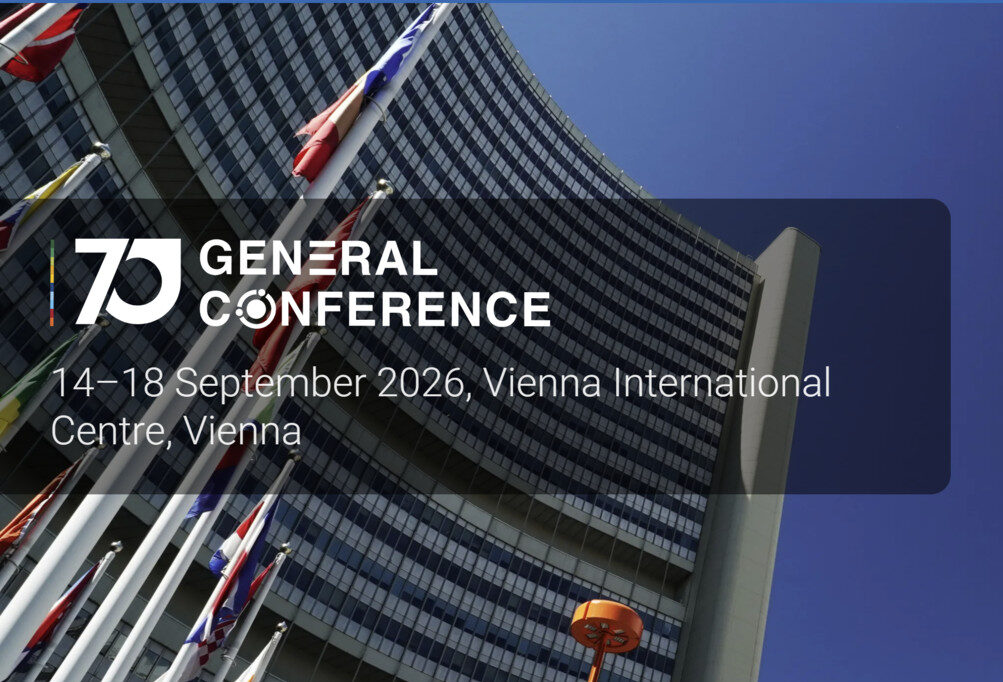
The 70th Regular Session of the International Atomic Energy Agency General Conference, held in Vienna from 14 to 18 September 2026, took place at an important moment for the global nuclear sector. Nuclear power is attracting renewed attention because of electricity demand growth, energy security concerns, decarbonisation objectives and the emergence of small modular reactors. Nuclear technologies are simultaneously finding wider applications in medicine, agriculture, water management, environmental monitoring and industry.
Yet the most consequential outcome of the Conference may not have been a new technological initiative or reactor announcement. It was a reminder that the expansion of nuclear technology depends not only on engineering and financing, but also on the ability of governments to sustain an effective international framework for safety, security, safeguards and peaceful nuclear cooperation.
The official record shows that the General Conference adopted 11 resolutions. They covered Timor-Leste’s application for IAEA membership, the Agency’s financial statements, its 2027 budget, the Technical Cooperation Fund, the Working Capital Fund, Member State contributions, credentials, safeguards in the Democratic People’s Republic of Korea and the Middle East, and nuclear safety, security and safeguards in Ukraine.
What makes the 2026 Conference exceptional, however, is what was missing from that list.
A Conference without five of its usual technical resolutions
At the end of the Conference, the Chair of the Committee of the Whole reported that Member States had been unable to reach consensus on draft resolutions concerning nuclear applications, nuclear and radiation safety, nuclear security, technical cooperation and safeguards effectiveness. The drafts were consequently not presented to the plenary for adoption. Existing resolutions in these areas will continue to guide the Agency’s activities until new texts are agreed.
This should not be interpreted as meaning that these IAEA programmes have stopped. Nuclear security programmes continue. Safeguards inspections continue. Technical cooperation projects continue. Nuclear safety standards and assistance continue, as do nuclear science and applications.
The significance is instead institutional. These recurring General Conference resolutions provide Member States with opportunities to update collective guidance as technology, risks and international circumstances change. At precisely the moment when the nuclear sector is becoming technologically more complicated, the political process was unable to produce fresh consensus texts across five of the Agency’s central technical areas.
The Conference President described the outcome as exceptional and recorded a growing desire among Member States to review the negotiation process and rebuild consensus before future conferences.
This creates one of the central paradoxes emerging from Vienna: nuclear technology is accelerating while parts of the multilateral machinery governing it are becoming harder to update by consensus. For Africa, where most countries depend substantially on international cooperation to build nuclear regulatory, scientific and technical capacity, that distinction matters.
Follow the budget, and another picture emerges
Despite the negotiating difficulty, the General Conference provided the Agency with a substantial operational framework for 2027.
GC(70)/RES/3 appropriated approximately €439.75 million for the operational Regular Budget, together with a €6 million capital budget. Of the operational allocation, approximately €171.42 million is assigned to nuclear verification, €48.55 million to nuclear techniques for development and environmental protection, €47.74 million to nuclear power, the fuel cycle and nuclear science, and €42.75 million to nuclear safety and security.
The size of the verification allocation is revealing. A larger global nuclear sector ultimately means more nuclear material, more facilities and potentially more complex fuel cycles requiring safeguards. The peaceful expansion of nuclear technology and the expansion of nuclear verification are therefore not competing trajectories. They are increasingly interconnected.
The Conference also approved a €98 million target for voluntary contributions to the Technical Cooperation Fund for 2027. That figure is particularly important from an African perspective because much of Africa’s interaction with nuclear technology takes place not through nuclear power stations but through the IAEA Technical Cooperation Programme.
Technical cooperation supports Member States in fields including health and nutrition, food and agriculture, water and the environment, industrial applications, nuclear knowledge and national institutional development. Any serious assessment of Africa’s nuclear future must therefore go well beyond electricity generation.
Nuclear power expectations are rising again
The global nuclear-power outlook presented around the General Conference reinforces the scale of the transition now being contemplated.
At the end of 2025, the IAEA reported 413 operating nuclear power reactors with approximately 377.1 GW(e) of generating capacity. Its 2026 projections extend to 2060 for the first time.
Under the IAEA’s low case, global nuclear capacity reaches about 696 GW(e) by 2060. Under the high case, it reaches approximately 1,284 GW(e), around 3.4 times the 2025 level. The Agency emphasizes that these are scenarios rather than predictions.
The difference between 696 GW and 1,284 GW is itself perhaps more informative than either number individually. It shows that the principal uncertainty surrounding nuclear energy is no longer whether reactors can technically generate large quantities of electricity. The variables increasingly concern whether countries can finance, license, construct and operate enough projects, develop adequate supply chains and workforces, secure fuel and establish long-term waste-management arrangements.
In other words, the nuclear future will depend as much on institutional execution as on reactor technology. That is especially relevant to emerging nuclear countries in Africa.
Africa is moving from nuclear interest to nuclear infrastructure
Africa remains a continent with only one operating commercial nuclear power programme, in South Africa, while Egypt is constructing the four-unit El Dabaa nuclear power plant. At the same time, a broader group of African countries is examining nuclear power options and strengthening the institutional infrastructure required to make informed national decisions.
This is an important maturation of the African nuclear conversation. The question is gradually moving from “Could Africa use nuclear power?” to more difficult questions: Can countries establish credible nuclear institutions? Can programmes survive political and fiscal cycles? Can regulators remain technically capable and sufficiently independent? Can projects obtain affordable financing? Can nuclear workforces be retained for decades? Can supply chains support construction and operation? And can radioactive waste and spent fuel be responsibly managed throughout the programme lifecycle?
Those questions are less visible than reactor technology selection, but they may ultimately determine which African programmes progress.
Small modular reactors could change the entry point
SMRs remain particularly significant for Africa because conventional large reactors can present challenges for smaller electricity grids and capital-constrained economies.
The latest IAEA projections suggest that SMRs could become a material share of new nuclear capacity through 2060. The attraction is understandable. Depending on design and project circumstances, smaller units could permit incremental capacity additions, modular construction, smaller individual project sizes and applications beyond electricity.
But an SMR should not be confused with a simplified nuclear programme. A 300 MW reactor still requires nuclear legislation, a competent regulator, safeguards arrangements, nuclear security, emergency preparedness, radiation protection, environmental assessment, spent-fuel and radioactive-waste management, qualified operators and long-term institutional oversight.
For African countries, therefore, SMRs may change the economics and scale of nuclear deployment. They do not remove the need to build a nuclear state infrastructure capable of governing the technology.
Standardisation may determine whether the SMR promise is realised
The economics of SMRs are based partly on an industrial idea that differs from the traditional nuclear megaproject: build standardised units repeatedly rather than engineering highly customised plants one at a time.
That principle encounters a regulatory problem. If essentially the same reactor design requires extensive redesign and substantially different licensing documentation each time it enters a new jurisdiction, much of the benefit of serial production could be lost.
International work on regulatory cooperation and harmonisation is therefore becoming increasingly important. This issue is particularly relevant to Africa because the continent is unlikely to develop dozens of entirely independent reactor regulatory systems for each technology without substantial international cooperation. Regional networks, shared technical knowledge and international design-review experience may therefore become increasingly valuable while preserving each country’s sovereign regulatory responsibilities.
The future of nuclear power in Africa may consequently depend not only on which reactors become commercially available, but on whether the global nuclear community succeeds in making regulatory learning more transferable between countries.
The fuel cycle returns to the centre of nuclear strategy
A world with substantially more reactors will require substantially more attention to the nuclear fuel cycle.
Reactor construction is only one part of a functioning nuclear-energy system. Uranium must be explored and mined. It must be converted and enriched where required. Fuel must be fabricated and transported. After irradiation, spent fuel must be stored, potentially recycled and eventually disposed of or otherwise managed under an approved national strategy.
New reactor concepts may also introduce different fuel requirements. As advanced reactors move toward deployment, nuclear planning will increasingly have to connect reactor selection with fuel availability, enrichment capacity, fuel fabrication, transport and the back end of the fuel cycle.
For African countries entering nuclear power, long-term fuel security and spent-fuel strategy will therefore become matters of national infrastructure planning rather than issues to be considered after a plant begins operating.
Ukraine has changed the nuclear safety discussion
GC(70)/RES/11 on nuclear safety, security and safeguards in Ukraine also carries technological implications beyond the immediate conflict.
The experience of nuclear installations operating in an environment of military conflict has introduced questions that earlier generations of reactor designers and regulators did not expect to confront on this scale.
Nuclear safety traditionally considers events such as earthquakes, flooding, equipment failures, fires, loss of off-site power and severe accidents. Recent events have demonstrated the importance of another dimension: maintaining essential nuclear safety and security functions when the surrounding electricity infrastructure, logistics systems, communications and physical access to facilities may themselves be disrupted.
This will influence future thinking about electrical resilience, emergency power, communications, cooling, physical protection, remote monitoring and emergency preparedness. For newcomer programmes, resilience is likely to become an increasingly explicit part of the meaning of nuclear safety.
Safeguards will become more digital
The Conference’s resolutions concerning the DPRK and safeguards in the Middle East demonstrate another important reality: nuclear verification remains fundamental to the legitimacy of peaceful nuclear expansion.
GC(70)/RES/9 reiterated the Agency’s verification role concerning the DPRK and its readiness to resume verification when the necessary political and legal circumstances permit it.
The technological direction of safeguards is increasingly clear. Traditional nuclear-material accountancy and on-site inspection will remain central, but the future safeguards system will also depend progressively on advanced surveillance, remote monitoring, environmental sampling, satellite information, secure data transmission and sophisticated information analysis.
Advanced reactors and new fuel cycles may make that task more complex. Safeguards therefore need to evolve alongside reactor technology, rather than after it. For African newcomer countries, incorporating safeguards requirements into facility design, information systems and nuclear-material accounting from the beginning can become increasingly important as programmes mature.
The most widespread nuclear revolution may occur outside electricity
There is also a danger that the intense focus on nuclear power obscures the technologies likely to affect the largest number of African countries in the near term.
For much of Africa, nuclear medicine, radiotherapy, food and agriculture, isotope hydrology, environmental monitoring and industrial radiation applications may produce tangible benefits long before a first nuclear power plant is connected to the grid.
Nuclear techniques can support cancer diagnosis and treatment, agricultural research, pest control, food safety, groundwater assessment, environmental studies and industrial inspection.
This is why the future of nuclear technology in Africa cannot be measured simply by counting reactors. A country may have no nuclear power station and still possess sophisticated nuclear medicine facilities, dosimetry services, environmental laboratories, isotope hydrology capabilities, research infrastructure and radiation-processing industries.
That broader nuclear ecosystem also creates the scientists, engineers, radiation-protection specialists and regulators from which a future nuclear-power programme can eventually draw.
Nuclear technology and artificial intelligence are beginning to converge
Another transition is occurring quietly. Nuclear science is becoming increasingly data intensive.
Artificial intelligence and machine learning are being investigated for applications ranging from isotope-data interpretation and predictive hydrology to equipment diagnostics, image analysis, non-destructive testing, predictive maintenance and complex scientific modelling.
This convergence could eventually influence reactor operation, safeguards, radiation protection and environmental monitoring. But nuclear AI will face a higher threshold of confidence than many commercial AI systems.
Nuclear applications require traceability, validation, cybersecurity, quality assurance and clearly defined human responsibility. An algorithm used to recommend entertainment content and an algorithm informing the condition assessment of a safety-related component do not carry comparable consequences.
The future nuclear sector is therefore likely to combine increasing automation with unusually demanding requirements for verification and human oversight.
The African opportunity is broader than buying reactors
The most important lesson from Vienna for Africa may be that the continent should not view the emerging nuclear economy solely through the question of reactor procurement.
If global nuclear generating capacity grows toward even the lower end of the IAEA range, the resulting industry will require uranium, engineering services, construction, component manufacturing, inspection, cybersecurity, environmental monitoring, radiation protection, waste services, laboratories, training, transport, software and specialist scientific expertise.
Africa already possesses important uranium resources and a growing base of nuclear science institutions. The larger strategic question is therefore how much of the future nuclear value chain can develop within African economies.
There is an enormous difference between importing a completed nuclear facility and participating in the industrial and scientific ecosystem surrounding nuclear technology.
Local participation does not necessarily mean manufacturing reactor pressure vessels immediately. It can begin with civil engineering, environmental services, laboratories, quality management, radiation monitoring, conventional components, professional services, training, maintenance and eventually progressively more sophisticated nuclear-grade activities.
That distinction will matter considerably if several African nuclear programmes advance simultaneously.
Vienna’s central message
The 70th General Conference leaves the international nuclear community with two contrasting pictures.
One is technological optimism. Nuclear-power projections have risen, SMRs are moving closer to deployment, advanced reactors and fuels are progressing, nuclear medicine is expanding, isotope technologies are becoming more sophisticated, digital technologies are entering nuclear science, and more countries are considering nuclear energy.
The other picture is one of governance pressure. Five major technical resolutions could not be renewed by consensus. Nuclear facilities must now be protected against risks ranging from cyberattacks to armed conflict. New fuels create new safeguards and waste questions. Expanding nuclear programmes require larger workforces, stronger regulators and more capable institutions.
These trends are not contradictory. They are two sides of the same nuclear future. The more important nuclear technology becomes, the more important its governance becomes.
For Africa, this is perhaps the most consequential lesson of GC70. The continent’s nuclear future will not be determined solely by whether individual governments decide to construct large reactors or SMRs. It will depend on whether African countries can progressively build the legal frameworks, regulators, scientific institutions, technical workforces, financing systems, supply chains, safety cultures, security arrangements and safeguards capabilities capable of supporting nuclear technology over generations.
The coming nuclear era may therefore look quite different from the one that preceded it. It will be more geographically diverse, more digitally connected, more dependent on international supply chains, more closely linked to medicine and industrial development, and potentially populated by many more reactor designs and fuel types.
And as Vienna demonstrated in September 2026, one challenge will sit above all of them: ensuring that international nuclear governance evolves quickly enough to keep pace with the technologies it is expected to govern.
For Africa, that is not a peripheral concern. It is part of the foundation on which any durable nuclear future will have to be built.
| EDITOR’S TAKE • GC70 points to a more technologically diverse but more governance-intensive nuclear order. • For Africa, success will depend less on reactor announcements than on institutional readiness, financing, regulation, workforce development, safeguards, security and participation in the wider nuclear value chain. • The inability to renew five major technical resolutions by consensus does not halt IAEA programmes, but it signals that political consensus must keep pace with technological change. |
Selected official sources
1. IAEA, Resolutions and Other Decisions of the 70th Regular Session of the General Conference, September 2026. https://www.iaea.org/sites/default/files/gc/gc70-res-dec2026.pdf
2. IAEA, 70th General Conference archive and official documentation. https://www.iaea.org/gc-archives
3. IAEA, Energy, Electricity and Nuclear Power Estimates for the Period up to 2060 / 2026 nuclear capacity projections. https://www.iaea.org/newscenter/pressreleases/iaea-projects-global-nuclear-power-capacity-could-triple-by-2060-continuing-rising-trend
4. IAEA, Technical Cooperation Programme reference resources. https://pcmf.iaea.org/PCMFReferenceDesk.aspx
5. IAEA, SMR Platform and Nuclear Harmonization and Standardization Initiative resources. https://nucleus.iaea.org/sites/smr/
6. IAEA, International Conference on the Fuel Supply Chain for Sustainable Nuclear Power Development, 2026. https://conferences.iaea.org/event/443/
Editorial note: This article is an analytical interpretation of the outcomes of the IAEA’s 70th General Conference and the wider technology trends reflected in official IAEA programmes and projections.
Related


Africa Deepens Nuclear Safeguards Capacity as AFCONE Convene Hands-On Training in Nairobi
By Nuclear Africa• August 24, 2026
A 300 MW SMR Could Support More Than 12,500 Construction Jobs in Ghana: New Study Tests Nuclear’s Economic Case
By Nuclear Africa• August 24, 2026
Ghana Targets 1,000 MW of Nuclear Power by the Mid-2030s: What Must Happen Before Construction Can Begin?
By Nuclear Africa• August 24, 2026