
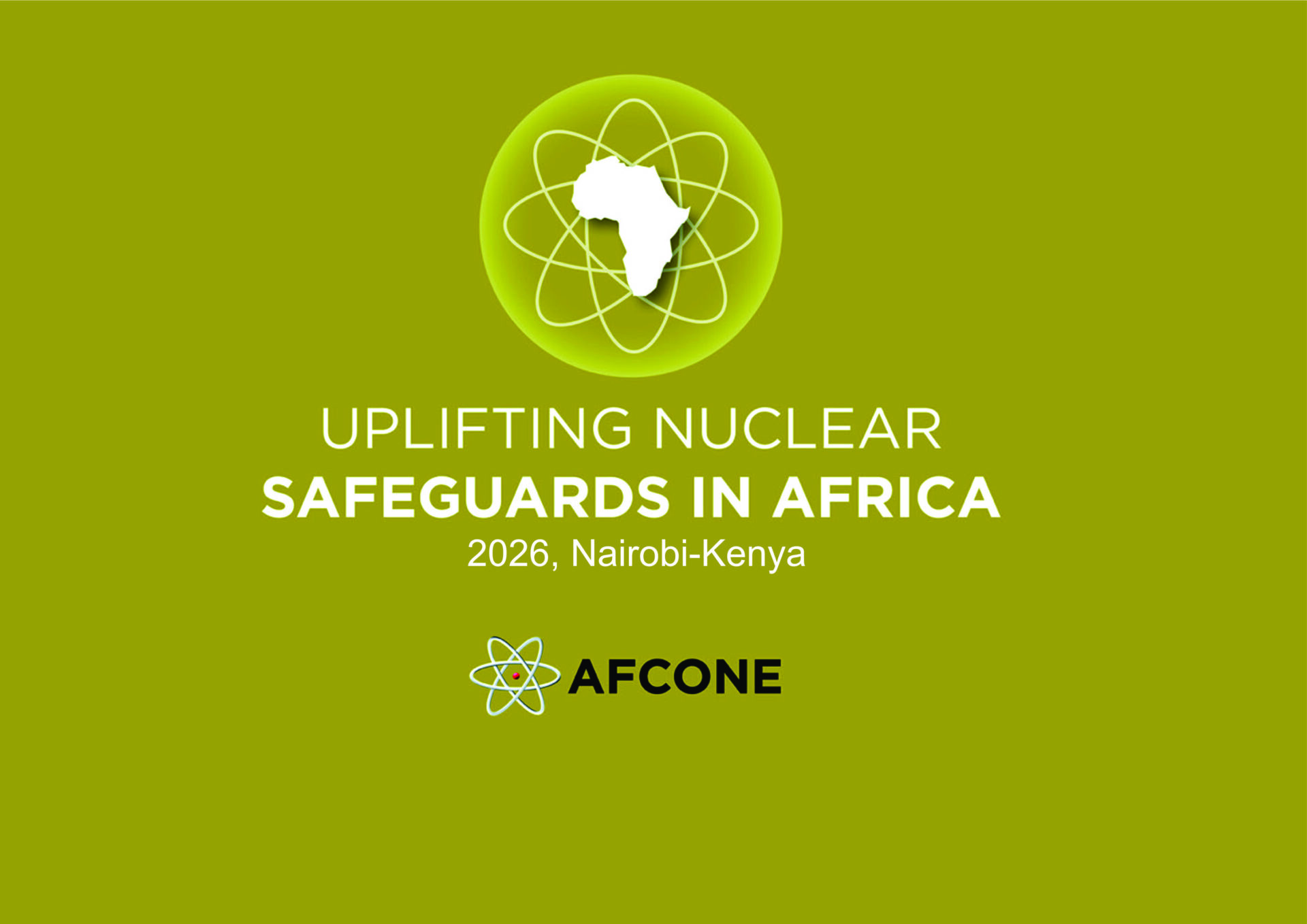
Nuclear safeguards practitioners from across Africa are gathering in Nairobi for the Uplifting Nuclear Safeguards in Africa Programme: Hands-On Training for Safeguards Practitioners, a specialised capacity-building programme hosted by the African Commission on Nuclear Energy (AFCONE), Kenya’s Nuclear Power and Energy Agency (NuPEA) and Finland’s Radiation and Nuclear Safety Authority (STUK).
Taking place from 24 to 28 August 2026, the Nairobi training represents the latest stage of a broader continental programme designed to move nuclear safeguards capacity in Africa beyond policy commitments towards practical, operational competence.
The training forms part of AFCONE’s five-year Uplifting Nuclear Safeguards in Africa Programme, an initiative supported technically by STUK and co-funded by the European Union and the Republic of Finland. The programme is intended to strengthen State Systems of Accounting for and Control of Nuclear Material, commonly referred to as SSACs, improve implementation of International Atomic Energy Agency safeguards obligations and reinforce Africa’s wider nuclear non-proliferation architecture. AFCONE has confirmed that the initiative receives expert support from STUK and is co-funded by the EU and Finland.
For Africa, the significance extends well beyond the week-long event in Nairobi. As an increasing number of countries consider nuclear power, expand nuclear research and make greater use of nuclear technologies in medicine, agriculture, industry and scientific research, the ability of national institutions to account for nuclear material and demonstrate that it remains exclusively in peaceful use is becoming an increasingly important part of the continent’s nuclear development.
Building the Institutions Behind Africa’s Nuclear Ambitions
Much of the international discussion surrounding Africa’s emerging nuclear programmes focuses on reactors, financing, vendors, grids and construction schedules. Yet nuclear infrastructure also rests on less visible institutional systems that determine whether countries can meet the legal and technical responsibilities accompanying peaceful nuclear development.
Safeguards are one of those foundational systems.
International nuclear safeguards are technical verification measures designed to provide credible assurance that nuclear material and activities declared for peaceful purposes are not diverted towards nuclear weapons or other prohibited purposes. They involve nuclear material accounting, record keeping, reporting, verification, inspections and the maintenance of reliable information about nuclear material inventories and activities.
For countries with limited nuclear material, these obligations may initially appear relatively straightforward. They become progressively more demanding as national programmes expand, particularly when countries introduce research reactors, nuclear fuel cycle activities or commercial nuclear power facilities.
This is why developing safeguards competence before major nuclear infrastructure becomes operational is increasingly important for African newcomer countries.
The Uplifting Nuclear Safeguards in Africa Programme was initiated as a five-year effort involving AFCONE, Finland and the European Union to strengthen international safeguards implementation across the continent. Its objectives include strengthening national nuclear material accounting and control systems, improving reporting under Comprehensive Safeguards Agreements and Additional Protocols, supporting implementation of the Pelindaba Treaty and building AFCONE’s capacity as a continental knowledge hub for safeguards.
The Nairobi programme is therefore not an isolated workshop. It forms part of a longer institutional development strategy.
From Classroom Knowledge to Practical Safeguards Implementation
A particularly important feature of the Nairobi training is its emphasis on hands-on learning.
Safeguards cannot be implemented effectively through policy knowledge alone. Practitioners must understand how international obligations translate into operational activities within facilities, regulatory bodies, nuclear organisations and national authorities.
They must be able to maintain accurate nuclear material records, identify material balance areas, understand inventory changes, prepare safeguards reports and declarations, manage supporting documentation and contribute effectively when national or international verification activities are undertaken.
They must also understand the relationship between operators, national safeguards authorities, regulators and the IAEA.
For this reason, practical training can be particularly valuable. It enables safeguards practitioners to move beyond understanding the language of agreements towards developing the competence required to implement those agreements consistently.
The AFCONE programme has increasingly adopted this capacity-building model. In June 2026, an AFCONE and STUK safeguards programme held at the South African Nuclear Energy Corporation brought together 25 delegates from 19 African countries for intensive training. AFCONE described the activity as part of its effort to strengthen SSACs and build sustainable continent-wide structures for safeguards implementation and nuclear non-proliferation.
The Nairobi training builds on that momentum.
A Programme With Growing Continental Reach
The scale of participation in the broader programme is noteworthy. AFCONE reported that the first phase of the initiative, covering 2023 and 2024, involved 26 African States Parties, demonstrating substantial demand for safeguards expertise across the continent.
That demand reflects the changing character of Africa’s nuclear landscape. Some African countries have decades of experience operating research reactors and managing nuclear materials. Egypt is constructing a commercial nuclear power plant. Other countries, including Ghana and Kenya, are advancing the institutional and infrastructure requirements associated with potential nuclear power programmes. Still others are expanding peaceful nuclear applications without currently pursuing nuclear electricity generation.
These different levels of development create both challenges and opportunities. Countries require training appropriate to their individual safeguards environments, but regional programmes also allow states to learn from one another. African practitioners can share experiences concerning legislation, national accounting systems, reporting arrangements, inspection support, institutional coordination and human-resource development.
Over time, these relationships can develop into a professional safeguards network that extends beyond individual training courses. That may ultimately become one of the programme’s most important contributions.
The European Union and Finland’s Role
The international partnership supporting the programme is also significant. The European Union and the Republic of Finland co-fund the Uplifting Nuclear Safeguards in Africa Programme, while Finland’s STUK contributes extensive technical experience in safeguards implementation, nuclear regulation and institutional capacity development.
The programme is therefore an example of international assistance being channelled through an African continental institution rather than being structured solely as external technical support to individual countries.
An earlier technical description of the programme explains that the European Union, Finland and AFCONE established the five-year initiative to strengthen international safeguards in Africa and help Pelindaba Treaty States Parties fulfil obligations arising from the Treaty, Comprehensive Safeguards Agreements and Additional Protocols.
Finland has similarly described the initiative as an ambitious five-year safeguards project jointly implemented with AFCONE and co-financed by the EU and Finland.
This model matters because sustainability will depend on Africa developing its own safeguards expertise, networks and institutional memory.
External assistance can provide resources and technical knowledge, but safeguards capability ultimately has to reside within African institutions.
AFCONE’s leadership role provides an important mechanism for achieving that transition.
AFCONE and the Pelindaba Treaty
The programme also reinforces AFCONE’s central role under the African Nuclear-Weapon-Free Zone Treaty, or Pelindaba Treaty.
The Pelindaba Treaty entered into force in July 2009 and establishes Africa as a nuclear-weapon-free zone. AFCONE serves as the Treaty’s implementing body and supports States Parties in fulfilling commitments relating to nuclear non-proliferation, disarmament and peaceful nuclear cooperation.
The safeguards programme consequently has a direct connection to the continent’s own legal architecture.
Strengthening safeguards capacity is not simply about satisfying external requirements. It is also about enabling African States to implement commitments they have undertaken collectively through the Pelindaba Treaty.
This distinction is important. As Africa’s nuclear ambitions expand, the continent will increasingly need to demonstrate that peaceful nuclear development and strong non-proliferation arrangements can advance together.
AFCONE has an opportunity to become the institution that connects these two objectives.
Kenya’s Emerging Role as a Regional Nuclear Capacity-Building Hub
Hosting the training in Nairobi is equally significant for Kenya. Kenya has been steadily developing the institutional and human-resource foundations associated with its longer-term nuclear energy ambitions. NuPEA is the government agency charged with developing and implementing Kenya’s nuclear power programme and promoting nuclear energy research and development.
The country’s growing involvement in regional nuclear conferences, technical programmes and training activities is also positioning Nairobi as an increasingly important location for African nuclear dialogue and professional capacity building.
For Kenya itself, participation in safeguards capacity development is particularly relevant.
Safeguards are among the institutional issues that countries pursuing nuclear power must address well before commissioning their first nuclear facility. Developing national expertise early allows safeguards requirements to be integrated into programme planning, facility design, legislation, regulatory arrangements and human-resource strategies.
This can help avoid treating safeguards as an obligation to be addressed only after major nuclear infrastructure has already been established.
For newcomer countries across Africa, that lesson deserves wider attention.
Safeguards, Safety and Security Are Different but Connected
It is also important to distinguish nuclear safeguards from nuclear safety and nuclear security.
Nuclear safety focuses principally on protecting people and the environment from harmful effects of ionising radiation and preventing or mitigating accidents.
Nuclear security addresses the prevention, detection and response to theft, sabotage, unauthorised access and other malicious acts involving nuclear and radioactive materials and associated facilities.
Nuclear safeguards, by contrast, centre on verification and nuclear material accountancy to provide assurance that peaceful nuclear material and activities are not diverted to prohibited purposes.
The three areas are distinct, although they increasingly need to be considered together when countries develop nuclear infrastructure.
A credible nuclear programme requires all three.
For African newcomer states, building reactor projects without simultaneously strengthening safety, security and safeguards institutions would create significant gaps in nuclear readiness.
The Retention Challenge
Training practitioners is only the beginning.African states must also retain them.
Safeguards expertise is highly specialised and can take years to develop. A recurring challenge in technical institutions is that personnel who receive specialised international training may later be transferred into unrelated roles, leave government service or retire without structured arrangements for transferring their knowledge.
The effectiveness of programmes such as the Nairobi training will therefore depend partly on what happens after participants return home.
National institutions should consider establishing formal mechanisms through which trained personnel disseminate knowledge to colleagues, contribute to national procedures and remain professionally engaged in safeguards-related responsibilities.
Train-the-trainer systems could be particularly valuable. So too could continental communities of practice supported by AFCONE, regular technical exercises, regional peer exchanges and stronger links with universities and nuclear training institutions.
The objective should be to transform individual training opportunities into lasting institutional capability.
Towards African Ownership of Safeguards Expertise
Perhaps the most important long-term question is whether Africa can progressively develop an indigenous safeguards knowledge infrastructure.
AFCONE’s Uplifting Nuclear Safeguards in Africa Programme offers an important starting point.
Regional training creates networks. Networks can support communities of practice. Communities of practice can become the foundation for regional expertise, peer support, specialist training centres and stronger national safeguards systems.
Over time, AFCONE could potentially deepen this role by maintaining a continental roster of safeguards experts, supporting national capacity assessments, coordinating specialised training, facilitating peer exchanges and helping countries identify capability gaps before nuclear programmes become more complex.
This would complement, rather than replace, the central verification role of the IAEA.
It would also strengthen Africa’s ability to take greater ownership of the institutions required to govern its own nuclear development.
Why This Matters for Africa
Africa’s nuclear future will not be determined solely by how many reactors the continent announces or eventually builds. It will also be determined by whether African states create institutions capable of managing nuclear technology safely, securely, transparently and exclusively for peaceful purposes.
Safeguards are central to that credibility.
Effective safeguards arrangements strengthen confidence between states, international institutions, technology suppliers and nuclear partners. They provide assurance that nuclear cooperation is being conducted consistently with non-proliferation commitments and help create the conditions under which peaceful nuclear technology can continue to be shared.
The Uplifting Nuclear Safeguards in Africa Programme: Hands-On Training for Safeguards Practitioners in Nairobi therefore deserves to be viewed as more than another technical workshop. The programme represents an investment in the institutional infrastructure that must accompany Africa’s expanding nuclear ambitions.
The immediate outcome will be better trained safeguards practitioners but the more important long-term outcome should be stronger national systems, greater regional cooperation, deeper African expertise and an increasingly self-sustaining continental safeguards architecture. Africa’s nuclear aspirations are growing. Its safeguards capacity must grow with them.
Related
A 300 MW SMR Could Support More Than 12,500 Construction Jobs in Ghana: New Study Tests Nuclear’s Economic Case
By Nuclear Africa• August 24, 2026
Ghana Targets 1,000 MW of Nuclear Power by the Mid-2030s: What Must Happen Before Construction Can Begin?
By Nuclear Africa• August 24, 2026
US-Africa Nuclear Energy Summit Ends in Accra: What Actually Changed for Africa’s Nuclear Ambitions?
By Nuclear Africa• August 24, 2026
Ghana’s Nuclear Simulator Is Becoming a Regional Training Asset for Africa
By Nuclear Africa• August 24, 2026