Niger has taken another consequential step in restructuring one of Africa’s most strategically important uranium industries, approving the allocation of two major uranium mining permits around Arlit to Nigerien companies.
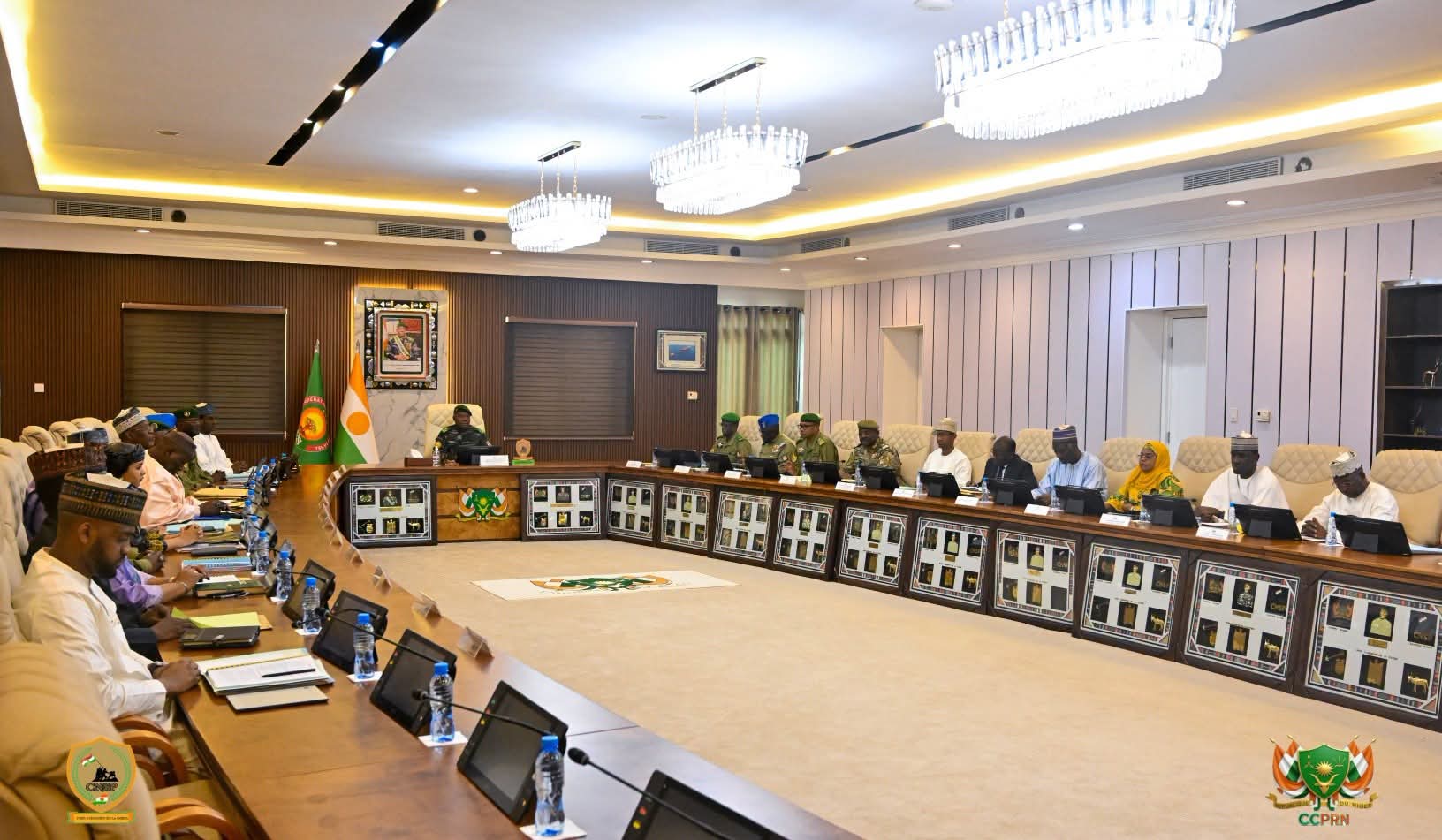
At its Council of Ministers meeting on 21 August 2026, the government approved a large-scale uranium mining permit known as In Azaoua for Teloua Safeguarding Uranium Mining Company, TSUMCO SA. It also approved the reassignment of the Madaquela I permit to Madaquela Mining Company, MAMICO.
The decisions are part of a wider transformation of ownership and state control in Niger’s uranium sector.
TSUMCO was created following the nationalisation of SOMAÏR, the long-established uranium mining company historically associated with France’s Orano. The government said TSUMCO had been continuing work on the former SOMAÏR perimeter while awaiting formal allocation of the large-scale mining title. The new In Azaoua permit formalises that arrangement.
Madaquela I has a different history.
The permit returned to the state domain in 2024 following the withdrawal of rights previously held by Canadian developer GoviEx. The new government decision reassigns the project to MAMICO.
A $10 million initial payment
Under the government’s announcement, MAMICO is expected to make an initial fixed payment of US$10 million to the state.
It is also expected to support capacity building within the mining administration, contribute to development in affected communities and comply with Niger’s local-content requirements.
The Council of Ministers communiqué refers to an expectation of approximately 1,000 jobs for Nigerien workers, alongside priority for domestic companies in supplying goods and services.
These commitments should be treated as project obligations and targets rather than outcomes already achieved.
Resource sovereignty meets operational reality
The political significance is clear.
Niger is seeking greater national control over uranium resources that have for decades been associated with foreign mining companies and international nuclear fuel markets.
But control of a mining permit is not the same as successful uranium production.
A commercially functioning uranium operation requires far more than mineral ownership.
It requires geological certainty, mine development, processing infrastructure, skilled personnel, environmental management, radiation protection, financing, transport arrangements, export channels and customers.
Those requirements will become the real test of Niger’s new uranium strategy.
Why the development matters beyond Niger
Niger’s decisions arrive during a period of renewed international concern about uranium and nuclear fuel security.
Countries expanding nuclear power are increasingly looking beyond reactor technology toward the resilience of uranium mining, conversion, enrichment and fuel fabrication.
Africa possesses some of the world’s significant uranium resources, particularly in Namibia and Niger.
That gives the continent greater strategic importance within the global nuclear fuel system.
The unresolved question is how much value African producing states can retain.
Historically, the greatest value in the nuclear fuel cycle is not necessarily captured at the mining stage. Conversion, enrichment, fuel fabrication, engineering and other downstream services can add significant economic value.
Niger’s push for national ownership therefore opens a wider continental debate about whether African uranium policy should evolve from resource extraction toward industrial participation.
Local content must become capability
The 1,000-job target and commitment to prioritise Nigerien suppliers are important.
Yet nuclear and uranium-sector local content cannot be measured only by the number of local contracts awarded.
Sustainable value creation requires domestic companies to acquire technical, safety, environmental and quality-management capabilities that remain useful after an individual mining project.
Training arrangements therefore matter.
So does the extent to which national professionals eventually occupy senior technical, operational and commercial positions.
What happens next
The permit decisions establish a new legal and commercial structure, but they do not guarantee a particular level of uranium production.
Questions remain around financing, equipment, technical partnerships, market access and export logistics.
NuclearAfrica will therefore be watching whether the ownership transition is followed by measurable operating performance.
The key test of resource sovereignty will not be who holds the permit alone.
It will be whether Niger can convert greater control into safe production, reliable exports, local industrial development, employment and sustainable national revenue.
Related


Africa Deepens Nuclear Safeguards Capacity as AFCONE Convene Hands-On Training in Nairobi
By Nuclear Africa• August 24, 2026
A 300 MW SMR Could Support More Than 12,500 Construction Jobs in Ghana: New Study Tests Nuclear’s Economic Case
By Nuclear Africa• August 24, 2026
Ghana Targets 1,000 MW of Nuclear Power by the Mid-2030s: What Must Happen Before Construction Can Begin?
By Nuclear Africa• August 24, 2026