For many countries embarking on nuclear power, public attention often centres on selecting a reactor vendor, signing intergovernmental agreements or announcing financing packages. Yet some of the most important work begins long before a single cubic metre of nuclear concrete is poured.
Poland’s latest milestone demonstrates precisely this often-overlooked phase of nuclear development.
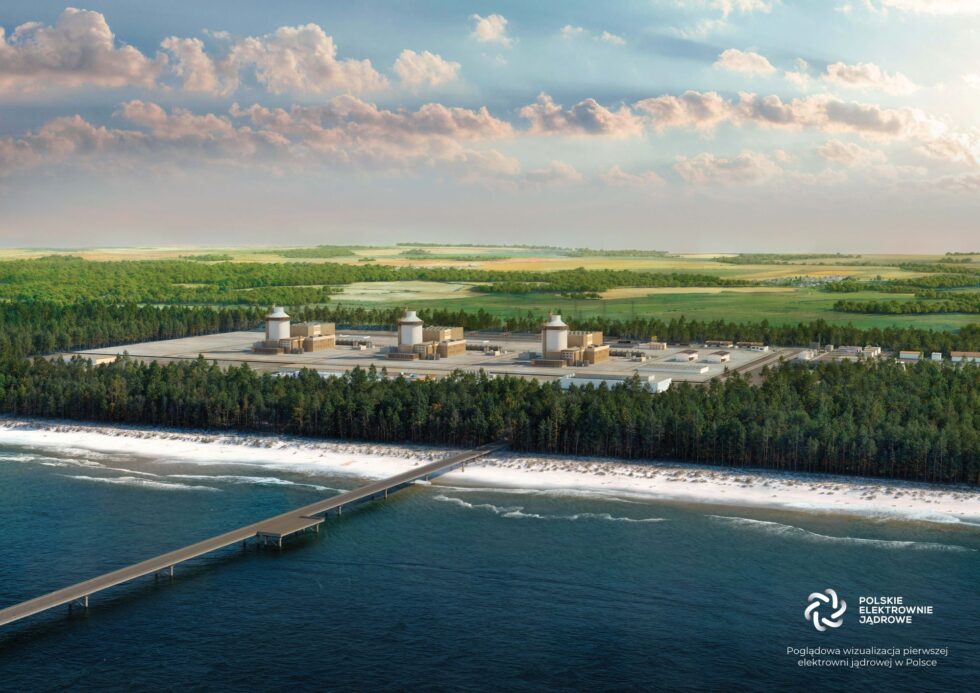
On 5 August, Poland’s state-owned nuclear project company, Polskie Elektrownie Jądrowe (PEJ), formally handed management of the Lubiatowo-Kopalino project site to Bechtel, the engineering and construction partner in the Westinghouse-Bechtel consortium responsible for delivering the country’s first nuclear power plant. At the same time, Polish construction company Budimex began authorised preparatory earthworks, including site levelling, drainage systems, temporary roads and construction logistics infrastructure.
The development marks an important transition from planning towards physical implementation. However, it should not be confused with the formal start of reactor construction.
No first nuclear concrete has yet been poured, the Polish National Atomic Energy Agency has not yet issued a construction licence, and negotiations on the final Engineering, Procurement and Construction (EPC) contract continue.
For African countries pursuing nuclear power, Poland’s experience provides a valuable reminder that becoming construction-ready is itself a complex, multi-year undertaking requiring substantial engineering, regulatory and institutional preparation.
Moving Beyond Announcements
Nuclear power programmes often receive public attention when governments announce technology partnerships or select reactor vendors.
Those decisions are important, but they represent only the beginning of implementation.
Between vendor selection and reactor construction lies a demanding period of project preparation involving detailed engineering, environmental compliance, infrastructure development, regulatory oversight and organisational readiness.
That is the stage Poland is now entering.
Bechtel will oversee day-to-day management of the construction site while coordinating contractors responsible for preparing the location for one of Europe’s largest infrastructure projects.
Initial activities include:
- large-scale earthworks;
- drainage systems;
- temporary construction roads;
- logistics compounds;
- storage facilities;
- utilities;
- worker access routes; and
- technical support areas.
Although these activities may appear conventional, they are essential prerequisites for future nuclear construction.
Without them, heavy reactor components cannot be transported, specialised equipment cannot be installed safely, and thousands of workers cannot operate efficiently on site.
Construction Readiness Is More Than Engineering
One of the most common misconceptions surrounding nuclear projects is that construction begins immediately after regulatory approval.
In reality, construction readiness encompasses far more than engineering design.
Before first concrete, project developers must establish:
- stable ground conditions;
- flood protection;
- drainage infrastructure;
- temporary electricity supplies;
- water services;
- transport connections;
- communications infrastructure;
- environmental protection measures;
- emergency access arrangements; and
- comprehensive quality-management systems.
These activities may require several years, particularly for first-of-a-kind national nuclear programmes.
Poland’s experience demonstrates that site preparation itself is a major infrastructure project requiring specialised project management and close coordination between government agencies, contractors and regulators.
Building Domestic Capability
Another significant aspect of Poland’s approach is the involvement of domestic industry.
While Bechtel provides overall engineering and construction leadership, Budimex is responsible for much of the conventional civil infrastructure associated with early site preparation.
This phased approach to localisation offers an important lesson for African newcomer countries.
Nuclear localisation does not necessarily begin with manufacturing reactor vessels or constructing containment buildings.
Instead, domestic companies often enter nuclear programmes through conventional engineering activities such as:
- roads;
- drainage;
- foundations;
- utilities;
- logistics;
- buildings;
- environmental management; and
- construction support services.
Over time, companies that demonstrate robust quality assurance, safety culture and project management capability may progressively qualify for more specialised nuclear work.
For African countries seeking to maximise local participation, this staged approach may prove considerably more realistic than expecting immediate participation in nuclear-grade construction.
The Importance of Owner Capability
Another often-overlooked aspect of Poland’s programme is the strengthening of owner capability.
Although Bechtel will manage construction activities, PEJ remains responsible for delivering Poland’s national nuclear project.
International experience consistently demonstrates that successful nuclear programmes require knowledgeable owners capable of:
- supervising contractors;
- evaluating technical decisions;
- managing schedules;
- controlling costs;
- coordinating regulators;
- engaging stakeholders; and
- maintaining configuration management throughout construction.
Without strong owner capability, governments risk becoming overly dependent on external contractors for critical technical and strategic decisions.
For newcomer countries, building institutional competence is therefore just as important as selecting reactor technology.
Regulatory Oversight Continues
The commencement of preparatory works should not be interpreted as indicating that regulatory approval has been completed.
Poland’s National Atomic Energy Agency continues reviewing the project as part of the country’s licensing process.
Before nuclear construction can begin, the project must still obtain:
- a nuclear construction permit;
- relevant building approvals;
- environmental compliance requirements; and
- additional statutory authorisations.
This distinction is important because nuclear programmes frequently announce visible construction activity that members of the public may mistakenly interpret as reactor construction.
Clear communication about project milestones strengthens public confidence and demonstrates regulatory transparency.
Financing Before Revenue
Another lesson from Poland concerns project financing.
Preparatory works generate substantial expenditure long before any electricity is produced.
Site investigations, engineering, environmental assessments, infrastructure construction and contractor mobilisation all require significant investment without creating revenue.
African newcomer countries should therefore recognise that financing nuclear power extends far beyond purchasing reactors.
Governments may need to secure dedicated funding for project development, enabling infrastructure and institutional capacity years before construction begins.
Failure to account for these early costs can delay projects even after technology selection has been completed.
What This Means for Africa
Poland’s latest milestone offers practical lessons for African countries progressing through the IAEA Milestones approach.
Several African programmes are currently evaluating sites, developing regulatory frameworks or engaging prospective reactor vendors.
As these programmes mature, they should begin planning not only for reactor construction but also for the extensive enabling infrastructure required beforehand.
Key priorities include:
- comprehensive site characterisation;
- transport and logistics planning;
- environmental permitting;
- drainage and flood protection;
- workforce accommodation;
- construction-support infrastructure;
- local contractor development;
- owner capability;
- project management systems; and
- transparent communication of project milestones.
Equally important is recognising that “construction readiness” represents a distinct phase of nuclear development rather than a single event.
Countries that invest adequately in this phase are likely to experience smoother licensing, stronger contractor performance and more realistic project schedules.
Looking Beyond the Reactor
One of the defining characteristics of successful nuclear programmes is that they view reactors as only one component of a much larger national infrastructure undertaking.
Electricity generation ultimately depends on a complex ecosystem of regulation, engineering, transport, logistics, workforce development, financing and institutional governance.
Poland’s transition into site preparation illustrates this broader perspective.
For African countries pursuing nuclear energy, the lesson is straightforward.
The path to nuclear power begins long before reactor construction.
Preparing the ground—physically, institutionally and financially—is every bit as important as selecting the reactor itself.
As Africa’s nuclear ambitions continue to expand, countries that recognise this early will be better positioned to deliver projects safely, efficiently and sustainably.
Why This Matters for Africa
Many African nuclear programmes focus primarily on reactor technology, financing and vendor partnerships. Poland’s experience demonstrates that years of engineering, infrastructure development, regulatory preparation and institutional strengthening are required before reactor construction can begin. Understanding this implementation phase will help newcomer countries develop more realistic schedules, stronger domestic participation strategies and better-informed public expectations. Construction readiness is not simply an engineering milestone—it is a measure of national preparedness.
Related


Africa Deepens Nuclear Safeguards Capacity as AFCONE Convene Hands-On Training in Nairobi
By Nuclear Africa• August 24, 2026
A 300 MW SMR Could Support More Than 12,500 Construction Jobs in Ghana: New Study Tests Nuclear’s Economic Case
By Nuclear Africa• August 24, 2026
Ghana Targets 1,000 MW of Nuclear Power by the Mid-2030s: What Must Happen Before Construction Can Begin?
By Nuclear Africa• August 24, 2026