Westinghouse Electric Company and Amentum have entered into a series of agreements intended to expand the engineering and project-delivery capacity available for future AP1000 reactor fleets while supporting regulatory development of the proposed AP300 small modular reactor.
The companies announced the agreements on 4 August 2026 as part of Westinghouse’s APX technology strategy, which seeks to connect the commercially available AP1000 large-reactor design with the smaller AP300 concept through common engineering, components, licensing experience, fuel design and supply-chain capabilities.
Under the most recent agreement, Amentum will support Westinghouse’s efforts to obtain US Nuclear Regulatory Commission approval for the AP300. The companies will separately cooperate to strengthen the engineering, industrial and execution capabilities required for the repeat construction of AP1000 units.
The agreements demonstrate that successful nuclear deployment requires more than a completed reactor design.
It also requires sufficiently large and experienced organisations capable of licensing, engineering, procuring, constructing, commissioning and supporting multiple plants over several decades.
However, the announcement is not a reactor order, construction licence or final investment decision. No customer, project site, contract value or binding deployment schedule was disclosed.
Westinghouse’s APX Strategy
Westinghouse describes APX as a common technology platform supporting both the AP1000 and AP300.
The company intends to position the AP1000 as its near-term reactor offering for large-scale electricity systems while developing the AP300 for customers requiring smaller individual units. According to Westinghouse, the strategy is intended to carry elements of the AP1000’s engineering, licensing basis, fuel design, components and supply chain into the AP300 programme.
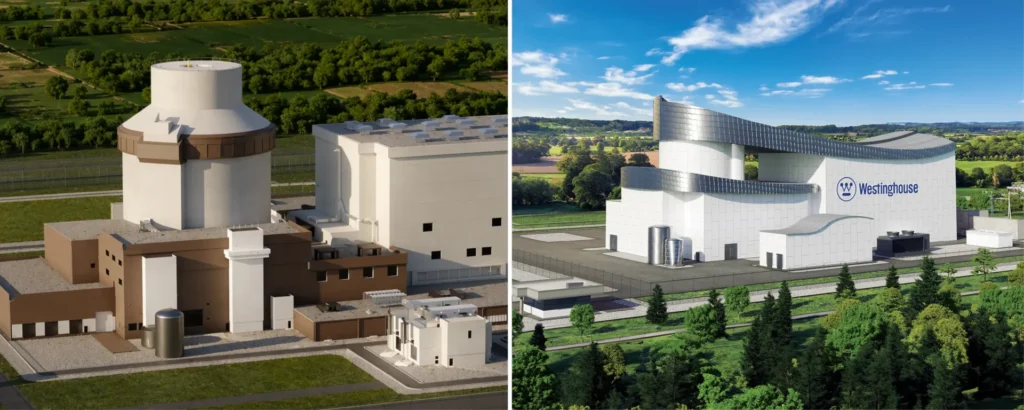
The AP1000 is a two-loop pressurised-water reactor with a nominal net electrical output of approximately 1,110 MWe. Westinghouse markets the design as a Generation III+ reactor using passive safety systems and a simplified plant configuration.
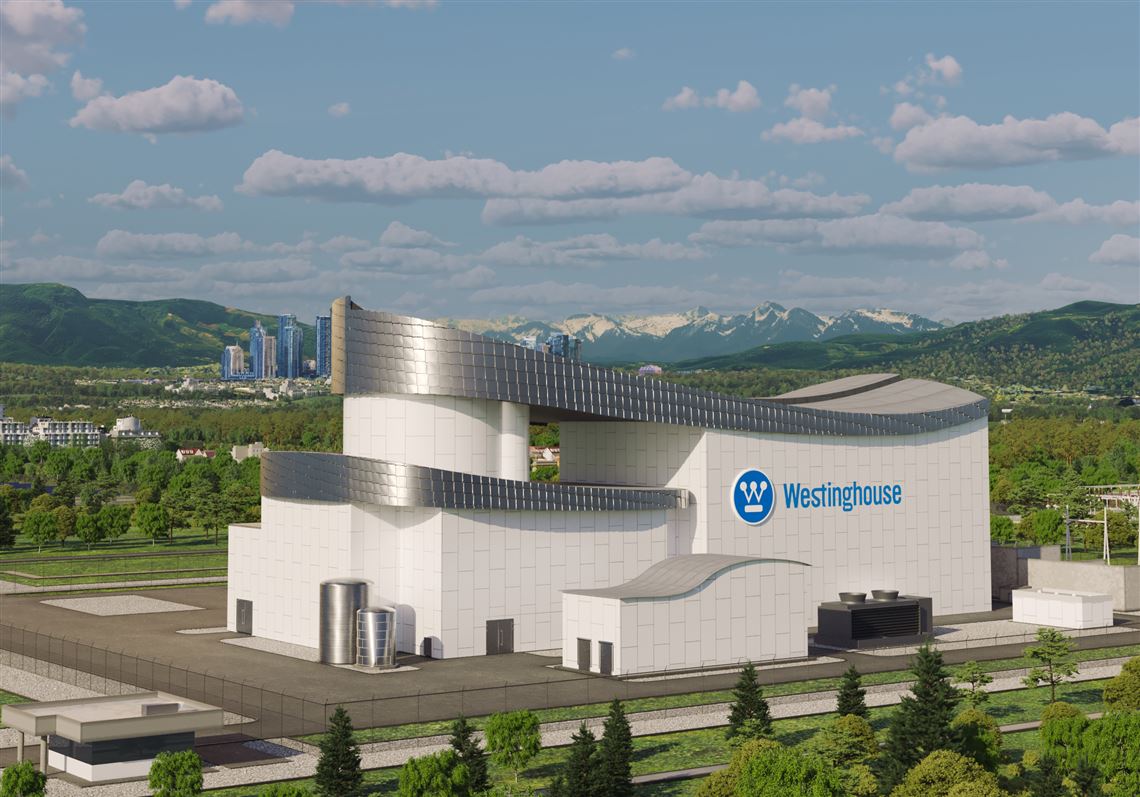
The proposed AP300 is a smaller, one-loop pressurised-water reactor in the 300 MWe class. The NRC describes it as being based on AP1000 components, technology and licensing experience.
The relationship between the two designs is commercially important.
Rather than developing a completely unrelated SMR platform, Westinghouse is attempting to reuse parts of an established large-reactor technology base. This could potentially reduce some design, component, supply-chain and regulatory uncertainties.
It does not eliminate first-of-a-kind risk.
The AP300 would still be a new reactor design with a different power output, primary-system configuration, plant layout and commercial deployment model. Its safety case, construction approach and economic performance must therefore be assessed on their own merits.
Amentum to Support AP300 Regulatory Development
The most clearly defined element of the new partnership concerns the AP300 licensing programme.
Westinghouse and Amentum said they would collaborate in seeking regulatory approval for the design from the US Nuclear Regulatory Commission. Westinghouse expects Amentum’s engineering capacity and nuclear-project experience to strengthen the licensing effort.
The AP300 has not yet received NRC design approval.
As of 5 August 2026, the NRC lists Westinghouse as participating in pre-application activities associated with a future design-certification application. The engagement began in May 2023 and has involved regulatory plans, technical white papers and discussions covering areas such as core design, fuel cycles, electrical systems, instrumentation and control, probabilistic risk assessment, emergency planning and safety-analysis methods.
This is an important distinction.
Pre-application engagement allows a reactor developer and regulator to identify major technical and licensing questions before a formal application is submitted. It can reduce uncertainty and help the applicant prepare documentation that responds to regulatory expectations.
It is not equivalent to the NRC formally approving the design.
The AP300 must still progress through the applicable licensing process, including the submission and acceptance of a complete application, detailed technical review, responses to regulatory questions and a final NRC decision.
Regulatory Heritage Is Useful but Not Automatic Approval
Westinghouse presents the AP300’s relationship with the AP1000 as an advantage because it may allow the company to reuse established engineering information and regulatory experience.
That approach could help where systems, components, analytical methods and safety principles remain sufficiently similar.
But the NRC cannot simply transfer the AP1000’s approval to the AP300.
The regulator must determine which parts of the AP1000 licensing basis remain applicable and which aspects require new analysis.
Questions may include:
- whether the smaller primary system behaves as predicted under normal and accident conditions;
- how the one-loop configuration affects safety analysis;
- whether passive safety systems perform adequately at the proposed scale;
- how control-room and staffing arrangements will operate;
- whether the emergency-planning approach is justified;
- how manufacturing and modular construction will be controlled;
- whether the proposed fuel cycle is adequately supported; and
- how multiple-unit sites would be regulated.
The use of established technology may reduce some uncertainties, but regulatory approval must remain evidence-based.
More Than a Reactor Design
The partnership illustrates a broader reality about nuclear new-build programmes.
A reactor vendor does not deploy a fleet using design documents alone.
Large teams and organisations are needed to convert the design into functioning projects. Their responsibilities extend from early site studies to plant operation and eventual decommissioning.
A fleet-delivery organisation may need to provide or coordinate:
Licensing documentation
The applicant must submit complete and internally consistent safety, security, environmental and technical information to the national regulator.
Documentation developed for one country may require adaptation to another country’s laws, regulatory requirements, site conditions and institutional arrangements.
Design and configuration management
A controlled reference design must be maintained throughout the programme.
Changes introduced at one unit must be assessed to determine whether they affect other units, licensing documents, equipment specifications, construction schedules or operating procedures.
Poor configuration management can result in different contractors working from inconsistent versions of the design.
Procurement and supplier qualification
Nuclear equipment must satisfy strict technical and quality requirements.
The vendor must identify qualified manufacturers, supervise production, verify material traceability, manage non-conformances and ensure that components delivered to the site match the approved design.
Construction management
Civil works, mechanical installation, electrical systems and instrumentation must be integrated across thousands of activities.
Delays in one part of the project can affect several other work packages, increasing costs and complicating the construction sequence.
Quality assurance
A nuclear project requires documented evidence that structures, systems and components have been designed, manufactured, installed and tested correctly.
Quality assurance must extend through the vendor, engineering companies, principal contractors and lower-tier suppliers.
Commissioning
The completed plant must undergo a structured programme of testing before and after fuel loading.
Commissioning verifies whether systems function individually and together under the conditions anticipated in the safety case.
Workforce preparation
Operators, maintenance personnel, engineers, radiation-protection staff, chemists, security personnel and emergency teams must be trained before the plant enters service.
Long-term support
The relationship does not end when construction is completed.
The owner-operator may require continuing access to spare parts, fuel, engineering services, software updates, inspections, outage support, design information and specialist maintenance.
A vendor proposing fleet deployment must demonstrate that it can support this complete lifecycle.
Why Engineering Capacity Matters for Fleets
Engineering capacity becomes especially important when several reactors are planned simultaneously or in close succession.
A company may be capable of supporting one project but lack the personnel, management systems or qualified suppliers required for a multi-unit programme across several countries.
Fleet deployment can place simultaneous demands on:
- design engineers;
- licensing specialists;
- procurement teams;
- manufacturing inspectors;
- construction managers;
- commissioning personnel;
- welding and quality specialists;
- project-control systems; and
- specialist suppliers.
Westinghouse said the agreements would strengthen its ability to deliver one-gigawatt reactors at scale. Amentum, which reports having more than 50,000 employees in approximately 70 countries, brings engineering and programme-management capacity across several stages of the nuclear lifecycle.
Whether the partnership achieves repeatable fleet delivery will ultimately depend on actual project performance rather than organisational size alone.
Delivery capability must be demonstrated through completed engineering, effective regulatory submissions, qualified supply chains, predictable construction and successful commissioning.
Standardisation Can Support Repeat Deployment
A fleet strategy normally seeks to preserve a standard reference plant across several projects.
Standardisation can allow engineering, licensing and construction lessons from the first unit to be applied to later reactors. It can also provide manufacturers with predictable demand and enable specialised teams to move between projects.
Westinghouse has separately submitted a revised AP1000 Design Control Document to the NRC intended to establish Vogtle Unit 4 as a standard reference plant for prospective US fleet deployment.
A standard plant does not mean that every project will be identical.
Each site may have different:
- seismic conditions;
- flooding and extreme-weather hazards;
- cooling-water arrangements;
- grid connections;
- environmental requirements;
- security conditions;
- emergency infrastructure; and
- national construction standards.
The objective is to maintain as much of the established reactor design as reasonably possible while addressing justified site- and country-specific requirements.
Excessive redesign can remove the benefits of standardisation. Refusing necessary adaptations can create safety and licensing problems.
The AP300 Remains a Development Programme
The AP300 is being positioned as a future option for electricity systems and industrial customers that may not require an individual reactor exceeding one gigawatt.
Potential markets could include smaller national grids, retiring fossil-fuel sites, industrial facilities, data centres and multi-unit developments where capacity is added incrementally.
These remain prospective applications.
The AP300 is not an operating commercial reactor. It has not completed the NRC design-certification process, and no completed reference plant exists from which construction cost, schedule, availability and lifetime operational performance can be independently demonstrated. The NRC’s current engagement remains at the pre-application stage.
The design’s reliance on AP1000 technology may provide useful technical heritage, but claims concerning accelerated construction, lower cost and fleet deployment remain forward-looking until demonstrated through licensing and completed projects.
Governments should therefore distinguish between:
- technology inherited from an operating reactor family;
- a new design based on that technology;
- regulatory approval of the new design;
- construction of a first unit;
- commissioning and commercial operation; and
- repeated fleet performance.
These are separate milestones.
African Relevance
Westinghouse and Amentum have previously worked together on nuclear power and decommissioning activities in several countries, including South Africa. No new African project was announced as part of the 4 August agreements.
Nevertheless, the partnership could influence future engagement with African governments considering large reactors, SMRs or wider nuclear infrastructure.
Westinghouse could present the AP1000 to countries with electricity systems capable of accommodating a reactor of approximately 1.1 GWe. The AP300 may eventually be promoted to countries or industrial users seeking smaller increments of nuclear capacity.
African decision-makers should not begin by asking which of the two designs they prefer.
They should first determine:
- the amount and timing of additional electricity required;
- whether the national grid can accommodate the proposed unit;
- which energy services the reactor would provide;
- whether the project is affordable;
- how construction risk would be allocated;
- what national nuclear infrastructure must be developed; and
- how the technology compares with other nuclear and non-nuclear options.
The reactor design should respond to national requirements rather than define them.
Evaluate the Delivery Consortium
The Westinghouse–Amentum agreements provide an important procurement lesson for African newcomer countries.
Governments should evaluate the complete proposed delivery consortium, not only the reactor vendor’s brand or technology.
The assessment should identify which organisation would be responsible for:
- reference-plant design;
- site adaptation;
- licensing support;
- safety-analysis documentation;
- engineering integration;
- procurement;
- equipment manufacturing;
- construction;
- quality assurance;
- commissioning;
- operator training;
- fuel supply;
- maintenance;
- spare parts;
- radioactive-waste support; and
- long-term configuration management.
Responsibilities that are unclear during procurement can become major sources of delay and dispute during construction.
A government should also determine whether the principal companies would remain contractually accountable or transfer substantial responsibilities to subcontractors after the agreement is signed.
Licensing Support Is Not Regulatory Approval
A reactor vendor and its engineering partner may prepare licensing documentation, perform calculations and respond to regulatory questions.
They do not approve the reactor.
That responsibility belongs to the independent national regulatory authority.
For an African newcomer, the regulator must be capable of assessing whether the documentation is:
- complete;
- technically credible;
- consistent with national law;
- applicable to the proposed site;
- supported by verified analysis;
- based on a controlled reactor configuration; and
- responsive to national safety objectives.
The regulator should not depend entirely on the vendor or the vendor’s engineering partner to interpret the safety case.
Where specialist national expertise is limited, the authority may use technical-support organisations or international regulatory cooperation. But outside experts must work under the direction of the regulator and should not become substitutes for permanent national competence.
A regulator that cannot understand or challenge the applicant’s evidence cannot exercise effective independence.
Protecting National Knowledge
Complex nuclear projects generate enormous volumes of technical information.
African owner-operators and regulators should ensure that contracts provide continuing access to the documents and data needed throughout the plant’s lifetime.
These may include:
- design-basis documents;
- safety-analysis reports;
- engineering calculations;
- equipment specifications;
- manufacturing records;
- software information;
- inspection findings;
- commissioning results;
- operating procedures;
- maintenance requirements; and
- design-change records.
The host country should not become dependent on a foreign company for every interpretation of its own nuclear installation.
Technology transfer should therefore involve practical participation in engineering, licensing, construction and commissioning—not only classroom training.
Localisation Requires a Long-Term Pipeline
A fleet strategy may provide stronger opportunities for African industrial participation than a single isolated reactor.
Domestic companies may be more willing to invest in specialised equipment, certifications and workforce development where there is a credible pipeline of multiple projects.
Potential areas for local participation include civil construction, electrical work, logistics, conventional equipment, environmental monitoring, security systems, maintenance and professional services.
However, localisation targets must reflect actual national capability.
Assigning safety-significant work to unqualified companies can introduce quality failures and project delays. A phased approach should allow local firms to build experience, qualify their management systems and move progressively into more complex work.
The vendor and engineering consortium should explain:
- which components can realistically be produced locally;
- which nuclear-quality certifications will be required;
- how domestic companies will be assessed;
- who will finance capability development;
- how intellectual property will be managed; and
- whether local firms will have opportunities beyond the first project.
AP1000 and AP300 Serve Different System Needs
The APX strategy presents the AP1000 and AP300 as related products within one technology family.
They would nevertheless serve different electricity-system requirements.
An AP1000 unit could add approximately 1.1 GWe to the grid. The host system must be capable of absorbing the output and managing the sudden loss of the unit during an unplanned shutdown.
The AP300 would provide a smaller increment, but several units might be required to achieve the output of one large reactor. This could affect land requirements, staffing, maintenance, financing, security and the economics of shared facilities.
Smaller unit size does not automatically mean lower electricity cost.
The relevant comparison must consider:
- total construction expenditure;
- cost per kilowatt;
- financing;
- construction duration;
- staffing;
- fuel;
- maintenance;
- capacity factor;
- multi-unit common systems;
- waste management; and
- decommissioning.
African countries should evaluate complete plant and programme economics rather than relying on the assumption that a smaller reactor will necessarily be easier to finance or operate.
Not a Reactor Order
The Westinghouse–Amentum agreements strengthen the organisations’ relationship and establish a framework for further licensing, engineering and delivery cooperation.
They do not constitute:
- an AP1000 reactor-supply contract;
- an AP300 order;
- an NRC design approval;
- a construction permit;
- a customer financing agreement;
- a final investment decision; or
- a commitment to build reactors in Africa.
The announcement did not disclose a contract value, customer, project site or binding construction timetable. Westinghouse and Amentum also identified several statements about future licensing and deployment as forward-looking.
Claims that the partnership will accelerate licensing or enable repeatable fleet deployment must therefore be tested through completed regulatory reviews and actual project performance.
Delivery Capacity Is Part of Technology Readiness
The agreements highlight an issue sometimes overlooked in nuclear procurement.
Technology readiness is not limited to whether the reactor’s physical design works.
A commercially deployable technology also requires:
- a licensable safety case;
- a capable delivery organisation;
- qualified manufacturers;
- effective project management;
- trained construction and commissioning teams;
- fuel and component availability;
- long-term service capacity; and
- a customer capable of owning and operating the plant.
Westinghouse is seeking to strengthen this broader delivery system by combining its reactor technology with Amentum’s engineering and programme capabilities.
For African newcomer countries, the lesson is not to judge a proposal only by the reactor’s advertised safety features, electrical output or projected construction cost.
Governments must assess the complete institutional and commercial system behind it.
The Westinghouse–Amentum partnership may improve the resources available for AP1000 fleet delivery and AP300 development.
But an engineering agreement is not a completed licensing process, and expanded corporate capacity is not evidence of a successfully delivered fleet.
That evidence must come from regulatory approval, completed construction and sustained operating performance.
Related


Africa Deepens Nuclear Safeguards Capacity as AFCONE Convene Hands-On Training in Nairobi
By Nuclear Africa• August 24, 2026
A 300 MW SMR Could Support More Than 12,500 Construction Jobs in Ghana: New Study Tests Nuclear’s Economic Case
By Nuclear Africa• August 24, 2026
Ghana Targets 1,000 MW of Nuclear Power by the Mid-2030s: What Must Happen Before Construction Can Begin?
By Nuclear Africa• August 24, 2026