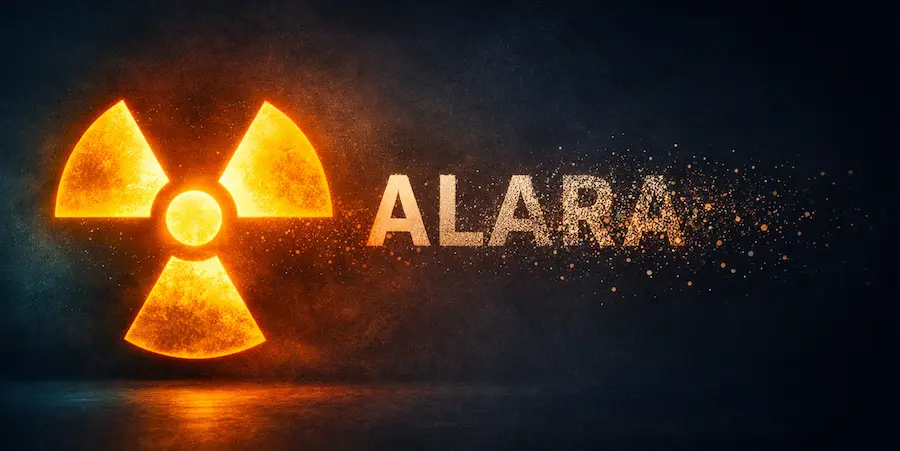
The United States Nuclear Regulatory Commission has proposed one of the most consequential changes to American radiation-protection regulation in decades: removing the requirement to keep radiation exposures “as low as reasonably achievable,” or ALARA, from its regulatory framework.
The proposed rule, formally published in the US Federal Register on 15 July 2026, would retain the existing maximum dose limits for radiation workers and members of the public. However, it would change how nuclear facilities, hospitals, universities, industrial users and other NRC licensees manage exposure below those limits.
Instead of requiring continuous optimisation through ALARA, the NRC proposes a graded approach to dose management. Radiation-protection measures would become progressively more rigorous as anticipated or measured exposures move closer to the applicable legal limit.
NRC Chairman Ho Nieh has argued that the proposal would improve the clarity and objectivity of the agency’s rules without lowering its safety standards. Critics counter that removing ALARA could allow occupational and public exposures to rise while remaining technically within legal limits.
The outcome will be closely watched internationally because optimisation is a foundational element of the radiation-protection system promoted by the International Commission on Radiological Protection and incorporated into the International Atomic Energy Agency’s safety standards.
What does ALARA mean?
ALARA means making every reasonable effort to maintain radiation exposure as far below the applicable dose limit as practical, while taking account of technological, economic and social considerations.
It does not require exposure to be reduced to zero regardless of cost or operational consequence. Instead, it requires organisations to examine whether further reasonable protective measures—such as shielding, remote handling, improved work planning or shorter exposure times—could reduce doses.
The principle is normally applied through three practical controls:
- Time: reducing the amount of time a person spends near a radiation source;
- Distance: increasing separation from the source; and
- Shielding: placing suitable protective material between the source and the individual.
ALARA can also influence facility design, maintenance planning, worker training, personal protective equipment, ventilation, radioactive-effluent controls and the investigation of unusual exposure trends.
The NRC’s existing regulations define ALARA as making every reasonable effort to keep exposures as far below the applicable dose limits as practical, taking account of technology, economics and other societal considerations.
ALARA is different from a dose limit
One of the most important distinctions in the debate is the difference between dose limitation and optimisation.
A dose limit establishes the maximum exposure legally permitted within a stated period. It functions as a boundary that must not ordinarily be crossed.
Optimisation asks a different question: even where exposure is below the legal maximum, could it reasonably be reduced further?
Under the current system, the two principles work together. Dose limits provide the upper boundary, while ALARA encourages operators to avoid treating that boundary as a routine exposure target.
The ICRP’s modern system of radiological protection is founded on three central principles:
- justification of activities involving radiation;
- optimisation of protection; and
- application of individual dose limits.
The organisation’s 2007 recommendations reinforce optimisation across planned, emergency and existing exposure situations.
What the NRC is proposing
The NRC proposes removing references to ALARA from its regulations and replacing the current optimisation requirement with a graded system based on defined exposure thresholds and required protective measures.
Under the emerging approach, basic radiation-protection requirements would apply at low prospective doses. Additional measures would become mandatory as exposure approaches a larger proportion of the applicable limit.
Examples described in analyses of the proposal include:
- radiation-worker instruction when expected occupational exposure exceeds 100 millirem in a year;
- individual dose monitoring where exposure could exceed 500 millirem, or 10% of the occupational limit; and
- more formal controls where a planned exposure could approach or exceed the normal annual limit.
The proposal would also provide greater flexibility in dosimetry and dose-assessment methods, revise some reporting and medical-use provisions, and introduce a process through which certain planned occupational exposures could exceed the normal annual limit under specified conditions.
Current licensees would not necessarily be required to abandon their existing radiation-protection programmes. Organisations could continue applying protective measures beyond the regulatory minimum, and previously established licence commitments would remain relevant.
The legal dose limits would remain
The NRC proposal does not remove the maximum occupational or public dose limits.
The general US occupational whole-body dose limit for an adult radiation worker would remain 5 rem, or 50 millisieverts, in a year. The general annual public dose limit would remain 100 millirem, or 1 millisievert, from licensed activities, subject to the detailed conditions and exclusions in the regulations.
This distinction is central to the NRC’s argument.
The regulator maintains that public health and safety can continue to be protected through enforceable dose limits, monitoring, training, access controls, posting requirements and progressively stronger measures as potential exposures increase.
Critics respond that the existence of a maximum limit does not ensure that actual doses remain well below it. They argue that ALARA has historically encouraged facilities to maintain worker and public exposure at levels substantially below the legal ceiling.
Why does the NRC want to change the framework?
The NRC argues that ALARA has created uncertainty over how much dose reduction is “reasonable.”
Because the concept requires professional and regulatory judgement, different inspectors, licensees and applicants may reach different conclusions about whether additional protective expenditure is justified.
The agency believes that this subjectivity can create inconsistent implementation, uncertain compliance expectations and costs that may produce little measurable safety benefit when exposures are already very low.
The NRC also expects clearer requirements to assist developers of advanced reactors.
A reactor designer must determine the amount of shielding, physical separation, ventilation, monitoring and other controls needed to satisfy radiation-protection requirements. More objective thresholds could, according to the regulator, make these expectations easier to incorporate into the design at an early stage.
The rulemaking forms part of a wider programme to reform NRC licensing and regulation while the United States seeks to accelerate the deployment of new nuclear capacity.
The connection to the linear no-threshold model
The ALARA debate is closely connected to the linear no-threshold model, commonly abbreviated as LNT.
The model assumes that the risk of radiation-induced cancer increases in proportion to dose and that no completely risk-free threshold can be demonstrated, even at very low exposures.
The model does not mean that every small exposure will cause cancer. It is used as a conservative population-protection tool when the health effects of very low doses are difficult to measure directly.
Supporters of retaining ALARA argue that if some risk may exist at any dose, exposures should be reduced where reasonable.
Opponents argue that applying LNT and ALARA rigidly at extremely low doses can overstate practical risks, create costly protective measures and discourage beneficial nuclear, industrial and medical activities.
The NRC proposal states that ALARA rests partly on the LNT assessment of risk from low radiation doses and seeks to move regulatory compliance towards clearer, defined limits and thresholds.
Arguments supporting the change
Supporters of the proposed reform make several arguments.
Greater regulatory clarity
Fixed thresholds may make compliance expectations easier to understand than a requirement based on whether every “reasonable” reduction has been pursued.
More consistent enforcement
A graded framework could reduce differences between inspectors and regulated organisations over whether an exposure-reduction measure is justified.
Better allocation of resources
Facilities could focus protective resources on situations presenting larger potential doses rather than devoting disproportionate effort to extremely small exposures.
Support for innovation
Advanced-reactor developers could incorporate clearer dose-management requirements into shielding, layout and operational planning.
Recognition of competing hazards
Radiation protection sometimes interacts with other safety risks. For example, heavy protective clothing or respirators may reduce radiological exposure but increase heat stress, restricted movement or industrial-safety risks. Effective protection should consider the complete risk picture rather than radiation dose in isolation.
Arguments against removing ALARA
Critics do not generally argue that every possible dose reduction must be pursued regardless of cost. Their concern is that removing optimisation as an enforceable obligation could change institutional behaviour.
Legal limits could become operational targets
A maximum dose limit is intended as a boundary, not a desirable routine level. Without ALARA, facilities may have less regulatory incentive to maintain doses substantially below that boundary.
Actual worker exposures could rise
Average occupational doses at US nuclear facilities have generally remained far below the annual limit. Critics attribute part of that performance to strong ALARA programmes.
Collective exposure may matter
A small increase in individual exposure may appear insignificant. However, where many workers or members of the public are exposed, the collective population effect may become more relevant.
Cost-benefit decisions can undervalue health
A narrowly financial analysis may favour accepting a higher dose where protective measures are considered expensive. Critics question how future health risk, uncertainty and public concern should be valued in such calculations.
International divergence may create complications
Removing ALARA from binding US regulations could create a gap between the American framework and the optimisation principles retained by the ICRP and IAEA.
Public confidence could be affected
Even where technical dose limits remain unchanged, the public may interpret removal of a familiar protective principle as regulatory weakening.
Proposed changes affecting public exposure and effluents
The proposal extends beyond occupational exposure.
Under the graded approach described in specialist analysis, licensees would not ordinarily be required to conduct further optimisation analysis for projected public doses below 25 millirem per year. For doses above that level, cost-benefit analysis could inform whether additional protective measures should be implemented, while the overall public dose limit would remain 100 millirem per year.
The NRC has also proposed changing its treatment of radioactive effluents.
The proposal would raise a referenced effluent dose constraint from 10 millirem to 25 millirem per year and allow licensees, under specified circumstances, to propose a higher facility-specific constraint below the overall public dose limit where further reductions are not considered cost-justified.
These provisions may attract particular scrutiny because they concern exposure outside controlled occupational settings.
Implications for medicine and other radiation uses
Although public discussion may focus on nuclear power plants, NRC radiation-protection rules apply more broadly to licensed radioactive materials and facilities.
They affect, among others:
- hospitals and nuclear-medicine departments;
- radiotherapy services;
- universities and laboratories;
- industrial radiography;
- isotope production;
- fuel-cycle facilities;
- radioactive-waste operations; and
- companies using sealed radioactive sources.
The proposed rule includes changes concerning medical-use exposures, including provisions for caregivers and other people who may be exposed following the administration of radioactive material to a patient.
Medical exposure requires particular care because reducing dose without regard to clinical purpose can compromise diagnosis or treatment.
The ICRP explains that optimisation in medical imaging means minimising exposure while preserving the image quality and information required for the medical objective—not simply pursuing the lowest possible dose.
International standards continue to support optimisation
The proposed US departure from regulatory ALARA would not automatically change international standards.
The IAEA’s General Safety Requirements Part 3 identifies justification, optimisation and dose limitation as central principles of radiation protection. Its requirements apply to facilities and activities that create radiation risks.
The IAEA framework uses dose constraints and reference levels to guide optimisation in different exposure situations. Protection is expected to be the best achievable under the prevailing circumstances, taking account of economic, societal and other relevant factors.
The ICRP similarly maintains optimisation as one of its three fundamental radiological-protection principles.
The US proposal could therefore produce a situation in which the NRC relies primarily on legal limits and graded requirements while international recommendations continue to describe optimisation as a foundational principle.
What this means for African regulators
African regulators should not interpret the US proposal as an automatic reason to remove ALARA from national laws or regulations.
Many African nuclear and radiation-protection systems are based substantially on IAEA safety standards. The optimisation principle is often embedded in national legislation, licensing conditions, radiation-protection programmes and professional training.
Any proposed change should be evaluated against the country’s own circumstances.
Regulatory capacity
A graded system based on thresholds may appear more objective, but it still requires reliable dosimetry, monitoring, inspections, records and enforcement.
Where regulatory capacity is limited, removing a broad optimisation duty could unintentionally weaken protection rather than improve efficiency.
Occupational conditions
Workers in some African facilities may face limited protective equipment, older infrastructure, maintenance challenges or insufficient monitoring.
In such circumstances, retaining a strong obligation to reduce exposure reasonably may remain particularly important.
Medical facilities
African health systems are expanding nuclear medicine, radiotherapy and diagnostic imaging. Optimisation is essential not only to protect workers but also to ensure that patient exposures are appropriate for the clinical purpose.
Public confidence
Several African countries are trying to establish public trust in nuclear institutions. Regulatory reforms perceived as reducing protection could intensify public concern, even where numerical dose limits remain unchanged.
Vendor designs
Advanced reactors licensed or designed under a revised US framework may eventually be marketed to African countries.
African regulators should determine independently whether the proposed shielding, access controls, effluent arrangements and occupational-dose assumptions satisfy national law and IAEA-aligned requirements.
A foreign design approval does not remove the host regulator’s responsibility.
Should Africa retain ALARA?
For most African countries, retaining the optimisation principle while improving its practical implementation would currently be the more prudent approach.
That does not mean preserving vague or unnecessarily burdensome procedures.
Regulators can strengthen ALARA by:
- issuing clearer dose-investigation levels;
- defining documentation expectations;
- adopting graded inspection approaches;
- using dose constraints;
- requiring proportional analysis;
- avoiding costly measures that produce negligible benefit;
- improving occupational-dose databases; and
- providing sector-specific guidance for medicine, industry, research and nuclear power.
A graded framework and ALARA do not necessarily have to be treated as opposites.
Defined thresholds can indicate when additional controls, monitoring and review become mandatory, while optimisation can continue guiding decisions below the legal limit.
This combined approach may offer greater clarity without abandoning the principle that unnecessary exposure should be avoided.
Questions African regulators should ask
Before considering similar reform, regulatory authorities should examine:
- Are actual occupational and public doses reliably measured and reported?
- Are national dose limits consistent with current international standards?
- Do facilities have functioning radiation-protection programmes?
- Are inspectors able to evaluate cost-benefit and optimisation decisions independently?
- Would removing ALARA create a practical incentive for higher routine exposure?
- How would the change affect medical, industrial and research users?
- Would the national framework remain compatible with IAEA safety standards?
- Could clearer guidance solve the implementation problems without removing optimisation?
- How would the public and radiation workers be consulted?
- What evidence shows that the reform would preserve or improve protection?
Implications for Ghana and other nuclear-newcomer states
For Ghana, Kenya, Rwanda, Uganda, Nigeria and other states developing nuclear infrastructure, the debate arrives at an important time.
These countries are reviewing legislation, developing licensing frameworks, training regulators and considering advanced reactors.
Their radiation-protection regimes must be sufficiently flexible to support innovation but strong enough to protect workers, communities and the environment.
A nuclear-newcomer state should be cautious about adopting a supplier country’s regulatory changes before:
- the international scientific debate has matured;
- the proposal has been finalised and implemented;
- operating experience is available;
- the IAEA has assessed the wider implications; and
- the national regulator has undertaken its own technical and legal review.
The safest approach is not regulatory copying, whether from the United States or any other jurisdiction. It is informed adaptation to national conditions and international obligations.
A broader question about nuclear regulation
The ALARA debate reflects a wider tension in nuclear governance.
Regulation must prevent genuine harm without creating requirements that consume resources but contribute little additional protection.
Rules that are vague, inconsistent or excessively burdensome can delay beneficial medical, scientific and energy applications.
Conversely, reforms motivated primarily by speed and cost reduction can weaken defence-in-depth, occupational protection and public trust.
Good regulation must therefore be:
- science-informed;
- risk-proportionate;
- enforceable;
- transparent;
- internationally credible;
- adaptable to new technology; and
- independent of both industry and political pressure.
The central question is not whether regulation should be strict or flexible. It is whether each requirement produces a demonstrable and proportionate contribution to safety.
What happens next?
The NRC proposal remains subject to public review and has not yet become final regulation.
The agency opened a 45-day public-comment period during which nuclear operators, radiation professionals, medical organisations, labour representatives, state regulators, public-interest groups and other stakeholders may provide evidence and recommendations.
The NRC may revise the proposal in response to comments before issuing a final rule.
Important issues for the final decision will include:
- whether the graded thresholds provide adequate protection;
- how public and occupational exposure trends would be monitored;
- how the new framework would interact with state regulation;
- whether international alignment should be preserved;
- how cost-benefit analysis would be conducted; and
- whether optimisation should be clarified rather than removed.
Conclusion
The NRC’s proposal to eliminate ALARA from its regulations represents more than a technical amendment.
It challenges a principle that has shaped radiation-protection culture for approximately five decades and remains embedded in the international system of radiological protection.
The NRC argues that existing dose limits, mandatory controls and a graded framework can protect health while providing clearer and less subjective regulation.
Critics warn that legal limits alone may not preserve the low routine exposures achieved under ALARA and that the reform could shift the regulatory emphasis from preventing unnecessary exposure to merely avoiding violation of a maximum limit.
For Africa, the debate should be followed closely but approached cautiously.
African regulators should preserve alignment with IAEA standards, examine national working conditions and strengthen the practical implementation of optimisation before considering major changes.
Regulatory modernisation is necessary as nuclear and radiation technologies evolve. But modernisation should make protection more effective—not simply less demanding.
Related


Africa Deepens Nuclear Safeguards Capacity as AFCONE Convene Hands-On Training in Nairobi
By Nuclear Africa• August 24, 2026
A 300 MW SMR Could Support More Than 12,500 Construction Jobs in Ghana: New Study Tests Nuclear’s Economic Case
By Nuclear Africa• August 24, 2026
Ghana Targets 1,000 MW of Nuclear Power by the Mid-2030s: What Must Happen Before Construction Can Begin?
By Nuclear Africa• August 24, 2026