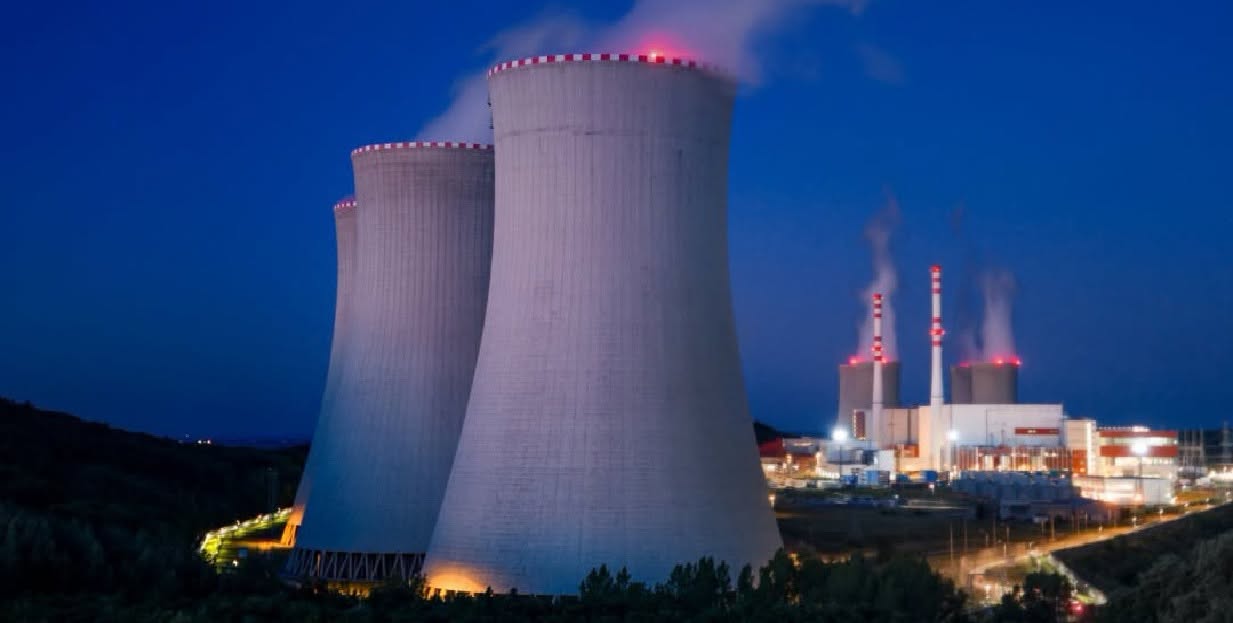
Slovakia’s Mochovce Unit 4 has achieved first criticality, bringing one of the world’s longest-running nuclear construction projects another step closer to commercial operation.
The VVER-440 reactor established its first controlled, self-sustaining nuclear chain reaction in early August following fuel loading and regulatory authorisation for physical startup.
First criticality is an important commissioning milestone, but Mochovce-4’s real significance for emerging nuclear countries lies in the extraordinary history behind it. Construction began in 1987.
The project subsequently experienced political transformation, financing challenges, construction suspension, ownership changes, design reassessment and extensive safety upgrades before finally reaching the commissioning stage almost four decades later.
For African nuclear-newcomer countries, Mochovce offers a lesson that receives too little attention: nuclear programmes must be designed to survive governments, economic cycles and institutional change.
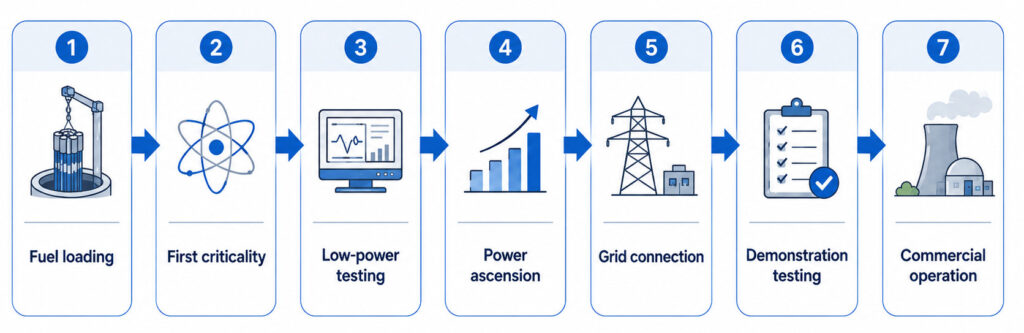
First Criticality Is Not Commercial Operation
First criticality means the reactor has achieved a controlled chain reaction. It does not mean the plant is already supplying electricity commercially.
Mochovce-4 must now proceed through low-power tests, progressive power ascension, grid connection, additional regulatory hold points and commissioning tests before entering routine commercial service.
That distinction matters because nuclear project milestones are frequently compressed into misleading descriptions such as “reactor starts operation.”
The actual sequence is more complex and African nuclear programmes should communicate these stages accurately from the beginning.
A Project That Outlived a Political System
When construction at Mochovce began, Czechoslovakia still existed and the Cold War had not ended.
The political and economic environment in which the plant was originally planned no longer exists.
That illustrates a fundamental characteristic of nuclear power.
Nuclear programmes operate on timelines far longer than electoral cycles.
A country may spend more than a decade developing infrastructure before construction begins, another decade completing a first-of-a-kind project, and sixty years or more operating the plant.
Decommissioning and radioactive-waste responsibilities extend even farther into the future.
Institutions therefore matter as much as technology.
Lessons for African Project Governance
African newcomer countries should ask whether their future nuclear programmes can remain coherent through changes in government, economic difficulties or delays in financing.
That requires strong institutions capable of preserving:
engineering records; licensing documentation; technical expertise; regulatory independence; project configuration; contractual knowledge; and long-term funding arrangements.
If knowledge disappears whenever personnel or governments change, project risk increases significantly.
This becomes especially important during prolonged delays.
Equipment may need to be requalified, regulatory standards may change and previously completed work may require reassessment.
Regulatory Standards Do Not Stand Still
A reactor designed decades earlier cannot simply be completed automatically under the technical assumptions that existed when construction began.
Mochovce underwent extensive safety modifications as regulatory expectations evolved.
That experience is particularly relevant for African countries considering projects whose delivery could extend over many years.
Delays create more than financial costs.
They can also trigger new regulatory requirements, redesign work, equipment replacement and further safety assessment.
Project schedules therefore have direct implications for regulatory risk.
Financing Continuity Matters
One of the most difficult aspects of nuclear development is maintaining access to capital over long periods.
A nuclear project can be technically sound but still fail if financing cannot be maintained.
Newcomer countries should therefore evaluate financing models not only against the cost of construction but against the possibility of delays, inflation, currency movements and changes in government borrowing capacity.
A robust financing plan must survive adverse scenarios rather than assuming uninterrupted project execution.
What This Means for Africa
Mochovce should not be used as evidence that modern nuclear construction normally takes forty years.
Its history is exceptional.
But the project demonstrates what can happen when political transformation, financing disruption and construction interruptions intersect with nuclear infrastructure.
For Africa, the lesson is not to fear long projects.
It is to build institutions strong enough to prevent avoidable interruptions from becoming permanent liabilities.
Nuclear newcomer programmes should therefore assess institutional durability alongside reactor technology, financing and grid readiness.
A nuclear programme is not simply a construction project.
It is a national commitment capable of spanning generations.
Related

Morocco Nuclear Regulator Says No Radioactive Leak at Maâmora Research Centre
By Nuclear Africa• October 7, 2026
Amazon’s 20-Year Nuclear Deal Shows How Large Corporate Buyers Can Help Finance Nuclear Investment
By Nuclear Africa• October 7, 2026Beyond the Resolutions: GC70 and the Emerging Global Nuclear Order
By Nuclear Africa• October 6, 2026
US Nuclear Regulator’s Workforce Warning Carries a Clear Lesson for African Nuclear Newcomers
By Nuclear Africa• October 5, 2026