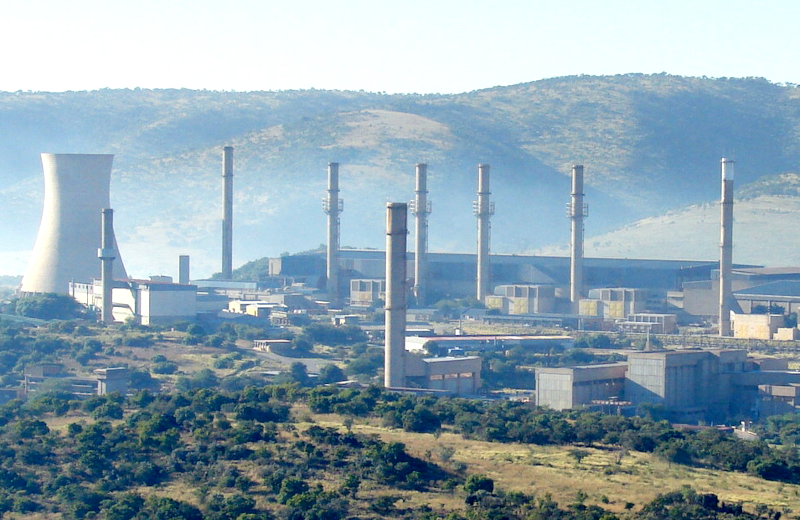
South Africa’s nuclear medicine infrastructure is set for another important development as the South African Nuclear Energy Corporation, Necsa, moves ahead with procurement of engineering services for a proposed Radioiodine Active Pharmaceutical Ingredient facility at Pelindaba.
Necsa’s current tender, FIN-SCM-TEN-0246, seeks a professional engineering design and management firm to modify an existing structure for the establishment of the facility. The tender closes on 16 September 2026, with a non-compulsory site and virtual meeting scheduled for 26 August.
The procurement follows an earlier Request for Information issued in June seeking design-service capability for a new radioiodine API facility.
This progression from market sounding to a formal engineering-services tender represents a meaningful project-development step.
It does not, however, mean that construction of the production facility itself has begun.
Why iodine-131 matters
Radioiodine, particularly iodine-131, is widely associated with the diagnosis and treatment of thyroid conditions.
Because iodine is naturally accumulated by the thyroid gland, radioactive iodine can be used to target thyroid tissue while limiting exposure to much of the surrounding body.
Radioiodine therefore represents an important part of nuclear medicine, particularly in the treatment of hyperthyroidism and certain thyroid cancers.
Producing pharmaceutical-grade radioactive material requires much more than simply generating an isotope.
The final product must be manufactured within tightly controlled quality systems governing radiological protection, pharmaceutical purity, contamination control, ventilation, traceability and validation.
That is why the API component of the Pelindaba project is important.
From reactors to medicine
South Africa already occupies a distinctive position in Africa’s nuclear medicine industry through the Pelindaba nuclear complex and NTP Radioisotopes.
The proposed facility reinforces an important point about nuclear infrastructure: research reactors and associated nuclear facilities can support economic and social services far beyond electricity production.
They can contribute to medical isotope production, pharmaceutical manufacturing, industrial irradiation, materials research and scientific training.
For Africa, these applications deserve significantly greater policy attention.
The continent’s nuclear discussion is often dominated by proposed power reactors even as healthcare systems face shortages in cancer diagnosis and treatment.
Why local production matters
Radioisotopes present unusual supply-chain challenges because many decay rapidly.
Unlike conventional medicines that can remain in warehouses for extended periods, radioactive pharmaceuticals lose activity continuously.
That means production scheduling, quality control, transport and hospital delivery must be carefully coordinated.
Regional production capability can therefore improve resilience.
The COVID-19 period and subsequent global supply disruptions demonstrated how vulnerable healthcare systems can become when they depend excessively on distant production centres.
Developing and maintaining African radiopharmaceutical capability is consequently both a health issue and a strategic industrial issue.
A localisation lesson
The engineering procurement also demonstrates what nuclear localisation looks like at a practical level.
It requires specialist knowledge in building design, cleanrooms, ventilation, radiation shielding, process systems, quality assurance, pharmaceutical standards, commissioning and validation.
These are competencies that can spill into other high-value industries.
African nuclear industrialisation therefore does not have to begin with manufacturing a reactor pressure vessel.
It can also begin in specialist laboratories, isotope plants, medical facilities, instrumentation and engineering services.
The important caveat
Necsa is currently procuring engineering design and management services for modification of an existing structure.
This should not be reported as though a new radioiodine factory is already constructed or operating.
Further design, regulatory, procurement, construction, commissioning and validation steps would be required before a facility could begin routine production.
Even so, the formal tender demonstrates that the project has progressed beyond a general concept.
For Africa’s nuclear medicine sector, that makes it a development worth following.
Related

Morocco Nuclear Regulator Says No Radioactive Leak at Maâmora Research Centre
By Nuclear Africa• October 7, 2026
Amazon’s 20-Year Nuclear Deal Shows How Large Corporate Buyers Can Help Finance Nuclear Investment
By Nuclear Africa• October 7, 2026Beyond the Resolutions: GC70 and the Emerging Global Nuclear Order
By Nuclear Africa• October 6, 2026
US Nuclear Regulator’s Workforce Warning Carries a Clear Lesson for African Nuclear Newcomers
By Nuclear Africa• October 5, 2026