As African countries move from nuclear-energy ambition toward practical programme development, a three-day US–Africa Nuclear Energy Summit in Accra is putting one of the continent’s most important constraints at the centre of the discussion: who will regulate, build, operate and sustain Africa’s future nuclear programmes?
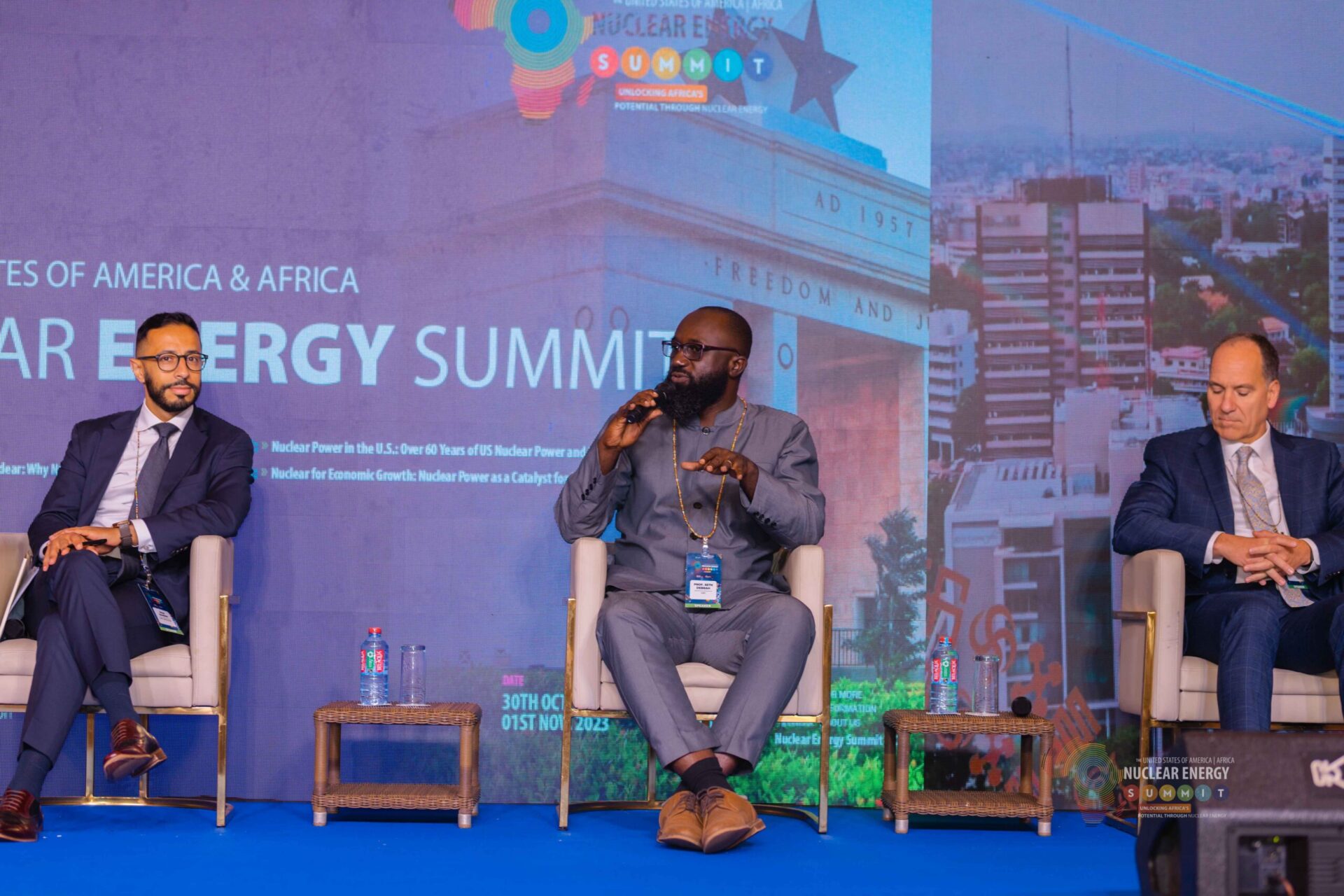
The 2026 US–Africa Nuclear Energy Summit opens in Accra from 19–21 August, bringing together African governments, regulators, nuclear programme organisations, universities, vocational-training institutions, laboratories and international nuclear experts around the theme “Building and Sustaining Africa’s Nuclear Workforce.”
The summit is organised by the US Department of Energy’s Office of Nuclear Energy in partnership with the Ghana Atomic Energy Commission, under the auspices of Ghana’s Regional Energy Training Centre. It is being held at the Labadi Beach Hotel in Accra.
The focus represents an important evolution in Africa’s nuclear conversation.
For years, much of the public debate around nuclear energy on the continent has concentrated on reactor technologies, vendor partnerships, financing and national policy commitments. But nuclear deployment ultimately depends on something much more fundamental: people with the competence to make the programme work safely for decades.
Africa’s Nuclear Ambitions Are Expanding
Several African countries are progressing nuclear-energy programmes or evaluating whether nuclear power should form part of their future electricity systems.
Those programmes are at different stages, but they face a common challenge.
A nuclear power programme cannot simply import a reactor and rely permanently on foreign expertise.
The country must progressively develop the national competence to regulate the technology, manage the project, operate the facility, maintain the equipment, protect nuclear material, implement safeguards, manage radioactive waste and eventually decommission the plant.
That requirement makes human-resource development one of the most important elements of nuclear infrastructure.
The Accra summit reflects that reality by focusing not simply on university-level nuclear engineering but on the wider workforce ecosystem needed across a nuclear programme.
According to the Atlantic Council, which is livestreaming the three-day event, discussions will address STEM education, technical and vocational training, regulatory capability, advanced nuclear expertise, artificial intelligence, cybersecurity and the development of future nuclear leadership.
A Nuclear Workforce Is Much Larger Than Reactor Operators
When nuclear workforce development is discussed publicly, attention often turns immediately to reactor operators and nuclear engineers.
They are essential, but they represent only part of the requirement.
A commercial nuclear programme depends on civil, mechanical, electrical and nuclear engineers; welders and electricians; radiation-protection professionals; project managers; chemists; inspectors; cybersecurity specialists; emergency planners; quality-assurance personnel; safeguards professionals; security personnel; environmental scientists; maintenance technicians and many other specialised occupations.
The skills requirements also change as the programme progresses.
The people required to conduct feasibility studies are not identical to those required during construction.
Construction workers eventually give way to commissioning specialists.
Commissioning teams are followed by permanent operating and maintenance personnel.
Regulators must develop competence in parallel with every stage.
The workforce challenge is therefore not simply about producing graduates.
It is about creating a pipeline of competencies that follows the entire nuclear lifecycle.
From STEM Education to the Nuclear Construction Site
The official summit programme reflects this broader view.
The speaker and panel roster brings together government officials, nuclear regulators, owner organisations, technical universities, vocational-training institutions and international nuclear organisations. Ghana’s Energy Minister John Abdulai Jinapor and Environment Minister Emmanuel Armah-Kofi Buah are among the speakers, alongside US Department of Energy and US Nuclear Regulatory Commission representatives.
The programme also includes African Development Bank Vice President Kevin Kariuki, Nuclear Power Ghana Executive Director Stephen Yamoah, Ghana Nuclear Regulatory Authority Chief Nuclear Regulatory Officer Emmanuel Ampomah-Amoako, Kenya Nuclear Regulatory Authority Director General James Keter Chumba, representatives of Nigeria’s Atomic Energy Commission and South Africa’s Necsa, as well as universities and technical-training organisations.
The mix is important. If Africa’s nuclear programmes are to succeed, universities cannot work independently of regulators, and regulators cannot develop independently of project organisations.
Technical and vocational education will also become increasingly important as projects progress toward construction.
A nuclear power station requires highly qualified engineers, but it also needs nuclear-qualified welders, electricians, instrumentation technicians and construction specialists capable of working within stringent quality-assurance systems.
That means the nuclear workforce challenge eventually reaches well beyond nuclear-science institutions.
It reaches national education systems.
The Regulatory Workforce May Be the Hardest to Build
Among all workforce challenges, regulatory capacity deserves particular attention.
A nuclear regulator must be sufficiently competent to review safety analyses, assess reactor designs, inspect construction, evaluate commissioning activities and independently challenge the organisations it regulates.
That capability cannot simply be created when reactor construction begins.
Regulatory organisations need years to recruit personnel, establish procedures, develop specialist expertise and accumulate practical experience.
The presence of Ghana’s and Kenya’s nuclear regulatory leadership at the summit therefore reflects an important reality: nuclear deployment requires the regulator to develop at least as quickly as the project organisation.
Failure to do so creates a dangerous imbalance.
A newcomer country could find itself negotiating with reactor vendors and engineering companies possessing decades of specialist knowledge while its own regulatory institutions remain relatively inexperienced.
Strong national capability helps address that asymmetry.
Ghana’s Emerging Role as a Regional Training Platform
Hosting the summit in Ghana is particularly significant because Accra is increasingly being positioned as a regional centre for African nuclear capacity development.
In 2024, the United States and Ghana launched the Regional Energy Training Center to support Ghana and other African countries developing civil nuclear programmes. The US Department of Energy described the centre as a regional hub providing training in areas including workforce development, reactor design and operation, project development and spent-fuel management.
That regional model is increasingly relevant.
Africa may not need every newcomer country to replicate every specialised nuclear training facility immediately.
Some expensive capabilities could potentially be shared.
Simulator centres, specialist laboratories, regulatory-training programmes, nuclear-security training facilities and advanced professional courses can serve participants from several countries while national institutions continue developing their own essential capabilities.
Ghana’s recent use of its SMR simulator for participants from Ghana, Kenya and Nigeria already provides an example of how that model can operate.
The summit gives the regional approach a broader institutional platform.
Should Africa Build Nuclear Centres of Excellence?
The workforce discussion should therefore move beyond individual scholarships and isolated training programmes.
Africa needs to consider whether it can establish an interconnected network of regional nuclear centres of excellence.
One country may possess stronger regulatory-training capabilities.
Another may specialise in uranium and fuel-cycle expertise.
Another could develop advanced research-reactor or isotope-production training.
Others may become centres for nuclear security, safeguards, radioactive-waste management, emergency preparedness or nuclear engineering.
Such cooperation would not remove national responsibility.
Every country operating a nuclear reactor must retain sufficient domestic competence to discharge its legal and safety obligations.
But sharing highly specialised infrastructure can reduce duplication and allow scarce expertise to serve a wider community.
For smaller nuclear newcomer programmes, that could be particularly valuable.
The Workforce Must Arrive Before the Reactor
Timing is perhaps the most important issue.
Nuclear workforce development cannot begin when first concrete is poured.
Some specialists must be available years earlier.
Regulators need personnel before they can review applications.
Owner organisations need experienced project managers before vendor contracts are negotiated.
Environmental and site specialists are required during site characterisation.
Legal experts are needed while legislation and liability frameworks are being developed.
Safeguards and nuclear-security competence must exist before nuclear material begins arriving.
Operator training then becomes progressively more plant-specific as the project approaches commissioning.
The workforce sequence therefore begins well before the reactor itself.
Countries that wait until construction to address personnel needs may discover that their nuclear project is advancing faster than their institutional capability.
Retaining Skills May Be as Difficult as Training People
African countries also need to think beyond training numbers.
A graduate trained in nuclear engineering does not automatically remain within the national nuclear programme.
Highly specialised professionals can find employment internationally, particularly as global nuclear expansion increases competition for experienced personnel.
Retention therefore matters.
Countries need credible career pathways, appropriate remuneration, research opportunities and institutions capable of providing professionals with meaningful long-term work.
This is particularly important during the lengthy pre-construction phase of a nuclear programme.
If a country trains specialists and then delays its project repeatedly, those professionals may leave for more active nuclear markets.
Workforce planning must therefore be coordinated with realistic programme schedules.
Industry Must Enter the Workforce Conversation
Another important issue is the relationship between nuclear workforce development and localisation.
Localisation cannot occur simply because a government announces a domestic-content target.
Local companies must possess workers capable of meeting nuclear standards.
A conventional welder may require additional qualification before performing nuclear-grade work.
A construction company may need completely different documentation and quality systems before becoming eligible for safety-significant activities.
Localisation therefore requires a parallel investment in industrial skills and supplier qualification.
The strongest nuclear workforce strategies will connect universities, technical institutes, regulators, utilities and private industry from the beginning.
Artificial Intelligence and Cybersecurity Add New Requirements
The 2026 summit also places digital capability, including artificial intelligence and cybersecurity, within the workforce discussion.
That is increasingly important.
Modern nuclear facilities use complex digital instrumentation and control systems.
Cybersecurity must therefore be treated as part of nuclear security rather than simply an information-technology function.
Artificial intelligence may also have growing applications in predictive maintenance, inspection, training, data analysis and operational decision support.
The future nuclear professional will consequently need skills that combine traditional nuclear engineering with increasingly sophisticated digital systems.
Africa’s nuclear education strategy must anticipate that evolution rather than train exclusively for yesterday’s reactor workforce.
Why This Matters for Africa
The central message emerging from the Accra summit is simple: Africa cannot import its entire nuclear future.
Reactor technology may come from an international vendor.
Major equipment may be manufactured abroad.
Foreign experts may support construction and commissioning.
But the long-term responsibility for nuclear safety, security, regulation and operation ultimately remains national.
That means the success of African nuclear programmes will depend as much on universities, regulators, technical colleges and professional institutions as on reactor vendors.
The continent therefore needs to think about nuclear workforce development as strategic infrastructure.
Training should begin early.
Regulators should grow alongside programmes.
Technical and vocational skills should be linked to localisation.
Specialised infrastructure should be shared regionally where appropriate.
And workforce retention should be treated as seriously as workforce recruitment.
The 2026 US–Africa Nuclear Energy Summit will not, by itself, solve these challenges.
It is a three-day forum, not a binding reactor agreement or a financing commitment. Any new initiatives announced during the summit will need to be assessed separately on their actual institutional, financial and implementation content.
But its theme addresses something more fundamental than another reactor announcement.
Africa can buy technology.
It can secure financing.
It can sign agreements.
But without competent people and institutions capable of sustaining those investments for generations, none of those steps will produce a durable nuclear programme.
Reactors require technology. Nuclear programmes require people.
NuclearAfrica Editorial Note
The 2026 US–Africa Nuclear Energy Summit runs from 19–21 August 2026 in Accra under the theme Building and Sustaining Africa’s Nuclear Workforce. The official summit programme lists participants from African governments, regulators, nuclear organisations, universities, technical-training institutions, the US Department of Energy, the US Nuclear Regulatory Commission and other institutions.
The summit itself should not be presented as a reactor procurement, financing or construction milestone. Any substantive agreements announced during the event should be independently assessed according to whether they are MOUs, funding commitments, contracts, regulatory decisions or implementation programmes.
Related

Morocco Nuclear Regulator Says No Radioactive Leak at Maâmora Research Centre
By Nuclear Africa• October 7, 2026
Amazon’s 20-Year Nuclear Deal Shows How Large Corporate Buyers Can Help Finance Nuclear Investment
By Nuclear Africa• October 7, 2026Beyond the Resolutions: GC70 and the Emerging Global Nuclear Order
By Nuclear Africa• October 6, 2026
US Nuclear Regulator’s Workforce Warning Carries a Clear Lesson for African Nuclear Newcomers
By Nuclear Africa• October 5, 2026