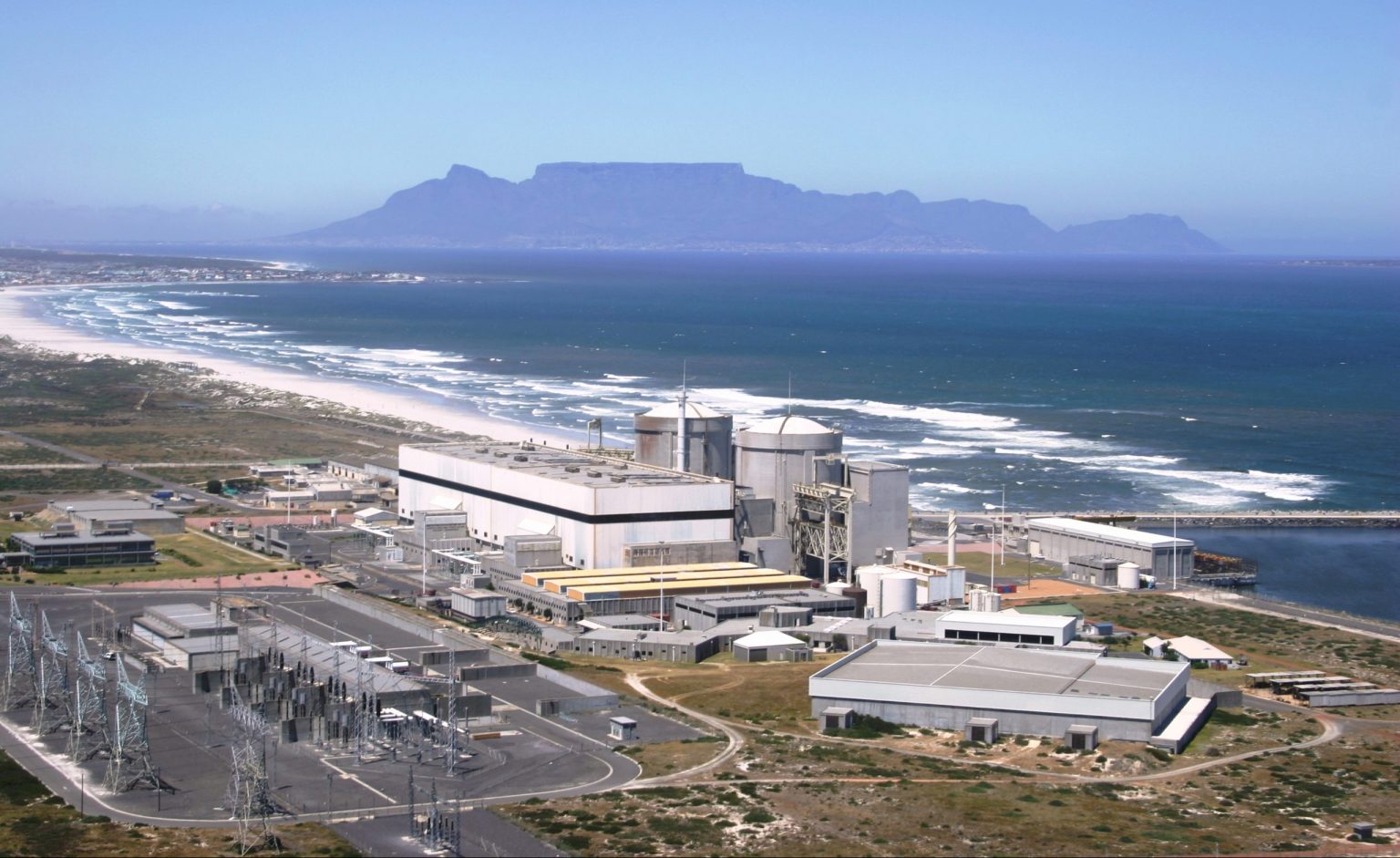
South Africa’s National Nuclear Regulator and Eskom have confirmed that radioactive-contamination events occurred inside controlled areas of Koeberg Nuclear Power Station during maintenance work on Unit 2, but that no radioactive material was released into the environment and no danger was posed to surrounding communities.
The National Nuclear Regulator reported three contamination events on 30 June, 2 July and 7 July 2026. Workers who may have been affected were screened, while the regulator said the measured contamination remained below levels associated with a routine dental X-ray.
The regulator concluded that the events did not meet the criteria for classification as a nuclear or radiological emergency and had no off-site radiological consequences.
Eskom’s subsequent technical explanation focused on two brief airborne-radioactivity detections on 2 and 7 July during inspections of Unit 2’s steam generators. The utility classified the event at Level 0 on the International Nuclear and Radiological Event Scale, indicating no safety significance.
What Happened Inside Unit 2?
Koeberg Unit 2 has been undergoing a scheduled maintenance outage since April 2026.
As part of the outage, workers were conducting eddy-current testing of steam-generator tubes. This non-destructive inspection technique uses robotic probes to examine the condition and thickness of tubes and identify degradation before it can affect plant performance or safety.
According to Eskom, movement of the inspection probes disturbed microscopic radioactive oxide particles, commonly called “crud” within the nuclear industry. A small quantity became airborne inside an enclosed work area.
Continuous air monitors detected the increased airborne activity and triggered alarms. Work was stopped temporarily, the area was secured, ventilation and filtration systems were allowed to remove the particles, and radiological assessments were completed before activities resumed.
Eskom said physical containment barriers, filtered ventilation, negative pressure, continuous monitoring and personnel-protection arrangements operated as intended.
Contamination Is Not the Same as an Environmental Release
The episode demonstrates the importance of precise language when reporting nuclear events.
Radioactive contamination means radioactive material is present where it is not intended to be. In a nuclear facility, this can occur within areas already designed and controlled for radiological work.
An environmental release occurs when radioactive material passes beyond the authorised barriers and boundaries of the facility.
The presence of contamination inside a controlled maintenance area therefore does not automatically mean radioactive material escaped from the plant.
In the Koeberg case, both Eskom and the regulator said the contamination remained inside the facility and that environmental monitoring showed no off-site consequences.
The events should consequently not be described simply as a “radiation leak.”
Why INES Level 0 Still Matters
The International Nuclear and Radiological Event Scale is used to communicate the safety significance of nuclear and radiological events.
Level 0 is below the numbered scale and indicates that an event has no safety significance.
That does not mean nothing unusual happened. It means that, after assessment, the occurrence did not produce consequences that justified classification at Level 1 or above.
Low-significance events can still provide important information about equipment performance, work planning, contractor control, radiation-protection practices and safety culture.
A mature nuclear system should be capable of identifying, documenting and reviewing these events without either concealing them or presenting them as disasters.
Regulatory Transparency and Public Confidence
Koeberg is Africa’s only operating commercial nuclear power station. Events at the facility therefore attract attention far beyond South Africa.
For countries developing their first nuclear programmes, the most important lesson is not that nuclear facilities will never experience abnormal conditions.
They will.
The more important questions are whether the plant detects those conditions quickly, whether workers respond according to established procedures, whether the regulator conducts an independent review and whether the public receives accurate information.
Transparent reporting can strengthen confidence when it clearly explains:
- what occurred;
- where it occurred;
- whether workers were exposed;
- whether radioactive material left the facility;
- how safety systems responded;
- what corrective actions were taken; and
- whether the regulator agrees with the operator’s assessment.
Operating an Ageing Nuclear Plant
The events also occurred as Koeberg moves into long-term operation.
The National Nuclear Regulator approved a 20-year operating extension for Unit 2 in November 2025, following an earlier extension for Unit 1. This allows both units to operate beyond their original 40-year licensing periods, subject to continued regulatory oversight.
Long-term operation places increased importance on ageing-management programmes, maintenance quality, component inspection, radiation protection and independent regulatory scrutiny.
The July events did not demonstrate that Koeberg is unsafe. They demonstrated why strong monitoring and oversight remain necessary throughout an extended operating life.
NuclearAfrica Perspective
The Koeberg events should neither be sensationalised nor dismissed.
There was no nuclear emergency, no environmental release and no reported threat to the public. Monitoring, containment and radiation-protection measures detected and controlled the airborne contamination.
At the same time, Level 0 should not become shorthand for “nothing happened.”
The events involved abnormal radiological conditions inside a working nuclear facility and required operator response, worker assessment and regulatory review.
For Africa’s emerging nuclear programmes, the episode illustrates what transparent nuclear governance should look like: detect events early, protect workers, inform the regulator, communicate clearly and implement corrective actions.
Sources: Eskom; South African National Nuclear Regulator; Associated Press.
Related

Morocco Nuclear Regulator Says No Radioactive Leak at Maâmora Research Centre
By Nuclear Africa• October 7, 2026
Amazon’s 20-Year Nuclear Deal Shows How Large Corporate Buyers Can Help Finance Nuclear Investment
By Nuclear Africa• October 7, 2026Beyond the Resolutions: GC70 and the Emerging Global Nuclear Order
By Nuclear Africa• October 6, 2026
US Nuclear Regulator’s Workforce Warning Carries a Clear Lesson for African Nuclear Newcomers
By Nuclear Africa• October 5, 2026