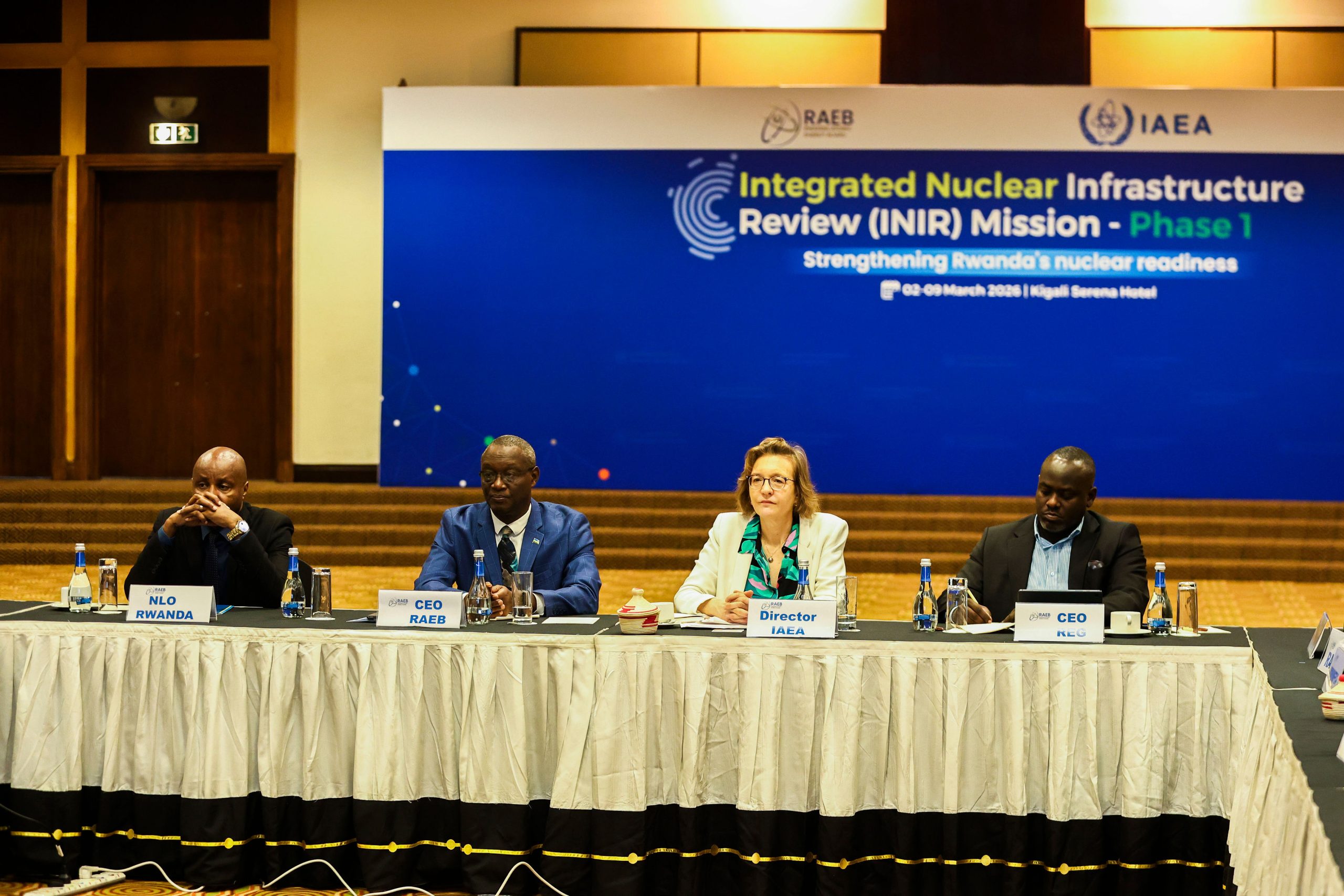
An expert mission from the International Atomic Energy Agency (IAEA) has completed a review of Rwanda’s progress in developing the infrastructure required to introduce nuclear power as part of the country’s long-term energy strategy.
The review mission, conducted from 2–9 March 2026, assessed Rwanda’s preparedness to establish a safe, secure and sustainable nuclear power programme. The mission formed part of the IAEA’s Integrated Nuclear Infrastructure Review (INIR) process, which supports countries considering nuclear power by evaluating national readiness across key infrastructure areas. ()
The INIR mission examined Rwanda’s self-evaluation report covering 19 key infrastructure issues, including national policy and strategy, legal and regulatory frameworks, human resource development, stakeholder engagement, and nuclear safety and security arrangements. ()
According to the IAEA, the review confirmed that Rwanda has made steady progress in preparing the foundations of its nuclear energy programme. The mission also provided recommendations and suggestions aimed at supporting the next phase of infrastructure development and strengthening institutional capacity. ()
Rwanda has been actively exploring nuclear power as part of its strategy to diversify its energy mix and support economic growth. The country aims to deploy its first Small Modular Reactor (SMR) in the early 2030s, which could contribute to a more reliable and low-carbon electricity supply. ()
In the long term, officials have indicated that nuclear power could supply between 60% and 70% of Rwanda’s electricity demand, helping reduce dependence on imported power and strengthening national energy security. ()
Rwanda established the Rwanda Atomic Energy Board (RAEB) to oversee the development of nuclear energy and coordinate activities related to nuclear science and technology. The programme is integrated into the country’s broader energy policy and development strategies, including plans aimed at achieving sustainable industrial growth and universal access to electricity. ()
IAEA review missions are an important component of the agency’s support to newcomer countries interested in nuclear power. Through the Milestones Approach, the IAEA provides guidance on building the legal, regulatory, institutional, and technical infrastructure necessary for a responsible nuclear energy programme. ()
The recommendations from the INIR mission will assist Rwanda in refining its national action plan and advancing toward the next stage of nuclear infrastructure development.
Rwanda is among a growing number of African countries exploring nuclear energy to meet rising electricity demand, support industrialization, and contribute to global climate goals through low-carbon energy sources.
Related

Morocco Nuclear Regulator Says No Radioactive Leak at Maâmora Research Centre
By Nuclear Africa• October 7, 2026
Amazon’s 20-Year Nuclear Deal Shows How Large Corporate Buyers Can Help Finance Nuclear Investment
By Nuclear Africa• October 7, 2026Beyond the Resolutions: GC70 and the Emerging Global Nuclear Order
By Nuclear Africa• October 6, 2026
US Nuclear Regulator’s Workforce Warning Carries a Clear Lesson for African Nuclear Newcomers
By Nuclear Africa• October 5, 2026