A newly formed US uranium company has completed a US$105 million financing and combined conventional uranium mines with technology designed to recover uranium from abandoned mine waste. For Africa’s uranium-producing countries, the development raises a larger question: can the next generation of uranium projects create new fuel supply while also addressing environmental liabilities left by earlier mining?
IsoEnergy and DISA Technologies have completed the transaction establishing DISA Uranium Corporation, converting an agreement announced earlier in August into an operating corporate structure backed by uranium assets, specialised mineral-processing technology and substantial private capital.
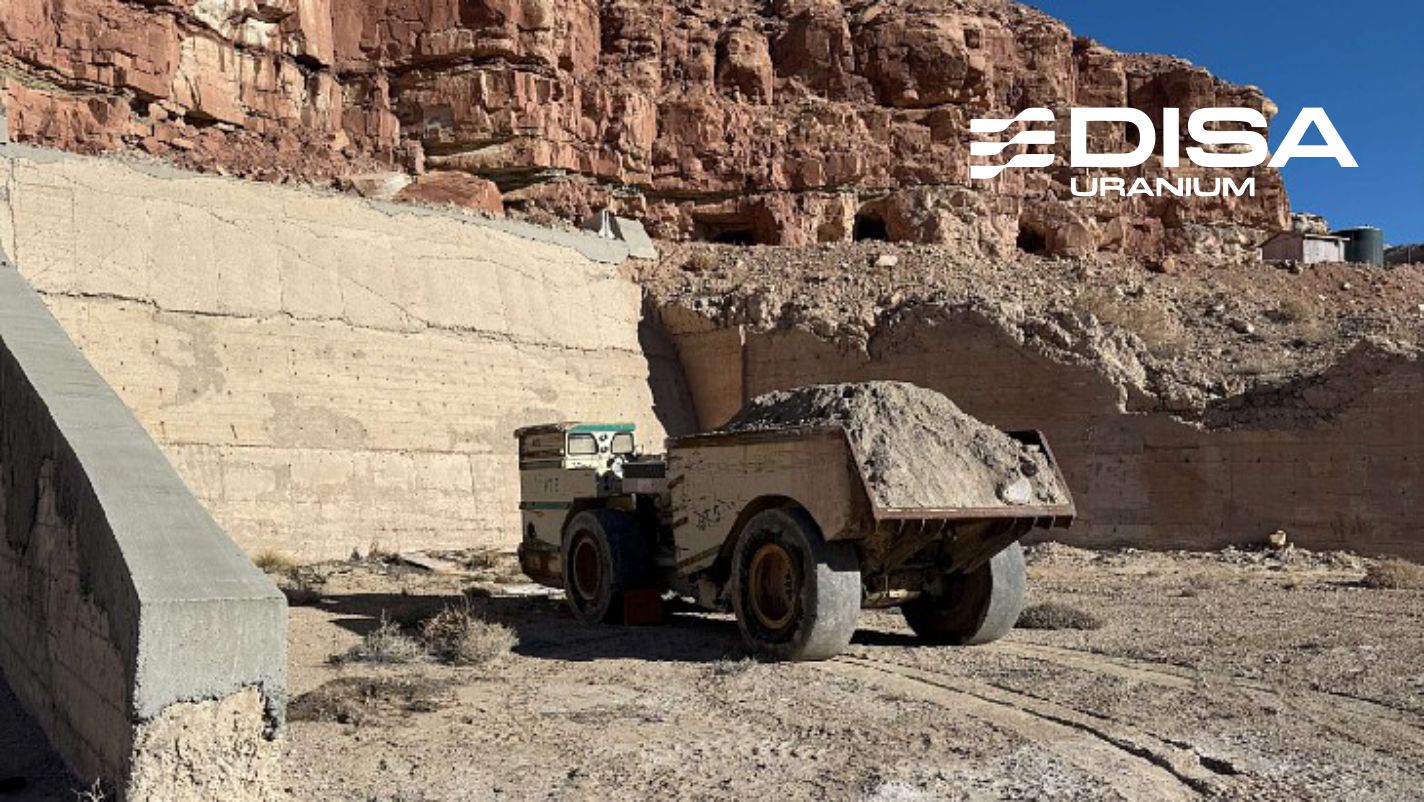
Under the transaction completed on 19 August 2026, IsoEnergy transferred five permitted, past-producing uranium properties in Utah : the Tony M Mine, Daneros Mine, Rim Mine, Sage Plain Project and Flatiron Project- to DISA Uranium. In exchange, IsoEnergy received shares in the new company and, after participating in the financing, now owns approximately 33% on a fully diluted basis, making it the largest shareholder.
At the same time, DISA Uranium closed commitments for a US$105 million private placement, with investors including Tembo Capital, BHP Ventures, Galvanize Climate Solutions, Valor Equity Partners, Evok Innovations, Halliburton Labs and Veriten. IsoEnergy itself invested US$33 million.
What makes the development interesting for the wider nuclear fuel cycle is not simply another uranium-company transaction. DISA Uranium is attempting to combine three activities that are usually discussed separately:
conventional uranium mining, recovery of uranium from legacy mine waste, and development of new uranium-processing capacity.
For Africa, where uranium production is again attracting strategic international attention, that combination deserves close examination.
From Agreement to Completed Transaction
The distinction between the announcement earlier this month and the latest development is important.
On 4 August, IsoEnergy and DISA announced a definitive agreement and US$105 million in financing commitments. At that stage, completion remained conditional.
That has now changed.
The companies confirmed on 19 August that the transaction and financing have closed. DISA Uranium now holds the Utah uranium portfolio together with rights to DISA’s High-Pressure Slurry Ablation technology for uranium, vanadium and abandoned uranium mine remediation.
Its seven-member board includes representatives from IsoEnergy and Tembo Capital as well as former US Nuclear Regulatory Commission commissioner Jeffrey Merrifield.
The company says its immediate strategy has three components: recover uranium from abandoned mine material, bring conventional US uranium production back online and develop domestic uranium-processing capacity. The past-producing Tony M Mine is identified as one of the near-term priorities.
None of those objectives should yet be confused with actual new production.
But the financing and completed asset transfer mean the strategy now has substantially more institutional and financial substance than an early-stage technology proposal.
The Technology Behind the Model
At the centre of the strategy is High-Pressure Slurry Ablation, or HPSA.
The process mixes mineral-bearing material with water and sends slurry through opposing high-pressure nozzles. The resulting particle-to-particle collisions are intended to separate uranium-bearing material from the larger host material.
In an abandoned uranium mine application, the objective is not simply to extract as much material as possible.
The process attempts to create two streams.
One is a smaller volume of concentrated fines containing uranium and other regulated material. The other is a larger coarse-material fraction from which sufficient contamination has been removed to potentially allow the material to remain or be returned to the site, subject to regulatory requirements.
That distinction is important because the economics of abandoned mine remediation are often dominated by excavation, transport and disposal of very large quantities of contaminated material.
If technology can significantly reduce the volume requiring off-site management while recovering usable uranium, remediation could potentially produce both an environmental and resource benefit.
But that proposition must ultimately be demonstrated site by site.
The NRC Licence Is Important — But It Is Not a Blank Cheque
DISA’s regulatory position is one of the more substantive elements of the project.
The US Nuclear Regulatory Commission issued Source Material Licence SUA-1605 to DISA Technologies in September 2025 after completing a safety evaluation and environmental assessment. The NRC concluded that the proposed licensed activities were consistent with a finding of no significant environmental impact under the assessed conditions.
The licence provides a regulatory route for HPSA treatment of abandoned uranium mine waste across multiple sites.
However, that does not mean DISA can simply arrive at any abandoned uranium mine and begin processing material.
The NRC requires a pre-mobilisation notification at least 90 days before deployment, with site-specific information subject to regulatory review. A demobilisation notification is also required after treatment activities have been completed.
The regulator’s public tracker illustrates the distinction. Review of a proposed deployment at the October Pile in Colorado has been temporarily paused at DISA’s request, while a notification concerning the Mary Ann Pile remains under NRC review.
This is particularly relevant for African policymakers considering technologies for uranium mine remediation.
A technology licence is not the same thing as approval of every site where the technology might eventually be used.
Local geology, radionuclide concentrations, groundwater, waste characteristics, worker exposure, transport arrangements, environmental conditions and final disposition all remain important regulatory considerations.
Tony M Tests the Conventional Mining Side
DISA Uranium is also proposing to apply HPSA to conventional uranium production.
The argument is that uranium-bearing material can be concentrated closer to the mine, reducing the quantity of material subsequently transported and processed.
The company says preliminary testing on material from the Tony M Mine reduced the feedstock mass to approximately 22% of its original volume while recovering 88% of the uranium.
Those results are potentially significant.
If successfully replicated at commercial scale, concentrating uranium-bearing material before downstream processing could reduce transport requirements and potentially alter the economics of lower-grade or previously marginal resources.
But the figures remain company-reported preliminary test results.
They should not yet be treated as proof of commercial-scale operating cost, recovery performance or environmental benefit.
Why the Processing Facility Matters
DISA Uranium also says it intends to develop new domestic recovery and processing infrastructure capable of producing uranium concentrate.
The company describes the proposed facility as potentially the first new US uranium recovery and processing plant of its kind in more than four decades. Site evaluation and design work remain under way.
This part of the strategy may ultimately be more consequential than the individual mines.
Mining uranium does not complete the nuclear fuel chain.
Ore must first be processed into uranium concentrate before proceeding through further stages such as conversion, enrichment where required, and fuel fabrication.
That distinction has major implications for Africa.
The continent possesses important uranium resources and established production, but much of the higher-value nuclear fuel cycle remains outside Africa.
The DISA approach therefore reinforces a question NuclearAfrica has raised repeatedly:
How much of the value between the uranium deposit and the reactor fuel can resource-producing countries realistically capture?
The answer does not necessarily mean every uranium producer should establish conversion, enrichment and fuel-fabrication facilities.
Those stages require sophisticated regulation, large markets, capital, safeguards, physical protection and specialist expertise.
But simply mining and exporting uranium should also not automatically be assumed to represent the maximum economic opportunity available.
A Different Way to Think About Legacy Uranium Sites
The remediation element may have particular relevance for Africa.
Decades of mining across the continent have left some countries dealing with radioactive tailings, waste rock, contaminated land and long-term environmental monitoring obligations.
At the same time, global interest in uranium is increasing as existing nuclear fleets extend their operating lives and new reactors are planned.
That creates two policy conversations that are often separated.
The first asks: How should countries clean up historical uranium liabilities?
The second asks: Where will the next generation of nuclear fuel come from?
DISA Uranium is attempting to connect them.
Its proposition is that some waste associated with historical uranium mining may still contain recoverable uranium and vanadium and that selective processing could reduce the volume of contaminated waste while returning recovered material to productive use.
That concept is worth studying.
It should not, however, become an excuse to weaken remediation standards.
Remediation Must Remain Remediation
There is an important governance principle here for Africa.
The presence of recoverable uranium inside mine waste does not automatically mean reprocessing that waste will deliver a net environmental benefit.
A credible assessment would need to consider:
worker exposure; dust and radon management; water consumption; secondary waste streams; groundwater impacts; transport requirements; final disposal; site restoration; community consent; and the long-term radiological condition of the remediated land.
The appropriate question is therefore not simply whether uranium can be recovered.
It is: Does recovery leave the site safer than it was before?
The NRC approach provides one useful model because the coarse material remaining after treatment must satisfy applicable release conditions before it can be returned to the environment.
For African regulators, that distinction would be essential.
Resource recovery must remain subordinate to radiation protection and environmental remediation requirements rather than the other way around.
Private Capital Is Also Part of the Story
The US$105 million financing introduces another dimension.
Nuclear fuel-cycle development is often associated with government financing because uranium and nuclear fuel have strategic national-security characteristics.
DISA Uranium’s initial capital base instead brings together private mining, venture, climate and industrial investors.
That does not mean government has disappeared from the project.
The regulatory framework remains essential, and the broader commercial rationale is influenced by US policies seeking greater domestic nuclear fuel security.
But the financing demonstrates how concerns around fuel security can attract private capital into technologies that sit between mining, environmental remediation and the nuclear fuel cycle.
African uranium-producing countries should watch this carefully.
The next global uranium cycle may involve more than conventional mining companies reopening mines.
It could increasingly include specialist processing companies, technology investors, remediation businesses, nuclear utilities and strategic financiers looking at different points along the fuel chain.
Why This Matters for Africa
Africa is already part of the global uranium economy.
The more consequential question is what role it wants to play in its next phase.
The continent can continue primarily as a supplier of mined uranium concentrates.
Or individual countries may selectively develop additional capabilities in areas where there is an economic, regulatory and technological justification.
Legacy-site remediation could form part of that discussion.
So could advanced mineral processing.
So could regional laboratory capability, uranium transport, environmental monitoring, radiation protection and specialised mine-waste management.
DISA Uranium does not provide a ready-made model that Africa can simply copy.
The mineralogy of African deposits differs.
National regulatory systems differ.
Waste characteristics differ.
Water availability, infrastructure and economics differ.
And the HPSA technology has yet to demonstrate its promised performance across sustained commercial-scale uranium production and remediation operations.
But the completed transaction is worth watching because it proposes something unusual:
use the same technological platform to address the environmental liabilities of the uranium industry’s past and the fuel-supply requirements of its future.
For African uranium producers, that is a strategic question worth asking.
Can the next generation of uranium development create more value while leaving fewer liabilities behind?
The answer will require evidence.
But it deserves serious attention.
NuclearAfrica Editorial Note
The 19 August transaction and US$105 million financing are completed milestones. DISA Uranium’s future mine restarts, uranium-processing facility and large-scale remediation programme remain development objectives rather than operating achievements.
DISA’s NRC licence is significant but does not constitute automatic approval to process material at every abandoned uranium mine. Site-specific regulatory steps remain required before deployment.
The Tony M recovery figures are preliminary company-reported test results and should not be interpreted as demonstrated commercial performance.
Related

Amazon’s 20-Year Nuclear Deal Shows How Large Corporate Buyers Can Help Finance Nuclear Investment
By Nuclear Africa• October 5, 2026
US Nuclear Regulator’s Workforce Warning Carries a Clear Lesson for African Nuclear Newcomers
By Nuclear Africa• October 5, 2026
US-South Korea $120 Billion Nuclear Framework Shows the Scale of State-Backed Reactor Finance
By Nuclear Africa• October 5, 2026
Morocco Nuclear Regulator Says No Radioactive Leak at Maâmora Research Centre
By Nuclear Africa• October 5, 2026