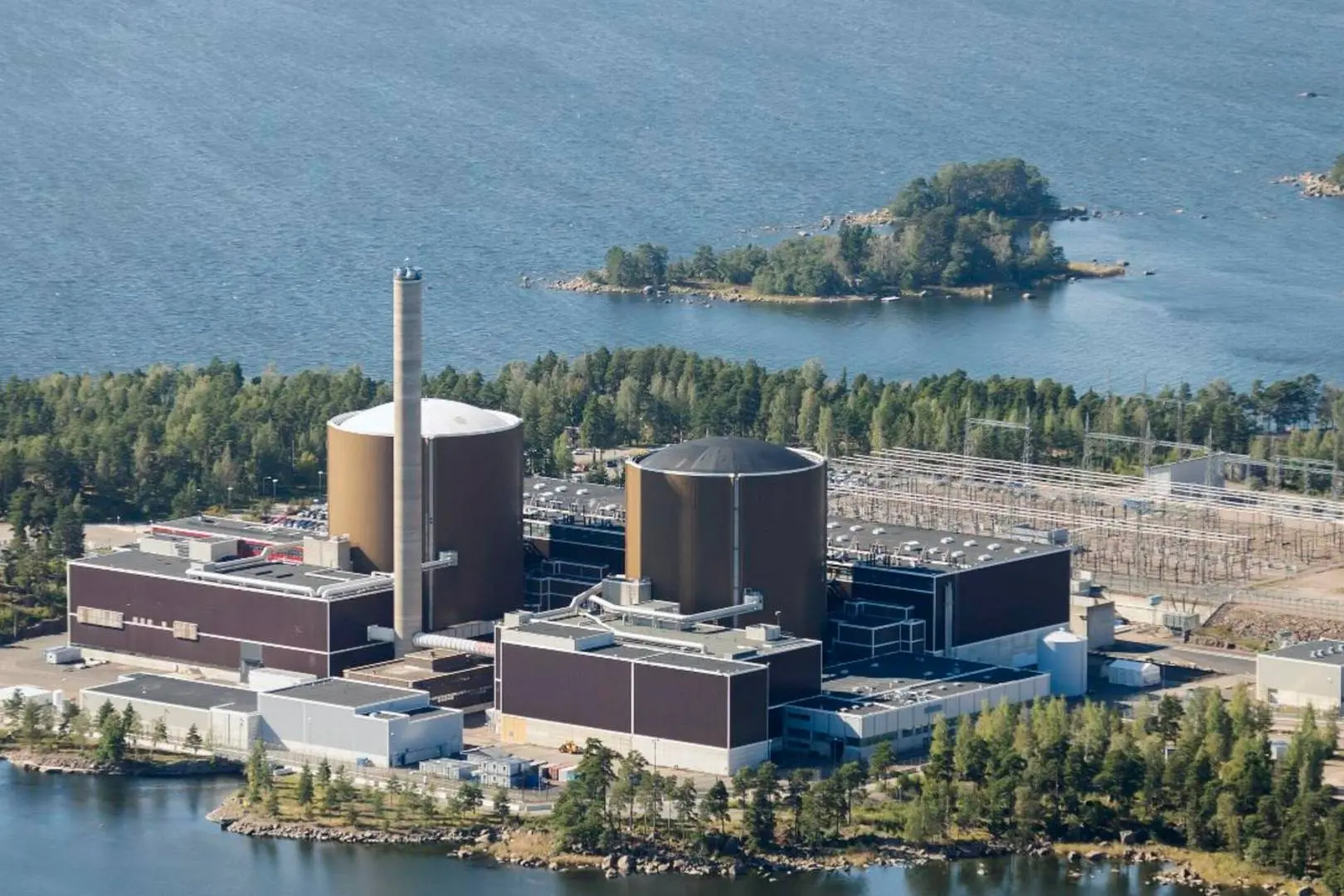
Finland’s Fortum has begun a major programme of turbine-island modernisation at the Loviisa Nuclear Power Plant, offering an important reminder that extending a nuclear plant’s operating life requires far more than obtaining a new licence.
The programme, launched during the plant’s 2026 annual outages, includes replacement of low-pressure turbine components, turbine automation systems and main seawater pumps. Implementation will continue in phases through 2028.
Fortum estimates investments associated with keeping Loviisa operating through 2050 could reach approximately €1 billion.
For Africa, this has particular relevance to South Africa’s Koeberg Nuclear Power Station and to newcomer countries making decisions about reactors expected to operate for 60 years or longer.
A licence is permission, not a guarantee
Finland granted new operating licences for Loviisa’s two reactors through the end of 2050 in 2023.
That decision does not mean the units can simply continue operating unchanged for another quarter-century.
Components age. Suppliers disappear. Digital systems become obsolete. Spare parts become harder to obtain. New safety requirements emerge. Knowledge must be retained as experienced employees retire.
Fortum says some turbine components are approaching the end of their technical lives and notes that changes in the operating and geopolitical environment have increased uncertainty around support and spare parts from some original suppliers.
Lifetime extension therefore combines regulatory approval with a sustained engineering and investment programme.
More electricity without increasing reactor power
One particularly interesting aspect of the Loviisa upgrade is that Fortum expects it to increase the plant’s electrical output by approximately 38 MW by 2028.
The improvement comes from increasing turbine efficiency rather than raising the reactor’s thermal power. Fortum estimates the turbine work will add around 7 TWh of electricity over the plant’s remaining operating life.
That distinction matters.
Nuclear asset optimisation does not always require uprating the reactor core itself. Improvements to the secondary side of the plant — where steam is converted into electricity — can extract more useful electrical output from the same reactor thermal energy.
The low-pressure turbine project involves replacement of casings and internal components across all eight low-pressure turbines at Loviisa. Fortum is also upgrading turbine protection and control systems and replacing main seawater pumps used in the condenser cooling system.
Why Koeberg should be part of the conversation
South Africa’s Koeberg station represents Africa’s principal example of long-term commercial nuclear operation.
As countries consider the economics of extending nuclear plants, headline calculations often compare the cost of continued operation with the cost of replacement generation.
But Loviisa demonstrates that long-term operation carries its own capital requirements.
A reactor may have substantial remaining value while still requiring large investments in electrical equipment, cooling systems, instrumentation, buildings, turbines, maintenance capability and ageing-management programmes.
The relevant economic question is therefore not “old reactor or free electricity.”
It is whether the cost of modernising and safely maintaining an existing asset produces sufficient additional reliable electricity to justify the investment.
For Koeberg and future African plants, this should become part of lifetime financial planning from the beginning.
Obsolescence is a nuclear issue
Long operating lives also expose plants to technological obsolescence.
A reactor commissioned today may still be operating in the 2080s.
Many suppliers, software platforms, control technologies and industrial components available at construction will not exist in their original form by then.
Operators must therefore maintain configuration control while replacing obsolete equipment with modern alternatives that satisfy nuclear quality and safety requirements.
Fortum’s automation upgrade illustrates this problem clearly. Modernisation is intended partly to improve future reliability, maintainability and spare-parts availability.
That has implications for African procurement strategies.
When newcomer countries evaluate reactor vendors, long-term supportability should matter alongside construction cost and reactor performance.
Who will provide replacement components 30 or 40 years later? Can parts eventually be manufactured locally? Who controls software and digital systems? What happens if geopolitical relationships change?
These are not secondary questions for an asset expected to operate across multiple generations.
Why This Matters for Africa
Nuclear power is often described as a 60-year investment.
In reality, the commitment can extend much longer when construction, operation, licence extension, decommissioning and waste management are considered together.
The IAEA has described newcomer nuclear programmes as requiring national infrastructure sustained over periods approaching or exceeding a century.
Loviisa demonstrates what that commitment looks like during the middle of the lifecycle.
The plant has an operating licence until 2050, but retaining that capability requires continued investment today.
African countries considering nuclear power should therefore build lifecycle thinking into financial models from the outset.
The real cost of a nuclear programme is not merely the price of constructing the first reactor.
It is the cost — and value — of safely maintaining an entire nuclear system over generations.
Related

Beyond the Resolutions: GC70 and the Emerging Global Nuclear Order
By Nuclear Africa• September 22, 2026
Africa Deepens Nuclear Safeguards Capacity as AFCONE Convene Hands-On Training in Nairobi
By Nuclear Africa• August 24, 2026
A 300 MW SMR Could Support More Than 12,500 Construction Jobs in Ghana: New Study Tests Nuclear’s Economic Case
By Nuclear Africa• August 24, 2026