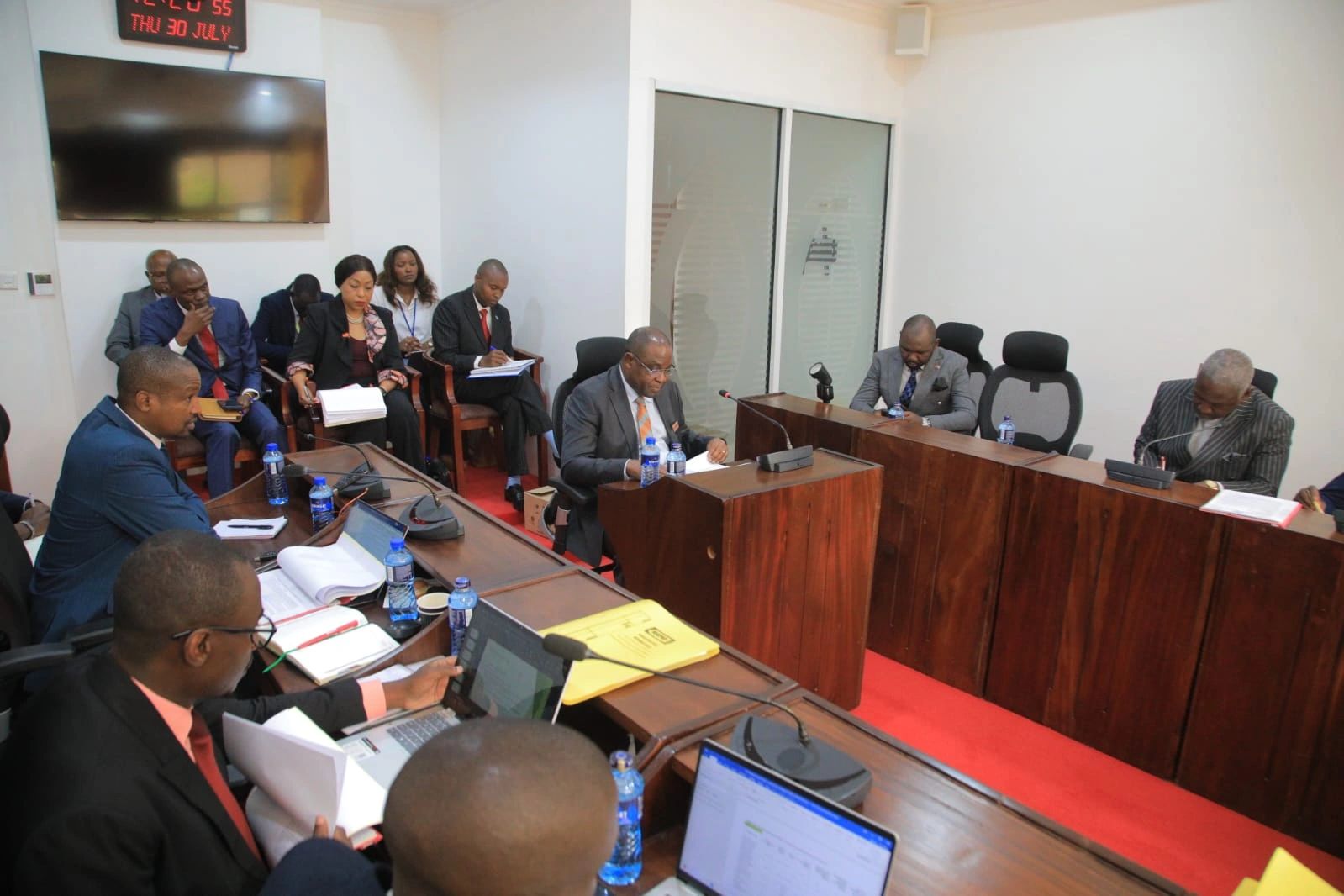
Kenya’s Senate Standing Committee on Energy has intensified parliamentary scrutiny of the country’s proposed nuclear power plant in Siaya County, seeking detailed assurances on safety, environmental protection, community participation, financing, land acquisition and regulatory readiness.
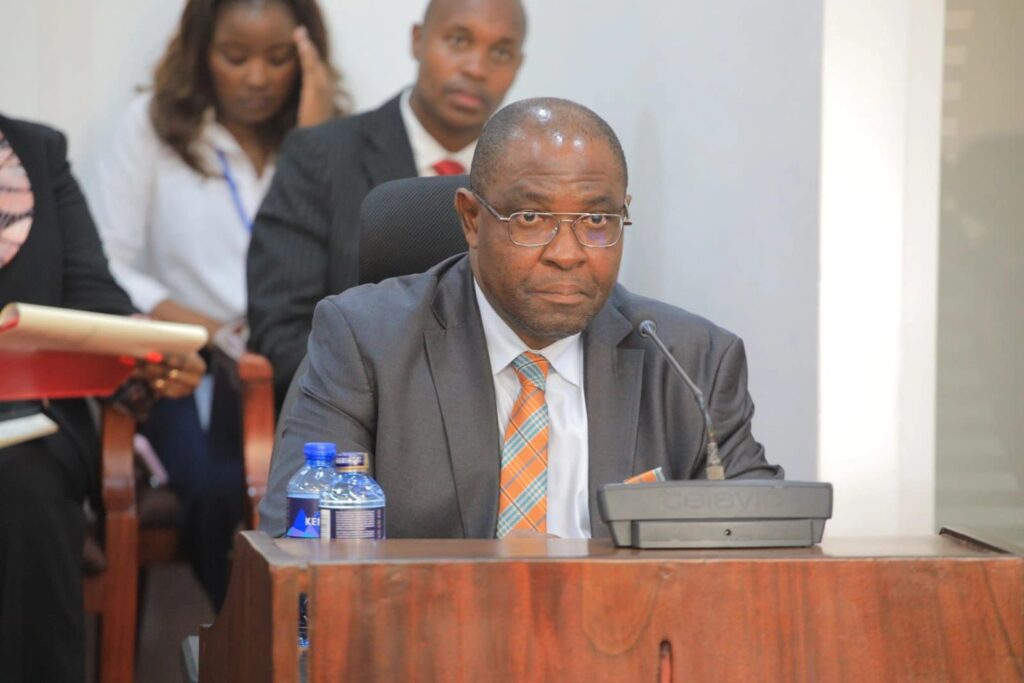
During a committee hearing on 30 July 2026, Nuclear Power and Energy Agency Chief Executive Officer Justus Wabuyabo briefed senators on the programme’s progress and the institutional arrangements being developed for Kenya’s first commercial nuclear power project. The official parliamentary schedule described the meeting as a deliberation on the nuclear project earmarked for Siaya County.
The hearing is significant because Kenya has publicly discussed beginning construction as early as March 2027. Senators questioned whether that timetable remains realistic given the major technical, regulatory, environmental, financial and social milestones that must still be completed.
Lenya Village identified as preferred site
NuPEA informed the committee that Lenya Village in Siaya County had been identified as the preferred location following regional assessments and preliminary screening of potential sites.
However, the designation does not amount to final approval for construction.
NuPEA acknowledged that the preferred and alternative locations must undergo detailed site characterisation before the Kenya Nuclear Regulatory Authority can consider licensing the project. The studies will need to determine whether geological, hydrological, meteorological, seismic, environmental and infrastructure conditions are suitable for a nuclear installation.
This distinction is important. Preliminary screening identifies locations that appear potentially suitable. Detailed site characterisation must then generate the scientific evidence required to demonstrate that a specific site can support the proposed reactor safely throughout construction, operation and decommissioning.
Site selection is therefore not complete merely because a preferred village or county has been announced.
Several milestones remain before construction
NuPEA outlined a series of activities that must be completed before construction can begin. These include:
- land acquisition;
- detailed site and engineering studies;
- environmental and social-impact assessments;
- selection of a reactor vendor;
- development of the financing arrangement;
- preparation of licensing documentation;
- regulatory review; and
- broader institutional readiness across responsible government agencies.
Members of the committee consequently challenged the proposed March 2027 groundbreaking date. One legislator argued that detailed site characterisation alone could take close to a year, while others cautioned against undertaking expensive project activities before establishing that the land is technically suitable.
The questions raised by the committee reflect a wider challenge for nuclear-newcomer states: political timelines must remain subordinate to evidence-based project sequencing.
A ceremonial groundbreaking should not occur before the site, environmental, regulatory and financial conditions for responsible construction have been demonstrated.
Kenya’s institutional responsibilities clarified
NuPEA used the hearing to clarify the responsibilities of the three principal organisations involved in the programme.
NuPEA is coordinating the development of Kenya’s national nuclear-power infrastructure. The Kenya Nuclear Regulatory Authority is the independent body responsible for licensing and regulatory oversight. KenGen has been designated as the prospective owner-operator that would develop, construct and ultimately operate the power station.
Clear separation of these responsibilities is essential.
The organisation promoting and coordinating the programme should not grant itself permission to construct or operate the plant. Licensing decisions must remain with an adequately resourced regulator capable of reaching independent technical conclusions.
The owner-operator must meanwhile develop sufficient internal competence to manage the reactor vendor, construction contractors, fuel suppliers, project finances and eventual plant operations.
Kenya is implementing its programme using the IAEA Milestones Approach and has described itself as being in Phase Two. The approach requires nuclear-newcomer states to address 19 interconnected infrastructure issues before proceeding through the programme’s major decision points.
These include the legal and regulatory framework, nuclear safety, safeguards, security, financing, human resources, grid readiness, radioactive-waste management, stakeholder involvement and preparation of the owner-operator.
Parliament raises concerns about public participation
Community engagement emerged as one of the hearing’s most contested issues.
Rarieda Member of Parliament Otiende Amollo told the committee that consultation had not yet matched the scale and significance of the project. He said he had participated in only one inaugural engagement and remained unaware of the precise project location.
He called for the scientific, environmental and social implications of the project to be explained more comprehensively to affected communities.
This concern is particularly important because Siaya residents have already organised opposition to the proposed plant. Demonstrations and public statements in May 2026 raised questions about safety, livelihoods, environmental consequences and whether communities had been adequately involved in the decision-making process. NuPEA subsequently stated that the project would not proceed without broad and informed community support.
Community sensitisation should not be treated as a campaign aimed only at persuading residents to accept a project that has already been decided.
Meaningful public participation should allow communities to:
- receive understandable and timely information;
- question the scientific and economic assumptions;
- obtain independent technical advice;
- influence site and project decisions;
- understand possible land and livelihood effects;
- participate in environmental review;
- examine emergency arrangements;
- negotiate community-development benefits; and
- raise objections without intimidation or exclusion.
Study tours to operating nuclear plants may help community representatives understand the technology, but such visits cannot substitute for sustained engagement at home.
Resettlement requires more than compensation
Senators also asked how much land would be required, how many households could be affected and what framework would govern compensation and resettlement.
NuPEA said no household would be displaced without prior, fair and prompt compensation under Kenya’s Constitution and national law. KenGen would be responsible for implementing an approved compensation and resettlement framework.
However, compensation alone may not address every social consequence.
Members of Parliament noted that communities in the proposed area may be organised around extended families and clans. Relocation could disrupt social networks, cultural connections, customary land arrangements, livelihoods and access to community institutions.
A credible resettlement programme should therefore consider:
- replacement land and housing;
- restoration of livelihoods;
- treatment of customary and communal interests;
- support for vulnerable residents;
- continued access to schools and healthcare;
- cultural and burial sites;
- grievance and appeal mechanisms;
- independent valuation of property; and
- long-term monitoring after relocation.
The objective should be to ensure that project-affected people are not made poorer or socially fragmented by a national infrastructure project.
Lake Victoria makes the environmental assessment regional
The proposed location near the Lake Victoria basin gives the project a potentially transboundary environmental dimension.
Legislators emphasised the importance of the lake to fisheries, water supplies, agriculture and millions of livelihoods in Kenya and neighbouring countries. NuPEA said the required environmental and social assessments would examine radiological safety, fisheries, aquatic ecosystems, thermal effects and possible transboundary consequences involving Uganda and Tanzania.
These assessments should consider both normal operations and accident conditions.
Relevant questions include:
- the proposed cooling technology;
- the quantity of water required;
- possible thermal discharges;
- effects on fish breeding and aquatic ecology;
- protection against flooding and extreme weather;
- transport of fresh and spent fuel;
- routine radioactive discharges;
- emergency monitoring;
- cumulative effects with other lake activities; and
- notification and consultation with neighbouring states.
The environmental process should be completed independently and made available for public scrutiny before major land acquisition or construction commitments become irreversible.
Safety claims must be communicated carefully
During the hearing, the NuPEA chief executive reportedly told senators that modern safeguards meant that a nuclear plant “cannot leak.”
The statement appears intended to reassure the committee about improvements in contemporary reactor technology. However, such an absolute formulation should be avoided in responsible nuclear communication.
Modern nuclear plants incorporate multiple physical barriers, redundant systems and layers of defence intended to prevent accidents and limit radioactive releases. Nevertheless, international nuclear-safety standards explicitly require operators and regulators to analyse accident conditions and prepare measures to mitigate consequences where prevention fails.
No major industrial technology should be presented as entirely incapable of failure.
Public trust is better served by explaining:
- how accidents are prevented;
- what barriers contain radioactive materials;
- which events the design must withstand;
- how emergency cooling is maintained;
- how severe accidents are analysed;
- what independent regulation requires; and
- how emergency arrangements protect workers and communities.
Strong safety systems are a reason for confidence, but they should not be communicated as a promise of zero risk.
Financing model remains unresolved
Senators sought clarification on whether the project would be financed directly through Kenya’s Exchequer or through international and strategic partnerships.
According to Parliament’s account, NuPEA estimated the project cost at approximately KSh500 billion. The agency also projected that construction could create between 5,000 and 12,000 jobs, with opportunities for local employment, skills development and participation by Siaya-based businesses. These figures remain programme estimates rather than final costs or guaranteed employment outcomes.
The absence of a final reactor design, vendor, financing model and completed site assessment means that the eventual project cost cannot yet be established with confidence.
A complete financing assessment should address:
- reactor technology and capacity;
- construction and owner’s costs;
- financing interest;
- currency exposure;
- sovereign guarantees;
- cost-overrun responsibility;
- grid and transmission investment;
- nuclear-fuel supply;
- insurance and liability;
- waste-management expenditure;
- decommissioning funding; and
- the price at which electricity would be sold.
Kenya must also determine whether the national electricity market and prospective off-taker can support a long-term nuclear power-purchase arrangement without creating unsustainable public liabilities.
Nuclear liability and international conventions
NuPEA told the committee that Kenya’s Cabinet had approved four international nuclear-safety conventions on 30 June 2026 and that the instruments were awaiting consideration by the National Assembly.
The agency has separately reported progress towards accession to the Convention on Supplementary Compensation for Nuclear Damage, which establishes principles for liability and compensation following a nuclear incident.
International accession must be followed by effective domestic implementation.
Kenya will need legislation that clearly establishes:
- the legally responsible nuclear operator;
- strict or exclusive operator liability;
- minimum financial security;
- insurance arrangements;
- jurisdiction over claims;
- compensation for environmental and economic damage;
- cross-border liability;
- applicable time limits; and
- state responsibility where damages exceed available operator funds.
These arrangements should be completed before reactor construction, not postponed until the plant approaches operation.
Community benefits must be specific and enforceable
Senators asked what direct benefits Siaya County and its residents would receive from hosting the project.
Questions included whether the project would support a Level 5 hospital, improve emergency-response capability, create employment and reserve any share of the generated electricity for local development.
A host-community benefit framework should be developed transparently rather than relying on general promises.
It could cover:
- upgraded hospitals and emergency services;
- local roads and water infrastructure;
- scholarships and technical education;
- apprenticeships and supplier-development programmes;
- community-development funds;
- employment and procurement targets;
- environmental-monitoring participation;
- host-community representation in oversight bodies; and
- long-term socioeconomic monitoring.
However, benefits must not be used to purchase consent or silence legitimate safety and environmental concerns.
Communities should be able to examine the risks and benefits independently and participate in determining which development arrangements best reflect local priorities.
March 2027 timetable appears increasingly demanding
The committee’s questioning shows that the proposed March 2027 groundbreaking date should be treated as a target rather than a confirmed construction milestone.
Before a safety-significant construction start, Kenya would need to complete or substantially advance site characterisation, environmental review, land arrangements, vendor selection, financing, licensing documentation and institutional preparation.
The IAEA Milestones Approach is intended to ensure that the national infrastructure required to regulate and operate a nuclear plant safely, securely and economically is established sequentially rather than overtaken by construction pressure.
A revised timetable would not necessarily indicate programme failure.
Delaying construction to complete essential studies and consultations would be preferable to beginning a multibillion-shilling project without sufficient site evidence, regulatory readiness or community legitimacy.
Why the hearing matters beyond Kenya
Kenya’s parliamentary hearing offers several lessons for African nuclear-newcomer states.
Parliamentary oversight must begin early
Legislators should examine financing, liability, environmental protection and institutional readiness before the country becomes contractually committed to a vendor.
Preferred-site announcements must remain conditional
A preferred location must still pass detailed scientific, regulatory and environmental assessment.
Community engagement must influence decisions
Public participation is not simply the dissemination of promotional information. Communities must have a meaningful opportunity to shape project outcomes.
Regulators need visible independence
The public should understand that the institution promoting nuclear power is different from the authority deciding whether the project meets safety requirements.
Timelines must follow readiness
Political commitments to begin construction should not override the sequencing of site, licensing, financing and environmental milestones.
Safety communication must avoid absolutes
The most credible message is not that accidents or releases are impossible. It is that risks are understood, minimised, independently regulated and addressed through multiple layers of protection.
Conclusion
The Senate Energy Committee’s examination of the proposed Siaya nuclear power plant represents an important exercise in democratic and institutional oversight.
NuPEA has identified Lenya Village as the preferred location and is advancing Kenya’s wider nuclear-power roadmap. However, the programme remains subject to detailed site characterisation, environmental assessment, land and resettlement arrangements, financing, vendor selection, regulatory licensing and broader community participation.
These are not procedural obstacles to be cleared as quickly as possible. They are the foundations of a safe and credible nuclear programme.
Kenya’s nuclear ambitions could support long-term electricity security, industrialisation, skills development and low-carbon growth. But those benefits will be realised only if the project is developed through transparent evidence, independent regulation and meaningful host-community participation.
The immediate priority should therefore not be to defend an ambitious groundbreaking date.
It should be to demonstrate that the site is suitable, the regulator is ready, the financing is sustainable, the environment is protected and the people expected to host the project have been fully and respectfully involved.
Related

Morocco Nuclear Regulator Says No Radioactive Leak at Maâmora Research Centre
By Nuclear Africa• October 7, 2026
Amazon’s 20-Year Nuclear Deal Shows How Large Corporate Buyers Can Help Finance Nuclear Investment
By Nuclear Africa• October 7, 2026Beyond the Resolutions: GC70 and the Emerging Global Nuclear Order
By Nuclear Africa• October 6, 2026
US Nuclear Regulator’s Workforce Warning Carries a Clear Lesson for African Nuclear Newcomers
By Nuclear Africa• October 5, 2026